
Vertical Drama Weekly: Netflix, Tiktok, and the money […]

![Vertical Drama Weekly: Netflix, Tiktok, and the money […]](/content/images/size/w1200/2026/01/Image_20260124104344_565_26.jpg)
✱
Vertical narrative formats are expanding from social surfaces into global media ecosystems, with new platform launches, data-confirmed adoption, trend-level forecasting, and even traditional/linear platforms experimenting with mobile-optimized drama content.
Week of Jan 18–24, 2026
Join Real Reel
Netflix confirms vertical short-form will anchor its next mobile redesign
Netflix confirmed that a major mobile UI overhaul is planned for later this year, with internal testing already underway around vertical short-form video feeds. These clips pull from existing films and series, designed to accelerate discovery and daily engagement rather than replace long-form viewing.
Importantly, Netflix framed vertical video as part of its core navigation layer, not as a promotional add-on.
Vertical storytelling is moving into the discovery infrastructure of premium streaming, signaling that attention capture now precedes duration, even for long-form giants.
 Social Samosa
TikTok’s PineDrama pushes microdrama beyond the main app
TikTok continues expanding PineDrama, its standalone microdrama app now active in the U.S. and Brazil. The app focuses on serialized, one-minute vertical episodes and operates independently from the main TikTok feed, positioning microdrama as a self-contained content product rather than a feed-native experiment.
Industry coverage increasingly frames PineDrama as a strategic pressure point against traditional streamers, not just another creator tool.
This is TikTok testing whether microdrama can sustain platform identity, not just engagement, a critical step toward long-term monetization and IP ownership.
 Lucia Moses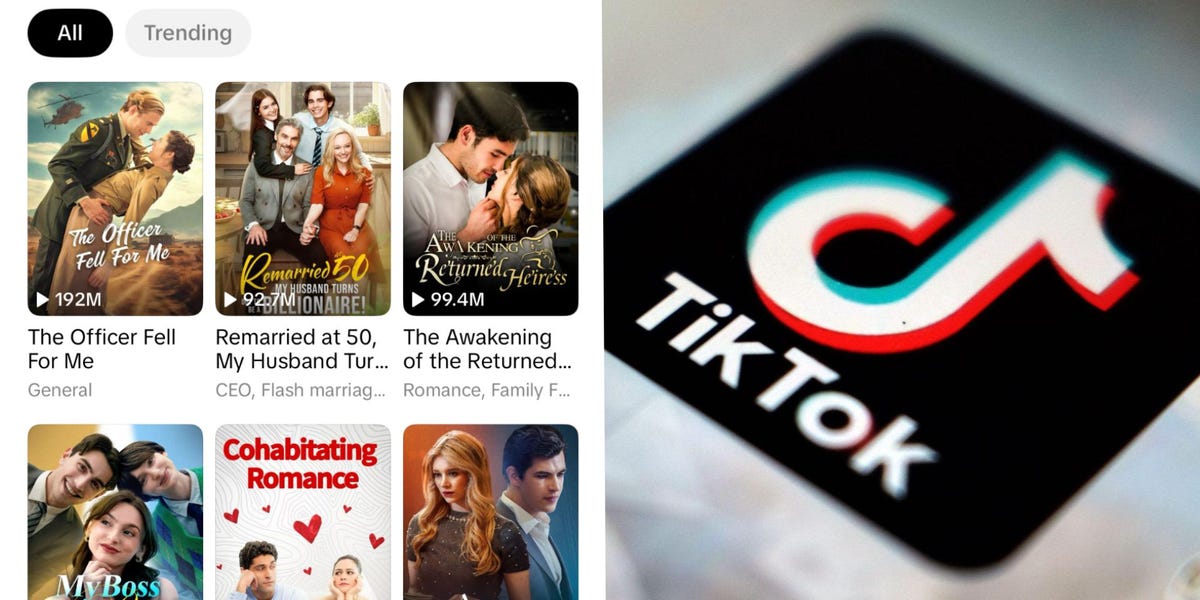
The money is now visible: microdrama revenues and financing come into focus
TechCrunch reporting this week cited Appfigures data estimating ReelShort’s 2025 IAP revenue at roughly $1.2B, with DramaBox around $276M, alongside continued capital activity including GammaTime’s disclosed funding.
These figures move the conversation from anecdotal success to verifiable scale, particularly in the U.S.-facing market.
Once revenue reaches this magnitude, microdrama stops being a “format trend” and becomes a competitive content economy, with rising expectations around production, reliability, and output volume.
 Amanda Silberling
India’s Tata Play Binge adds “Shots” microdrama segment
India’s Tata Play Binge introduced a new “Shots” segment focused on short, vertical, episodic storytelling, explicitly designed to reflect mobile viewing behavior. The feature sits alongside traditional streaming content, targeting users who increasingly consume narrative in short, high-frequency sessions.
This move places microdrama inside one of India’s major OTT aggregation platforms rather than isolating it in social apps.
Vertical drama is no longer a China- or U.S.-only phenomenon, it’s becoming a regional UX response to mobile storytelling behavior, even in markets with mature OTT ecosystems.
 ET Online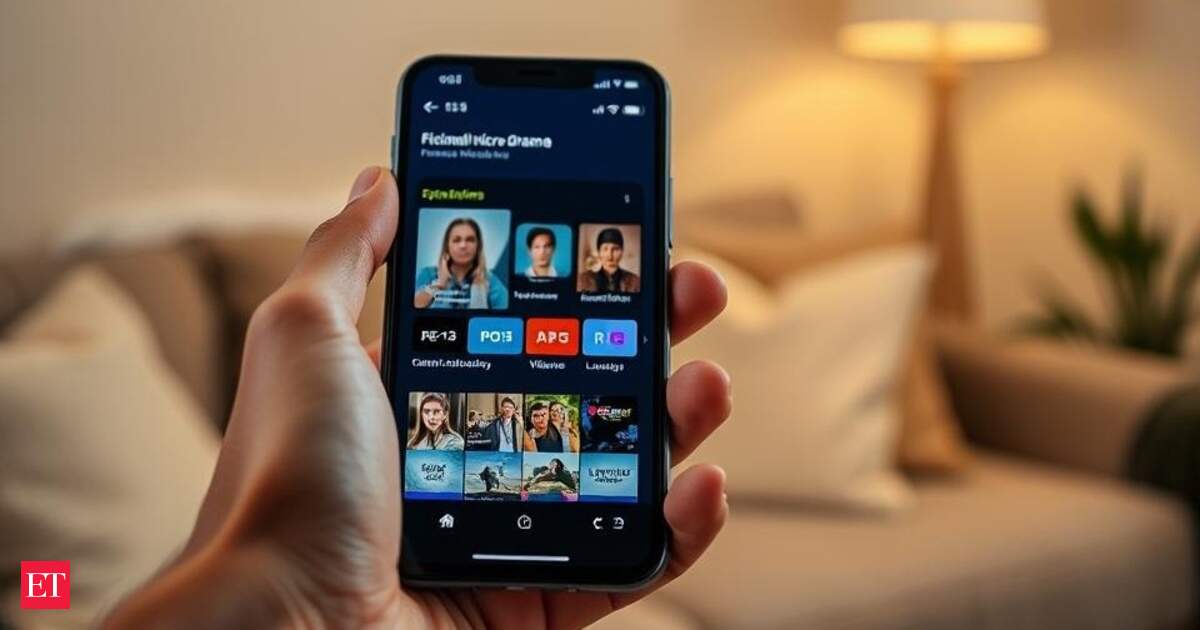
✱