Industry analysis of the global vertical drama and microdrama market.
⦿⦿
Vertical drama spent this week wearing someone else's name — WWE's, the BBC's, a Hollywood merger's.
Week of Jul 13-Jul 19, 2026
This week, vertical drama expanded through partnerships rather than new IP: WWE signed on with ReelShort for an original microdrama, RoseBerry Media launched its library-driven platform Epis, and Amavizion released its first vertical commission. Meanwhile, Paramount Skydance's proposed acquisition of Warner Bros. Discovery faced a state-led legal challenge, and India's microdrama sector continued drawing investment alongside mounting scepticism about its underlying economics.
ReelShort × WWE: wrestling signs on for original vertical drama
ReelShort and WWE announced a partnership on July 14 to produce an original live-action microdrama pairing WWE Superstars with established vertical talent. The first series will star Drew McIntyre, Jacob Fatu, and Joe Hendry alongside ReelShort regulars Marc Herrmann and Chase Mattson. Production begins in August, with a premiere targeted for autumn.
It is the first tie-up between a major sports entertainment brand and a microdrama platform at this scale. WWE brings a built-in global fanbase already fluent in heightened characters and serialized conflict — the same mechanics vertical drama runs on — without ReelShort having to build that audience from scratch.
A fandom this large no longer needs vertical drama to build its audience. It needs vertical drama to hold it.
 Katie Kilkenny
RoseBerry Media: Epis launches as a home for reformatted TV, not just originals
RoseBerry Media launched Epis on July 14, a mobile-first vertical streaming service built on library deals rather than original IP alone. The platform opened with more than 100 titles across drama, reality, dating, true crime, and documentary, drawing on partnerships with A+E Global Media, All3Media International, Banijay Rights, Cineflix Rights, and Fremantle. Reformatted titles include BBC dating format Sexy Beasts and Channel 4 true-crime series The Fall: Skydive Murder, retitled You Can't Kill Me.
Where most vertical platforms have built catalogs from original romance and revenge IP, Epis is testing whether existing television libraries can survive the cut to 9:16. RoseBerry also plans 25-plus original vertical productions this year, positioning the library deals as a testing ground rather than a replacement for new production.
Vertical stopped being only a production format this week — for RoseBerry, it became a distribution window for TV libraries that already exist.
 Jesse Whittock
Amavizion: UK platform's first vertical original bets on adult comedy
UK pay-per-view streamer Amavizion released its first vertical original commission, Shambles, on July 15. The 18-plus comedy follows three housemates in Cape Town and runs 36 episodes of 45 seconds to two minutes each, for roughly 45 minutes total. It is directed by Emmy-nominated Bonnie Rodini through South Africa's Rodini Films, and the full season is priced at £1.49.
Amavizion built its catalog on curated world cinema and PPV pricing rather than the coin-unlock or subscription models most microdrama platforms use. Shambles tests whether that same per-title pricing logic — usually applied to films — can carry a serialized vertical commission.
A £1.49 flat price for a full season is a bet that vertical viewers will pay once for a story, not repeatedly to keep unlocking it.
 Nico Franks
Loomi Entertainment × DramaBox: AI microdrama gets global distribution
Loomi Entertainment Group, a subsidiary of Perth-based Globavend Holdings, signed a global distribution agreement with DramaBox for its AI-produced English-language microdrama The Wolf King's Forbidden Bride. DramaBox, which reports more than 90 million registered users across 200-plus countries and over 100 million Google Play downloads, will carry the title worldwide under the deal.
The agreement is notable less for its scale than for its source: an AI-native production entering one of the largest existing microdrama catalogs through a standard distribution deal, rather than a bespoke platform partnership. It suggests AI-produced content is starting to move through the same pipelines as conventional vertical drama.
DramaBox isn't building a separate lane for AI content — it's routing it through the same distribution pipe as everything else.
 Globavend Holdings Limited
iQIYI International: micro dramas now half of Japan and Korea's top 10
iQIYI released its first-half 2026 global content report on July 9, reporting a 130% year-on-year surge in viewership on its international platform. The company credited a "long + short" strategy pairing premium long-form Chinese dramas with micro dramas as dual growth engines, supported by subtitles in 13 languages and dubbing across key markets.
In Japan and South Korea specifically, micro dramas now account for half of the platform's top 10 trending titles — a share the company frames as evidence the format has moved from experiment to core content category in East Asia, not just a China-to-US export story.
Half a top-10 chart in two of Asia's most competitive TV markets is not a niche format finding an audience. It's a category holding one.
 iQIYI Inc.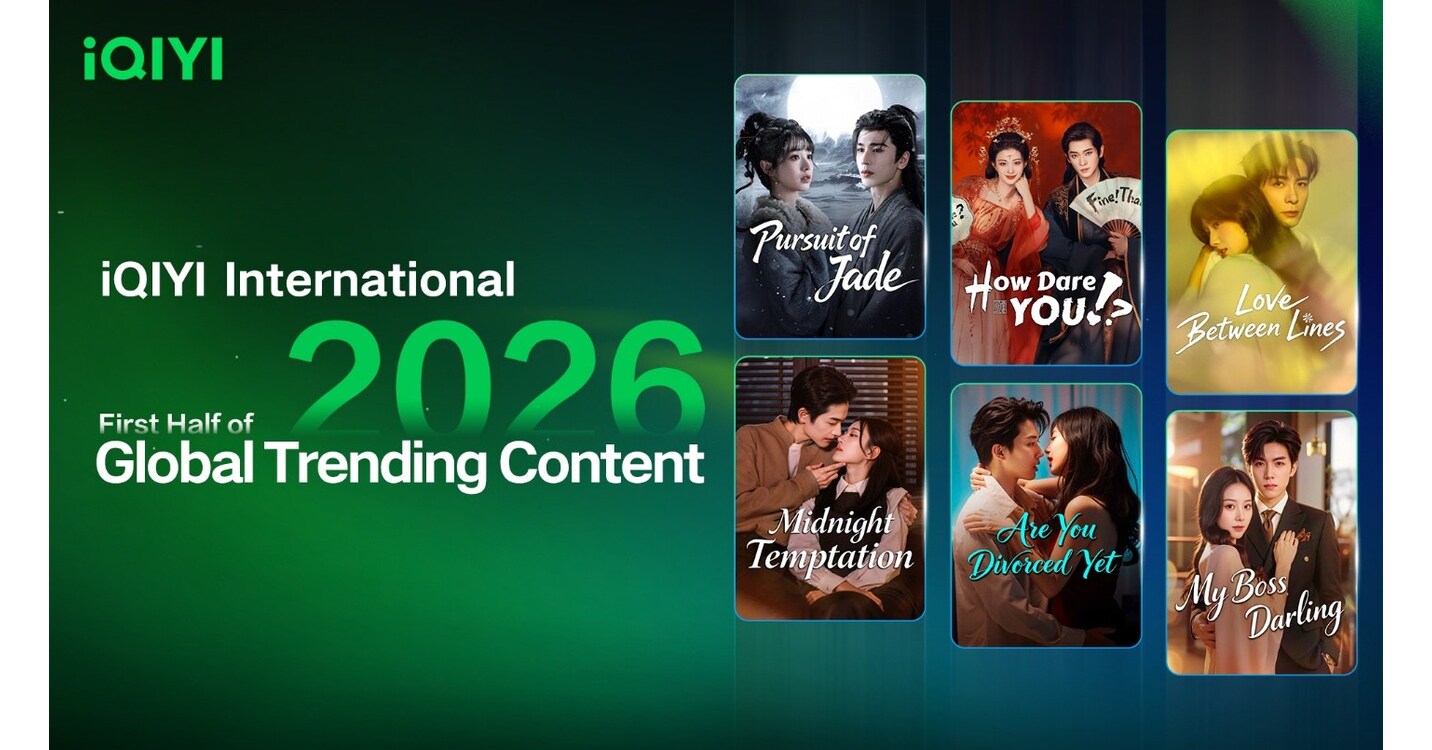
Paramount × Warner Bros. Discovery: states sue to block $110B merger
A California-led coalition of 12 state attorneys general filed suit on July 14 to block Paramount Skydance's proposed $110 billion acquisition of Warner Bros. Discovery, despite the Department of Justice having already cleared the deal. The states argue the merger would give the combined company control of more than 30% of big-budget theatrical wide releases and over a quarter of basic cable revenue. A federal judge is expected to rule on a temporary restraining order motion by July 22.
The lawsuit lands as traditional media consolidation and vertical platform expansion are running on parallel but separate tracks — the same week smaller vertical players were absorbing TV libraries and sports IP, the industry's largest legacy merger hit its first serious legal obstacle.
Scale is being contested at the top of the industry the same week it's being assembled piece by piece at the bottom.
 Ted Johnson
India: investment keeps flowing as some microdrama platforms fold
A C21Media feature published July 14 described India's microdrama sector as sending "mixed signals" — investment continuing to flow in and subscriptions rising, while some platforms fold and questions grow around revenue models and subscriber retention. The piece is behind C21's subscriber paywall; its full reporting on which platforms and what specific numbers are involved was not independently verifiable at time of writing.
The mixed picture tracks with sector-wide data: Lumikai's State of India Interactive Media report found micro-dramas crossed $300 million in revenue in their first year, with growth projected at 91% in 2026 and a $4.5 billion market by 2030 — even as venture funding for micro-drama OTT platforms actually rose, from $28 million across five deals in all of 2024 to $44 million across six rounds in just the first half of 2025, per Venture Intelligence data cited by Forbes India.
The money and the scepticism are both real, and neither one is winning yet.
 Ed Waller 14-07-2026© C21Media
✱