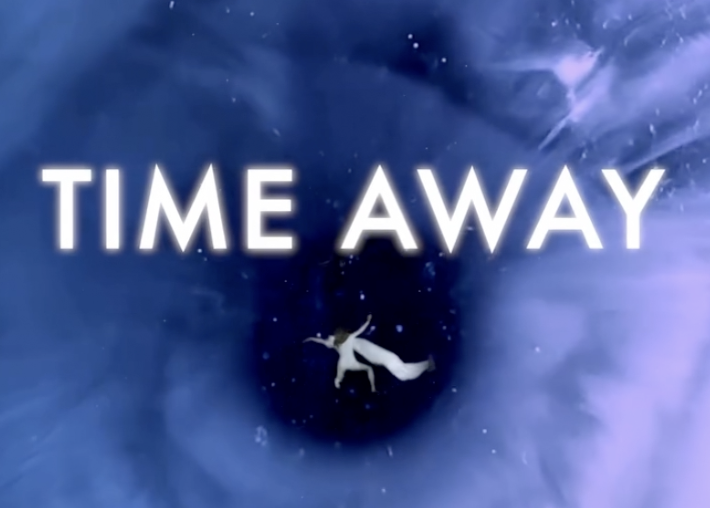
Science fiction is one of vertical drama's least explored genres — and one of its most demanding. Time Away, created by filmmaker Barton Bund, tests how far an independent microdrama can stretch when it prioritizes philosophical ambition over spectacle, using practical visual effects and world-building to tell a story about consciousness, memory, and time itself. In a vertical video landscape defined by romance formulas, it arrives as something genuinely different.
⚈ ⚈
A refreshingly ambitious science fiction series that values curiosity over easy answers.
-
Review by Liz
@portraitstorydiaries
A Journey Through Time, Memory & Imagination
Through the Looking Glass
Time Away isn't interested in taking the easiest route. Like the best science fiction, it doesn't simply imagine the future. It quietly changes the way we think about the present. One of the things I enjoy most about the vertical drama space is watching creators take risks. It's become such an exciting avenue for both emerging and established storytellers to experiment with bold ideas and push creative boundaries, and Time Away is one of those projects. At first, I expected another time-travel adventure filled with paradoxes and alternate timelines.
Instead, it quietly became a story about how every choice, every memory, and every passing moment shapes who we become.
What immediately sets Time Away apart is its confidence in letting curiosity lead the way. Rather than explaining every mystery the moment it appears, the series invites us to discover its world alongside Dr. Ronnie Young, a scientist determined to understand the enigmatic time traveler, Jep. As history begins to intertwine with consciousness, cosmic phenomena, and visitors from the future, the story becomes less about changing the past and more about questioning how we experience time itself. I found myself happily piecing everything together, never feeling spoon-fed, yet always eager to see where the next episode would take me.
Beyond the Event Horizon
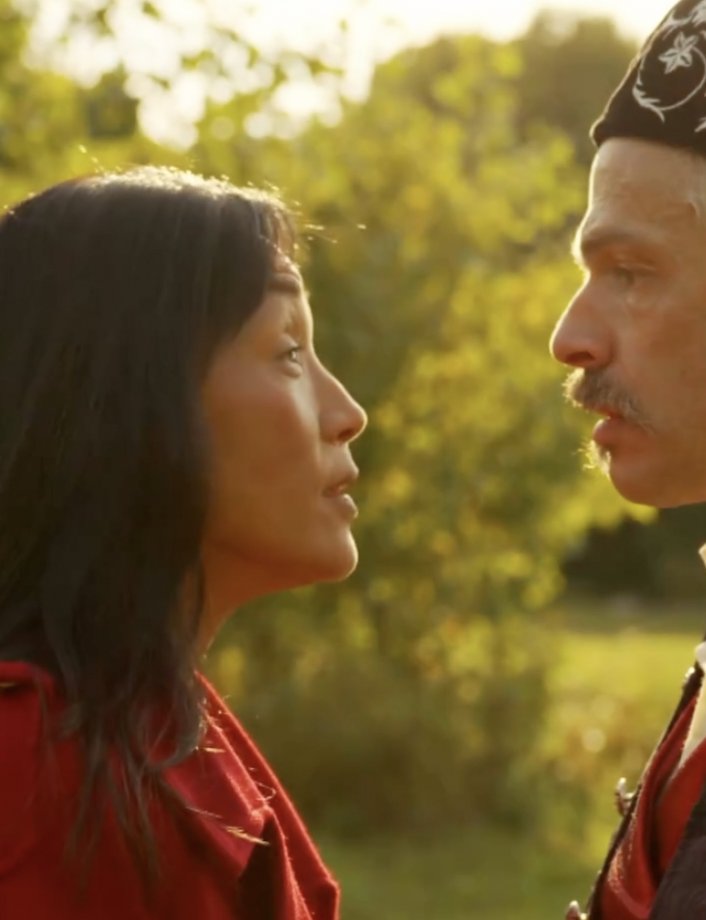
That same sense of curiosity extends beyond the story itself. The colorful cosmic imagery, practical effects, period costumes, and retro-inspired visuals reminded me that science fiction doesn't always need the biggest budget to spark the imagination. Instead of chasing spectacle, Time Away leans into creativity, and I found that surprisingly charming. I did wish the different timelines had slightly clearer visual markers because there were moments when I needed an extra second to figure out exactly where, or rather when, we were. Then again, perhaps that's part of the experience. Time isn't supposed to feel neat and orderly, and neither is this story.
▙ ▙
It begins with the mystery of time travel, but before long, I realized it wasn't asking me to solve a puzzle. Instead, it left me with a better question...
Liz
I'll admit I'm usually terrible at waiting for weekly episodes. My impatient heart always wants to keep going. This time, though, I didn't mind slowing down. Each episode revealed another piece of the puzzle without giving everything away, and by the time I caught up, I found myself just as curious about the person who dreamed up this universe as I was about where the story itself was headed.
Decoding the Universe : An Exclusive Conversation with Filmmaker Barton Bund
The more I thought about the series, the more I wanted to understand the person who imagined its world in the first place. I had the opportunity to speak with filmmaker, actor, writer, director, and creator Barton Bund. While many vertical drama fans may be discovering his work for the first time, Barton brings years of experience both in front of and behind the camera, with acting credits including The Dunes, Ovid and the Art of Love, and the short film Mine Then Yours. Here, he channels that experience into an ambitious blend of science fiction, philosophy, and practical filmmaking that feels refreshingly different within the vertical drama space.
In our conversation, Barton shares the inspiration behind the story, the ideas that shaped its fictional universe, the old-school techniques used to create its visual effects, and why he hopes audiences continue embracing curiosity as the journey unfolds.
Liz: Time Away feels like such a refreshing addition to the vertical drama space. Where did the very first spark for this story come from? Was there a specific moment or question that first inspired this universe?
Barton:
It's part of my larger fictional universe. I write in an imagined world because I have a hard time writing about this one as it is. During the pandemic, I imagined an alternate reality on the other side of a mirror. The giant crystal wall represents the divide between our world and mine, and that idea gave me a lot of creative freedom.
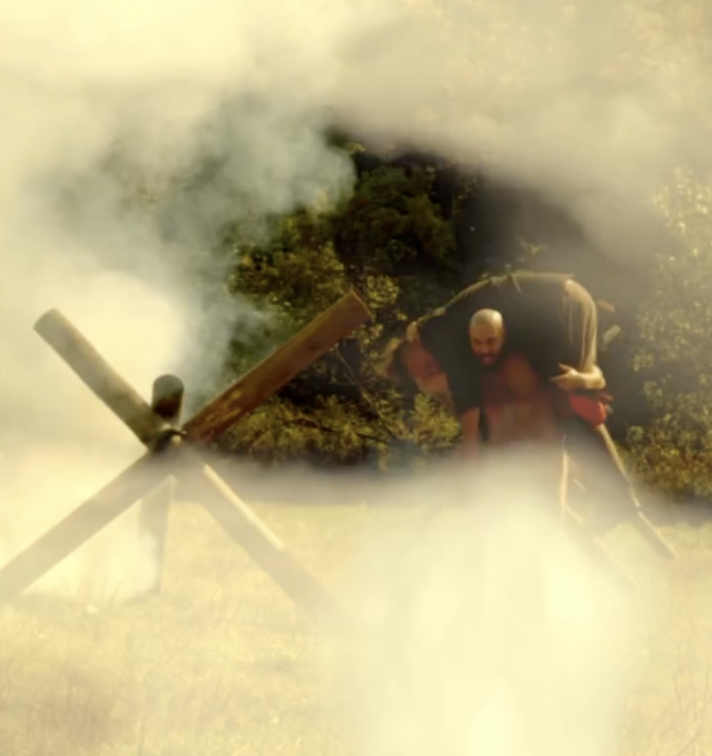
The story developed after I read several books on the philosophy of time. Everyone experiences time differently, at different rates and with different perspectives. I wondered what would happen if those different philosophies played out in a dramatic setting.
▙ ▙
Everyone experiences time differently, at different rates and with different perspectives...
Liz
Liz: One idea that stayed with me throughout the series is that time almost feels like it has a consciousness of its own rather than simply being something people travel through. Was that always part of your vision, or did that philosophy develop naturally as you were writing?
Barton:
You're the first person to ask about that! The Time Consciousness was almost left out entirely. Then Yorg Kerasiotis joined the cast, and I realized he was the perfect person to portray this unusual, godlike being. Every living creature has some awareness of time. Humans do, and so do animals. A rooster knows when morning arrives. That made me wonder: what if all of that awareness flowed through one cosmic mind?
Of course, Dr. Young doesn't believe in any of this. She's a scientist and philosopher who may even have the power to destroy the Time Consciousness. Their relationship is complicated because there's also a romantic connection between them. This immense cosmic being is trying to possess the life of one human woman, which raises bigger questions. What do we really believe about time? Is there intelligence at the center of reality? Dr. Young doesn't think so, but everyone is free to decide for themselves.
Liz: The sci-fi world is incredibly rich, with so many creative visual moments. Was there one scene that was especially challenging to bring to life but ended up becoming one of your favorites?
Barton:
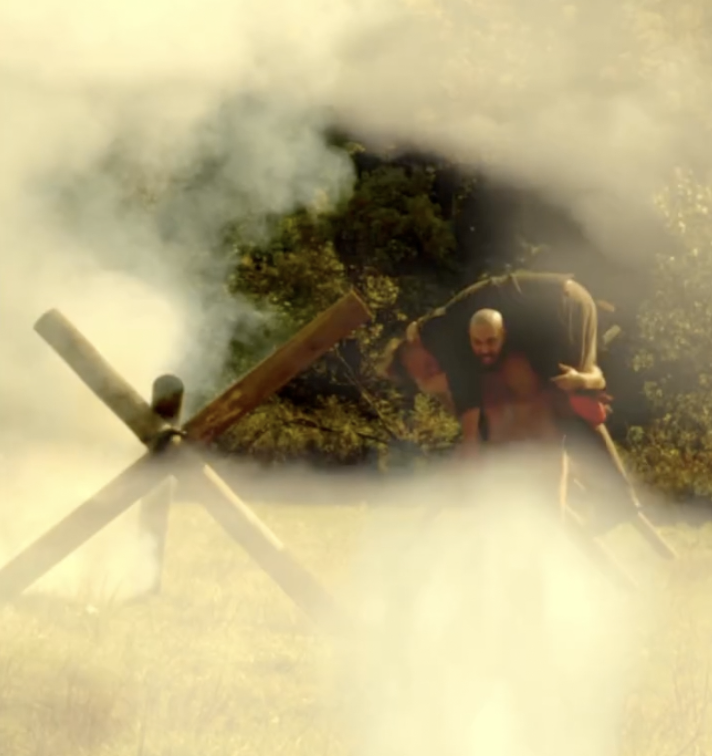
The entire production was technically challenging. Every episode contains at least a dozen visual effects shots, with hundreds of tiny effects used throughout the space sequences. We built practical models and used liquid chemical reactions to simulate space travel because I wanted something closer to 2001: A Space Odyssey.
The scenes with Yorg and Jennifer were filmed on a green screen using a giant trampoline to recreate weightlessness. The old-school visual effects were created using techniques pioneered by Stanley Kubrick and Douglas Trumbull. Our effects company, Cinemaquarium, combines those classic filmmaking methods with today's vertical format. That's fairly unique in the age of AI. This project pushed both my technical abilities and my imagination to their limits.
▙ ▙
Rather than simply telling a science fiction story, it invites us to see time as something deeply personal, shaped by our memories, choices, and relationships...
Liz
Liz: One thing I really enjoyed is that Time Away trusts its audience to connect the pieces instead of revealing everything at once. How did you find the balance between building the mystery while still giving viewers enough to keep them excited for what's coming next?
Barton:
I really didn’t want to confuse people, but I’m afraid I must’ve done just that. The real mystery is how this world works. The crystal wall and the tiny black hole suggest there's far more beyond our understanding. Much of the black hole imagery was actually created in my kitchen using visual effects techniques from the silent film era.
I wanted viewers to imagine that the events of 1881 are directly connected to those distant black holes. When two people fall in love, stars are exploding somewhere in the galaxy. At the center of it all is Dr. Ronnie Young, a scientist as significant as Isaac Newton or Copernicus. As she unravels one mystery, she discovers an even greater one beyond it. That's science, especially when you're exploring quantum physics.
Liz: Since the story is still unfolding, I'd love to end with this. As viewers continue following Ronnie, Jep, and the rest of the characters, what do you hope stays with them as each new chapter is released?
Barton:
There's so much more to come. Charlie becomes one of the most important characters as the season progresses. He's from the far distant future, perhaps hundreds of millions of years ahead, yet he eventually becomes a man of 1881, an era filled with extraordinary discoveries.
Dr. Young witnesses these events alongside her closest friends, and the time travelers develop a bond unlike anything else in the universe. Those friendships are incredibly powerful, and every character will be pushed to their limits. Dr. Young is still trying to make sense of everything. Jep began as her research subject, but the arrival of new travelers reveals that time is far more complex than she ever imagined. Their journeys are only just beginning.
The Time Between Moments
The funny thing is, after speaking with Barton Bund, I found myself thinking less about time travel and more about time itself. Learning how much thought went into the series' philosophy, practical visual effects, and world-building gave me an even greater appreciation for Time Away. Rather than simply telling a science fiction story, it invites us to see time as something deeply personal, shaped by our memories, choices, and relationships.
I also came away with a renewed appreciation for independent creators who are willing to take creative risks instead of following familiar formulas.
Projects like this remind me that imagination isn't measured by the size of a budget. It comes from storytellers passionate enough to build entire worlds and invite us into them.
If you're looking for a vertical drama that rewards patience, embraces mystery, and trusts its audience to connect the pieces, this is a journey well worth taking. You can follow the story as it continues to unfold on the official Instagram page where new chapters are released and the adventure is only just beginning.
Images used in this article are sourced from the public internet and are presented for editorial context only. All rights remain with their respective owners.
Credits
Written by Liz
Design & Motion by VØYD
More Reviews From Liz
- His Princess From Nowhere — a self-produced vertical drama that treats silence and restraint as the primary storytelling tools. A rare example of independent craft working fully on its own terms.
 Liz
Liz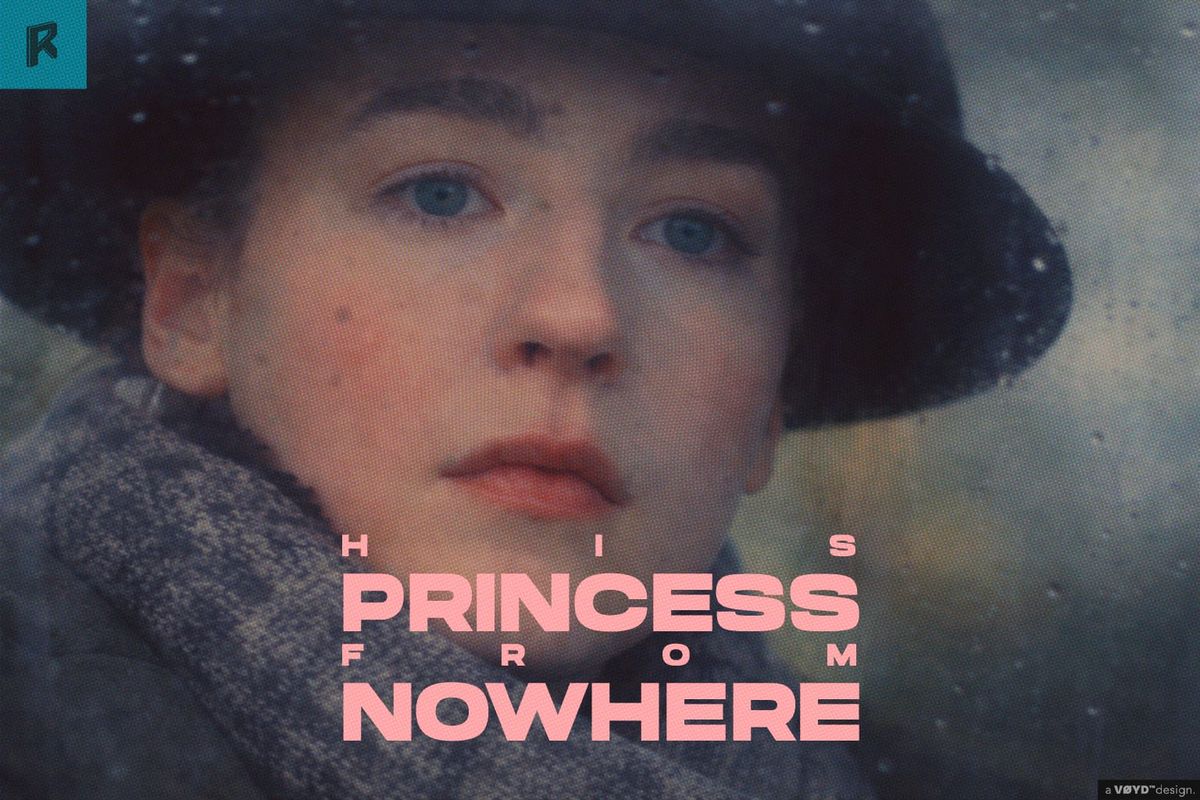
- Outplayed — a ReelShort vertical that uses gaming environments and dual identity to show what vertical drama can carry when craft leads over formula.
 Liz
Liz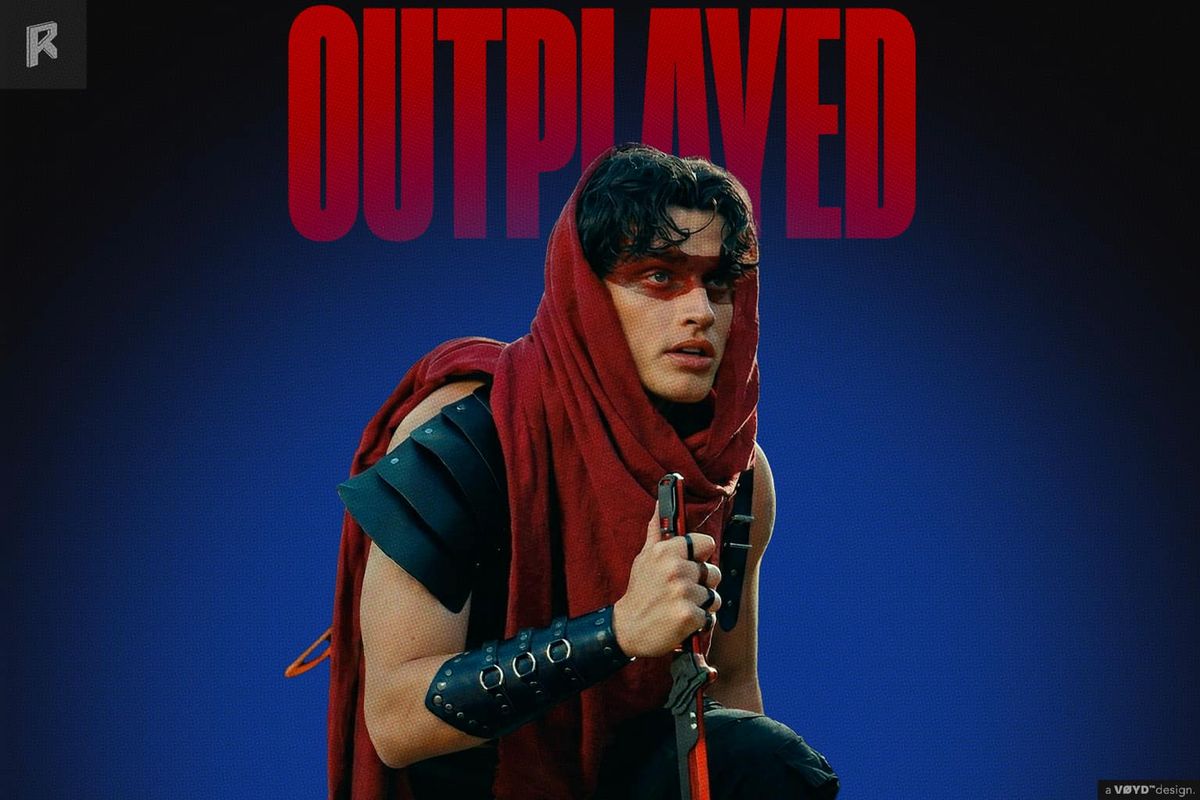
✱