VeYou launched in April as a premium vertical drama platform; RIVR Media is the production company behind its new soccer romance. Between the two sits a working relationship the industry rarely gets to see documented: script notes, casting decisions, and a text message sent to a Netflix set in Dublin. Real Reel asked both sides — and their director — to reconstruct it.
"If it were just a few degrees cooler, that bear mascot could have had a whole three-dimensional character arc."
Michael Reich, Director
Join Real ReelEvery vertical drama that reaches a phone screen is the product of a negotiation the audience never sees: a platform that knows what it needs, a production company that knows what it can make, and hundreds of decisions in between that live in texts, calls, and script notes before disappearing. The finished series keeps none of it. Rival Hearts, which premiered on VeYou on July 17, is a sports romance produced by RIVR Media in its first collaboration with the platform. This is what one of those collaborations looks like from the inside.
The First Conversation
The partnership began the way most of them still do in this industry: through a direct introduction. Christa Morris, Stryer's colleague at RIVR, connected the company with Tommy Harper, VeYou's CEO. At their first Zoom, RIVR brought up Rival Hearts. Harper connected with the team and the concept immediately.
"I loved the concept of the script and felt it was a very global idea," he says.
What's worth noting is the speed from there. Development in vertical drama runs on turnaround, and this one ran fast even by the format's standards: Harper would send notes on a script; RIVR would return a new version within two days. The same pace carried into editing.
The Sports-Film Note
Harper's creative direction was concrete, and concreteness is rarer in platform notes than it should be. He wanted Rival Hearts to feel bigger in look and tone, with the energy of a sports film. The cast should look like athletes. The music should have energy. The poster should feel fun and inviting. For one episode, his reference point was specific enough to name: the volleyball scene in Top Gun.
"No pressure for a production company there!" Stryer jokes.
He also told RIVR that he did not want the series to begin with a woman being slapped.
Director Michael Reich says there was never a literal slap in the script. But writers Marc Cotter and Joe Bilella were looking for a different kind of opening than the format's most familiar humiliation beat. The early conflict instead involves the female lead, sports reporter Maya Rivers — and instead of a hand across her face, the blow is public: a moment on the stadium jumbotron that embarrasses her in front of a full crowd. It's a structurally smarter version of the same beat — the humiliation still lands, but no one has to get hit for it.
"I'm not a fan of slapping women in verticals," Reich says, "and I'm glad to see that trope is finally dying out."
Harper, for his part, points to the finished series as proof the format doesn't need it:
"We are showing you can have elevated vertical content that doesn't abuse women."
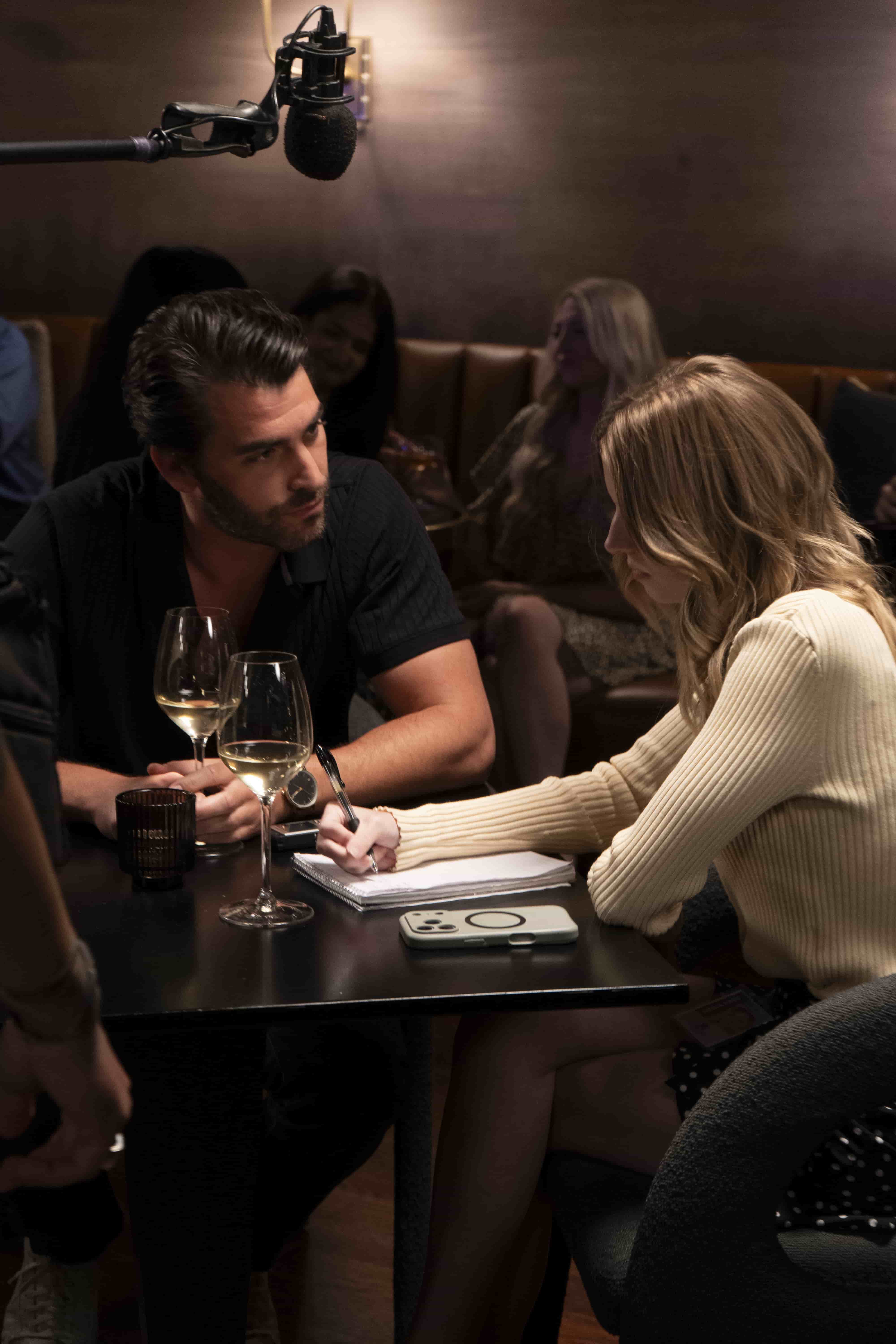
"We are showing you can have elevated vertical content that doesn't abuse women."
Tommy Harper, CEO, VeYou
For RIVR, the sports-film direction translated into the people brought onto the field.
Antonio Rosello, who originated the story and stars in the series, grew up playing soccer. So did his co-lead Sam Myerson, who later played professionally. Reich also shares their knowledge of the game. The team used real Knoxville soccer players for the on-screen teams and brought a soccer consultant to the shoot; the jerseys, cleats, and game action were treated as production details that needed attention. In a format where sports settings are usually wardrobe rather than choreography, that's a meaningful allocation of budget and time.
"The two leads were also extremely good at soccer," Reich says. "They weren't necessarily World Cup level, but they could pull off some wild dribbling and even a bicycle kick. So we just let them do their thing and shot it from as many cool angles as possible."
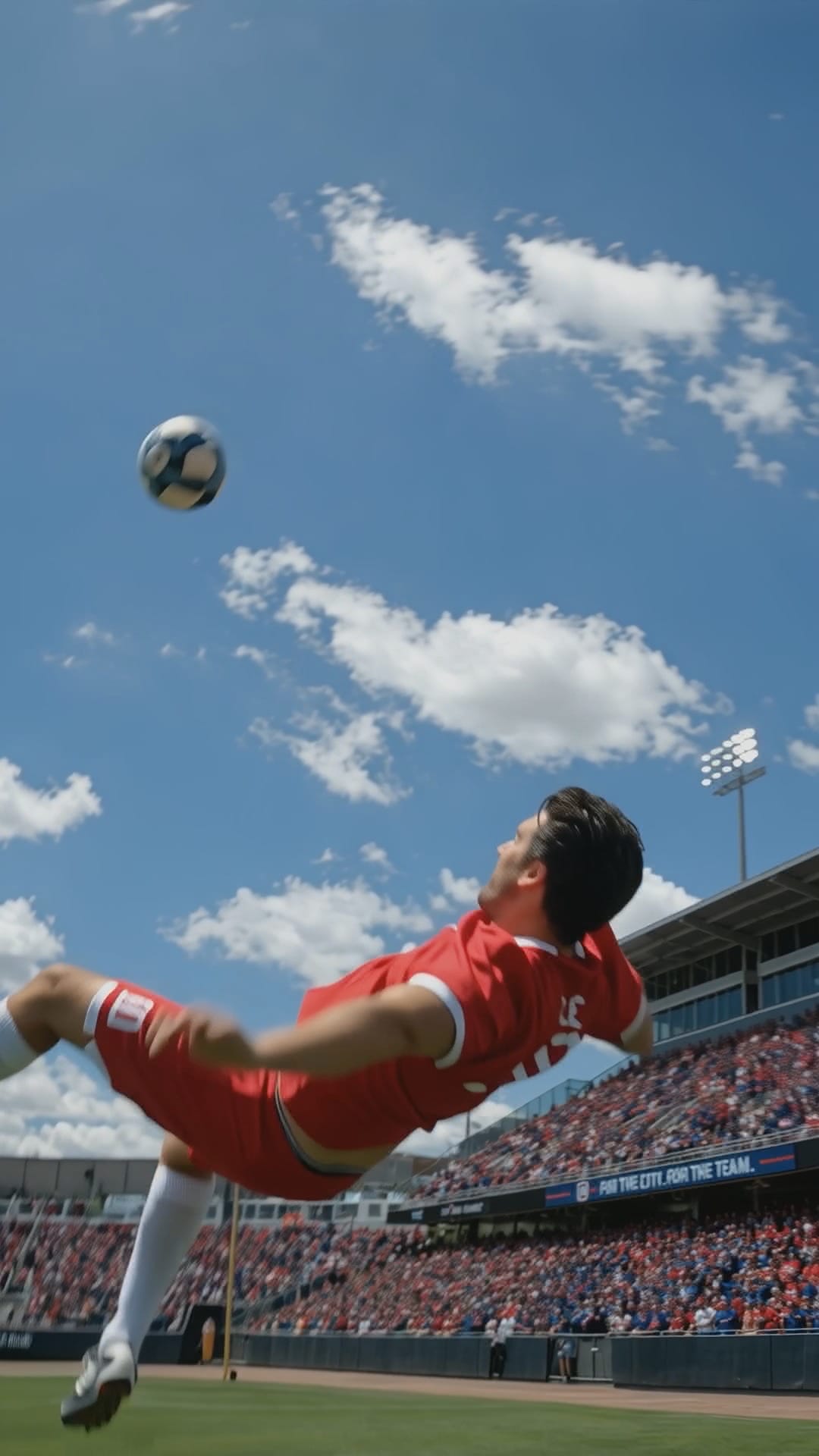
Myerson volunteered to attempt the bicycle kick himself — the photograph of that moment, above, is the one the RIVR team keeps coming back to as the defining image of the production.
Where all of that got stress-tested was the opening sequence, the hardest scene in the series to shoot. It introduces nearly every major character through a single soccer match: complicated plays, a large group of extras, each character needing a clean first impression — in more than 100-degree heat, on a baseball diamond adapted for the sequence.
"The opening soccer scene was by far the hardest scene to shoot," Reich says. "Almost every character in the movie played in that first scene. And since every character was being seen for the first time, you had to pay extra attention to their introduction."
A Broken Toe, and a Text to Dublin
The production's first surprise arrived before anyone reached set. Rebecca Berg, who plays a supporting role in the series, broke her toe while travelling to Knoxville. She arrived in an orthopedic boot —
"probably the farthest thing from sexy in the vertical world," Stryer says. "A clunky metal boot in a world filled with stiletto Louboutins."
Reich and Berg suggested working it into the character rather than hiding it. The boot could become a comic detail in a setting otherwise defined by soccer players, glamour, and stilettos.
But a change to what appears on screen was a decision for both companies, not one. Stryer contacted Harper — who was in Dublin at the time, on the set of Netflix's Wednesday. His reply came back by text, almost immediately: "Love it. Let's lean into it."
The production incorporated the boot. The exchange took less time than most productions spend scheduling the meeting to discuss it.
The heat imposed its own limits once shooting began. Reich says he would have used the blue bear mascot in more scenes if the temperature had allowed it — instead, he had to think about the person inside the costume.
"If it were just a few degrees cooler," he says, "that bear mascot could have had a whole three-dimensional character arc."
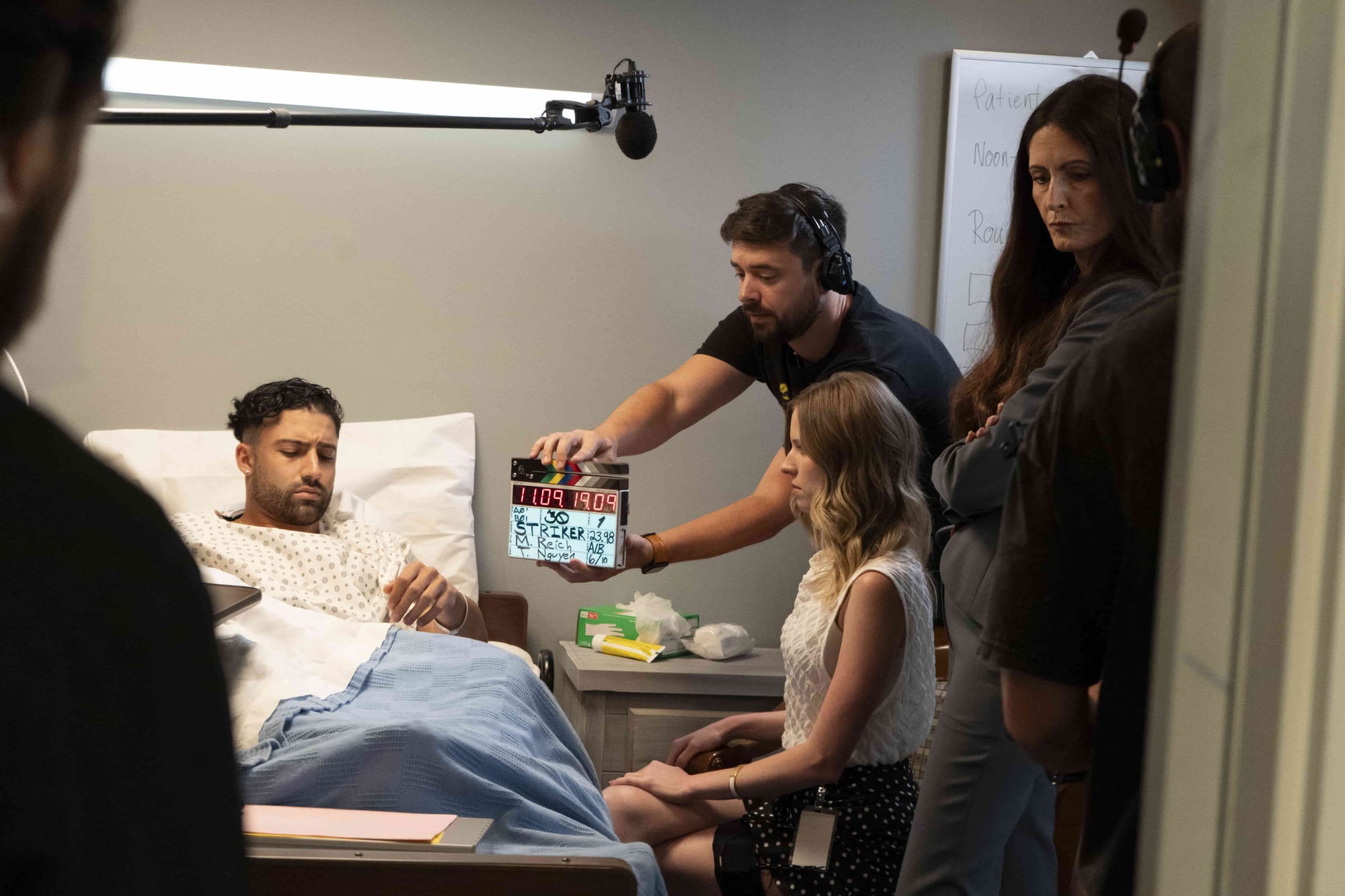
"When you partner with someone like Tommy Harper, who's a bit of a legend in the film industry, you can't help but be a little intimidated to show him a cut."
Lori Stryer, CEO, RIVR Media
"This Is Great"
The moment Stryer describes as the most nerve-racking of the production wasn't on set. It came at the end of that fast-moving edit process, when RIVR submitted the first nine episodes to VeYou for review.
"When you partner with someone like Tommy Harper, who's a bit of a legend in the film industry, you can't help but be a little intimidated to show him a cut," she says. "Even though I think RIVR has the most amazing post team, there's still that sliver of doubt."
She positioned herself in the corner of an edit bay and waited. Within ten minutes, a ding. She knew who it was before she opened it. The email was three words: "This is great."
"Let's never tell Tommy this," Stryer says, "but I may have shed a tiny tear of joy."
Around the Pitcher's Mound
The opening scene stayed the hardest day of the shoot. But what the finished sequence doesn't show is how each of its problems was absorbed.
The pitcher's mound stayed out of frame. The blue bear appeared less than planned. A bicycle kick was attempted for real. And an orthopedic boot became part of a character rather than a continuity problem.
By both companies' account, nothing about this collaboration was difficult — every note landed, every approval came fast. That is their version, and the finished series can't confirm it either way. What it can show is the part that survives on screen: a soccer world built by people who play, and a production that turned its accidents into material.
Rival Hearts is streaming now on VeYou.
If This Found You More From the Field From the Same World
R:ID — Tommy Harper: Hollywood's Vertical Drama Reckoning
Harper on why vertical drama needs its own studio logic; the macro argument behind the platform whose production process this piece documents.
 Real Reel
BKSTG — Producing a Vertical Drama on Your Own Terms
Lee C. Zhang on making His Princess from Nowhere with no platform brief — the exact opposite working model to the one in this piece.
 Real Reel