Interview · R:ID ╳ Dir. Sining XIANG ❘ After 500 Million Views

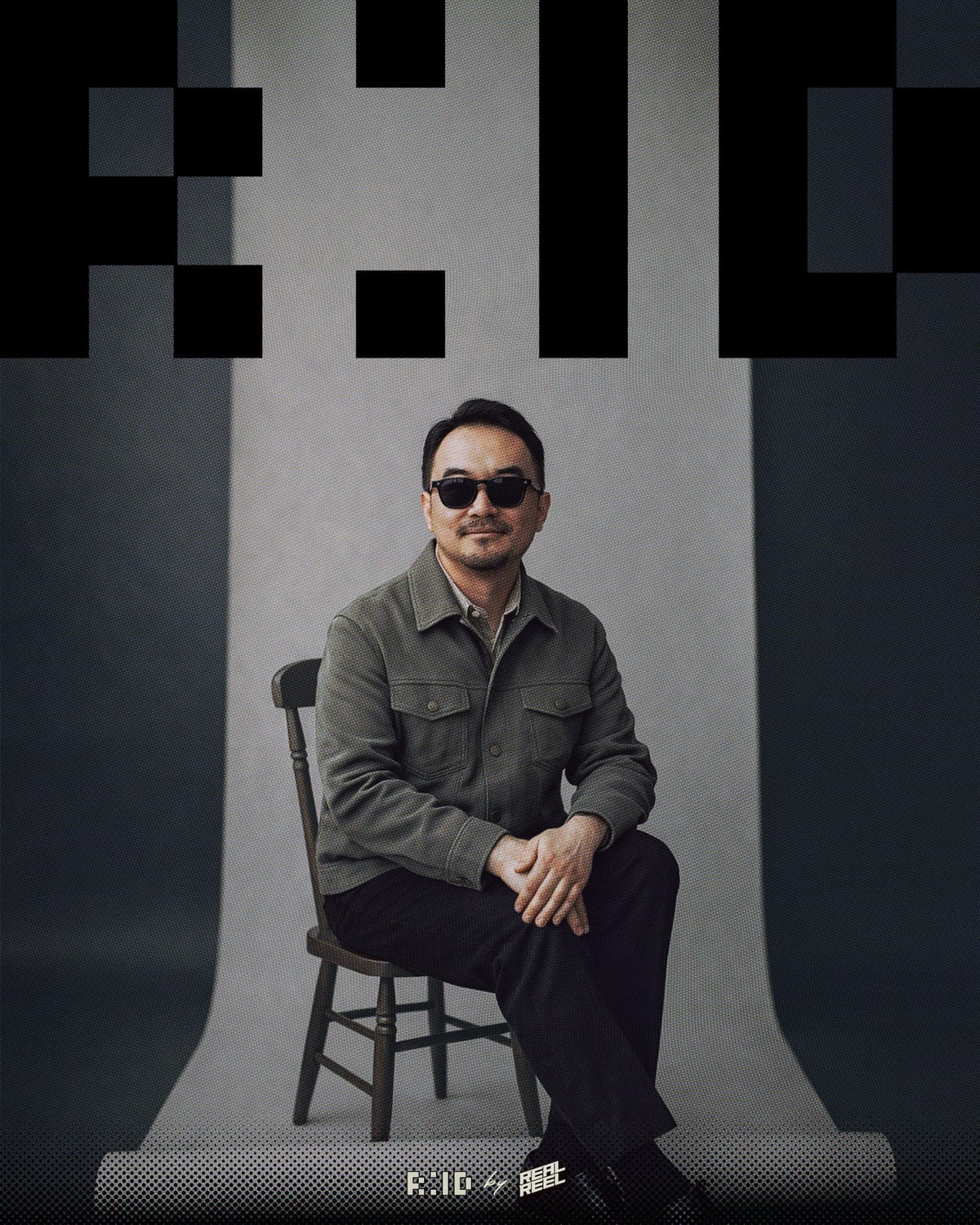
This is an original R:ID editorial interview. Reproduction or redistribution without prior written permission is prohibited, except for brief quotations with attribution.

THE FIRST
AUTEUR OF
THE ALGORITHM AGE?
500 Million Views, Zero Illusions
-
A Director Redraws His Boundaries.

⁙
Opening
▙ ▙
When the frame shrinks and the algorithm accelerates faster than intention,
what remains of the person behind the camera?
There is a new kind of director emerging, not the auteur with a 120-minute canvas, not the showrunner in charge of a writers’ room, but a creator shaped by compression, speed, and industrialized mobile storytelling.
Here, stories are not “released”, they are scrolled.
Frames are not sacred, they are negotiable.
Authorship is no longer ownership, it is a temporary privilege.
The Double Life of My Billionaire Husband has crossed more than 500 million views, but behind those numbers stands a filmmaker confronting a new identity:
traditional in training, algorithmic in practice, fluent in cinematic grammar,
but working inside a machine that moves faster than intention.
R:ID begins here, with a director who realized, perhaps earlier than most, that a work’s second life now forms faster, louder, and further beyond the creator’s control than its first.
⁙
Q&A
R:ID:
When half a billion people scroll through your frames, when did you realize the work was no longer “yours”?
Sining:
It’s definitely crazy that the show became the phenomenon it has become. But at the time of making it, none of us key creatives really saw it as “our work,” since we didn’t write the script and the content doesn’t necessarily reflect us as artists. So I didn’t follow it closely as its popularity grew.
But it is a nice feeling to feel connected to the audience—that something we created together was able to reach so many people, which is a testament to everyone’s effort to make it as good as we could.
R:ID:
Did stepping into vertical dramas trigger any identity discomfort? Were you willing to share the finished work with people close to you?
Sining:
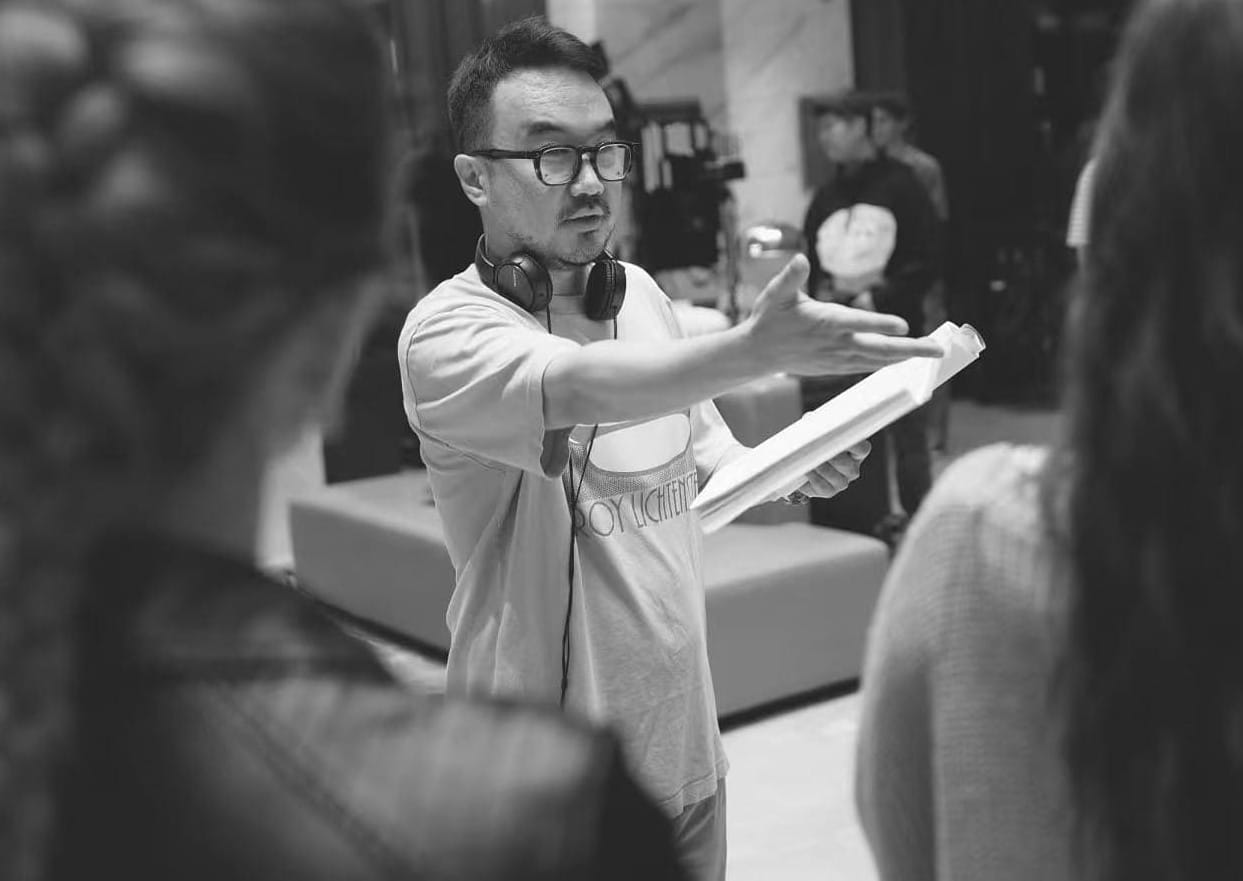
I approached making the show the same way I approach any of my own work. I still did a script analysis, director’s lookbook, shot list, etc. I didn’t feel discomfort because I saw it as a great opportunity to practice—working on set, with actors and crew members. The experience of making the show was actually really great.
When it came out, none of us on the crew wanted or cared to take credit at first. But as the show became a viral hit, I thought: why not? How often do I get to create something that becomes part of the cultural zeitgeist? My parents actually saw the show when it was translated and uploaded to Chinese websites. They loved it haha.
R:ID:
After the explosion of popularity, what truly changed in you, not visibility, but the subtle shifts?
Sining:
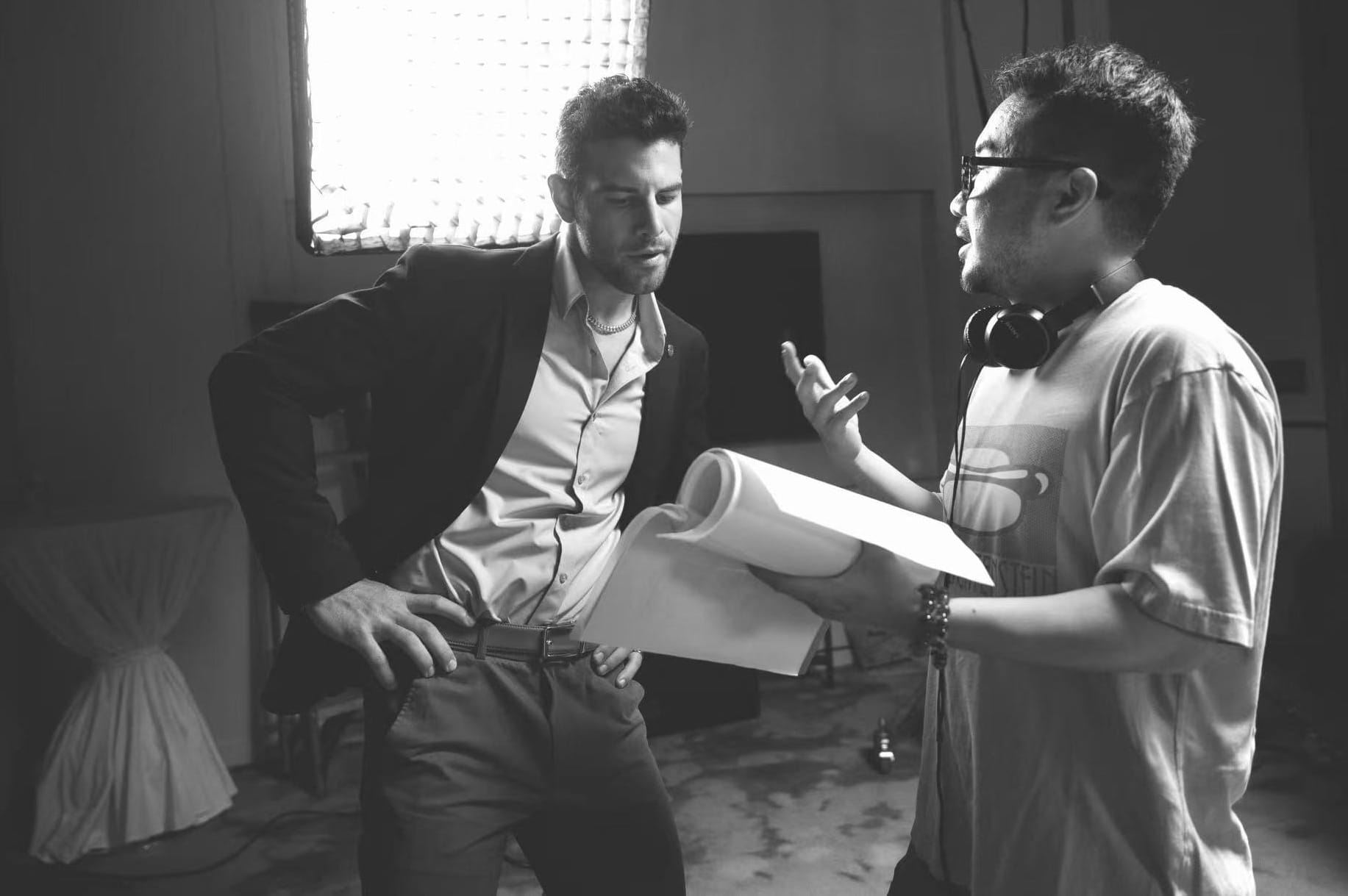
For one thing, I got a taste of working in a “studio system”, albeit on a smaller scale. You have to learn to deal with different personalities of the “execs,” navigate company politics, and so on. But I also think it was a great lesson in learning about the audience—what they like and don’t like. It may not be what you expect. Staying humble is the best advice for people working in the vertical space.
R:ID:
Why did the show become a breakout hit?
Sining:
I feel the show became such a viral hit for multiple reasons. First of all, the novelty of vertical certainly got people’s attention. And the show was well structured for a vertical which is very much cliffhanger after cliffhanger—a non-stop dopamine rush. Also, I think the cast did a fantastic job; the two leads—with their good looks and chemistry—certainly sold the show. And, if I may say so myself, it was well made. Our team did a great job with the time and resources we had.
R:ID:
If Season 2 allowed only one change, which dimension would you choose?
Sining:
Actually, nowadays I tend to trust the platform more on the structure, since I know they have a team of writers studying vertical shows to know what works best and what doesn't. And I wouldn’t change much about the characters, because people love these two leads and their relationship—that’s the reason they want a season 2, right?
I love finessing dialogue and coming up with clever one-liners, so dialogue would be the main area I’d want to work on.
R:ID:
What is the single most crucial ability for a vertical director?
Sining:
Most importantly, a vertical director needs to work well under pressure. There are no pick-up shoots. You have to finish the show within the schedule. So always have a plan and think fast on your feet, for 12 hours straight. That is the hardest part.
R:ID:
Have you ever wondered, “Is this still creation?” What was your answer?
Sining:
I would say it is still creative work. You are still working with actors; you need to get good performances out of them so the audience can be invested. You still need to make choices on camera placement, shot size, blocking—all of which require creative decisions. We always have moments when someone has a great idea that just brings a scene alive. It can be very fun.
▜ ▜
I believe movies will always be here, and there will always be people who prefer watching them.
Sining Xiang
R:ID:
Is cinema quietly being redefined as more people consume stories on their phones?
Sining:
Things are changing for sure, and there’s nothing we can do to stop it. I’m also a firm supporter of change—not necessarily because the changes are good, but because I don’t think people need to be told what they should or shouldn’t do. If some people want to watch films on their phones, or even prefer YouTube over movies, let them be. Do you like being told you can’t do certain things because some pundit deems it stupid?
Before movies were invented, reading and plays used to be major sources of entertainment. Books and plays still exist, but the audience changed. The only thing we can do is deal with the changes, not try to stop them.
I believe movies will always be here, and there will always be people who prefer watching them.
R:ID:
Was there a moment when you realized you had to redefine the boundaries of “director”?
Sining:
I feel I’ve always kept my work in the traditional TV and film space and my work in vertical clearly separated. When I’m not on set directing verticals, I’m usually working on my own film scripts. In the vertical space, I’m still applying my skills as a director to deliver a “product” the client wants. I assume it’s similar even when working on big-budget studio films, such as one of the Marvel superhero movies haha.
R:ID:
How do you design the opening hook of a vertical drama?
Sining:
I think the first time the audience sees the main character is quite important. I usually pay attention to the tone of the story and what’s in the script. I pull references from TV shows and movies that are relevant.
For example, for a show I recently directed for GoodShort, I Am the Mafia Girl Boss and He’s My Man (it’s long, I know haha), the script says the main character Elle Capone is pouring a shot of whiskey for her dead father and placing the glass in front of his photo. You can shoot it exactly as written. But the tone of this show is very comedic, so what I came up with was finding a stock photo of a mafia-looking man smoking a cigar, and then cutting to Elle smoking a cigar in the exact same gesture—to indicate she’s truly his daughter and to add some humor.
R:ID:
When platform logic contradicts your aesthetic instincts, what do you choose?
Sining:
Usually in verticals, directors do not get the right to final cut. I learned that even if you film a scene a certain way, they can change it or even delete the whole scene in the end. So if there are conflicting ideas, we just film both ways and they can decide which one works better in editing.
But sometimes it’s a more serious issue of ethics or morals—for example, there are lots of shows with violence and abuse toward women, which is apparently popular. I usually pass on scripts like that.
R:ID:
Can vertical short dramas produce true auteurs?
Sining:
It really depends. As of now, verticals aim to maximize commerciality. The only criteria to judge whether a show is a success is how much money it makes, which means the content is catered toward the common denominator—so it cannot be too high-brow. Of course, the techniques used in making the shows can be artistic, but the stories are still these melodramatic, generic plots. Is there a future where vertical can be artistic? Of course. But the platforms need to figure out their business models for that first.
R:ID:
With unlimited budget and freedom, what would you create? Would it be vertical?
Sining:
It would not be vertical.
I am developing a horror feature titled The Ghost Wedding. I just got into a program backed by The Black List with partners such as Lucasfilm and Decentralized Pictures. Hopefully I can make it happen soon.
R:ID:
If a young filmmaker asked “Should I start with vertical?”, would you give the idealistic or realistic answer?
Sining:
I would say: get whatever directing work you can haha.
⁙
R:ID Epilogue
Vertical dramas are not the future of cinema.
They are the future of labor in cinema,
the training ground, the pressure chamber, the identity forge.
Sining Xiang is merely the first recorded witness.
Many more will follow, asking the same question:
When creation accelerates beyond the creator,
what parts of the creator remain?
About Sining Xiang
Los Angeles–based director trained in traditional film and television, working across indie narrative, commercial production, and the rapidly expanding vertical drama ecosystem. His viral hit The Double Life of My Billionaire Husband has amassed nearly 500 million views, making him one of the earliest case studies in algorithm-age authorship.
He is currently developing his horror feature The Ghost Wedding, backed by a Black List program supported by Lucasfilm and Decentralized Pictures.
✱
R:ID #03
╳ Sining Xiang
R:ID™ is Real Reel’s interview column
on creative identity in the algorithm age,
studying not the work,
but the makers and the identities
shaped through their practice. ☻
MORE R:ID ⇲
 Real Reel
 Real Reel