
Vertical Drama Industry: Business Models, Platforms, Production Pipeline & Global Market Map (2026)


Updated: Feb 2026
An industry-level reference to how the vertical drama industry — and its underlying economy — actually operates.
✱
Vertical drama is no longer best understood as a content format or a short-form storytelling trend. At scale, it functions as a distinct entertainment economy: mobile-native, monetization-driven, and structurally incompatible with legacy film and television systems.
Join Real Reel

This guide is written for professionals.
Its purpose is not to describe what vertical drama looks like, but to explain how value is created, distributed, and sustained across the vertical drama industry — economically, operationally, and globally.
What This Guide Covers
This guide is organized around the core systems that define the vertical drama industry:
- Industry Definition
What vertical drama is—and why it functions as a distinct mobile-first entertainment industry rather than a short-form content trend. - Business Models
How vertical drama monetizes through IAP, IAA, and hybrid systems, and why monetization logic directly shapes narrative structure. - The Vertical Drama Economy
How value is created, distributed, and concentrated across platforms, production partners, and portfolios—and how this economic model differs from traditional film and TV. - Platform Landscape
How vertical drama platforms operate, why they are structurally different from streamers, and the role of social platforms in distribution and discovery. - Production Pipeline
How vertical dramas are developed, written, produced, and localized—and why speed and volume are economic requirements, not stylistic choices. - Global Market Dynamics
How the same industry logic adapts across China, North America, Southeast Asia, and other regions. - Talent and Ecosystem
The emerging production economy around actors, writers, and producers working within vertical drama systems. - Industry Impact and Outlook
Why vertical drama matters now, and what it signals about the future of serialized storytelling and entertainment economics. - Frequently Asked Economic Questions
Clear answers to common questions about profitability, costs, and how the vertical drama economy compares to traditional screen industries.
Origins: From China to a Global Vertical Drama Industry
Vertical drama originated in China, initially as short-form horizontal serialized dramas (duanju) developed alongside online fiction and mobile video platforms. As mobile viewing overtook desktop consumption, Chinese producers began redesigning these short dramas for vertical (9:16) screens, driven by user behavior and monetization efficiency rather than aesthetics.
More details:
 Real Reel
By the early 2020s, vertical short drama had become fully industrialized within the Chinese market. Its transition into a global industry began when this production and monetization system was packaged into dedicated apps for overseas audiences—most notably with the launch of ReelShort, which established the template for exporting China’s vertical drama model internationally.
More details:
 Real Reel
What the Vertical Drama Industry Actually Is
At an industry level, vertical drama is a mobile-first serialized entertainment system defined by three non-negotiable constraints:
- Phone-native attention economics
- Episodic compulsion rather than long-form immersion
- Monetization mechanisms embedded directly into narrative structure
This is why vertical drama cannot be treated as “short TV” or “TikTok fiction.”
Its defining feature is structural coupling: storytelling, release cadence, and revenue mechanics are designed together rather than sequentially.
More details:
 Real Reel
In practice, this means:
- Episodes are written to resolve micro-tension, not thematic arcs
- Cliff placement is a revenue decision as much as a creative one
- Performance is measured episode-by-episode, not season-by-season
Vertical drama behaves less like traditional screen media and more like live-service entertainment, where content performance continuously feeds back into production and monetization decisions.
More details:
 Real Reel
How the Vertical Drama Business Model Works
The vertical drama business model is frequently described using surface labels — IAP, IAA, hybrid monetization — but those labels obscure the core structural shift.
What distinguishes vertical drama is not the presence of micro-transactions, but the fact that revenue pacing dictates narrative pacing, reversing the logic of traditional screen economics.
- In-App Purchases (IAP)
Unlock-based monetization works because stories are architected to delay resolution while escalating emotional stakes. Payment friction is offset by narrative urgency rather than perceived content value. - In-App Advertising (IAA)
Ad-supported models rely on high episode completion rates. This places pressure on narrative density: if emotional payoff per episode drops, ad economics deteriorate rapidly. - Hybrid Models
Hybrid systems dominate because they allow platforms to segment users by willingness to pay while maintaining acquisition scale. Creatively, this forces stories to function under both free and paid consumption paths.
The critical takeaway is structural:
In vertical drama, monetization is not downstream of storytelling.
It is upstream of it.
The Vertical Drama Economy: How Value Is Created and Captured
Beyond individual business models, vertical drama operates as a distinct economic system with its own value chain, risk allocation, and capital logic.
- Value Creation
Value is generated through episodic engagement density, not long-term brand attachment. Each episode functions as a micro-conversion opportunity rather than a loss leader for future seasons. - Cost Structure
Costs are front-loaded into development speed, writing efficiency, and production discipline. Visual ambition matters less than narrative throughput and reliability. - Revenue Concentration
Revenue tends to concentrate heavily at the top, with a small percentage of titles generating the majority of returns. As a result, platforms operate on portfolio logic, not hit-driven bets. - Risk Distribution
Platforms typically absorb market risk through commissioning and distribution control, while production partners optimize for velocity and repeatability rather than single-title upside.
Structurally, this produces a system where:
Vertical drama economies reward scale, iteration, and system efficiency —
not singular creative success.
This is why vertical drama economics resemble mobile gaming portfolios more than film financing models.
More details:
 Real Reel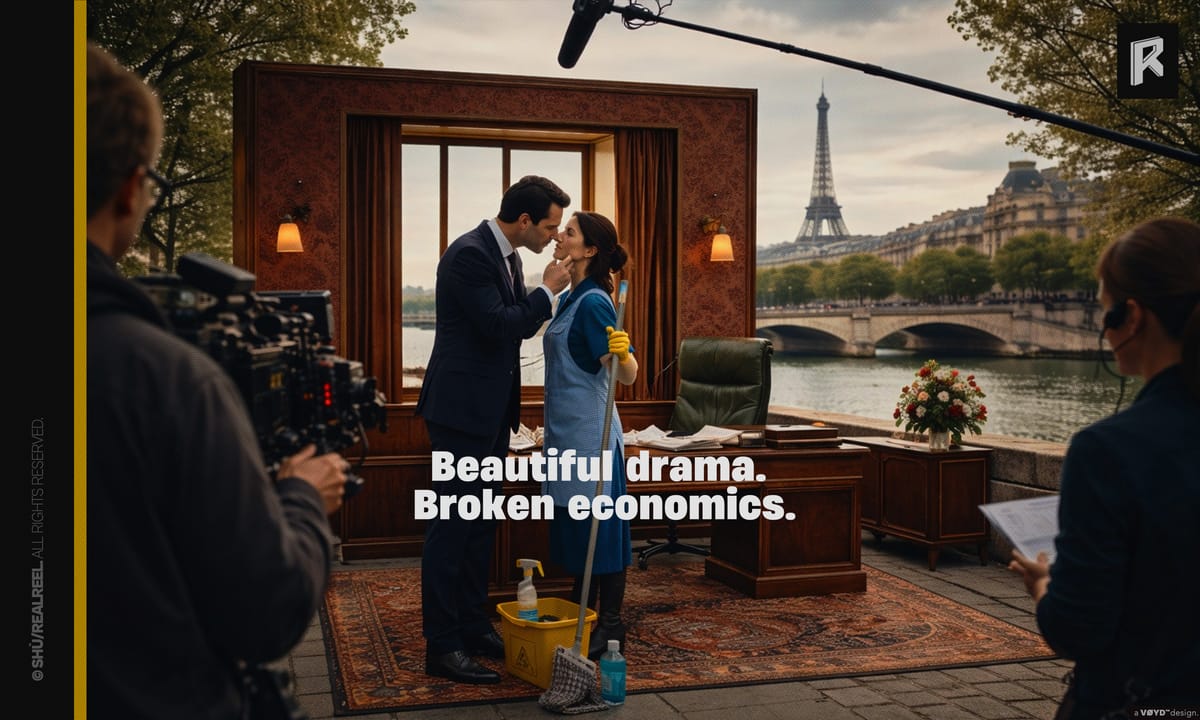
Platform Landscape: Why Vertical Drama Platforms Are Not Streamers
Vertical drama platforms are often described as “the Netflix of vertical content.” This analogy is operationally misleading.
Unlike traditional streamers, vertical drama platforms:
- Optimize for daily repeat engagement, not session duration
- Prioritize content velocity over catalog depth
- Treat content as performance units, not long-term library assets
Dedicated vertical drama platforms tightly integrate commissioning, distribution, monetization, and performance analytics, creating short feedback loops between audience behavior and production decisions.
Social platforms such as YouTube and TikTok function primarily as distribution and discovery layers. They are effective for testing IP and acquiring audiences, but rarely sustain vertical drama economics independently.
The structural difference is clear:
Streamers optimize for content longevity.
Vertical drama platforms optimize for capital turnover.
More details:
 Real Reel
 Real Reel
Production Pipeline: Why Speed Is an Economic Requirement
Vertical drama production is frequently mischaracterized as “fast because it is cheap.”
In reality, speed is an economic necessity, not a creative shortcut.
- Development
Projects are greenlit based on genre performance, hook clarity, and monetization fit. Market logic precedes creative refinement. - Writing
Scripts are engineered for escalation density. Shorter episodes allow platforms to optimize conversion metrics and control churn with precision. - Production
Compressed shoot schedules respond to platform demand for continuous content supply. Teams unable to sustain velocity become economically non-viable. - Post-Production and Localization
Localization is designed into the pipeline. Stories must survive cultural translation to justify global deployment and amortize costs.
This leads to a core industry reality:
Vertical drama production is not low-effort.
It is high-discipline production under tight economic constraints.
More details:
 Real Reel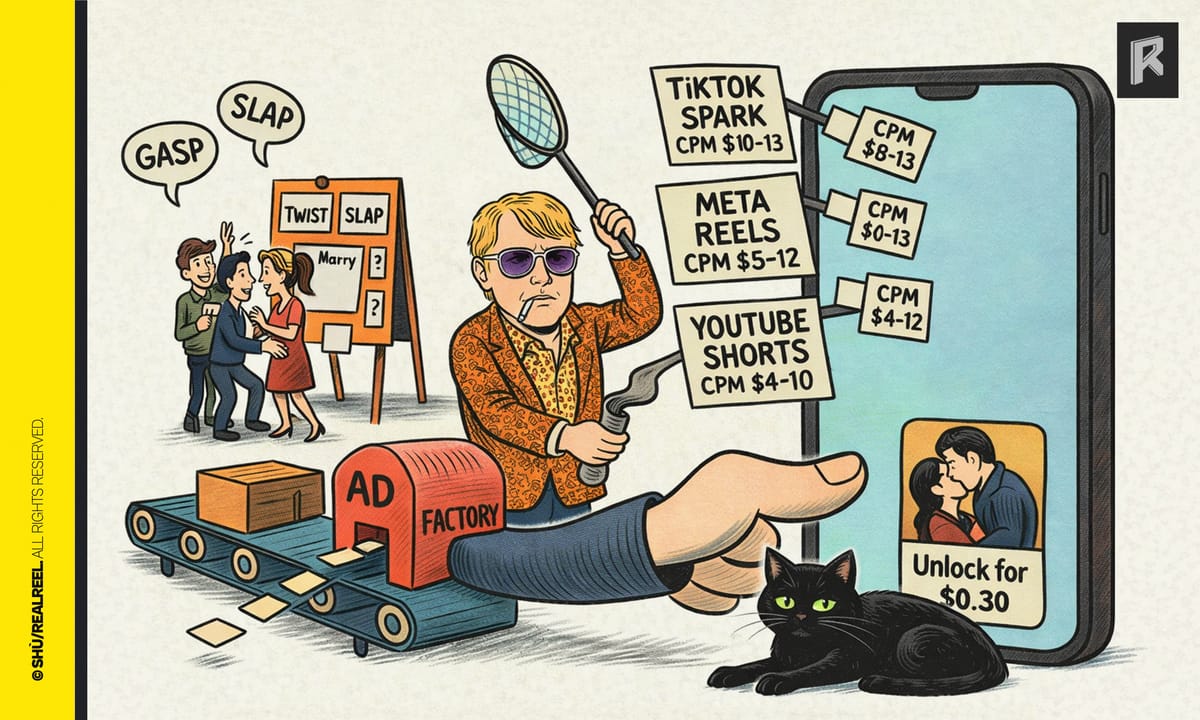
Global Market Dynamics: One Industry, Multiple Economic Logics
While the vertical drama industry is global, its economic logic varies by region.
- China demonstrates industrialized scale through vertically aligned platforms, production, and monetization.
- North America emphasizes higher ARPU via IAP, but faces higher content expectation thresholds.
- Southeast Asia and Latin America favor hybrid and ad-supported models, prioritizing accessibility and volume.
- Japan and Korea adapt vertical drama through local genre sensibilities, often balancing tone against velocity.
The implication is straightforward:
Vertical drama does not globalize through export.
It globalizes through economic and structural adaptation.
More details:
 Real Reel
Talent and the Emerging Production Economy
Vertical drama has quietly created a parallel production economy.
Actors operate within accelerated schedules. Writers design narrative mechanics rather than extended arcs. Producers function closer to product managers than traditional creative executives.
Rather than replacing legacy film and television talent, vertical drama reconfigures entry points, enabling faster iteration, earlier audience validation, and alternative career paths.
More details:
 Real Reel
Why the Vertical Drama Economy Matters Now
Vertical drama matters not because it replaces traditional media, but because it has become a live testing ground for serialized entertainment economics.
It enables:
- Rapid IP validation
- Direct audience monetization
- Faster capital cycles
- Lower per-project risk through portfolio strategies
For legacy studios and platforms, vertical drama represents a parallel economic system — one that reveals how storytelling, monetization, and production discipline are converging under mobile-first conditions.
More details:
 Real Reel
Frequently Asked Economic Questions
Is the vertical drama industry profitable?
Yes. Profitability depends on alignment between narrative pacing, release cadence, and monetization design.
Some models:
 Real Reel
 Real Reel
What makes the vertical drama economy different from traditional film and TV economics?
Faster cash cycles, episodic monetization, portfolio-level risk management, and platform-controlled value distribution.
More details:
 Real Reel
Does higher production value guarantee better performance?
No. Conversion is driven by escalation and pacing, not visual polish.
More details:
 Real Reel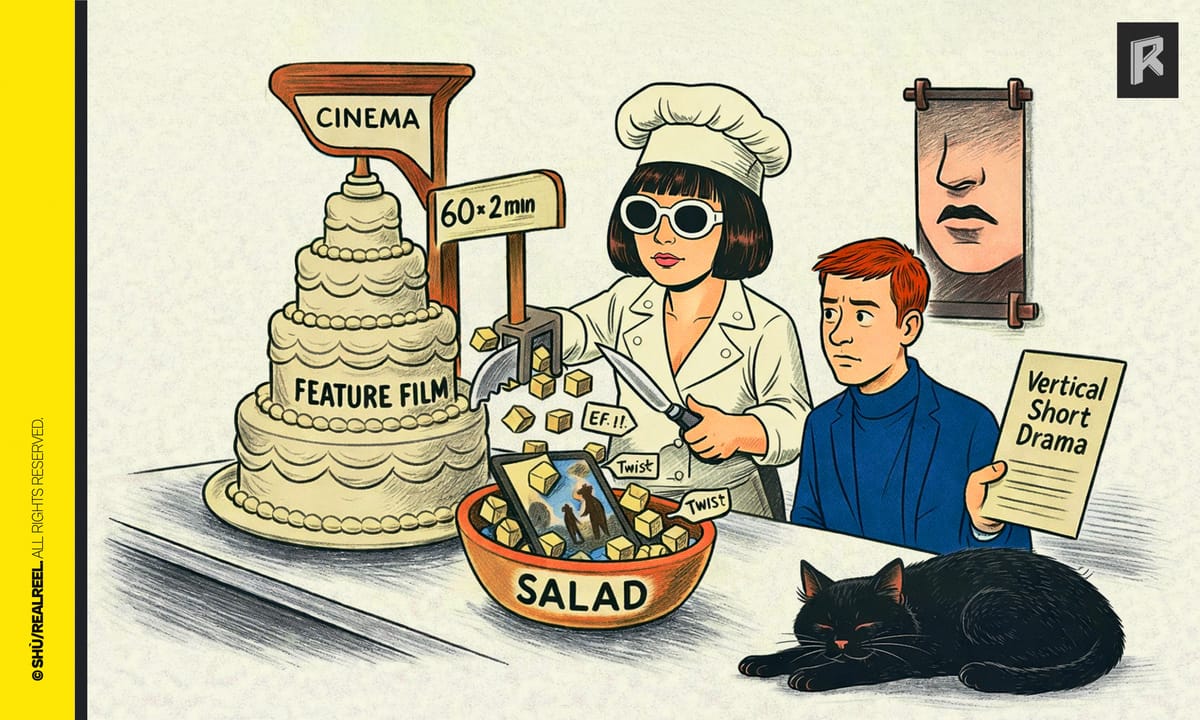
Where to Go Next on Real Reel
This guide serves as the structural entry point to Real Reel’s coverage of the vertical drama ecosystem.
From here:
- Explore Playbooks for writing and production systems
 Real Reel
- Read Industry Observation & Weekly Signals for structural shifts and market movement
 Real Reel
- Dive into R:ID Interviews for practitioner-level insight
 Real Reel
✱