Vertical Drama Weekly: Omdia, Mip London and the Marketing Economy


✱
Vertical is no longer proving it can grow — it is proving it can allocate capital.
Week of Feb 23 – Mar 1, 2026
Join Real Reel
Omdia: Microdramas Overtake Netflix and Disney+ on Mobile Engagement
Omdia released new 4Q25 data showing that microdrama apps have surpassed major streamers such as Netflix, Disney+ and Prime Video in mobile engagement time. The research estimates global microdrama revenue at approximately $11 billion in 2025, projected to reach $14 billion in 2026, with around $3 billion generated outside China. The United States is expected to represent roughly half of the non-China market next year.
The numbers are less about bragging rights and more about attention allocation. This is the first time a major research firm has framed microdrama not as a breakout category, but as a dominant mobile-native consumption format.
Once engagement data and revenue forecasts align at this scale, capital reallocates. Micro drama is no longer competing for cultural relevance — it is competing for mobile video budgets.
 Omdia
Omdia
Mip London: Platforms Admit Up to 90% of Budget Goes to Marketing
At Mip London, executives openly discussed the structural economics of microdrama platforms, with some indicating that as much as 90% of total budget allocation can go toward marketing and user acquisition. The growth model was frequently compared to gaming, emphasizing funnel optimization, conversion mechanics and data-driven retention strategies.
The conversation was unusually candid. Instead of romanticizing content output, panels centered on acquisition cost, monetization flow and scalability mechanics.
When marketing absorbs the majority of platform spend, content becomes a conversion engine rather than a prestige asset. That shifts power toward operators who understand performance economics, and forces producers to think in retention curves, not just scripts.
 John Hopewell
 Georg Szalai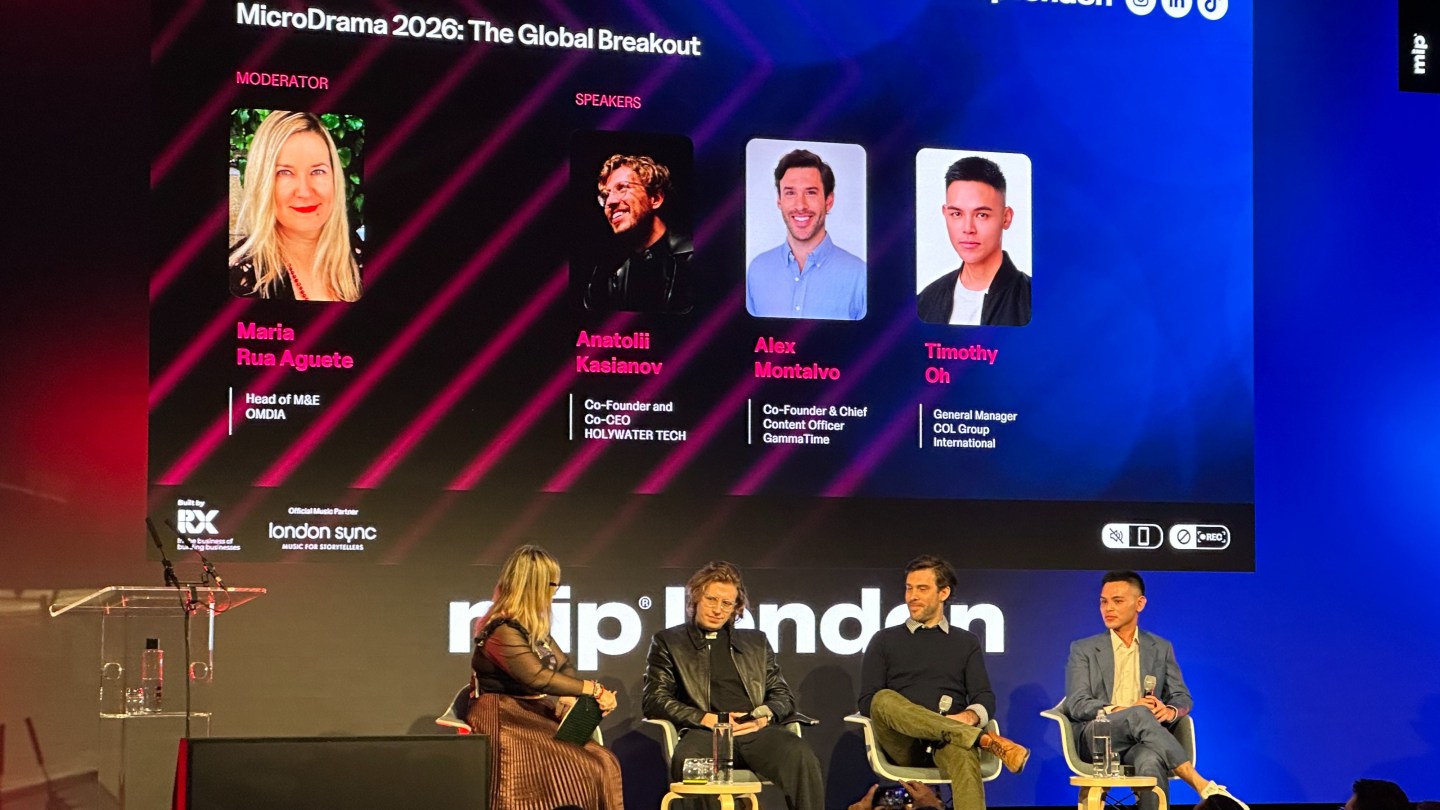
GammaTime and Idilio Launch Five Spanish-Language Vertical Series
GammaTime, led by Bill Block, announced a development partnership with Latin American studio Idilio to produce a slate of five Spanish-language vertical dramas, spanning romance, telenovela and thriller genres. The collaboration explicitly targets both Latin America and the U.S. Hispanic market.
This is not a one-off localization experiment. It is a slate strategy aimed at serving a defined language demographic at scale.
Language segmentation is becoming a strategic battleground. Once vertical platforms move from “English-first global” to structured Spanish-language slates, total addressable market expands, and acquisition models can be duplicated across linguistic corridors rather than rebuilt from scratch.
 Anthony D’Alessandro
My Drama Casts ‘Dancing With the Stars’ Name in Vertical Series
Holywater Tech’s My Drama platform cast Dancing With the Stars figure Maksim Chmerkovskiy in its vertical series Wild Silence, positioning the show as a celebrity-led entry within its app ecosystem.
The move blends traditional television visibility with mobile-native serialized format, testing whether mainstream recognizable talent can translate into vertical retention and monetization dynamics.
Celebrity participation changes perception economics. Once recognizable TV personalities participate in vertical projects, the format gains agency legitimacy and advertiser comfort, but it also raises cost structures and contractual complexity.
 Katie Campione
Deadline: Traditional TV Distributors Reposition Around Microdrama
Industry reporting this week highlighted a subtle but important shift: traditional television distributors are no longer dismissing microdrama as a fringe format. Instead, they are exploring how to integrate vertical libraries into existing sales channels, regional packages and rights structures.
Rather than competing with vertical platforms, parts of the legacy distribution ecosystem appear to be adapting around them.
When traditional distributors engage, the business language changes. Micro drama begins to inherit television-style rights negotiations, windowing logic and territory packaging, accelerating its transformation from growth app to structured media product.
 Jesse Whittock
✱