Interview · R:ID ╳ Han Choi ❘ Korean Vertical Strategy Between Seoul and Los Angeles

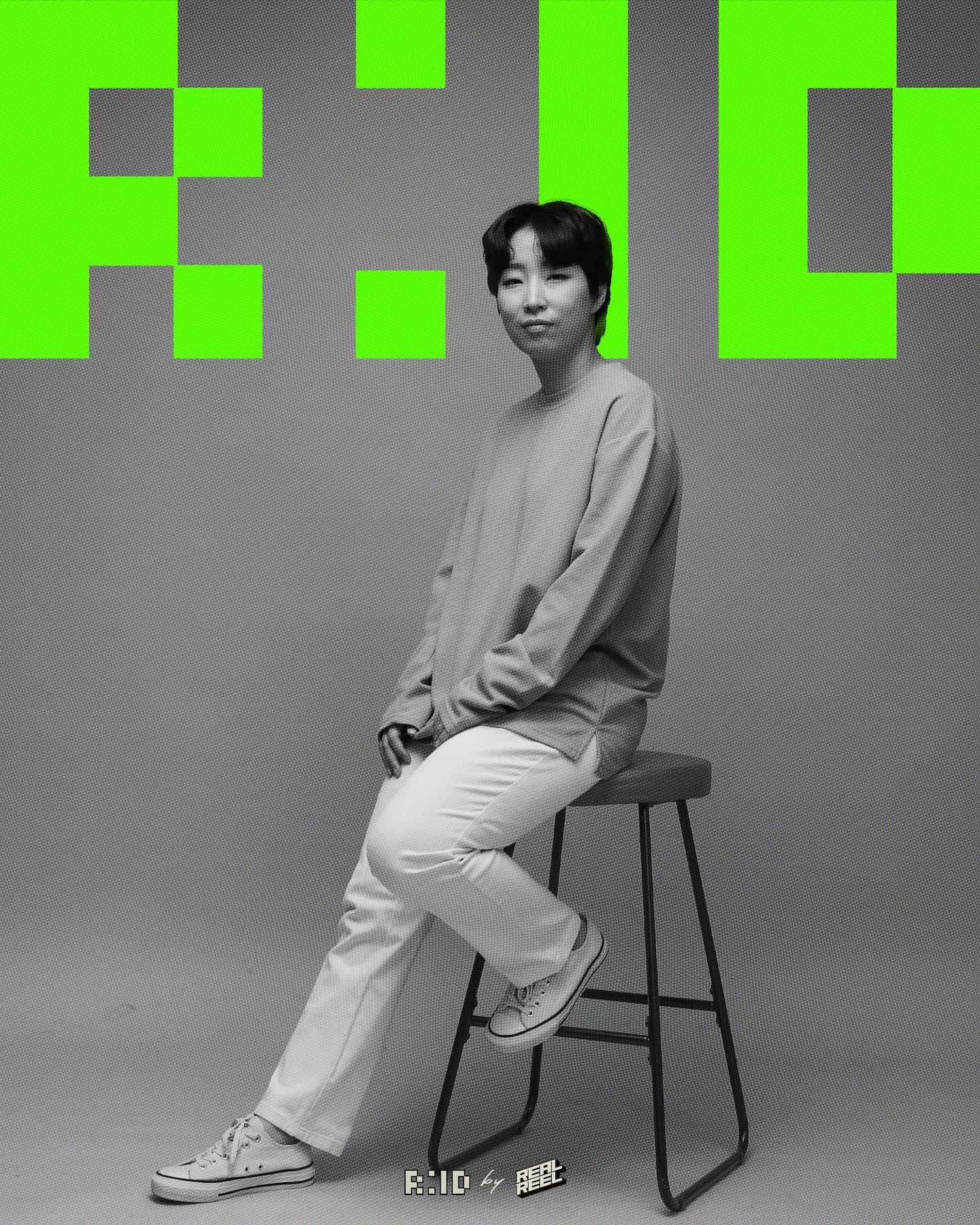
This is an original R:ID editorial interview. Reproduction or redistribution without prior written permission is prohibited, except for brief quotations with attribution.
As long as we have a good story, I don’t think audience expectations are that different.
Interview with Han Choi, U.S. Content Lead, Vigloo (SpoonLabs), a Korean-origin vertical drama platform competing globally.

⁙
Opening
▜ ▜
Vertical drama may have been industrialized in China.
It may be scaling fastest in the U.S.
But another ecosystem is quietly positioning itself between Seoul and Los Angeles.
When Vigloo relocated its U.S. team to LA, the move was not only geographic. It signaled a Korean-origin platform stepping directly into the largest global vertical market, not simply exporting content, but building it locally.
Han Choi, Vigloo’s U.S. Content Lead, operates at that intersection:
legacy broadcasting and mobile-first platforms, K-drama grammar and dopamine-driven micro-format, instinct and data.
Her approach is neither ideological nor defensive.
It is pragmatic.
And in a format defined by speed, that pragmatism may be strategic.
⁙
Q&A
R:ID:
Could you briefly introduce yourself and your role at Vigloo?
Han:
I spent my middle and high school years in Thailand and went to college in the U.S. After graduation, I returned to Korea and joined CJ ENM as a global business development manager, handling licensing and foreign partnerships. CJ later sent me to Thailand to work on a joint venture where we remade Korean dramas into Thai versions.
I then moved to TikTok as a content business manager, sourcing legacy media, government, and creator content into vertical format. That’s where I first gained real experience with vertical storytelling.
After TikTok, I joined Kakao Entertainment, working on global expansion of K-content including screen adaptation of webtoon and web novel IPs,
Now at Vigloo, I’m the U.S. Content Lead. I oversee English-language vertical production from script sourcing to launch, and I’m building our team here in Los Angeles. Since it’s a fast-paced industry, I’m also very hands-on in production.
R:ID:
You’ve worked at CJ ENM, TikTok, Kakao Entertainment, and now Vigloo. What connects these chapters in your career?
Han:
I think since the beginning of my career, I’ve been surrounded by really great people. Every time I moved to a different company, it was connected to people who brought me into new spaces.
Also, I’ve always stayed within the media industry. CJ, TikTok, Kakao, and now Vigloo, they’re different environments, but they’re all under the same umbrella. Media has always been where my passion is.
▙ ▙
Everything just connects.
This industry is about people, and meeting great people led me to different experiences and now to Vigloo.
All of my previous experiences, from legacy broadcasting to mobile platforms to fandom businesses, somehow connect in vertical because vertical is also about stories and engaging fans.
R:ID:
Having worked in both traditional companies and mobile-first platforms, what’s the biggest difference in how they think about audience attention?
Han:
In legacy media, especially if you own a channel, you produce content and audiences tune in. There’s a certain built-in structure.
But in digital and vertical platforms, it’s completely different. There are so many options available to the audience. We have to win over their attention among a pool of choices.
▙ ▙
You have to grab their attention immediately. Every second matters.
That’s the fundamental shift. Vertical is much more about fighting for attention.
▙ ▙
...You have to grab their attention right away. Every second matters...
R:ID:
Since your team relocated to Los Angeles last November, why was it strategically necessary to move the U.S. team there? What has changed since the relocation?
Han:
▙ ▙
The U.S. is currently the biggest market for vertical, so being physically present here was strategically important for us.
Last year, we were actually producing and releasing a lot of content. But when the entire team relocated to Los Angeles, we had to slow down for a while. Relocation takes time, setting up the team, adjusting to a new environment, so that naturally paused our momentum a bit.
Now that we’ve settled, we’re entering a faster stage. We’re building networks with local creators, production houses, actors, and partners. It’s about establishing the right ecosystem here.
While the platform currently features a strong library of Korean content, we are aggressively investing in English-language originals tailored for U.S. audiences.
R:ID:
Korean content culture is known for being fast and highly competitive. Has that shaped the way you work?
Han:
Generally, Korean people move very fast. Decisions are made quickly. There’s not much hesitation.
I think culturally, we’re very passionate about content. You can see that in how K-pop grew globally, there’s a strong drive behind it.
▙ ▙
So I do feel that this kind of fast-moving, passionate environment naturally influences how we approach storytelling and production. Things move quickly.
R:ID:
Do you think K-drama’s emotional pacing and cliffhanger structure naturally fit vertical storytelling?
Han:
▙ ▙
I think it’s a very natural fit because vertical drama and K-drama both focus on characters’ journeys.
Also, the tropes we are producing, like hidden identity, revenge, love triangle, CEO and secretary in love, these are things we see all the time in K-drama. And those stories are already being translated into vertical.
If we manage to bring our K-drama elements and strengthen them, I think we have a high chance of winning in the vertical market.
R:ID:
Does micro-drama require adaptation of K-drama grammar?
Han:
There has to be adaptation.
▙ ▙
K-drama mostly focuses on emotional journeys across many different characters. Vertical is more about the two leads.
So we have to adjust how we illustrate the story within fewer characters.
Also, sometimes K-drama focuses more on sentimental, softer moments. But vertical right now is more dopamine-oriented. The emotions have to be heightened a little bit.
R:ID:
Working between Seoul and Los Angeles, do you feel tension between Korean storytelling instincts and U.S. expectations?
Han:
I haven’t really felt that kind of tension.
It goes back to the story. Korean dramas and movies that you mentioned have already been consumed by U.S. audiences because they had good stories.
▙ ▙
As long as we have a good story, I don’t think audience expectations are that different.
The difference comes more from language and casting. If we bring Korean content directly without adapting into English, it won’t work as well. But story-wise, I don’t see a big gap.
R:ID:
What do global audiences misunderstand about Korean production culture?
Han:
People sometimes assume Korean productions are very hierarchical and director-driven.
But having worked both in Korea and the U.S., I don’t think it’s that different.
▙ ▙
Production is always time-sensitive and safety-sensitive.
Everyone has to be precise.
In both environments, it’s collaborative work between directors, creators, and crews. It’s not as rigid as some people imagine.
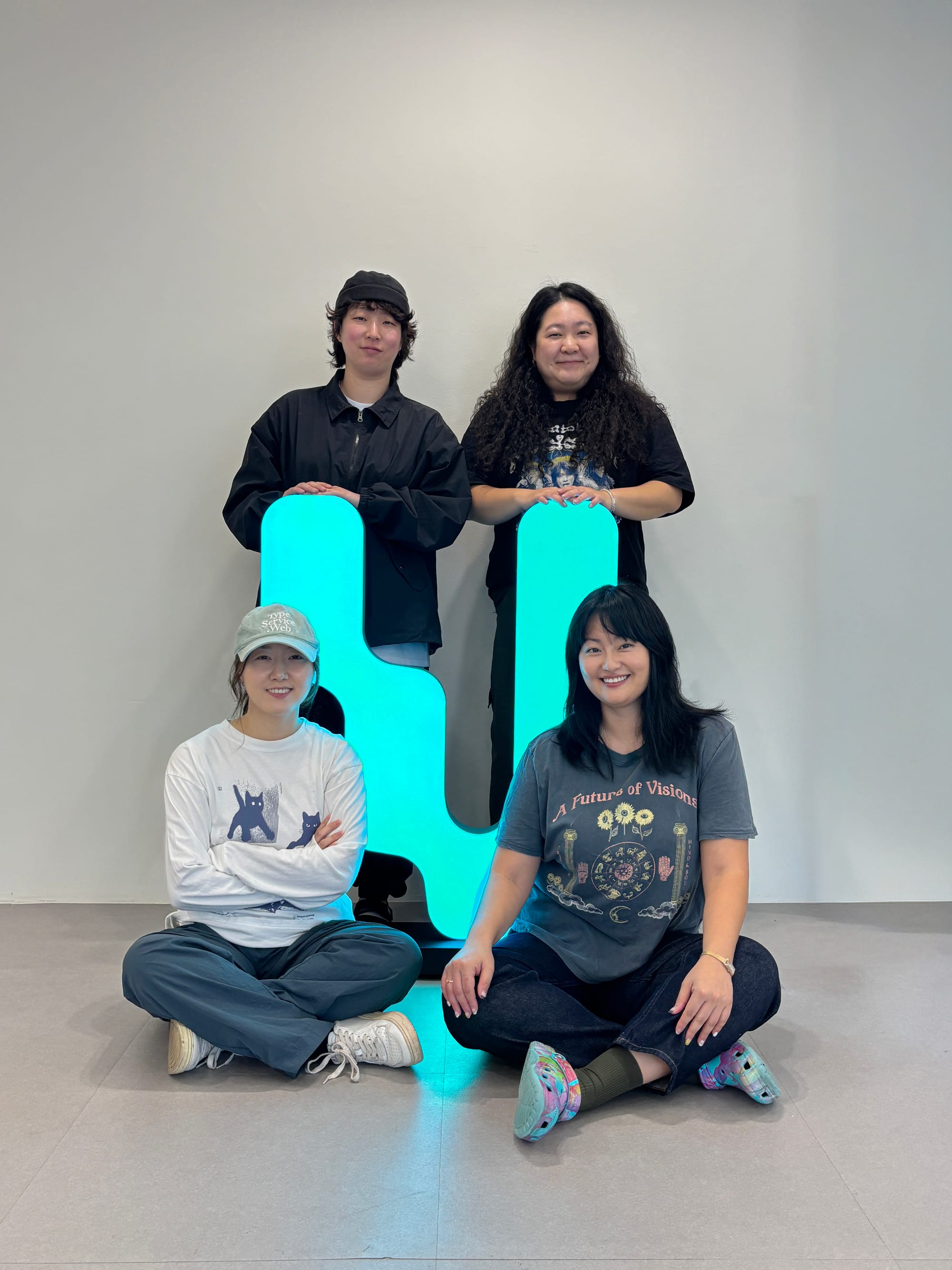
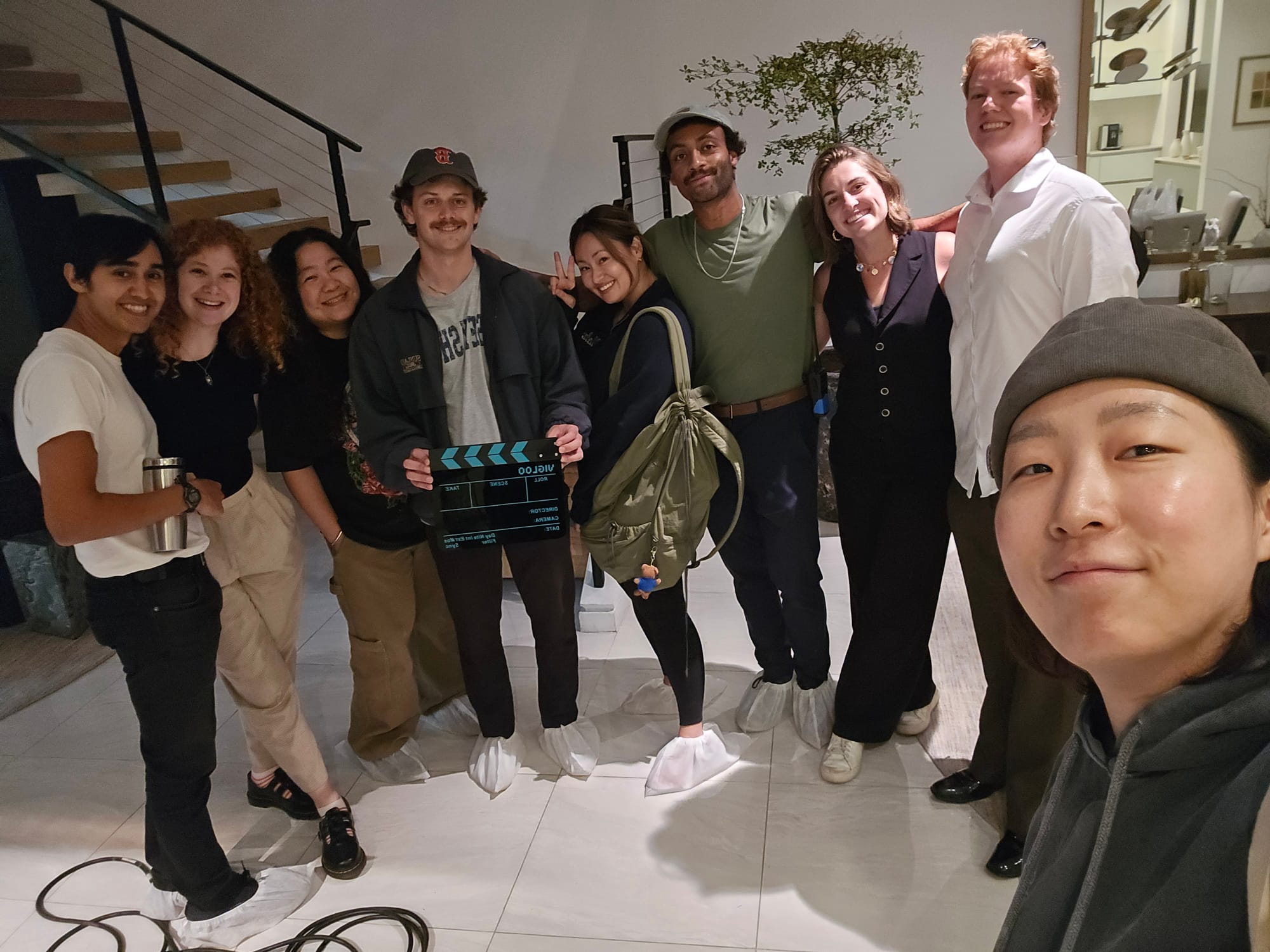
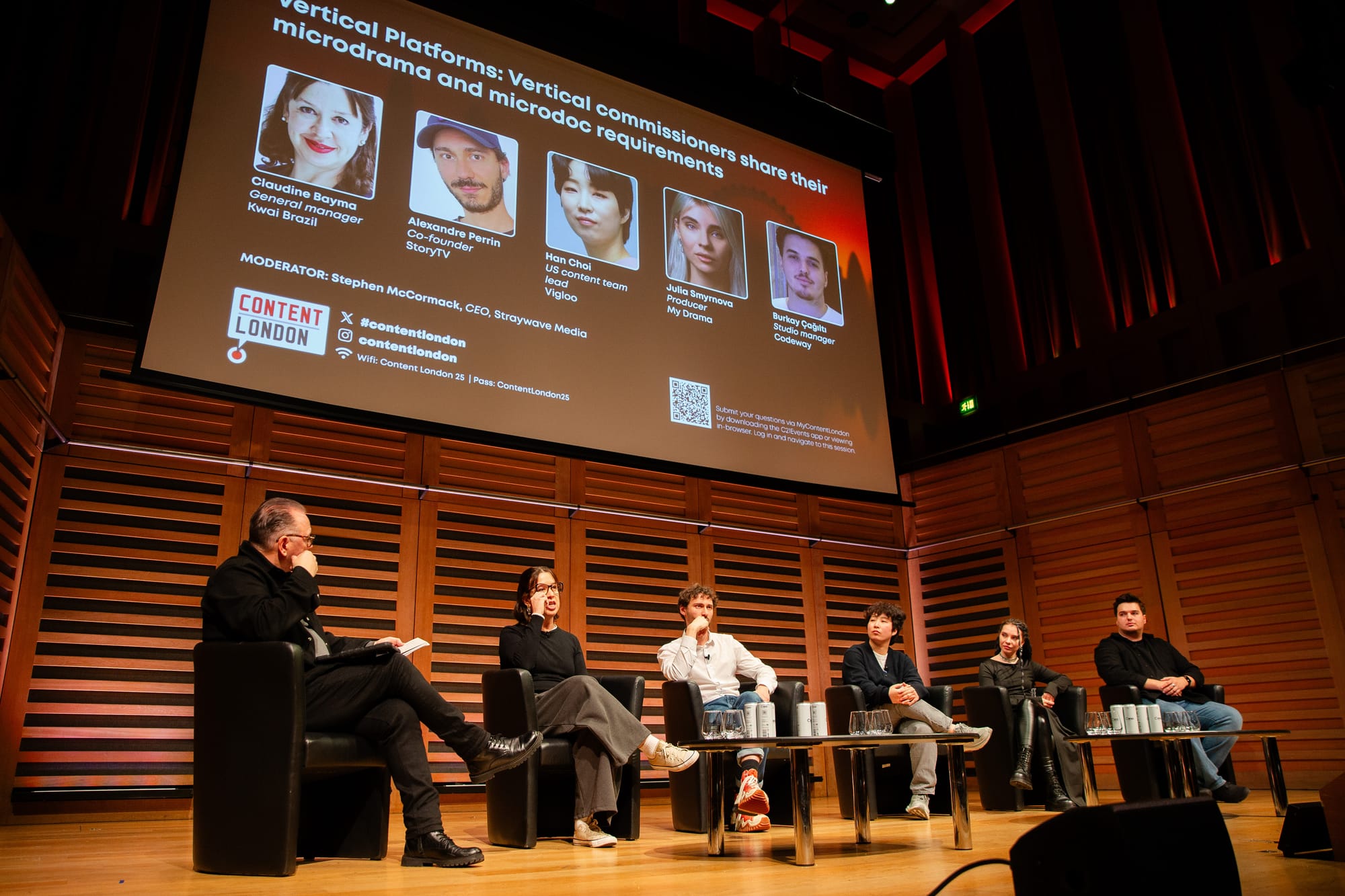
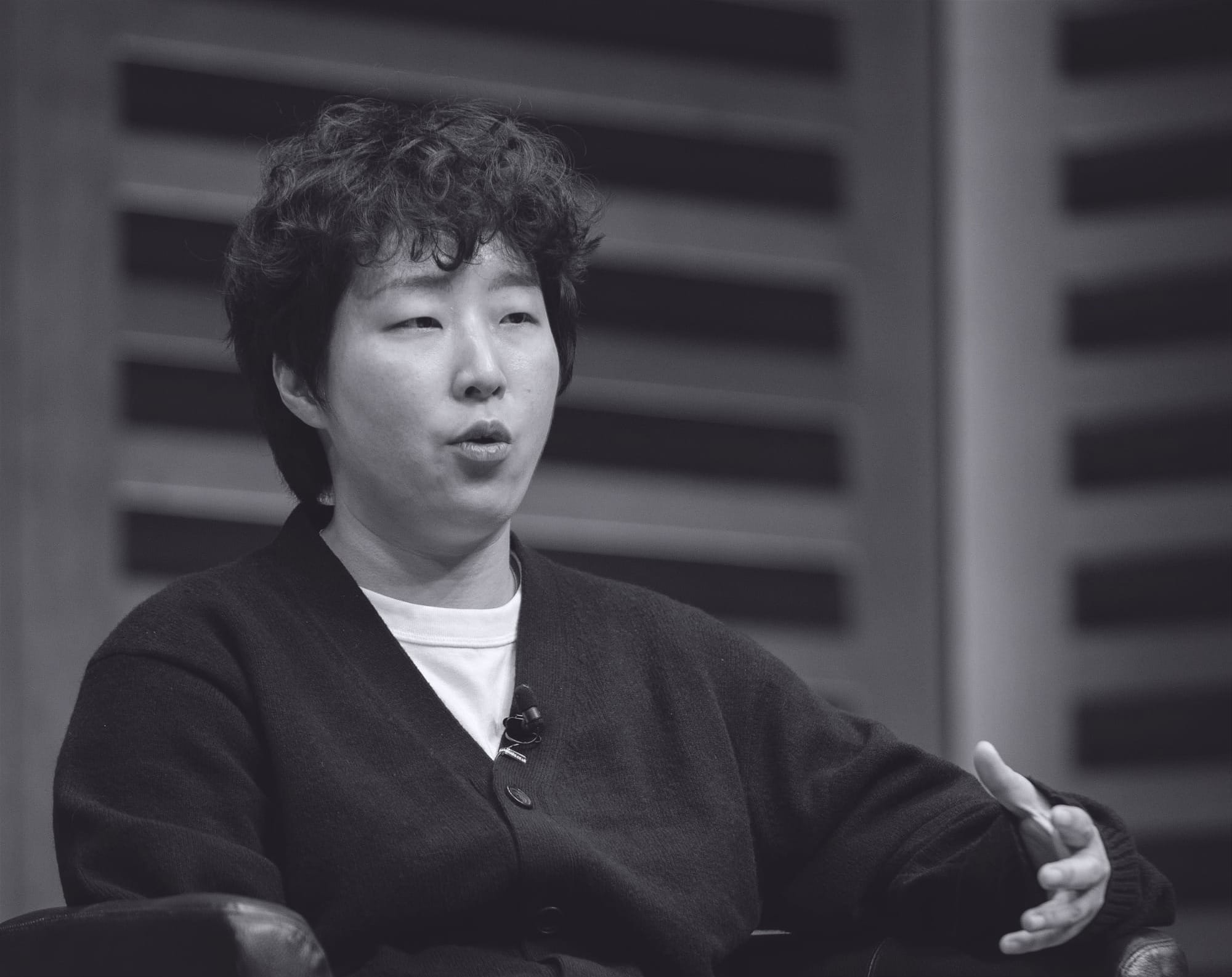
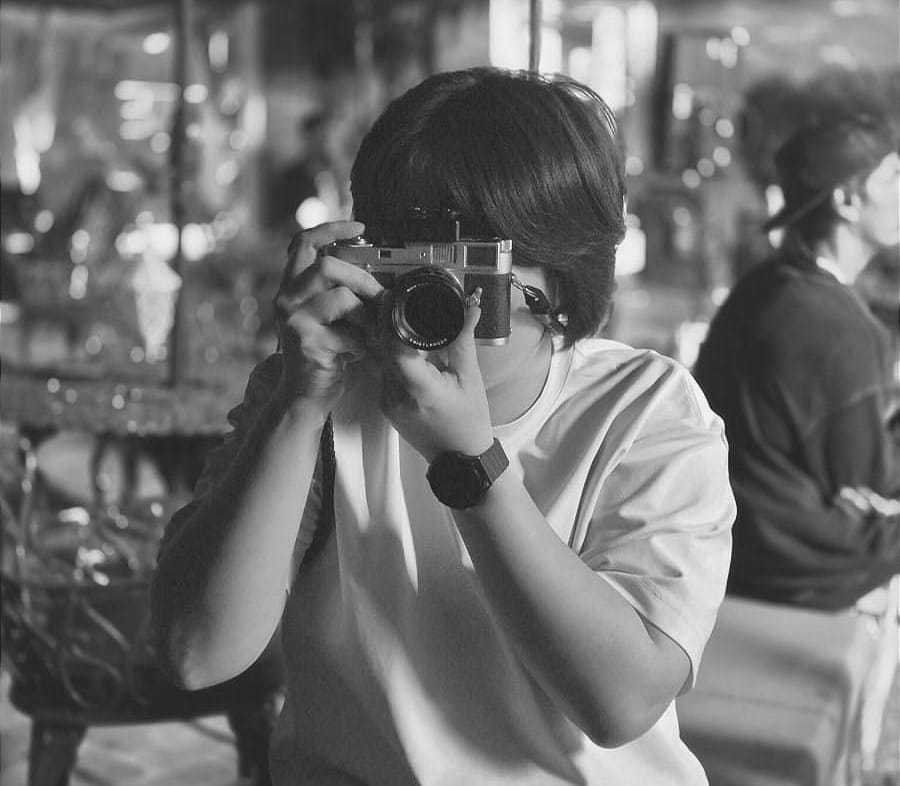
Photos shared by the interviewee. All rights reserved.
R:ID:
Who is watching vertical dramas in Korea? Is the audience similar to the U.S., or different in age and behavior?
Han:
Demographically, it’s fairly similar to the U.S., mostly women over 30.
But the Korean vertical market is still early. We are one of the pioneers there. The market size is smaller than the U.S., but it’s growing.
▙ ▙
And Korean content travels. So it’s not only about building the domestic vertical market, it’s also about global distribution opportunities.
R:ID:
In a market heavily driven by retention metrics, how do you personally protect creative intuition?
Han:
This is something I’m still figuring out.
There are projects I personally thought wouldn’t work, but they performed well. And there are stories I believed strongly in, that failed.
So we cannot rely 100% on numbers. But we also cannot rely 100% on instinct.
▙ ▙
It comes down to the core premise.
Having a clear creative intention and a strong foundation for the story is essential.
Data then helps us understand which types of conflicts or relationship dynamics resonate in the vertical space.
It’s about balancing those two elements.
R:ID:
Vigloo has announced plans to significantly expand AI-driven productions. What was your personal reaction when that strategy was introduced?
Han:
AI is inevitable.
We’re already living with it. It doesn’t mean creators will be replaced. AI is a tool to help us create faster and more efficiently.
It can help in pre-production, visual effects, and especially in testing ideas before committing to full live-action production. That’s cost-saving and time-saving.
▙ ▙
But live action won’t disappear. Audiences still love real human performances.
R:ID:
Where do you see AI genuinely enhancing storytelling, and where do you think it risks flattening it?
Han:
Genres like fantasy, sci-fi, and action may benefit the most, as they typically require heavy VFX and large-scale setups that are costly in live action.
▙ ▙
AI can help us experiment more freely in those areas.
However, vertical storytelling is highly focused on emotional expression within a 9:16 frame, and AI still struggles with capturing subtle emotional nuance. That’s why it’s important how thoughtfully we apply the technology.
▙ ▙
It’s about integration, not replacement.
R:ID:
How can writers or production companies approach Vigloo for collaboration?
Han:
Absolutely, we’re always looking for creators and partners who align with our vision. Feel free to reach out via email (vigus@spoonlabs.com) or connect with me on LinkedIn↗.
⁙
R:ID Epilogue
If vertical drama is still considered niche in parts of the industry, Han does not frame the future as a battle between platforms.
She frames it as expansion.
Consistent hit stories.
A disciplined balance between creativity, data, and technology.
And an ecosystem large enough for multiple players to coexist.
“We don’t have to compete each other. We have to make this industry bigger.”
Between Seoul’s production intensity and Los Angeles’ market scale, Vigloo’s next chapter will depend less on format innovation, and more on execution.
For Han, it still begins the same way it always has:
With story.
About Han Choi
Han Choi is currently serving as U.S. Content Lead at Vigloo, SpoonLabs’ vertical micro-drama platform. Her career spans traditional broadcasting and mobile-first platforms, including roles at CJ ENM, TikTok, and Kakao Entertainment.
With experience in international licensing, content localization, webtoon expansion, and K-pop business strategy, she brings a cross-market perspective to vertical storytelling. Based in Los Angeles, she leads Vigloo’s English-language production and U.S. growth strategy.
✱
R:ID #06
╳ Han Choi
R:ID™ is Real Reel’s interview column
on creative identity in the algorithm age,
studying not the work,
but the makers and the identities
shaped through their practice. ☻
MORE R:ID ⇲
 Real Reel
 Real Reel
 Real Reel