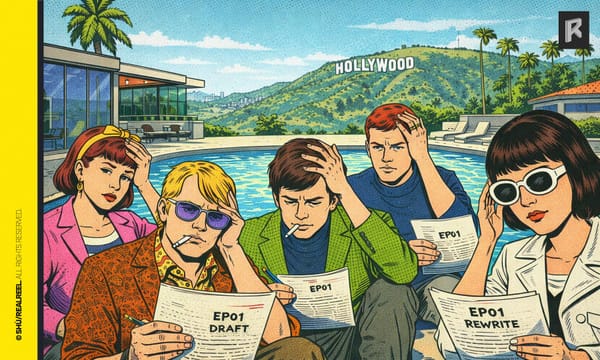
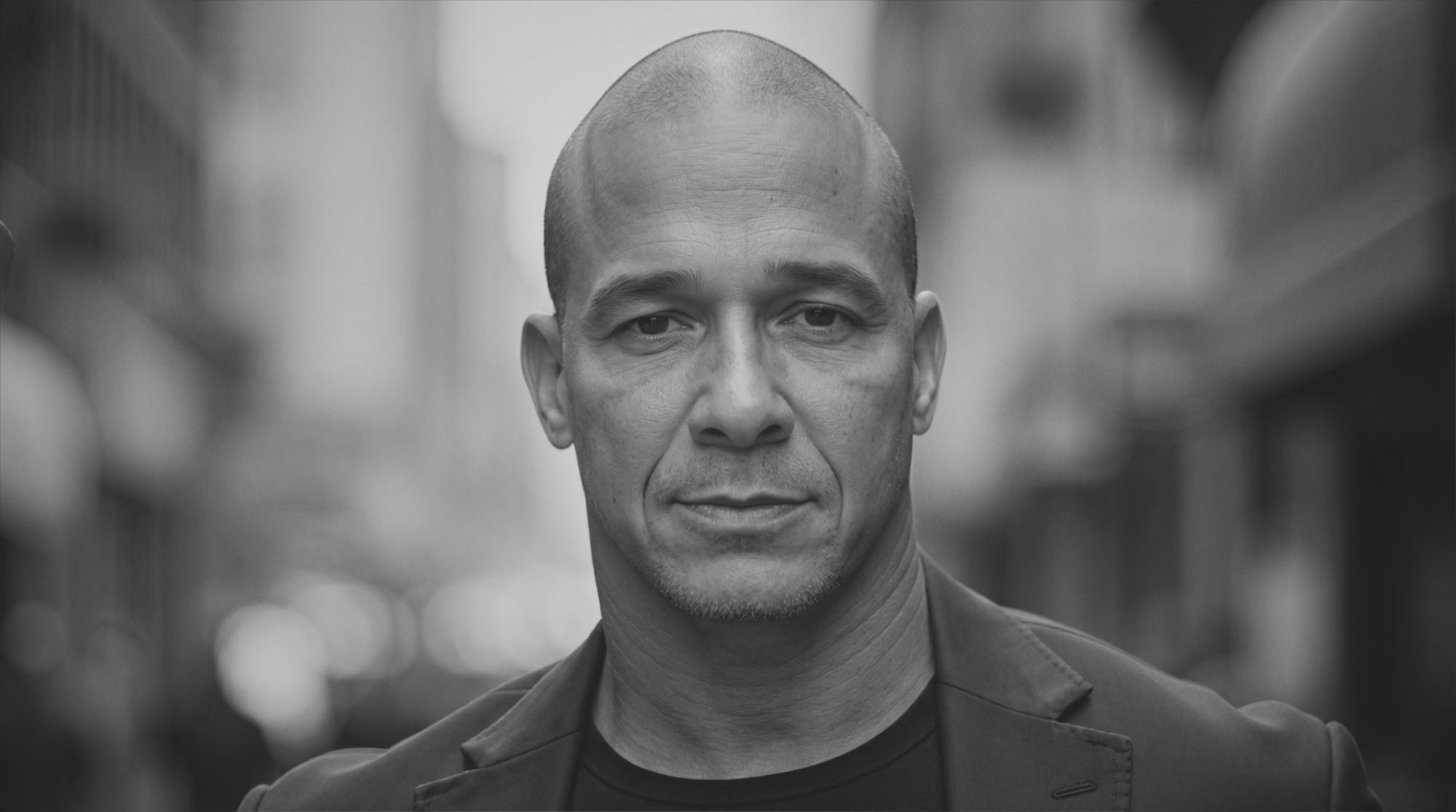
Interview · R:ID ╳ John Lewis ❘ Vertical Isn’t Compressed Cinema. It’s a Different Engine
The vertical drama format is proven, but the platform layer is still open. John Lewis on muVpix, storytelling economics, and why the next phase of vertical video may be built by those who move early.



The Vertical Platform Moment - Why John Lewis Believes the Window Is Open Now
Founder of muVpix, John Lewis, on vertical storytelling economics, the format Hollywood still misunderstands, and why the next platform wave may be built by people who move early.

⁙
Opening
▜ ▜
“You can’t just take a movie and cut it into 90-second pieces. If you try to do that, you lose the audience immediately.”
The vertical drama economy has already proven that mobile-native storytelling can generate enormous audiences. But the structure of the industry, particularly in the United States, is still taking shape.
Platforms, production pipelines, marketing systems, and creator ecosystems are all evolving at the same time. That combination makes vertical one of the rare moments in entertainment where the format itself is already validated, but the infrastructure around it is still being built.
For John Lewis, that realization didn’t come through industry reports or strategy decks. It came through the same experience millions of viewers have every day: scrolling.
What started as curiosity quickly turned into something more analytical. As Lewis began studying the economics and narrative mechanics behind vertical storytelling, he came to a conclusion that now guides his approach to the space.
Vertical storytelling, he argues, is not compressed cinema.
It is a different storytelling engine altogether.
⁙
Q&A
R:ID:
At what moment did you realize you didn’t just want to participate in vertical storytelling, but actually build something around it?
John:
About a year and a half ago I was just scrolling on my phone and started seeing these vertical stories. I kept swiping past them, but then one of them caught me.
It was from China, set in a castle. The story was pretty simple. A man goes off to war, and while he’s gone the woman ends up with the new powerful guy in town. Then he comes back from the war trying to win her back, but she says no because she’s already with someone richer and more powerful. What she doesn’t know is that while he was gone, he actually became the emperor.
▙ ▙
The story itself was basic, but I still wanted to see what happened next. I realized I was hooked.
That’s when I thought there’s something in this format. If I’m feeling that as a viewer, and also as a filmmaker, then a lot of other people must be feeling it too.
Then I started researching the industry and realized I was actually behind the game.
R:ID:
You work across acting, producing, and now building infrastructure. What made vertical compelling enough to add another layer to what you were already doing?
John:
I didn’t really replace anything I was doing. I still make feature films every year. I just opened another business.
But the economics are interesting.
If you make a solid thriller or horror feature at something like a Blumhouse level, that might cost five million dollars. For less than that, you can make multiple vertical series and market multiple vertical series. So the amount of money you spend on the product, compared with the potential return, can be very different.
▙ ▙
From a business perspective it made sense to explore it.

▙ ▙
...Vertical storytelling isn’t just a movie cut into 90-second pieces. It’s a completely different way of writing...
R:ID:
You’ve said vertical storytelling isn’t simply compressed cinema. What does that mean in practice?
John:
▙ ▙
It means you can’t just take a movie and cut it into 90-second clips. That doesn’t work. If you try to do that, you lose the audience very quickly.
You have to write specifically for this format. Every episode needs something interesting in it. There has to be a reason to watch the next episode. Usually that means some kind of cliffhanger.
You also can’t make the story too complex.
In traditional filmmaking you might have A, B, and C storylines. In vertical, if you try that, you lose the audience. You have to stay focused on the main storyline and make sure the viewer always understands exactly what’s happening.
So it’s a very specific style of writing.
R:ID:
From what you’ve seen so far, what do traditional film and television professionals still misunderstand about vertical storytelling?
John:
A lot of writers reach out to me and start listing their credits in film and television, thinking that will impress me. But when I hear that, I usually think they don’t understand the format yet. You can be an incredible writer and still not be right for this.
The same thing happens with directors. Some big directors I know say they want to direct a vertical series. And I tell them they probably can’t do it the way they’re used to working.
In traditional production, shooting five pages in a day is considered strong. On one vertical project I shot recently, we did twenty-two pages in one day.
▙ ▙
That’s a completely different pace. You have to understand what deserves time and what doesn’t, and you have to know how the material will eventually be edited.

R:ID:
muVpix positions itself around more cinematic, premium micro-drama. In your mind, what actually defines “premium” in vertical storytelling?
John:
I actually think the word cinematic can be misleading.
Sometimes Hollywood comes into a space like this and thinks they’re going to make it better. But this industry already exists and already generates billions of dollars.
So I don’t think the goal is to turn vertical into traditional cinema.
▙ ▙
For me, premium just means quality.
You keep the storytelling tropes that audiences already respond to, because those are proven. But within that structure you can push the stories to be a little more interesting with stronger acting or better choices to raise the level of execution.
R:ID:
What does that look like in terms of casting and story development?
John:
▙ ▙
For me it means working with actors who understand the vertical format, but also choosing the stronger performers within that world.
I’m not necessarily talking about traditional TV actors coming in. I’m talking about actors who already work in this space but really know how to deliver the emotion.
One of my favorites is Felix Merback. I think he’s one of the best vertical actors right now because he understands the medium and he can really act.
Story-wise, it means respecting what the core audience already likes, which is mostly women between about 30 and 55, while also making the stories a little more interesting.
That’s why supernatural elements like werewolves often work. It’s still romance, but it adds another layer.
R:ID:
Vertical platforms often identify very specific audience segments. How do you think about the audience for muVpix?
John:
The core audience is extremely important. I don’t want to alienate that audience at all. They’re the people who already love the format.
▙ ▙
What I want to do is keep that audience happy while maybe also bringing in some additional viewers who might not normally watch vertical drama.
But you never abandon the audience that made the format successful in the first place.
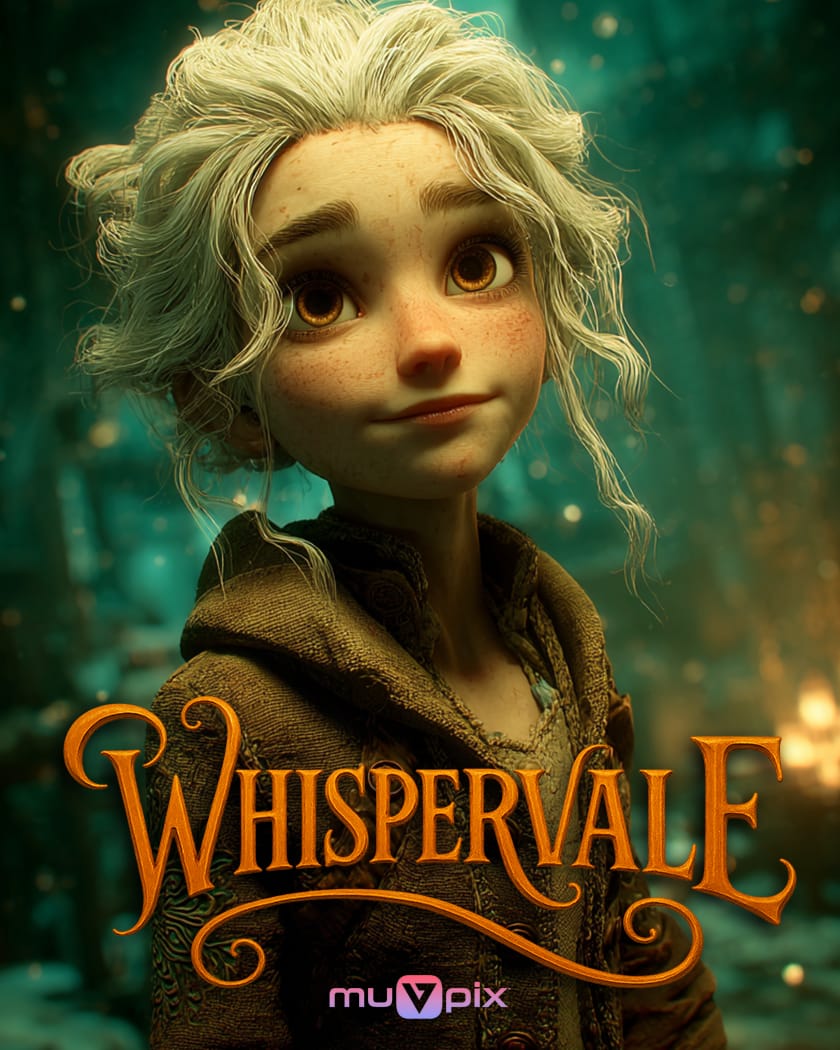





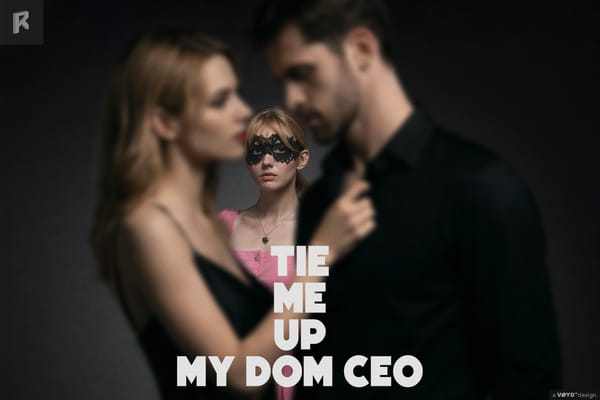
Images courtesy of muVpix. All rights reserved.
R:ID:
What emotional need do you think vertical storytelling fulfills for audiences?
John:
▙ ▙
A lot of it is about escapism.
Vertical storytelling is often watched by someone on their phone who just wants to step outside their own life for a few minutes.
It’s similar to reading a romance novel. The viewer doesn’t just want to observe the story, they want to imagine themselves inside it.
That’s where Quibi made a mistake, in my opinion. They were trying to put big movie stars and movie-style stories onto a phone screen. But if I’m watching Chris Hemsworth, I’m not imagining that I’m Chris Hemsworth.
Vertical storytelling works differently. It lets viewers imagine themselves as the main character.
R:ID:
Do you think genres like action or horror will grow as vertical audiences?
John:
Horror maybe. Action is more difficult.
If someone is watching action, the action has to look convincing. A lot of times it doesn’t, and then it starts looking silly.
▙ ▙
Most of the vertical content that appears to be action is still really aimed at the same audience, women watching a strong male character protecting the lead.
So I still think the core demographic will remain similar, at least for now.
R:ID:
Building a platform is very different from producing a film or series. What has surprised you most about that transition?
John:
▙ ▙
What surprised me most is the range between risk and reward.
A vertical series might cost a few hundred thousand dollars to produce and market. If it performs reasonably well, it can generate a few million. If it performs extremely well, it can generate much more than that.
That spread between production cost and revenue potential is very different from traditional filmmaking.
R:ID:
When developing a vertical project, what are the first structural questions you ask about the story?
John:
▙ ▙
The same first thing as in any film project: a good script.
It still has to be well written. The dialogue has to work. The story has to be engaging. Then I look for something that fits the genre but still has a unique angle.
After that, you need a strong director who understands the pace of this format, and a cast that fits the budget and the audience. And then there’s marketing. You can make the best product in the world, but if nobody knows about it, it doesn’t matter.
R:ID:
What does the launch slate for muVpix look like?
John:
We’re launching with four original projects. Two I produced myself. One is Whispervale, which is animated, and the other is Swipe Left: Dying for Love. Then we licensed two other original series, Tides of Desire (a beautifully produced series shot in Costa Rica) and Beneath Crimson Sails (the first real Pirate vertical series).
So we’re launching with those four originals along with other content already on the platform. My goal is to produce at least twenty originals this year, maybe around two per month.
R:ID:
Looking ahead five years, what do you think the vertical industry might look like compared with today?
John:
I think the industry will grow a lot, but it will also change.
Hollywood studios will probably get more involved. Unions will probably become more involved. Budgets will likely increase. That will make the space more competitive and maybe harder for smaller creators to enter.
▙ ▙
Right now there’s still a window where smaller players can build something.
Five years from now that window might be narrower.
R:ID:
Finally, what advice would you give to filmmakers or creators who are just beginning to explore vertical storytelling?
John:
▙ ▙
Start creating.
Everyone has a phone now, and the cameras are very good. I’ve seen vertical projects shot on iPhones that looked great. You don’t have to wait until you raise a huge budget. Write something interesting, shoot it with friends, experiment, and learn how the format works.
This is a rare moment in entertainment where a new format is already proven but still developing. If you wait too long, you might miss the opportunity.
⁙
R:ID Epilogue
For much of Hollywood, vertical storytelling still looks like a novelty — a format defined by shorter episodes and mobile screens.
For John Lewis, the shift is more structural.
The format has already proven its audience, its economics, and its distribution model. What remains open is the platform layer: who builds the ecosystems that connect creators, content, and viewers.
That window may not stay open forever.
But for now, it exists.
And for founders willing to move early, Lewis believes the opportunity is still very real.
About John Lewis
John Lewis is an actor, filmmaker, and entrepreneur and the founder of muVpix, a vertical storytelling platform focused on premium micro-drama. Alongside his work in feature films, Lewis has become an active builder in the emerging vertical entertainment ecosystem, exploring the economics, production models, and audience dynamics shaping mobile-first storytelling. Through muVpix, he aims to develop original vertical series while contributing to the evolving infrastructure of the format.
✱
R:ID #08
╳ John Lewis
R:ID™ is Real Reel’s interview column
on creative identity in the algorithm age,
studying not the work,
but the makers and the identities
shaped through their practice.
MORE R:ID ⇲
 Real Reel
 Real Reel
 Real Reel