⚈ ⚈
I wasn't asking 'Is this faithful to Shakespeare?' I was asking 'How are they going to pull this off?' That's a much more interesting question.
...
-
Review by Dalia
@verticalfilmslover

Can You Make Romeo & Juliet Feel Unpredictable Again?
How many different versions of Romeo & Juliet have we all seen by now? The original play. The Leonardo DiCaprio film. Modern retellings. High School plays. Big stage adaptations. Musicals. By this point, most of us know exactly where the story is headed. Or at least... we think we do…
That's what surprised me most about Romeo & Juliet Reimagined. Instead of spending every episode comparing it to Shakespeare, I found myself getting swept up in this version of Romeo and Juliet. By the time I was only a handful of episodes in, I wasn't checking boxes against the original anymore; I was simply invested. I wanted to know what was going to happen next, even though I walked in believing I already knew the ending.
And honestly, that's one of the hardest things any adaptation can accomplish.
A Visual Feast: Cinematography and the Baz Luhrmann Influence
Before we even get into the story, we need to talk about how beautiful this film is. Romeo & Juliet Reimagined is rich, polished, and genuinely cinematic. It is easily one of the most beautifully filmed verticals I have watched. The lighting, locations, framing, costumes, and deep, luxurious visuals make the production feel much larger than the screen you are watching it on. Cinematographers Michael Negrin and Colby Ricker deserve enormous credit for creating a world that feels romantic, dangerous, and almost dreamlike without losing the intimacy the vertical format requires.
Visually, the film often reminded me of Baz Luhrmann’s Romeo + Juliet. It does not feel like a copy, but it carries some of the same creative energy: old family conflict placed inside a heightened modern world, bold imagery, religious symbolism, weapons, wealth, color, and emotions that are never presented quietly. Darío Herrera’s work as Creative Art Director also helps give the film its distinct identity. Every location feels carefully chosen, and every frame seems designed to remind us that this is not meant to be an ordinary modern romance. It is dramatic, extravagant, and romantic in exactly the way a story called Romeo & Juliet should be.
Why I Forgot I Already Knew the Story
There was a moment while I was watching where I caught myself doing something I didn't expect: I stopped trying to compare it to Shakespeare. That realization hit me around Episode 6. Instead of mentally checking off familiar plot points, I was completely locked into this Romeo and this Juliet. That's a testament to the writing because it managed to create genuine suspense around one of the most recognizable love stories ever told. The adaptation makes plenty of changes, some small and some significant, but for the most part they never distracted me. Instead, they made me curious. Every time the story took a different turn, I found myself wondering where it was headed next rather than wishing it had stayed closer to the original. That's exactly what a reimagining should do. It shouldn't replace the classic; it should make you excited to discover a new interpretation. By the time I reached the halfway point, I wasn't asking, "Is this faithful to Shakespeare?" I was asking, "How are they going to pull this off?" That's a much more interesting question, and it's the biggest compliment I can give the storytelling.
Chemistry Is Everything
No version of Romeo & Juliet works unless you believe these two people would risk everything for each other. You can have gorgeous cinematography, beautiful costumes, and all the dramatic family feuds in the world, but if Romeo and Juliet don't make you root for them, the story falls apart.
Thankfully, Gabrielle Faith Brown and Crayton Carrozza make that part easy.
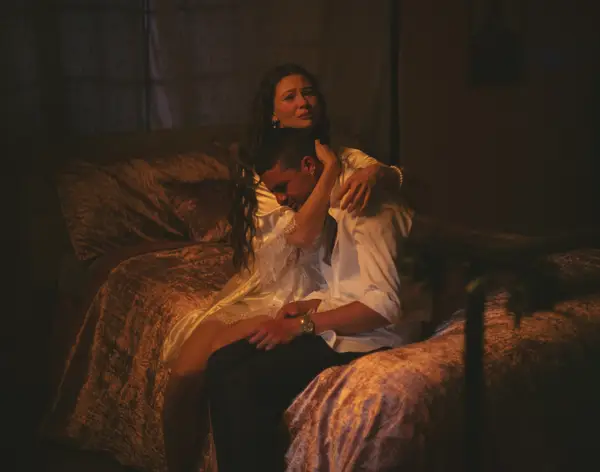
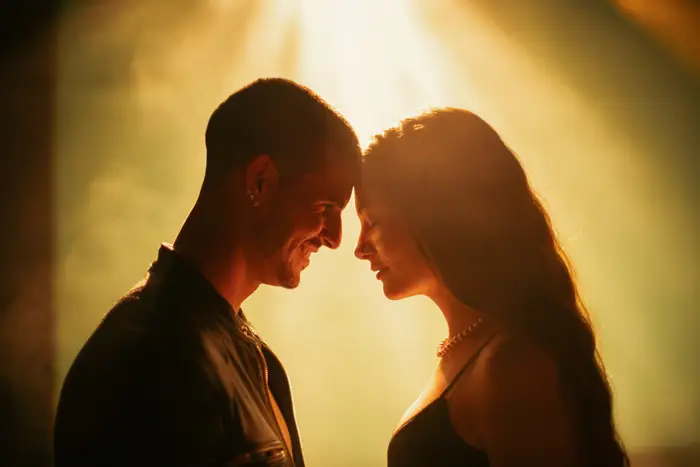
Their chemistry feels effortless. From the moment they meet, there's an undeniable pull between them that never feels forced or manufactured. Whether they're sharing quiet moments or navigating the chaos surrounding their families, they make you understand why these two are willing to challenge generations of hatred for a chance at a future together.
What I appreciated most was that their relationship wasn't built solely on grand declarations of love. They found time for the smaller things: laughter, teasing, and genuine tenderness. Those quieter moments made the bigger emotional scenes land even harder because the relationship felt authentic rather than rushed.
By the middle of the series, I wasn't rooting for Shakespeare's Romeo and Juliet anymore. I was rooting for Gabrielle's Juliet and Crayton's Romeo. That's an important distinction, and it's one of the biggest reasons this adaptation succeeds.
▙ ▙
A reimagining shouldn't replace the classic — it should make you excited to discover a new interpretation.
Dalia
Romeo & Juliet: Familiar Names, New Hearts
One of the smartest choices this adaptation makes is allowing Romeo and Juliet to become fully realized characters rather than simply asking them to recreate performances we've seen for centuries. Their story may be inspired by Shakespeare, but their personalities belong entirely to this world.
Crayton Carrozza's Romeo is, at his core, a hopeless romantic. Long before he falls in love, he's a young man carrying the weight of unimaginable grief after losing his brother, Teo. Rather than moving forward, he has spent the last year emotionally frozen, retreating into the basement to train, box, and simply exist instead of truly living. Then Juliet walks into the room, and everything changes.
Their first meeting is one of my favorite scenes in the entire series. Romeo is so overwhelmed by what he feels that he asks to hold Juliet's hand; not as some grand romantic gesture, but because he needs to know if what he's experiencing is real. It's a wonderfully vulnerable moment that tells us everything we need to know about him. This isn't a man chasing excitement; it's someone rediscovering what it feels like to be alive.
That emotional thread continues throughout the story, especially during his visit to Teo's grave. Without saying very much, Carrozza communicates how deeply Romeo still loves and misses his brother. Teo's absence isn't simply part of Romeo's backstory; it's the lens through which he sees the world. It also makes his relationship with Juliet feel even more meaningful because she doesn't erase his grief; she reminds him that life can still hold joy alongside it.
Gabrielle Faith Brown's Juliet is equally refreshing. She's spirited, independent, and far more willing to challenge the expectations placed upon her than many traditional interpretations. Learning she's expected to marry Paris doesn't send her quietly into acceptance. Instead, she rebels in the most believable way possible for this modern setting, heading out with her cousin Rosalyn for a night that unexpectedly changes her life forever.
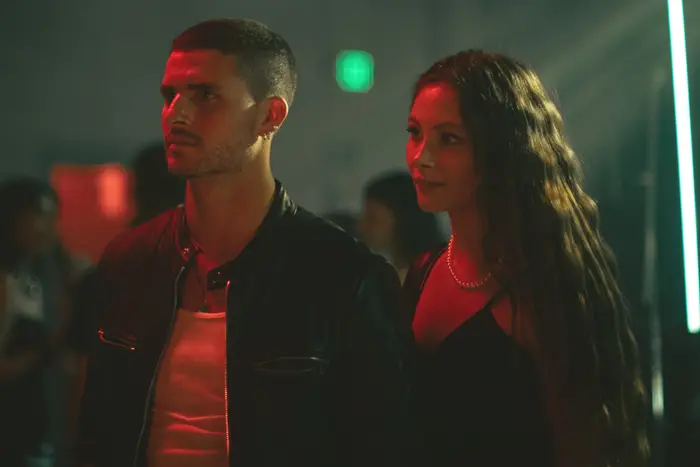
Moving their first meeting to the Montague nightclub instead of a Capulet masquerade is one of my favorite updates. It feels contemporary without losing the excitement of two people finding each other in the middle of the wrong place at exactly the right time. Even in those first moments together, Juliet isn't portrayed as someone waiting to be rescued. When trouble arrives, she instinctively protects Romeo, showing both courage and conviction before either of them fully understands what they're risking.
That confidence continues throughout the series. One of Juliet's strongest moments comes when Lord Montague warns her to stay away from Romeo. Rather than shrinking under the pressure, she stands her ground and tells him, "You don't know me, and you don't know him." It's a deceptively simple line, but it perfectly captures this version of Juliet. She isn't naïve. She has simply decided to trust what she knows in her heart, even if the rest of the world believes she's making a terrible mistake.
Together, Carrozza and Brown don't try to imitate iconic performances from the past. They create their own Romeo and Juliet; two young people who feel authentic, vulnerable, passionate, and completely worth rooting for.
The Characters Who Made This World Feel Alive
A love story can only carry so much on its own. What makes this adaptation work is that the world around Romeo and Juliet feels populated with people whose choices matter, even when you don't agree with them.
Jordan Barrett's Mercutio brings an infectious energy to every scene he's in. He's charismatic, loyal, and exactly the kind of friend who lights up the room. Because of that, the emotional weight of his story lands the way it should. You understand why he means so much to Romeo, which makes everything that follows carry real consequences.
TravQue's Tybalt is one of the more interesting reinterpretations in the film. Rather than trying to recreate every version that has come before, this adaptation takes him in a different direction. While I found myself wishing for a little more build-up before some of his biggest moments, his presence still shifts the emotional temperature of the story the instant he arrives.
▙ ▙
I wasn't rooting for Shakespeare's Romeo and Juliet anymore. I was rooting for Gabrielle's Juliet and Crayton's Romeo.
Dalia
Mitch Arbor brings a quiet steadiness to Father Lawrence. In a world filled with family feuds, impulsive decisions, and heightened emotions, he's the rare character who feels grounded. His scenes give the story room to breathe and remind us that hope still exists, even when everything seems determined to fall apart.
Trevor Bush gives Benvolio a warmth that often gets overlooked in adaptations. He's more than Romeo's cousin and friend; he's a constant reminder of the life Romeo is trying to protect, offering loyalty without ever demanding the spotlight.
Paris is also handled differently here, and Max Decker fully commits to the role. He creates an obstacle that audiences will have no trouble rooting against, and his performance gives the story another layer of tension whenever he enters the frame. Considering he also serves as the film's director, co-creator and co-writer; it's an impressive balancing act that never pulls attention away from the story itself.
The family dynamic also deserves recognition. Rick Vo and Marissa Littell bring authority and emotional weight to Lord Capulet and Lady Helen Capulet, making the conflict feel larger than simply two young people in love. On the other side, Darío Herrera's Lord Montague carries an unexpected sense of reflection beneath the family rivalry. One of my favorite moments comes when he speaks about wanting the war to end with their generation; a simple line that says more about this version of Montague than pages of exposition could. Knowing Herrera also co-created, co-wrote, produced, and served as the film's Creative Art Director, makes that layered performance even more impressive.
And I can't leave out Yolanthe Cabau as the Nurse. Every version of Romeo & Juliet needs someone who brings warmth into the middle of the chaos, and she fills that role beautifully. She becomes the emotional bridge between generations, offering comfort, humor, and compassion whenever the story threatens to become overwhelmed by conflict.
Reimagining Shakespeare Without Losing Its Soul
Whenever someone adapts Romeo & Juliet, the inevitable question is, "How faithful is it?" I think that's the wrong question. The better question is: Does it remain faithful to the emotions that have kept this story alive for more than 400 years?
Romeo & Juliet Reimagined isn't interested in recreating Shakespeare scene for scene, and I don't think it should be. Instead, it takes the heart of the story; love, grief, loyalty, family, revenge, forgiveness, and impossible choices; and reshapes those ideas for a modern audience. Some moments are instantly recognizable, while others take completely different paths, often in ways I genuinely didn't see coming.
One of my favorite changes is where Romeo and Juliet first meet. Trading the famous masquerade for a nightclub on Montague territory immediately changes the dynamic. Juliet isn't simply wandering into Romeo's world by accident; she's making a choice, and that decision says a great deal about who this version of Juliet is. It's a small change on paper, but it gives their relationship a different energy from the very beginning.
Not every change landed with me quite as strongly. There were a few moments where I found myself wanting a little more connective tissue between major events, particularly surrounding Tybalt and Mercutio. My questions were never about whether those scenes matched Shakespeare. They were about character motivation. I wanted a little more time to understand why certain decisions happened when they did, so that every emotional beat carried the same weight as the strongest moments elsewhere in the story.
The adaptation also occasionally nods back to Shakespeare through familiar lines of dialogue. While I appreciated those callbacks, they sometimes stood out because the series spends so much of its runtime speaking in a natural, contemporary voice. For me, the modern dialogue was one of the adaptation's greatest strengths. It made these characters feel immediate and accessible, so the sudden shifts into Elizabethan language briefly pulled me out of a world that had otherwise felt completely immersive.
But if there's one thing this series reminded me of, it's that adaptations don't have to preserve every event to preserve a story's soul. They simply must make us believe in the people at the center of it. More often than not, Romeo & Juliet Reimagined accomplishes exactly that. It respects Shakespeare without becoming trapped by him, creating something that feels both familiar and unexpectedly fresh.
▙ ▙
Adaptations don't have to preserve every event to preserve a story's soul.
Dalia
The Ending: Changing Something Sacred
Let's address the elephant in the room.
Whenever you take on Romeo & Juliet, there are certain expectations that come with the title. This is arguably the most famous love story ever written, and generations of readers and viewers have grown up knowing exactly how it ends.
So yes... this adaptation makes some bold choices.
What surprised me wasn't that the story changed. It's that somewhere along the way, I stopped judging those changes and simply became invested in where this version wanted to take me. That's the sign of a successful adaptation.
Instead of asking, "Would Shakespeare have done this?" I found myself asking, "Does this make sense for these characters?" Those are two completely different conversations.
There were a few moments near the end where I wished certain emotional beats had a little more room to breathe. After spending so much time becoming attached to these characters, I wanted to linger in those final moments just a bit longer. I found myself wanting a few more conversations, a little more reflection, and just enough time to fully appreciate everything these characters had fought so hard to overcome.
But here's the thing... None of those thoughts came from wanting the story to copy Shakespeare.
They came from caring about these versions of Romeo and Juliet.
And that's probably the greatest compliment I can give Romeo & Juliet Reimagined. It didn't make me spend 44 episodes comparing it to one of the greatest plays ever written. It made me spend 44 episodes hoping these two young people would find a way through impossible circumstances.
I never thought I'd say that about another version of Romeo & Juliet… Yet here we are.
Final Verdict: Can You Make Romeo & Juliet Feel Unpredictable Again?
Before I started Romeo & Juliet Reimagined, I thought I knew exactly what I was getting.
I know Shakespeare. I know the Baz Luhrmann film. I've seen countless retellings over the years on stage and screen. I have even acted in a few stage versions. I honestly expected to spend the entire time comparing this version to every other one that came before it.
Instead, something unexpected happened: I stopped comparing.
Somewhere between the gorgeous cinematography, the heartfelt performances, and a story willing to take risks while honoring the emotional core of the original, I found myself completely invested in this Romeo and this Juliet. That's an incredibly difficult thing to accomplish when you're adapting one of the most recognizable stories ever written.
No adaptation is ever going to satisfy every Shakespeare purist, nor should it try. A reimagining isn't meant to replace the original; it's meant to offer a new perspective on a story that has endured for centuries. This series understands that. It respects the themes that have made Romeo & Juliet timeless while embracing the pace, emotion, and accessibility that make the vertical format so compelling. What impressed me most wasn't that it dared to make changes. It was that those changes kept me engaged enough to stop predicting what came next and simply enjoy the ride. That's not something I expected to say about a story I've known for most of my life.
If you've never read Shakespeare, this is an approachable, emotionally engaging way to experience one of literature's greatest love stories through a modern lens. And if you already know every beat of the original, don't go in looking for a scene-by-scene recreation. Go in with an open mind. You might be just as surprised as I was.
In the end, Romeo & Juliet Reimagined answered the question I asked at the very beginning.
Can you make Romeo & Juliet feel unpredictable again?
Against all odds... YES.
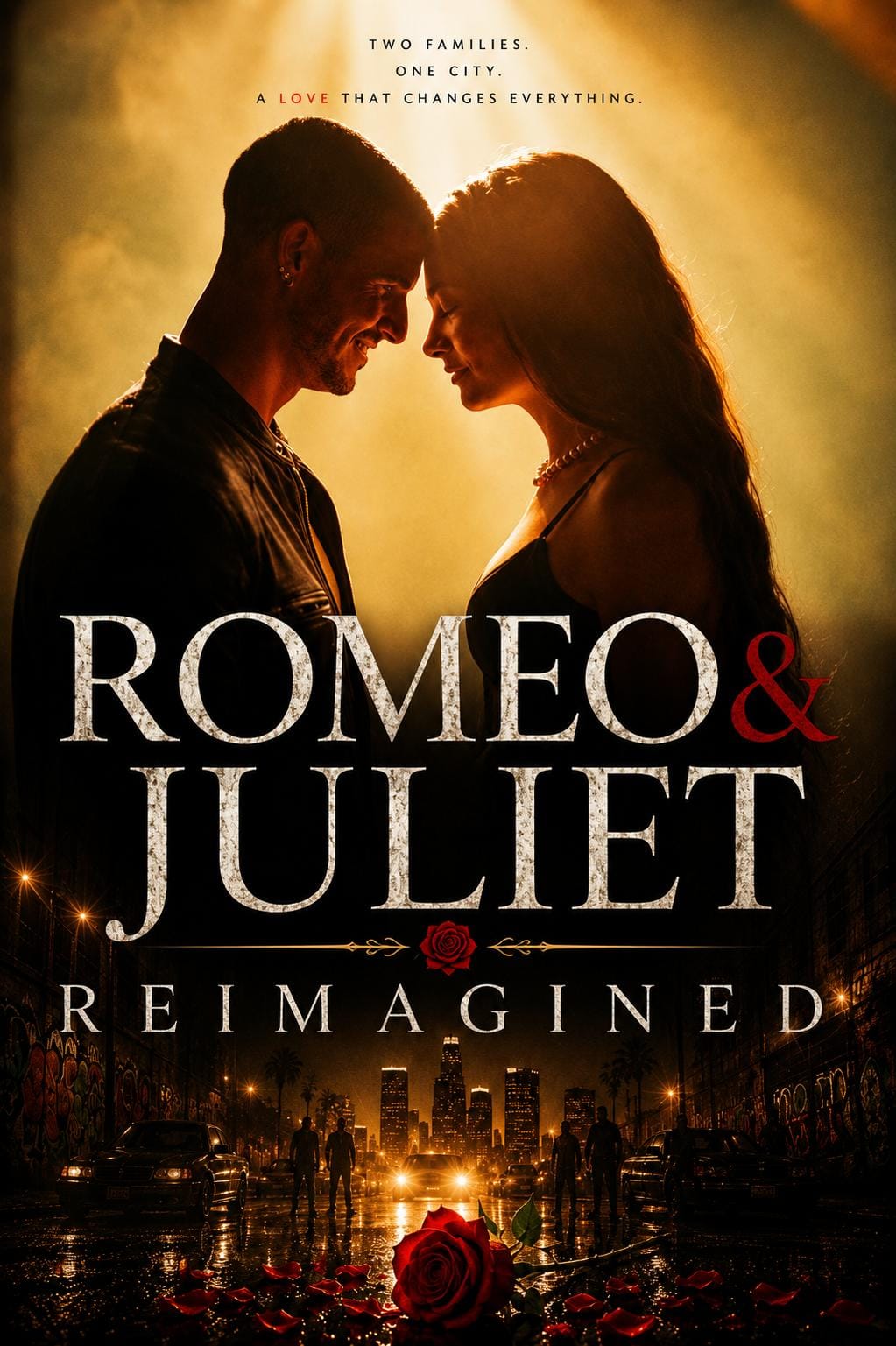
Available on muVpix
Main Cast: Gabrielle Faith Brown – Juliet;Crayton Carrozza – Romeo;Mitch Arbor – Father Lawrence;Trevor Bush – Benvolio Montague;Dario Herrera – Lord Montague;Jordan Barrett – Mercutio;Rick Vo – Lord Capulet;Marissa Littell – Lady Helen Capulet;Yolanthe Cabau – Nurse;TravQue – Tybalt;Maximillian Decker – Paris;Mustafa Speaks – Captain;Ava Marino – Rosalyn
Creators: Max Decker, Darío Herrera
Director: Max Decker
Writers: Max Decker, Darío Herrera, William Shakespeare
Producers: Nathan Bayne, EP; Liz Fuller, EP; Mustafa Speaks, EP; David Dolansky, Producer; Darío Herrera, Producer; John Lewis, Producer
Cinematorgraphy: Michael Negrin, Colby Ricker
Creative Art Director: Darío Herrera
Images used in this article are sourced from the public internet and are presented for editorial context only. All rights remain with their respective owners.
Credits
Written by Dalia
Design & Motion by VØYD
More Reviews From Dalia
- The Road Between Us — GammaTime's vertical drama about grief, guilt, and two people who choose to meet in the middle. One of the most emotionally precise reviews in the Real Reel catalogue.
 Dalia
Dalia
- My Silent Treasure — Purple Light Pictures' Western romance vertical that builds mystery, cultural texture, and cinematic atmosphere into a format that usually runs on speed.
 Dalia
Dalia
✱