The vertical drama space is maturing fast, and My Silent Treasure from Purple Light Pictures is a case study in what microdrama can achieve when creators commit to tone, place, and performance. Streaming on CandyJar TV, this vertical video production blends Western atmosphere with Latin cultural authenticity — signaling a new benchmark for short-form storytelling on mobile.
⚈ ⚈
This story practically smells like warm desert air, tequila, dust, and slow-burn romance...
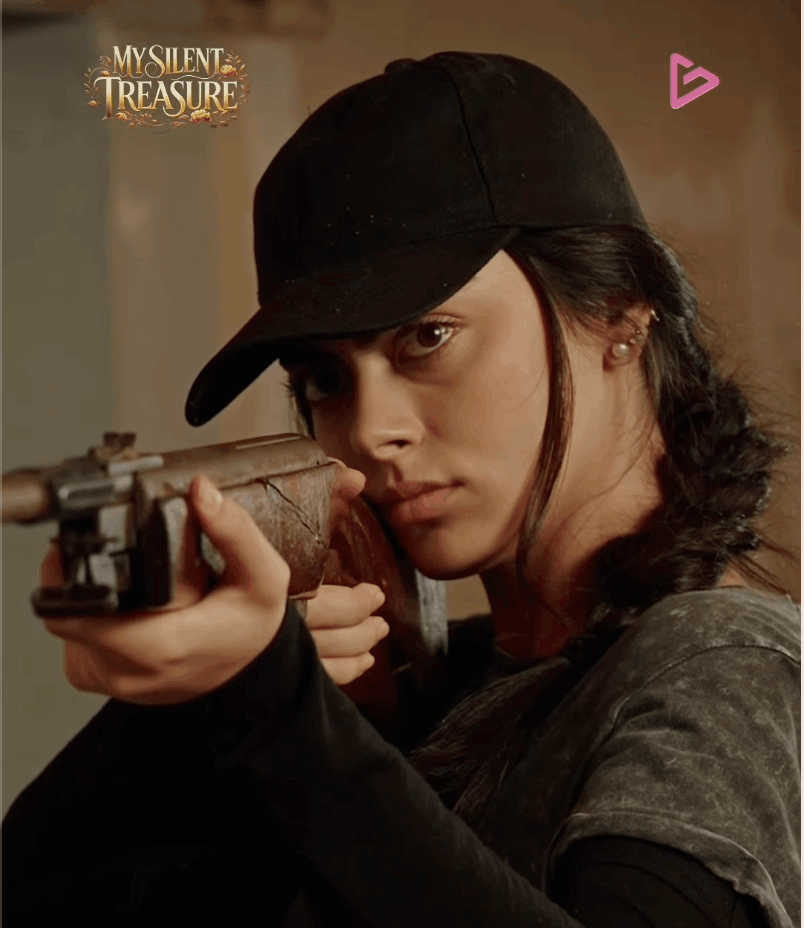
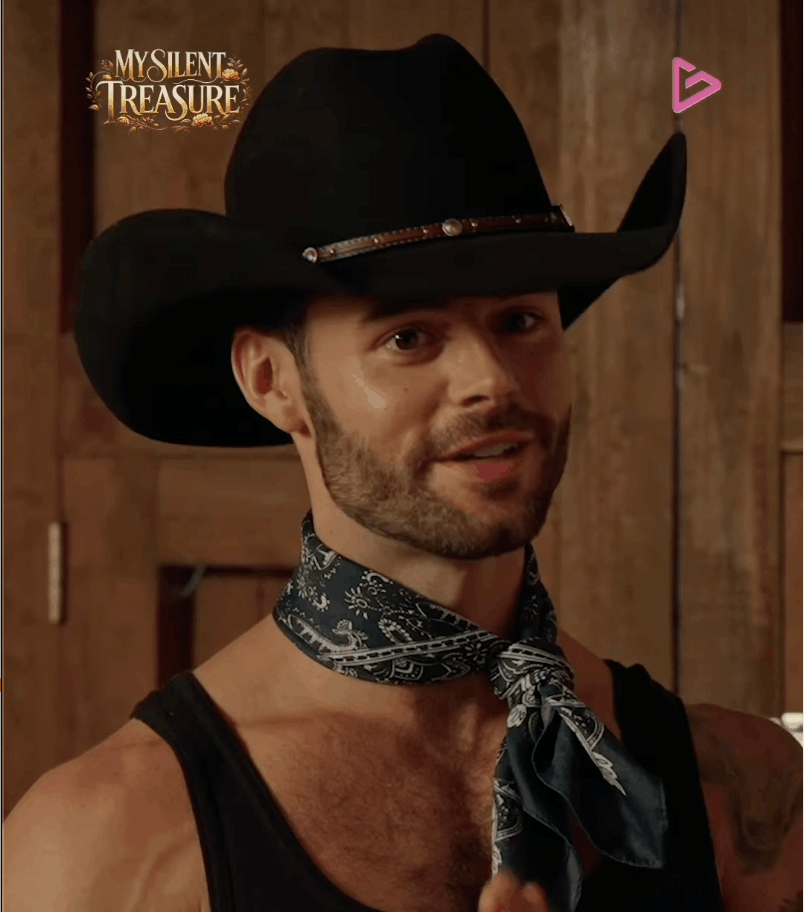
The moment Dean Weston rides into that hacienda looking like a freshly minted cowboy: hat tilted just right, boots shining like they’ve never met actual dirt; you can already feel the tone forming. He thinks he’s stepping into a legacy. Instead he steps into a living world that doesn’t need him to exist. The first person to make it clear he’s not needed? Ana. The Chica. Gun raised. Eyes blazing. Zero words spoken.
Iconic entrance and a big pile of sh..doo-doo.
From there the story becomes this fascinating mix of mystery, romance, cultural texture, and Western treasure hunt energy. Dean inherits the hacienda and surrounding land from his grandfather Don Tomás, but the inheritance comes with layers: letters, secrets, history, and of course the small problem of people who would very much like to steal whatever treasure is hiding on that property.... plus... Ana.
What makes the show refreshing is that it doesn’t lean on cheap tricks or vertical tropes.
No forced cruelty arcs. No bullying. No lazy melodrama.
Instead it builds a world. The hacienda feels real. The town feels connected. The history actually matters.
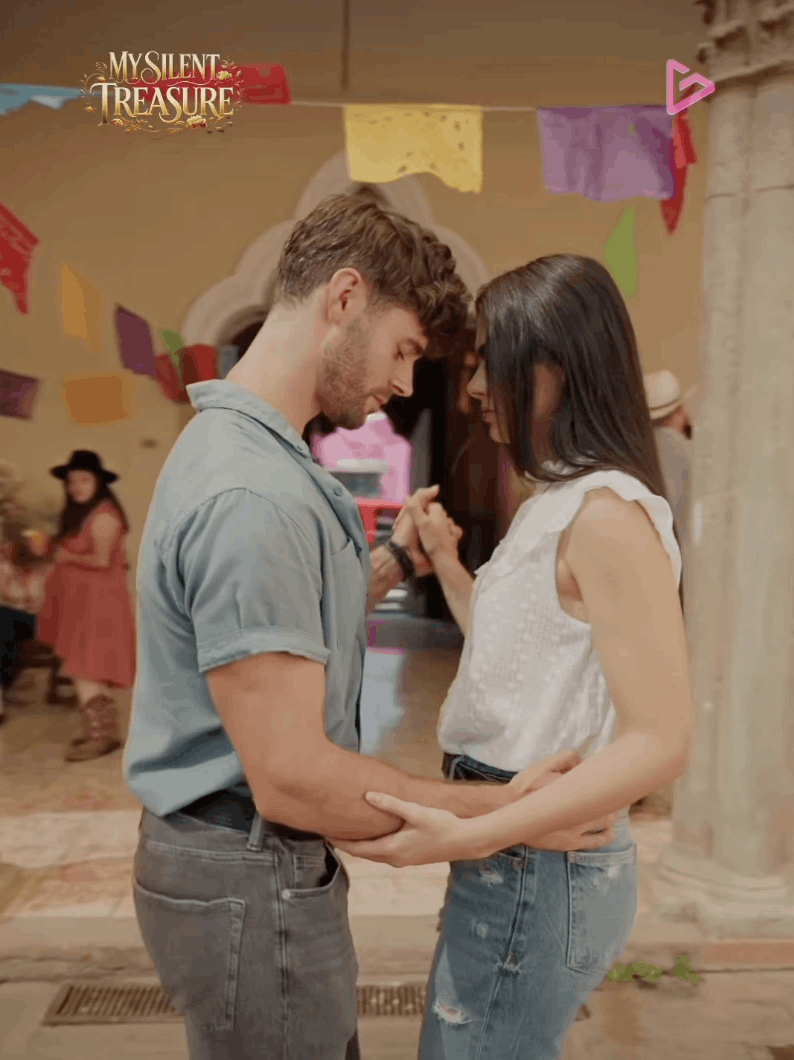
Now, let’s talk about the Latin cultural pulse running through the story. The party scene? The music? The dancing? That wasn’t just a pretty sequence. That was a moment where the show quietly says: "This place existed long before the hero showed up." For Latino viewers especially, that authenticity lands hard. It’s not spectacle. It’s heritage. Meanwhile Dean, our city boy turned accidental ranch owner, slowly learns that you cannot swagger your way through a culture you don’t understand. And watching Ana silently enjoy his learning curve? Delicious.
▙ ▙
Ana communicates entire emotional paragraphs with her eyes...
Dalia
WHY I LOVE IT
• Latin cultural heartbeat: The music, dancing, and communal celebration feel organic. It’s not decorative; it’s identity.
• A heroine who doesn’t need words: Ana communicates entire emotional paragraphs with her eyes. That level of control is rare.
• Western energy in a vertical format: Dusty landscapes, inheritance drama, treasure hunt tension; the scale feels bigger than a phone screen.
• Chemistry that grows instead of exploding: Dean and Ana don’t jump into romance. Their connection builds through trust, shared discovery, and quiet loyalty.
• A refreshingly humane world: The story has tension without resorting to cruelty or unnecessary humiliation tropes.
• The Don Tomás letters: The narrative device works beautifully. Every clue deepens the mythology of the hacienda.
• Humor in the right places: Watching a Boston man attempt rural ranch life is pure entertainment.
WHAT FELL FLAT
Let’s keep it honest, because you know @VerticalFilmsLover does not hand out free passes:
• The ending arrives too fast: The emotional payoff deserved a little more breathing room.
• The treasure mystery could stretch further: The buildup is fantastic, but the final resolution feels slightly rushed.
• A story this rich begs for continuation: You can practically feel that there are more chapters left in these characters.
• Selfishly? I wanted one more episode… maybe five.
FINAL THOUGHTS
My Silent Treasure is one of those rare verticals that doesn’t feel built for the algorithm.
It feels built for storytelling. Between the Mexican landscapes, the Western atmosphere, the authentic culture, and the restrained romance, this production quietly proves something important: Vertical drama can carry cinematic weight when creators trust the material. PurpleLight clearly understands that audiences are ready for stories that respect tone, place, and performance.
MAIN CHARACTER / ACTOR VIBES
Mariana Tostado: Ana (La Chica)
Mariana Tostado delivers a quietly powerful performance as Ana, proving just how effective nonverbal acting can be when handled with precision. Portraying a character without dialogue removes the most obvious tool an actor has, so every emotion must come through expression and physical presence. Mariana meets that challenge with impressive control. Her eyes do most of the storytelling; shifting between defiance, curiosity, and warmth with subtle, intentional changes. What makes Ana compelling is that her silence never reads as weakness. Ana is fiercely loyal to the hacienda and deeply protective of Don Tomás’s legacy, standing firmly in that world long before Dean arrives. In many ways, Ana is the emotional guardian of the hacienda. She understands its value beyond money, and refuses to let outsiders exploit it. Mariana captures that quiet strength with remarkable consistency. Even in moments of danger, that strength never disappears. Ana isn’t defined by her silence. She’s defined by the strength behind it, and Mariana makes every quiet moment feel meaningful.
Eric Guilmette: Dean Weston (El Gringo)
On paper, Dean could have easily slipped into the familiar “rich heir out of his element” trope: City boy arriving in polished boots with no real connection to the land he’s inherited. Eric avoids that trap completely. Instead, he plays Dean with a grounded steadiness that evolves as the story unfolds. From the moment he arrives at the hacienda, there’s a sense that Dean is taking everything in before reacting. He observes first, then acts. That restraint becomes one of the character’s most compelling qualities. When pressure builds, whether from the mystery surrounding Don Tomás’s letters, the tension with Nora, or the danger posed by Joe Slade; Dean doesn’t unravel. He absorbs the situation, processes it, and moves forward with intention. Eric brings a subtle Western presence to the role as well. Not an imitation of classic cowboy figures, but the same calm authority and measured confidence that defined those characters. What ultimately makes the performance work is the warmth he maintains throughout the story. Dean never loses his humanity, even as the stakes escalate. That balance of strength and emotional openness makes his transformation believable. By the end, Dean doesn’t simply inherit the hacienda. He grows into the responsibility of protecting it.
▙ ▙
This place existed long before the hero showed up...
Dalia
Elina Golde: Nora
Nora is the character that quietly introduces the emotional contrast in Dean’s journey. She represents the life Dean used to belong to: polished, structured, and very tied to the expectations of his Boston world. She doesn’t come in swinging as a loud villain. Instead, Nora carries herself with the quiet confidence of someone who believes the future has been decided. She is used to being part of Dean’s life plan. When the hacienda and Ana begin shifting his priorities, Nora’s reactions feel like controlled frustration from someone realizing the ground beneath her is slowly disappearing. Elina mastered this confused pent up loss of patience. Moments where Nora’s smile feels slightly forced or where her patience is clearly wearing thin. She isn’t evil; she’s simply out of place in the world Dean is evolving into. In narrative terms, Nora functions as the final tether to Dean’s old identity. Once that connection breaks, his transformation into the man who belongs at the hacienda is complete.
Benedikt Sebastian: Joe Slade
Now THIS is how you play a villain. Benedikt doesn’t scream evil. He radiates controlled menace. There’s charm in the performance, which actually makes the danger more unsettling. You never quite know when Joe will switch from polite to threatening. That unpredictability adds tension to every scene he enters.
RELATIONSHIPS
Chemistry Breakdown – Dean & Ana
This relationship works because it doesn’t rush. It evolves through shared discovery, mutual respect, and moments of quiet connection.
Their energy moves through several stages: Suspicion → Curiosity → Trust → Protection → Love
The scene where Dean rescues Ana from the barn is the turning point. The way he unties her, holds her, and realizes how close he came to losing her? That moment seals the emotional bond. No grand speech needed. Just two people realizing they belong on the same side.
Dean and Nora represent emotional distance that’s impossible to ignore. Their relationship carries the energy of two people who once fit together but are now moving in different directions. The more Dean connects with the legacy of Don Tomás, and Ana’s strength, the less convincing his old life becomes. That shift shows clearly in his interactions with Nora. With Nora, Dean feels restrained. With Ana, Dean feels authentic. Nora senses that change long before anyone says it out loud. She’s trying to pull him back toward the future they once imagined. Dean has already started building a different one. That emotional mismatch becomes one of the story’s more grounded relationship arcs.
▙ ▙
With Nora, Dean feels restrained. With Ana, Dean feels authentic...
Dalia
SMALL CRACKS IN THE ARMOR
Two Additional Reasons It Fell Flat - Dalia’s Personal Pet Peeves
There were a couple details that pulled me slightly out of the experience.
1. The Don Tomás Letter Detail
These letters are an important emotional device throughout the story. They guide Dean through the legacy of the hacienda and help connect past and present. But one small detail felt oddly impersonal. Don Tomás signs his letters as Don Tomás, rather than something familial like Grandfather or Abuelo. For a story rooted so deeply in heritage, family history, and cultural connection, that choice felt a bit formal for what should have been a deeply personal correspondence. It doesn’t break the narrative, but it creates a slight emotional distance where warmth might have strengthened the bond between generations.
2. The Language Authenticity Issue
This was the reason the series landed at 5.5 instead of a full 6 for me.
The story is set in Mexico, surrounded by a clearly established local community. The dialogue choices occasionally felt inconsistent with the environment. Many of the local characters speak English with exaggerated Spanish accents rather than simply speaking Spanish naturally. And that choice felt unnecessary. Basic Spanish dialogue with subtitles would have elevated authenticity significantly. In real life, locals would absolutely speak Spanish with one another. The decision to lean into broken English occasionally made those moments feel slightly artificial; almost like the production didn’t fully trust the audience to follow subtitles. And yet the police at the end yell “Manos Arriba” like gringos “Manoes Ariba”, instead of correctly. The show does such a strong job capturing cultural atmosphere visually that these small language choices stand out more than they normally would. A bit more confidence in the natural language of the setting would have pushed the realism even further.
DEEP DEEP DIVE
Why Don Tomás Chose Ana for Dean’s Life
The deeper you look at the story, the clearer it becomes that Don Tomás wasn’t simply leaving Dean land and a treasure. He was leaving him a path. Don Tomás understood something about his grandson that Dean himself had not yet realized. Dean came from a world of money, expectations, and appearances. A world that could easily swallow someone whole if they never stopped to question it. The hacienda was meant to ground him. Ana was meant to guide him. Ana represents everything Don Tomás valued about the land and the life he built there: loyalty, resilience, humility, and deep connection to community. She understands the hacienda not as property, but as heritage. By placing Ana at the center of the estate’s history, Don Tomás was ensuring that Dean would not inherit the land blindly. He would have to learn it. He would have to listen to the person who already understood it. Ana becomes the bridge between past and future; the person who can translate Don Tomás’s legacy into something Dean can carry forward. And in doing so, Don Tomás quietly sets the stage for something more than inheritance. He creates the circumstances for Dean to discover not just the treasure hidden in the land… but the partner who belongs beside him as he builds the next chapter of that legacy. In that sense, the real treasure Don Tomás leaves behind isn’t gold. It’s belonging.
Why Ana Being Mute Makes the Romance Stronger
One of the most interesting storytelling choices is Ana’s silence. At first, it might seem like a limitation for a romantic lead. In reality, it becomes one of the most powerful elements of the entire dynamic. Because when a character can’t rely on dialogue, every other form of communication becomes amplified. Ana speaks through eye contact, body language, small gestures, and emotional presence. Mariana handles this with remarkable control. Her performance forces the audience, and Dean, to pay attention. That’s where the relationship becomes so compelling. Dean cannot rely on charm, fast talking, or clever persuasion with Ana. He has to listen differently. He has to slow down, observe, and respond with sincerity instead of words. That dynamic changes the entire rhythm of their relationship. It removes the typical romantic shortcuts and replaces them with something far more intimate: trust built through actions rather than speeches. The result is a connection that feels quieter but much more genuine. Dean doesn’t fall for Ana because of flirtation or witty banter. He falls for her because he sees her strength, her loyalty to the hacienda, and the way she protects Don Tomás’s legacy with absolute conviction. And Ana falls for Dean not because of what he says, but because of what he proves through his choices. That makes their relationship feel earned in a way that many faster-paced romances never quite achieve.

Available on CandyJar TV
Images used in this article are sourced from the public internet and are presented for editorial context only. All rights remain with their respective owners.
✱