Industry analysis of the global vertical drama and microdrama market.
⦿⦿
The vertical drama industry is undergoing a structural shift.
AI-generated microdramas are no longer experimental.
Join Real Reel
You've already watched an AI short drama.
You just didn't know it.
Open YouTube Shorts and start scrolling. According to Kapwing's research on content served to new users, roughly one in five Shorts is pure AI-generated content. YouTube's own CEO Neal Mohan called it out by name in his January 2026 annual letter, using the phrase "AI slop" to describe the flood of low-quality generated videos and pledging to crack down. ↗ Over on TikTok, the platform quietly introduced a feature in November 2025 letting users control how much AI content shows up in their feed. ↗ That toggle exists for a reason: AI content has become so common that platforms had to give users a dial. And most users, even when they're aware of it, keep scrolling anyway.
This is the new baseline. Audiences have already reset their tolerance for AI-generated video, just through everyday use. Against that backdrop, AI entering short drama, a format already built on speed, low cost, and narrative hooks, isn't a disruption. It's a structural rewrite that's already underway.
This piece is Real Reel's current read on where that rewrite stands.
All observations here focus on markets outside mainland China. China is covered separately as a structural reference point at the end.
The First Commercial Signal: Reel.AI and The Billionaire's Return
One of the earliest cases to register on our radar came from Reel.AI, the short drama platform operated by Shanghai-based CreativeFitting. Around mid-2025, its fully AI-generated series The Billionaire's Return started circulating across multiple platforms, later picked up by GoodShort and others, quietly entering the market without a live-action production budget or a traditional studio behind it.
The significance wasn't the title itself. It's not just proof that AI can produce a watchable series.
It's proof that AI-generated content can move through the same international distribution and monetization systems as any other title, get picked up by third-party platforms, and find a paying audience anywhere in the world.
Shortly after, CreativeFitting disclosed that its all-AI short drama slate had surpassed $10 million in annual recurring revenue, and the company closed a multi-million-dollar Pre-A++ funding round. The business case had been made.
Vigloo: A Systematic Bet, Not a One-Off
In late September 2025, Korean platform Vigloo, operated by SpoonLabs and backed by gaming company Krafton, released two fully AI-visual vertical originals: Met a Savior in Hell and Seoul: 2053. These were the first full-length AI-produced vertical dramas out of South Korea.
Vigloo reported that Met a Savior in Hell was completed in a six-week pipeline, cutting costs by 90% and production time by half. Seoul: 2053 used AI to render sandstorms, humanoid figures, and cityscapes that would have eaten up a traditional short drama budget entirely. For the first time, a team could tell a high-concept, visually ambitious story at a price point the short drama format could actually support.
In March 2026, Vigloo went further. It released Bloodbound Luna, its first fully AI-produced English-language vertical series: 22 episodes, fewer than 10 people on the team, completed in eight weeks. The title is part of Vigloo's stated plan to bring AI-produced content up to roughly 30% of its annual slate.
What makes Vigloo worth watching isn't just the numbers. Han Choi, Vigloo's U.S. Content Lead, put it plainly in a recent interview: vertical storytelling depends heavily on emotional nuance, and AI still has real limits there. The approach has to be integration, not replacement. That kind of clarity, in an industry prone to overclaiming, is itself a signal.
 Real Reel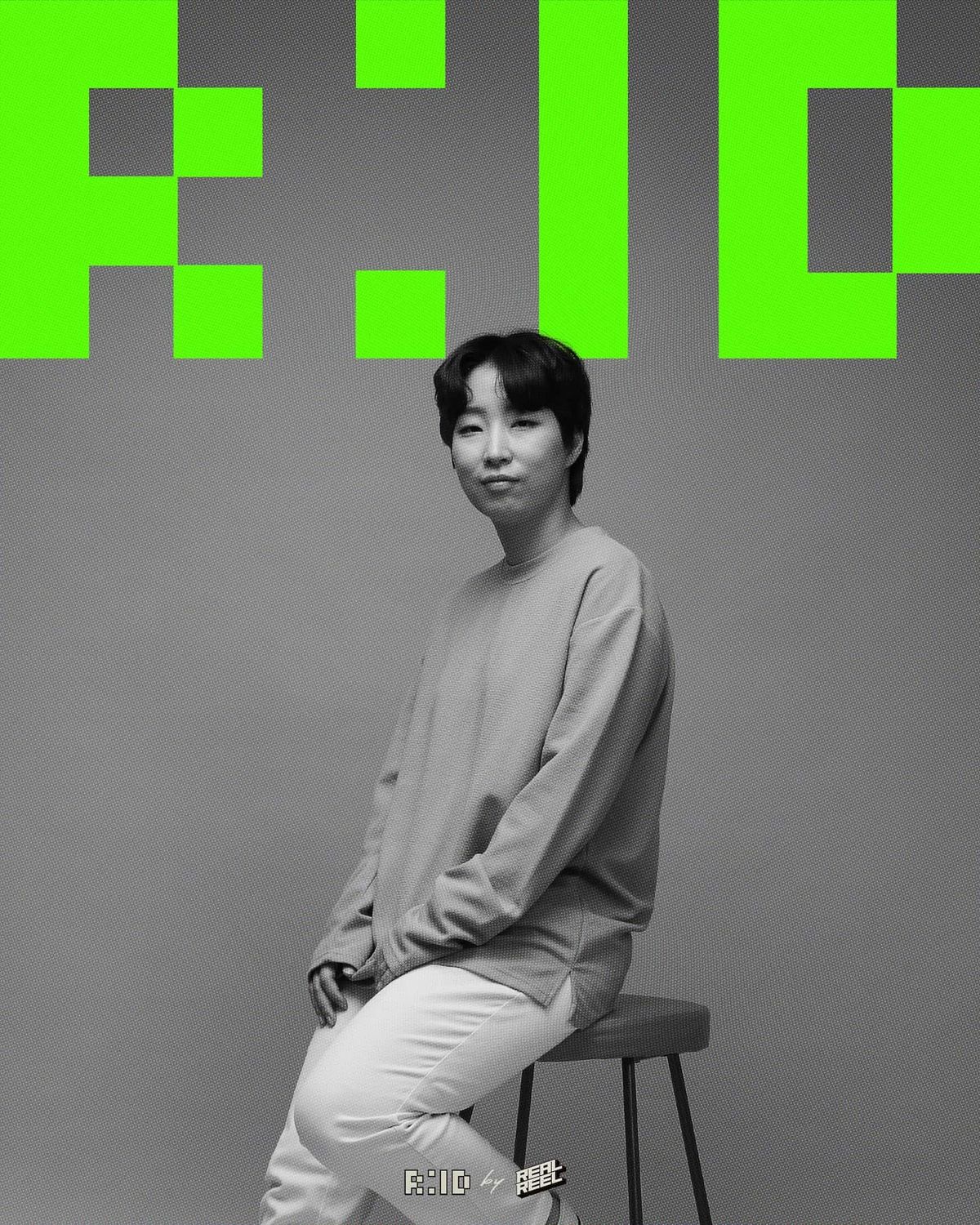
Genre Unlocked: Greek Mythology Goes AI
In March 2026, Too Late! The Daughter of Olympus Forsakes You arrived on ShortMax and spread quickly across social media and drama communities.
The format was familiar: betrayal, divine intervention, a second chance. The setting was not. Greek mythology and Mount Olympus are the kind of visual worlds that would be expensive and logistically painful to produce in live-action short drama. AI-assisted visuals, golden temples, glowing Fates, dramatic lighting, gave the series a look that felt expensive without the budget to match.
This is the less-discussed implication of AI in this space. It's not just that existing genres get cheaper to make. It's that a whole tier of storytelling, fantasy, mythology, sci-fi, epic historical, becomes something a small team can actually attempt. The range of stories that are financially viable to tell has quietly expanded.
The Major Platforms Are Already In
Netshort, GoodShort, DramaBox. Three of the most powerful distribution machines in short drama are all making the same move.
Netshort, known for comic-adapted content and aggressive paid acquisition, is currently pushing two AI short dramas: The Discarded ACE and The Doctor's Obsession with His Pregnant Stepsister. What matters here isn't the titles. It's what Netshort's involvement tells us: a platform with a proven distribution machine has decided that AI content slots cleanly into that machine. No special treatment, no novelty framing. Just content, running through the same funnel as everything else.
GoodShort made a similar call when it picked up The Billionaire's Return from Reel.AI. That was a straightforward content acquisition decision. GoodShort looked at an AI-generated short drama and saw something worth paying for and putting in front of its users on the international market.
Then there's DramaBox. One of the two dominant platforms globally, it has been actively seeking out AI production partners, a deliberate move to pull AI-generated content into its supply chain at scale. For a platform that landed a spot in Disney's 2025 Accelerator Program and consistently ranks among the top two short drama apps worldwide by revenue, that's not experimentation. That's a procurement strategy.
The platforms that built this market through relentless content volume, performance marketing, and pay-to-unlock mechanics are now opening their pipelines to AI-generated content. Not because they're chasing a trend. Because the economics work, and because AI content moves through their existing systems without friction. That's the clearest sign yet that AI short drama has crossed from novelty into normal inventory.
Holywater Tech: Capital Makes Its Move
If the above represents content-layer signals, Holywater's recent moves represent something more definitive at the capital level.
The Ukraine-based company behind My Drama has made three significant moves in quick succession. In October 2025, Fox Entertainment took an equity stake and committed to co-producing more than 200 vertical titles over two years. In January 2026, the company raised $22 million in a round led by Horizon Capital, with participation from U.S. investors including Endeavor Catalyst and Wheelhouse. Then in February 2026, Holywater fully acquired Jeynix, an AI-VFX studio founded in 2025 specializing in facial animation, face replacement, de-aging, and lip-sync. The technology can deliver results that are difficult to distinguish from traditional high-end post-production. Following the acquisition, the company rebranded as Holywater Tech.
The co-founders noted that Jeynix achieved a level of visual fidelity in face-matching that they simply couldn't find anywhere else.
Read these three moves together: Hollywood IP access, U.S. capital validation, and in-house AI visual capability. Holywater Tech is no longer positioning as a content platform. It's positioning as a vertically integrated AI entertainment technology company. That's one of the clearest strategic moves any player in this space has made in the past year.
Where Is AI Short Drama Actually Landing?
AI short drama's global expansion is not uniform. The acceptance logic varies by market, and those differences are structural, not incidental.
United States: Highest willingness to pay, highest quality bar
The U.S. remains the largest revenue market for short drama outside China. Short drama apps generated nearly $3 billion in global in-app revenue in 2025, a 115% year-on-year increase, and the U.S. accounted for the lion's share. In Q1 2025 alone, U.S. short drama app revenue reached $350 million, nearly half of the entire global total for that quarter. But U.S. audiences also carry the highest expectations for production quality. A Raptive survey of 3,000 U.S. adults found that consumer trust drops roughly 50% when content is perceived as AI-generated, regardless of whether viewers actually stop watching.
High payment willingness sits right next to real aesthetic skepticism. That's the central challenge for AI short drama in the American market. Cost-cutting alone isn't a strategy here. The product has to feel made for you, not generated at you.
Southeast Asia: Structurally well-matched
Short drama app downloads in Southeast Asia grew 61% quarter-on-quarter in Q1 2025, approaching 87 million downloads. The region is mobile-first, skews young, runs on ad-unlock monetization, and carries lower cultural resistance to AI-generated content. For AI short drama, which is built for high-speed production and rapid localization, Southeast Asia offers a natural fit that few other markets can match right now.
Latin America: Land-grab in progress
Short drama app downloads grew 278% year-on-year globally in 2025, the fastest-growing app category by downloads, outpacing even AI apps. Latin America drove a significant portion of that growth. DramaWave recorded a 27x increase in downloads in the region in Q1 2025 alone, and newer platforms like RapidTV and MeloShort have built their entire early user bases there. In markets where local live-action production costs are significant, AI content's cost advantage translates more directly into opportunity.
MENA: High potential, high bar
The MENA region's OTT market has reached approximately $5.9 billion, with mobile-first consumption and meaningful willingness to pay. But content sensitivity around religion, gender representation, and family values creates a localization challenge that technology alone can't solve. The barrier to entry in MENA isn't production cost. It's cultural calibration.
The pattern across all four markets: Southeast Asia and Latin America are the lowest-friction, highest-velocity environments for AI short drama right now. The U.S. is the highest-value but hardest-to-please market. MENA is high-potential but requires deep local investment to unlock. AI short drama's global expansion is not one playbook applied everywhere. It's a different calculation in every market.
China: This Has Already Happened There
To understand where the international market is heading, it's worth a brief look at what China's short drama ecosystem looks like today. Not as a template, but as a reference point.
In January 2026 alone, Chinese platforms launched more than 14,600 AI-generated short dramas, roughly 470 new titles per day. Production costs have collapsed. A drama that cost over RMB 1 million to produce in 2024 can now be made for RMB 50,000 to 100,000 using AI tools. When ByteDance released its latest video generation model in early 2026, the founder of Black Myth: Wukong developer Game Science publicly said he was "deeply shocked" by what it could do, pointing specifically to multi-character scenes, complex physical action, and sustained character consistency across shots.
The human cost is real and already visible. A short drama actor who worked 50 consecutive days in 2023 worked six days in March 2026. One respected Chinese actress stated on national television that AI would replace 90% of actors, framing it not as a prediction but as a description of what she already sees in her own industry.
This is not a forecast. It's a dispatch from a market roughly 18 months ahead of where the rest of the world is now.
What We're Watching
Three things are shifting simultaneously, and how they resolve will shape this market over the next two years.
The range of stories that can be told is expanding. AI has brought the cost of high-concept genres, mythology, sci-fi, fantasy, down to a level where small teams can actually attempt them. That changes what gets made, not just how cheaply it gets made.
Audience acceptance is real but uneven. Southeast Asia and Latin America are moving fast. The U.S. is the most valuable market but also the most skeptical of visibly AI-produced content. Anyone trying to scale AI short drama globally has to navigate that gap carefully, because what works in one market can feel off in another.
Technology ownership is starting to matter. Holywater Tech's decision to acquire Jeynix rather than just license its tools is a bet that owning the capability becomes an advantage over time. More platforms will face that same decision in the next 12 months.
The speed of this shift has outpaced most expectations. The more important question now isn't whether AI short drama works. Several players have already answered that. The question is which teams, which markets, and which content strategies will define what comes next.
We'll be watching closely.
FAQ
What exactly is an AI short drama?
An AI short drama uses generative AI tools for visuals, character creation, scene design, voice, or the full production pipeline to create vertical-format serialized content, typically with episodes of one to five minutes. The degree of AI involvement varies widely. Some productions use AI only for VFX or dubbing. Others, like Vigloo's recent releases or Reel.AI's slate, are generated almost entirely through AI workflows from script to final output.
Are audiences aware they're watching AI-generated content?
Often not, and that's partly by design. Most platforms don't label AI-generated short dramas as such. TikTok introduced user controls for AI content volume in late 2025, suggesting awareness is growing, but audiences continue engaging regardless. In the U.S., perception of AI authorship does reduce trust scores, which is why the more successful AI short dramas lean into visual quality rather than flagging their production method.
How does the production cost difference actually break down?
A traditional U.S. or Korean short drama series typically costs $150,000 to $300,000 with an 8 to 10 day shoot. Vigloo reported cutting costs by 90% and production time by half on its AI originals. In China's more mature AI short drama market, full AI-generated series are being produced for the equivalent of $7,000 to $14,000. The gap between AI and live-action is not subtle. It's an order of magnitude at the high end.
What does Holywater Tech's acquisition of Jeynix actually mean in practice?
Jeynix specializes in AI-assisted facial animation, face replacement, de-aging, and lip-sync. These tools allow a production to localize content across languages in days rather than weeks, and to achieve a level of visual polish that previously required expensive post-production work. By bringing Jeynix's full team in-house, Holywater Tech gains direct control over a capability that reduces localization costs and turnaround time across its entire slate of titles.
Is AI short drama a threat to live-action production jobs?
In China, the displacement is already measurable. Actors who were booking 30 projects a month are now booking seven or eight. Some production companies have fully exited live-action and shifted to all-AI workflows. In international markets, the shift is at an earlier stage, but the direction is clear. Vigloo's approach, treating AI as a tool that works alongside human creative judgment rather than replacing it, represents one way the industry is trying to manage that transition. Whether that balance holds as the tools improve is one of the more important open questions in this space.
Further Reading from Real Reel
If this piece raised questions about the broader competitive landscape:
A structured map of which platforms are controlling which layers of the U.S. market, from early system-builders to AI-driven players. If you want to understand where AI short drama fits within the broader competitive picture, start here.
Real Reel
If you want to go deeper on who's building what and where the money is moving:
Real Reel's most detailed look at the revenue data, regional breakdowns, and what ecosystem consolidation actually means across markets. Essential context for anyone tracking how AI-driven production intersects with where audience dollars are flowing.
Real Reel
If you want the format fundamentals before following the AI layer:
The reference piece. Covers episode structure, leading platforms, the three monetization models in active use, and what Disney+, TikTok, and legacy broadcasters are each actually betting on, in more specific terms than the headline announcements suggest.
Real Reel
✱