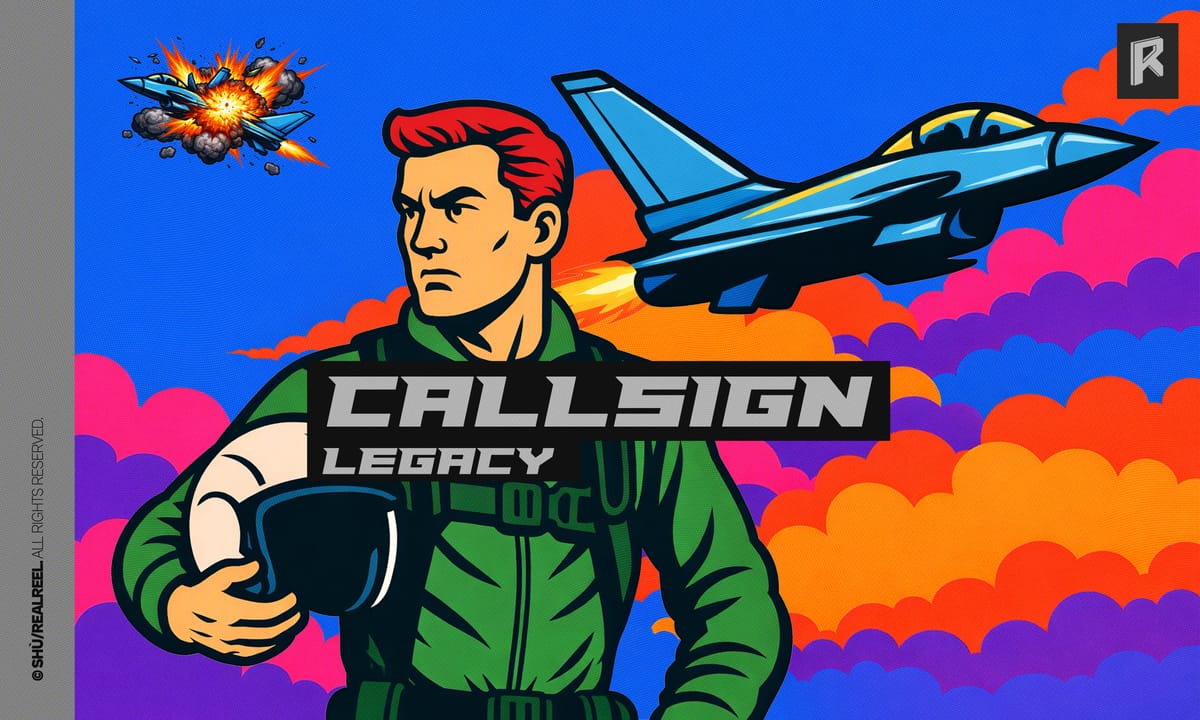
Vertical Drama Review: Callsign: Legacy

⚈ ⚈
ReelShort’s rare male-led action drama delivers a strong opening built on flight fantasy and physical spectacle,
but struggles to sustain credibility as its conflicts shift toward exaggerated interpersonal clashes.
Join Real Reel
In a content ecosystem largely dominated by female-skewing romance and relationship dramas, ReelShort’s Callsign: Legacy stands out simply by existing.
The series is one of the platform’s few clear attempts at a male-led, action-forward narrative, leaning heavily into military aesthetics, physical training, and aviation mythology to attract a different segment of the audience.
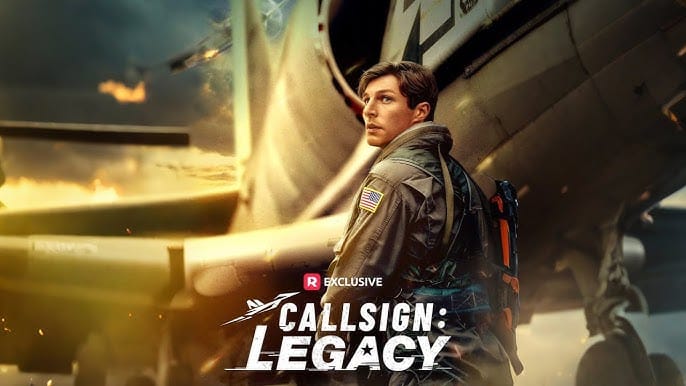
From its opening episodes through the first paywall, the creative intent is unmistakable. The show foregrounds aircraft, flight simulators, helicopter trials, and high-pressure military selection environments, signaling early that this is not a conventional romance disguised in uniform.
The visual language and narrative framing clearly reference Top Gun, positioning the story within a recognizable lineage of elite-pilot fantasies.
The resemblance is deliberate, extending even to the casting and presentation of the male lead, whose screen presence is designed to evoke classic star-driven action charisma.

▉A Growth and Redemption Narrative at Its Core
At the narrative level, Callsign: Legacy centers on a familiar but effective arc: a young man seeking to become a fighter pilot while carrying the burden of his father’s disgraced past. The protagonist’s journey is structured around personal growth and revenge, as revelations about his father’s framing by superiors trigger a cascading series of consequences. Those same forces attempt to manipulate and control the son, using him as leverage within a larger institutional power struggle.
The series repeatedly places its protagonist under pressure, professionally, socially, and emotionally, before offering incremental reversals. He is targeted, humiliated, and obstructed, then gradually vindicated through interventions from higher authorities and through demonstrations of his own competence. The emphasis is less on tactical realism and more on status: who holds power in a given moment, and how that power is publicly asserted or stripped away.

▉Strong Early Momentum
In its early stretch, Callsign: Legacy executes this structure efficiently. The opening episodes establish clear stakes, a rigid hierarchy, and a protagonist positioned at the bottom of that hierarchy. The visual polish and consistent pacing help anchor the fantasy, making the first paywall feel earned rather than arbitrary. For viewers seeking action-driven vertical content, the initial setup delivers a clear promise and follows through on it.
This early success is particularly notable given the platform’s release environment. Since debuting on November 23, the series has accumulated a moderate view count relative to contemporaneous releases, neither a breakout hit nor a bottom-tier performer. Within ReelShort’s high-volume launch strategy, where new titles arrive every few days, maintaining mid-range visibility itself suggests a degree of audience recognition, particularly among viewers responsive to non-romantic formats.

▉Where Credibility Begins to Fray
The series’ challenges emerge in its midsection, where conflict design shifts away from institutional pressure and toward repeated confrontations with antagonistic figures operating at lower levels of the hierarchy. While the overarching conspiracy remains intact, much of the on-screen tension is driven by increasingly direct interpersonal provocations.
For a military-set story, this approach strains credibility. Frequent, openly hostile confrontations, particularly those resembling schoolyard disputes, undermine the disciplined, consequence-driven environment the series initially establishes. The dissonance becomes more pronounced when the protagonist himself responds physically to such provocations during a crisis, a moment that risks damaging the carefully constructed image of an elite trainee operating within strict professional boundaries.
In a genre that depends heavily on protagonist appeal, these moments matter. Male-led action narratives of this type rely on consistent star-building: the audience must believe not only that the hero will succeed, but that he deserves his eventual authority. When conflict resolution veers into behavior that feels impulsive or out of step with the setting, the central fantasy weakens.

▉The Importance of Star Construction
This is where the Top Gun comparison becomes most instructive. Films in that lineage succeed not simply because of aircraft or spectacle, but because of the sustained construction of a central figure audiences want to follow. The appeal of a character like Maverick lies in controlled rebellion, confidence and edge contained within a framework that ultimately reinforces competence and command.
Callsign: Legacy gestures toward this model, particularly in its early episodes, but does not always maintain it as the narrative progresses. The issue is not a lack of escalation, but the direction of escalation. For its core audience, greater intensity does not necessarily come from louder confrontations, but from higher stakes, systemic pressure, and irreversible choices that test the protagonist’s discipline as much as his skill.

▉A Promising Signal for Platform Expansion
Despite its limitations, Callsign: Legacy remains a meaningful data point for ReelShort. The series demonstrates that there is space on the platform for male-led, action-oriented storytelling, and that audiences will engage when production value, pacing, and genre clarity align. Its opening episodes show a strong understanding of how to hook viewers through spectacle and aspiration.
Looking ahead, the lesson is not to abandon this direction, but to refine it. Future projects in this vein would benefit from conflict engines better aligned with audience expectations, less emphasis on exaggerated interpersonal clashes, and more focus on institutional obstacles, professional consequence, and star-driven character building.
If ReelShort continues to diversify its slate, Callsign: Legacy may ultimately be remembered less as a breakout hit and more as an important early step in testing how male-skewing action narratives can function within the vertical drama ecosystem.
✱