Vertical Drama Review: Once Upon A Breakup

⚈ ⚈
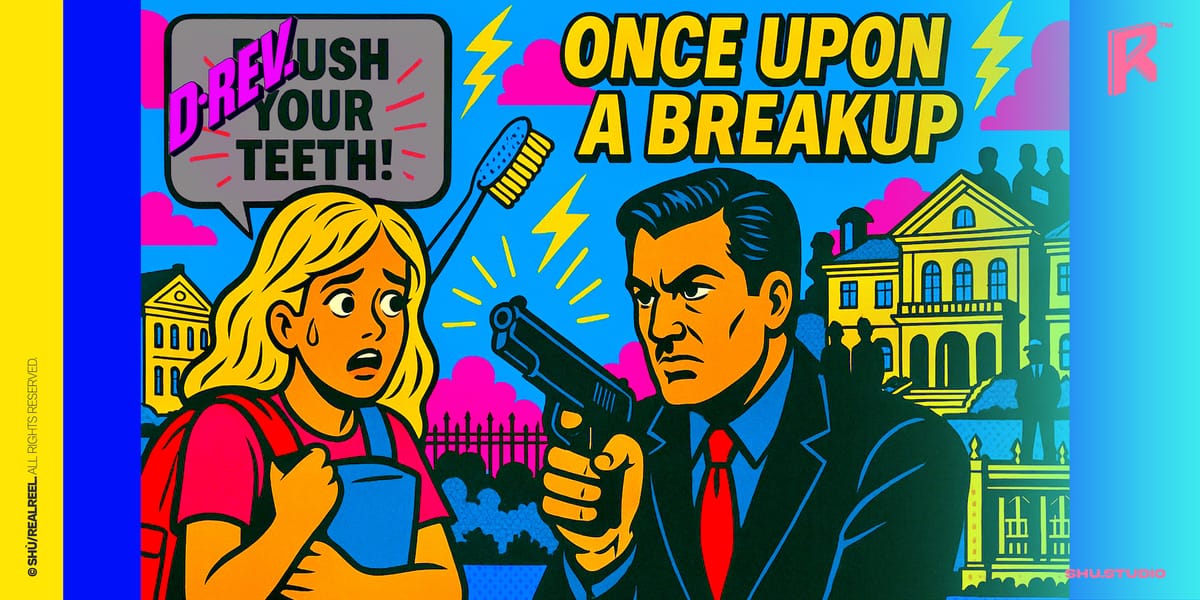
ReelShort’s campus-mafia romance delivers high emotional velocity, until product placement derails the experience.
Once Upon A Breakup has quickly climbed the platform’s internal charts, positioned as a flagship YA-meets-mafia title in the app’s romance catalog.
Join Real Reel
The premise is engineered for vertical storytelling:
Mia, blindsided by a birthday breakup, stumbles into the orbit of Carson Moretti, a campus benefactor whose polished exterior hides his role as a young crime boss. A rescue in the woods, a well-timed gunshot, and a sudden proposal lock the two into a forced-marriage structure that generates conflict every 30–40 seconds, the format’s sweet spot.
The opening chapters execute the formula cleanly. Emotional beats escalate rapidly: a near assault, a frantic escape, Mia’s first encounter with Carson, and the improvised marriage bargain that anchors the series.
The structure aligns with ReelShort’s proven loop of threat → intervention → emotional whiplash → micro-release, keeping retention high while building a fantasy of protection, danger, and unintended intimacy.
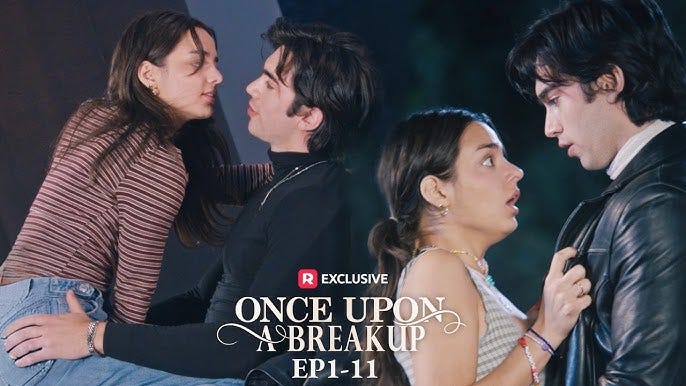
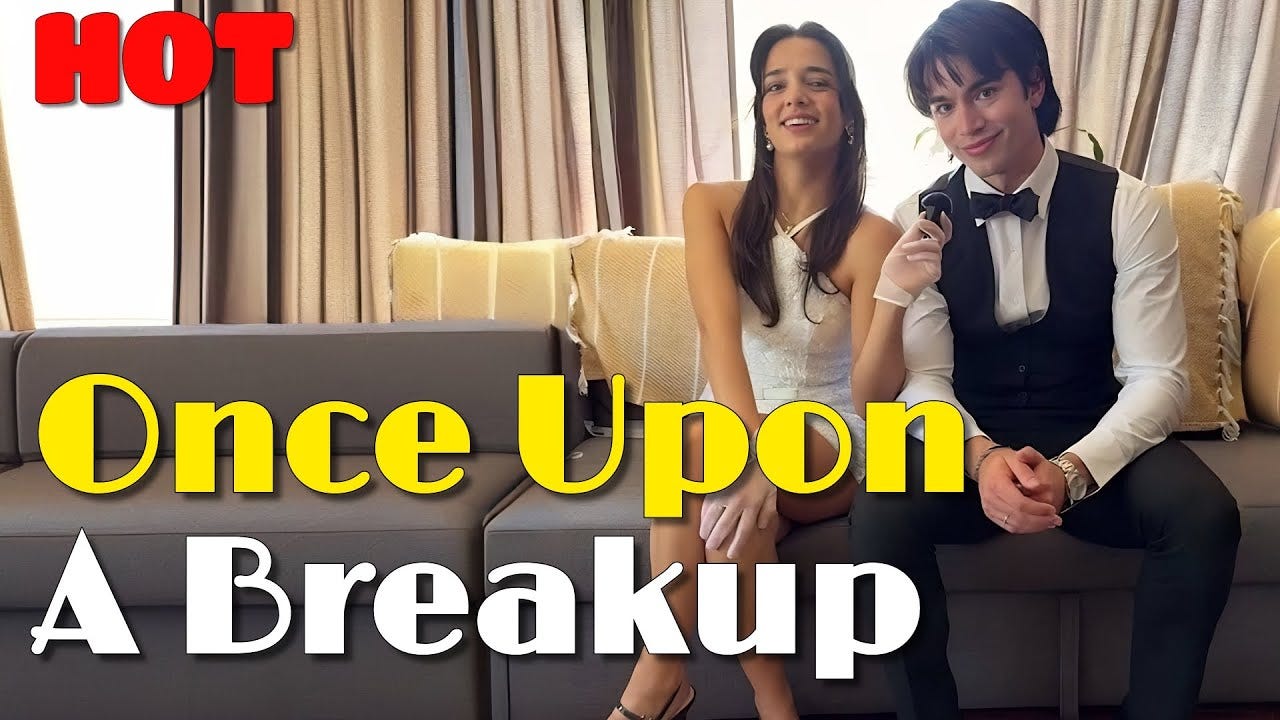
Performers Maria Barseghian and Nate Flores adapt well to 9:16 staging: tight framing carries most of the narrative weight, and their micro-expressions do the heavy lifting in place of traditional coverage.
But the show’s momentum takes a notable hit beginning in Episode 7, where product placement becomes intrusive enough to disrupt narrative logic and emotional continuity.
A Case Study in Disrupted Immersion: The Toothbrush Incident
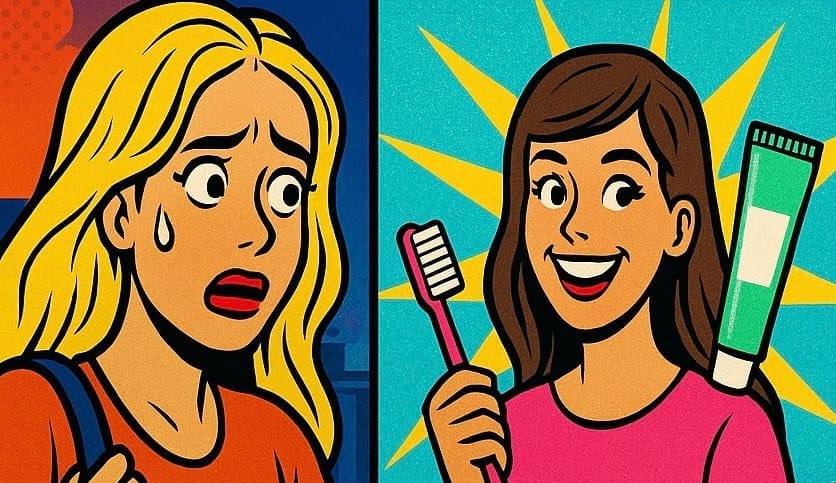
Episode 7 introduces an abruptly cheerful toothbrush advertisement embedded directly into a scene where Mia’s emotional state should be fragmented, fearful, and conflicted. She has just entered a forced marriage with a man she barely knows, under circumstances that merge coercion with survival instinct. Instead of deepening this tension, the sequence cuts to upbeat music and a lifestyle-style brushing montage.
The result is tonal dissonance so sharp it breaks immersion: a character who should be processing trauma is suddenly performing product-demo delight.
For viewers, especially paid subscribers, this isn’t simply an annoyance, it undermines the psychological throughline that the series spent six episodes constructing. Vertical dramas rely heavily on continuous affect: the viewer must feel the protagonist’s escalating stakes without interruption. Here, the ad functions as an emotional reset button at the exact moment the story requires continuity.
Episode 8 continues the issue, with a second placement that abruptly shifts Mia from survival-mode to buying gifts and rings for Carson : a jump unsupported by her emotional arc and one that makes the ad feel like it’s driving the scene rather than the character.”
Does the fantasy land?
On the pleasure side, Once Upon A Breakup understands its core fantasy:
- A heroine who has been taken for granted discovers she was someone’s main character all along.
- The most powerful man in the room is soft only for her and casually lethal to everyone who hurts her.
- The ex who wasted her time is forced to watch her “upgrade.”
Carson is designed as the vertical era’s classic “lethal puppy”: gun in one hand, gentle hand on Mia’s shoulder in the next shot. The early episodes stack protective gestures: bandaging her wounds, remembering her birthday when even Aiden forgot, giving her the choice to walk away… in theory.
At the same time, the show leans hard into dangerous wish fulfillment. The snake-and-gun gag, the buried-body glimpses, the forced proximity in a locked-down mansion: they all sit a breath away from genuine horror. Vertical drama loves this edge: your brain knows you should run, but the camera keeps finding the jawline in soft lighting. For viewers already fluent in mafia TikTok edits, that’s the dopamine.
Where it wobbles is tone. Scenes of attempted assault, implied executions, and Mia’s very real fear are often followed, within a couple of beats, by flirty banter and wedding planning. The series tries to smooth things over by emphasizing Carson’s long-standing crush and Mia’s growing agency, but some jumps feel like they’re happening for the sake of the next jolt, not because the characters have actually processed anything.
If you can swallow the genre logic, “my kidnapper is my safest option”, the show plays like a heightened fanfic fantasy. If you’re sensitive to romanticized violence or consent gray zones, you’ll probably be pausing the app to yell at your phone.
Industry & craft, in one pass
Structurally, Once Upon A Breakup is built like most current ReelShort flagships: a grid of bite-size vertical episodes that can also be stitched into a 90-plus-minute “movie cut” for YouTube and Facebook distribution.
It arrives as ReelShort doubles down on premium-feeling romances following titles like How to Tame a Silver Fox and True Heiress vs. Fake Queen Bee, which the platform pushes as evidence that micro-dramas can carry full genre fantasies in 9:16.
From a craft perspective, a few things stand out:
1. The Engine: Mia as fear-driven protagonist
Real Reel’s own character playbook talks about “Engines”: protagonists whose wants are simple, urgent, and reckless enough to drive the loop. Mia’s Engine is crystal clear:
“I just want to be safe and loved by someone who actually chooses me.”
Every big decision spins out of that:
- Breaking up with Aiden on the spot when he chooses Jessica.
- Running blindly into the woods instead of going back to the dorm.
- Offering herself to Carson to avoid being “disposed of.”
- Proposing marriage as a shield.
These aren’t “smart” choices; they’re vertical-era choices : the kind that keep consequences crashing in every 2–3 episodes. For creators, Mia is a good case study in how to bind a story’s emotional stakes to a character’s impulsive logic.
2. Walls and Witnesses: power in human form
On the Wall side, the show gives Mia not one but two human price tags:
- Carson’s crime family and business world, who decide how safe she is and what “being Mrs. Moretti” costs.
- Aiden and Nick on campus, who embody the everyday compromises she’s been making with men who expect her to tolerate disrespect.
The best scenes pit these worlds against each other: campus administrators grateful for Carson’s “clean money” donations, classmates gawking at Mia’s new status, an ex-boyfriend suddenly realizing the girl he sidelined is now sitting at the head table. That’s where the series briefly becomes more than a pure romance and brushes against questions of class, reputation, and who gets to stand “under the sun.”
3. Nuke moments and the satisfaction loop
Vertical dramas live or die on what Real Reel calls the satisfaction hit : a frustration → hope → reversal → release loop that resets every few minutes. Once Upon A Breakup stacks its “Nuke” moments (those big emotional detonations) aggressively early:
- The birthday betrayal.
- The tent assault.
- The gunshot + implied execution.
- The “marry me or kill me” proposal.
In clips and early episodes, you can feel a jolt landing roughly every 30–40 seconds: a hand on a throat, a gun raised, a wedding vow spoken too fast. The show’s better stretches remember to pay those jolts off with micro-releases: Carson intervening, Aiden getting humiliated, Mia realizing she has more leverage as his wife than as his captive. When that rhythm is tight, the binge feels inevitable.
Where the loop slips is in the mid-range emotional arcs. Some conflicts resolve almost instantly because the series is racing to the next cliffhanger. Others drag a few episodes too long without adding new information, leaning on repetition rather than escalation. It’s a common ReelShort issue: the platform’s cadence expectations sometimes overpower the internal logic of a scene.
4. Performance and staging in 9:16
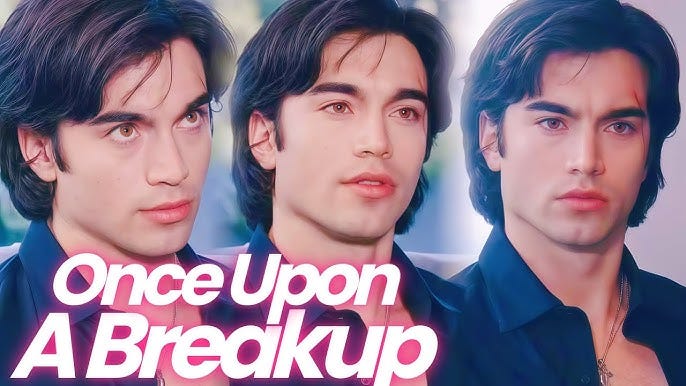
Casting-wise, Maria Barseghian and Nate Flores (credited as Maria Barseghian and Nate Flores/Nathan Flores in promos) are very much part of the “vertical actors” wave , young performers learning to work almost entirely in close-up, where micro-expressions have to carry what TV dramas would handle with coverage and slow burn.
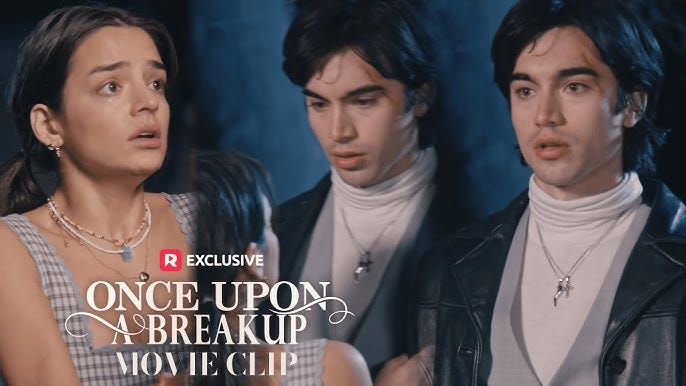
Available clips show the camera staying glued to faces: Mia’s panic in the tent, Carson’s measured stare as he levels the gun, the tiny flicker when she realizes he remembered her birthday. The production leans on:
- Tight framing for threat and intimacy.
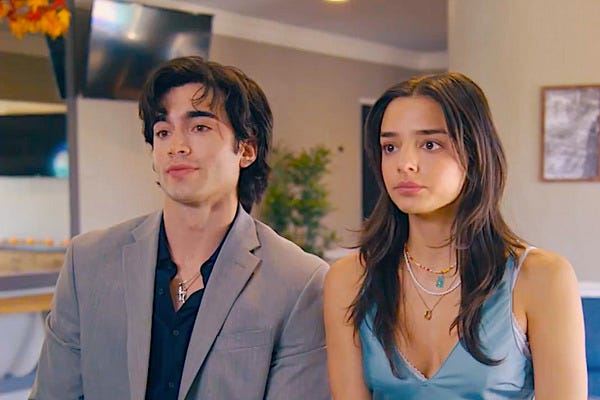
- Simple, readable costuming (Carson in tailored darks, Mia in student-casual that gradually shifts more polished).
- A limited set palette , mansion interiors, campus corridors, party lights , that keeps the world building inexpensive but recognizable.
None of it screams “premium cable,” but within the constraints of vertical drama budgets, it does the job: it puts faces and feelings where your thumb is.
✱