Vertical Drama Weekly: Vertical Builds the Machine


✱
This week’s vertical drama signals weren’t about format validation or breakout view counts. They were about infrastructure — how supply is being organized, how talent pipelines are forming, how legacy IP is being re-exploited, and how platforms are professionalizing distribution.
Week of Feb 1–7, 2026
Join Real Reel
UK: Tattle TV partners with Onset Octopus to build a micro-drama slate
Tattle TV announced a production partnership with UK-based vertical producer Onset Octopus, framed explicitly around developing a slate of British vertical micro-dramas, rather than individual pilot experiments. The collaboration positions Onset Octopus as a repeat supplier, not a one-off vendor.
The significance lies in how supply is being structured: this is a platform formalizing output through a production partner that already operates within the constraints of vertical storytelling — short episode architecture, cliff-driven pacing, vertical framing, and high-frequency delivery.
This marks a shift from performance-led commissioning to delivery-led commissioning. Slate partnerships signal that vertical platforms are prioritizing reliability, cadence, and rights clarity — the conditions required for institutional capital and long-term platform planning.
 Jesse Whittock
Africa: Micro-drama training initiatives point to ecosystem engineering
The Digital Creator Africa Academy launched a micro-drama training initiative focused on building format-native vertical storytelling skills across Africa and the diaspora, including writing, production workflows, and vertical-specific narrative design.
This is not a platform expansion play. It’s a labor and capability intervention — training people specifically to produce vertical drama at scale, rather than adapting long-form habits to short screens.
Training programs are the earliest indicator of future supply geography. When vertical becomes teachable as a discipline, it stops being export-dependent and becomes locally manufacturable — reshaping global cost curves and long-term content sourcing for platforms.
 Andy Fry
LatAm → US: Telemundo turns a hit longform title into a ReelShort vertical product
Telemundo Studios launched a mobile-first vertical version of Armas de Mujer (’Till Jail Do Us Part) on ReelShort: 123 episodes, roughly two minutes each, released as a vertical microdrama product with Spanish + English-captioning and an English-dubbed track.
The key is that this is not “promo clips” or a companion feed. It’s a structural reformat — a longform IP being rebuilt into vertical-native episode architecture designed for mobile consumption and vertical platform monetization logic.
This is vertical becoming a true exploitation window, not a marketing layer. Once studios can repackage catalog IP into vertical-native episodic products, vertical rights start to matter contractually, libraries gain a new monetization path, and platforms gain a lower-risk supply stream that doesn’t rely entirely on original commissioning.


APAC: ReelShort formalizes expansion through a multi-year partnership with AR
ReelShort entered a multi-year strategic partnership with Hong Kong-based Asia Productions (AR), naming AR as its exclusive agency for APAC with a mandate to expand reach and accessibility across the region.
This is operations-forward news: the implication is that ReelShort is moving from opportunistic regional traction to a repeatable go-to-market structure.
Distribution infrastructure is the maturity tell. Multi-year regional partners signal that vertical platforms are graduating from “UA + hits” toward localization-as-operations (payments, compliance, marketing access, channel relationships). That’s how a fast-growing app starts to behave like a scalable global media business.
 Lyene Marie Darang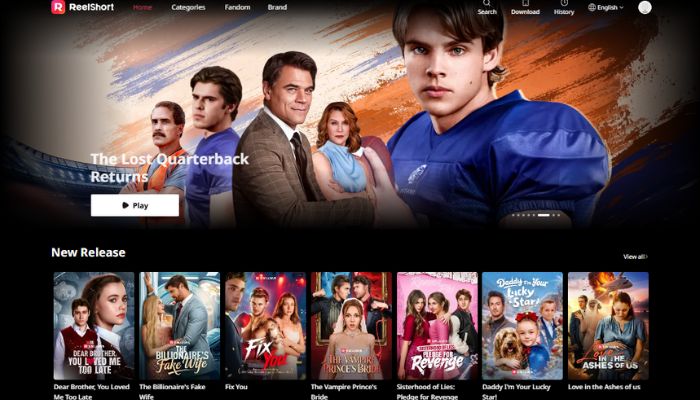
What we missed (Jan 15) — and why it mattered
Variety reported that Taye Diggs would star in (and executive produce) a vertical drama romance project for CandyJar.
A-list casting is a capital-and-standards signal. When recognizable U.S. talent attaches as both star and EP, it implies the category is building credibility not just with audiences but with reps, financiers, and talent pipelines — the ecosystem layers that determine whether vertical becomes a mainstream production lane or stays a performance-marketing niche.
 Selome Hailu
✱