Hana Yori Dango has been adapted into television across five countries, each version building on decades of audience attachment and hours of runtime to develop its ensemble and emotional arcs. ReelShort's Taming My Bullies attempts the same emotional territory in vertical drama — a microdrama format with a fraction of that runtime and none of that infrastructure. The question it raises is less about faithfulness and more about what the vertical video format can structurally hold.
⚈ ⚈
The real question is whether it preserves the spirit of the original story.
For the most part, it does.
-
Review by Aline
from I Love Verticals
Can a Vertical Reimagining Capture the Magic of Hana Yori Dango?
Few romance stories have left a mark on international audiences quite like Hana Yori Dango.
Originally created by Yōko Kamio, the manga became one of the most influential shojo series ever published, spawning multiple adaptations across Asia, including Japan's iconic Hana Yori Dango, Korea's Boys Over Flowers, Taiwan's Meteor Garden, China's Meteor Garden reboot, and Thailand's F4 Thailand: Boys Over Flowers. Each version brought its own cultural identity while preserving the core elements that made the story beloved by millions.
So when ReelShort announced Taming My Bullies, a Vertical heavily inspired by Hana Yori Dango, expectations were inevitably high.
As both a longtime Vertical viewer and a lifelong HANADAN fan, I approached the series with equal parts excitement and skepticism.
he challenge wasn't simply drawing inspiration from a famous romance. It was adapting one of the most recognizable romance stories in Asian entertainment history into a format designed around short episodes, rapid pacing, and limited runtime.
After three parts and a complete story, the question remains:
Did Taming My Bullies successfully bring Hana Yori Dango into VertiLand?
The answer is more complex than a simple yes or no.
Understanding the Challenge of Reimagining Hana Yori Dango
Before discussing the series itself, it's important to understand the magnitude of what ReelShort attempted.
Hana Yori Dango isn't simply a romance.
It is a sprawling story featuring dozens of important supporting characters, multiple interconnected subplots, extensive character development, and emotional arcs that unfold over months or even years.
Most traditional adaptations have the advantage of lengthy television seasons. They have the luxury of spending entire episodes exploring side characters, friendships, family dynamics, and emotional growth.
Vertical storytelling does not.
Even with three separate installments, Taming My Bullies operates within far stricter limitations than the traditional HANADAN adaptations it draws inspiration from.
As a result, the real question isn't whether the series perfectly recreates the source material's scope.
No Vertical reimagining could realistically accomplish that within the Vertical format.
The real question is whether it preserves the spirit of the original story.
For the most part, it does.
▙ ▙
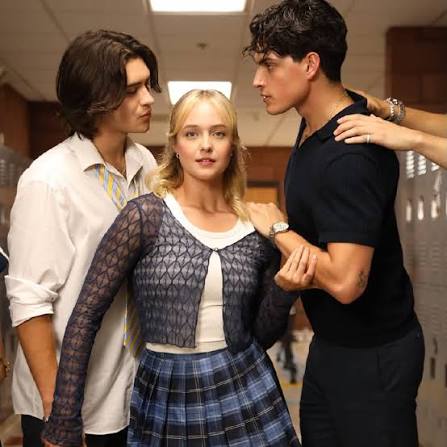
Remove his vulnerability and he becomes a bully. Remove his arrogance and he loses his identity...
Aline
The Heart of HANADAN Is Still There
One of the greatest strengths of Taming My Bullies is that it clearly understands what makes Hana Yori Dango work.
The series preserves many of the iconic ingredients fans expect:
- The strong-willed female lead who refuses to bow to wealth and status.
- The elite group of wealthy boys ruling the school.
- The complicated romance between a stubborn heroine and an emotionally immature rich heir.
- The rival love interest.
- The arranged fiancée.
- The controlling mother.
- The rooftop moments.
- The iconic umbrella imagery.
- The emotional misunderstandings.
- The eventual proposal.
- The details have changed.
- The setting has changed.
- The cultural context has changed.
- But the emotional DNA remains recognizable.
- At no point did I question whether I was watching a HANADAN inspiration.
- The influence is present from beginning to end.
Emma and Rowan Carry the Story
Any adaptation of Hana Yori Dango ultimately succeeds or fails based on its central couple.
Emma and Rowan had enormous shoes to fill.
Emma clearly draws inspiration from Makino, one of the most beloved shojo protagonists ever created.
Fortunately, the series understands that Makino's greatest strength was never her kindness.
It was her resilience.
Emma maintains that same spirit.
She refuses to be intimidated by wealth, popularity, or social pressure. Even when facing impossible situations, she continues fighting for herself and the people she cares about.
The decision to make her an athlete rather than simply an ordinary student was particularly smart. It modernizes the character while preserving her determination and independence.
Then there is Rowan.
Perhaps the most difficult character to reinterpret.
The challenge with creating a character inspired by Domyoji is that he is simultaneously ridiculous and lovable.
Remove his vulnerability and he becomes a bully.
Remove his arrogance and he loses his identity.
The balance is incredibly difficult to achieve.
Cameron Porras manages it remarkably well.
His Rowan is impulsive, emotionally immature, often frustrating, and occasionally clueless. More importantly, he remains deeply sincere.
The result is a character audiences can root for despite his many flaws.
And ultimately, that's exactly what Domyoji has always been.
August and the Challenge of Reimagining Rui
If Rowan is the heart of the story, August represents one of its greatest challenges.
Rui is one of the most beloved characters in the entire franchise.
His role is deceptively complicated.
He must be appealing enough to create a believable love triangle, but not so appealing that audiences stop supporting the main couple.
Luke Dodge handles this balancing act extremely well.
His August feels calm, kind, emotionally intelligent, and genuinely supportive.
In some ways, he may even be more approachable than certain previous versions of Rui.
However, August also highlights one of the series’ biggest limitations.
His storyline feels incomplete.
This isn't necessarily the fault of the actor or the writing.
It's simply a consequence of time.
The original source material devotes significant attention to Rui's personal journey, particularly his connection to Shizuka.
Without that storyline, August remains compelling, but loses some of the depth that made Rui such an iconic character.

▙ ▙
A great soundtrack can elevate a story long after the final episode ends...
Aline
Supporting Characters Matter
One area where Taming My Bullies deserves significant praise is its supporting cast.
Hazel emerges as one of the series' strongest additions.
Rather than functioning solely as "the best friend," she becomes an important participant in the story's emotional development.
Bar Daniel brings warmth, humor, and authenticity to the role.
Her relationship with Liam is also one of the adaptation's most enjoyable surprises.
Natalie deserves recognition as well.
Initially positioned as a potential antagonist, she eventually develops into something far more interesting.
Instead of becoming another jealous rival fighting for Rowan's attention, she pursues her own goals and gradually becomes a genuine ally.
It's a refreshing subversion of a familiar trope.
And honestly?
I was very happy she received her own happy ending.
The Mother Problem
Every adaptation of Hana Yori Dango is judged by one specific character: The mother.
She is arguably the franchise's most important antagonist.
The challenge isn't making her evil. The challenge is making her believable.
Victoria succeeds.
While she may not reach the terrifying heights of some previous versions, particularly Thailand's unforgettable portrayal, she remains controlling, manipulative, and deeply committed to maintaining her family's status.
Most importantly, viewers immediately understand why Emma is fighting against her.
That's exactly what the role requires.
What Was Missing?
This is where the Vertical format begins to reveal its limitations.
Several important characters simply do not exist in this reimagining.
Tsubaki is perhaps the most obvious omission.
As Domyoji's older sister, she plays a critical role in helping him mature throughout the original story.
Her absence is understandable but still noticeable.
Susumu is another loss.
His relationship with Domyoji was one of the most charming dynamics in the original manga and adaptations.
Then there's Shizuka.
For longtime fans, this may be the biggest omission of all.
Shizuka's influence extends far beyond Rui's storyline. She serves as one of the emotional pillars of the entire narrative. She inspires Rui, influences Makino, and earns the respect of every member of the F4, including Domyoji himself.
Removing her simplifies the story considerably, but also removes an important layer of emotional complexity.
And finally, Sakurako.
Unlike traditional bullies, Sakurako operated through manipulation and psychological strategy.
She introduced a very different type of conflict that the Vertical adaptation never fully replaces.
These omissions don't ruin the adaptation.
But they do explain why longtime fans may feel something is missing.

▙ ▙
At no point did I question whether I was watching a HANADAN inspiration...
Aline
The Element This Adaptations Forget: Music
There is another aspect of Hana Yori Dango that goes overlooked during this adaptation. The soundtrack.
For many fans, the music became inseparable from the story itself.
Twenty years later, hearing "Wish," "Love So Sweet," or "One Love" instantly transports me back to the Japanese series.
Those songs aren't merely opening themes.
They're emotional anchors.
They're part of the identity of the franchise.
The same thing happened with F4 Thailand.
"Who Am I" remains one of my favorite Thai songs, while "Shooting Star" has one of those choruses that permanently lives in your head.
The music became part of the lore.
Part of the memory.
Part of the experience.
This is actually one area where Verticals still lag behind other forms of entertainment.
Very few Vertical productions invest in original music.
Even fewer create songs that become associated with their stories.
It's something I'd love to see the industry embrace more aggressively moving forward.
A great soundtrack can elevate a story long after the final episode ends.
Final Verdict
So, is Taming My Bullies a good Vertical?
Absolutely.
It's one of ReelShort's strongest romance productions and one of the most ambitious reimaginings the Vertical industry has attempted.
Is it a great reimagining inspired by Hana Yori Dango?
That's a more difficult question.
The answer depends largely on what you're looking for.
If your goal is to relive every subplot, supporting character, and emotional beat of the original story, you'll probably find the series lacking.
The Vertical format simply doesn't provide enough space.
However, if your goal is to experience the core spirit of Hana Yori Dango through a modern Western lens, Taming My Bullies succeeds surprisingly well.
For me, the Japanese version remains the definitive adaptation, with F4 Thailand following closely behind.
Those productions had more time, more space, and more freedom to fully explore the world and its characters.
But that doesn't diminish what ReelShort accomplished.
Reimagining elements of one of the most beloved romance stories ever written into a Vertical was never going to be easy.
The fact that Taming My Bullies still feels unmistakably like HANADAN by the end is, perhaps, its greatest achievement.
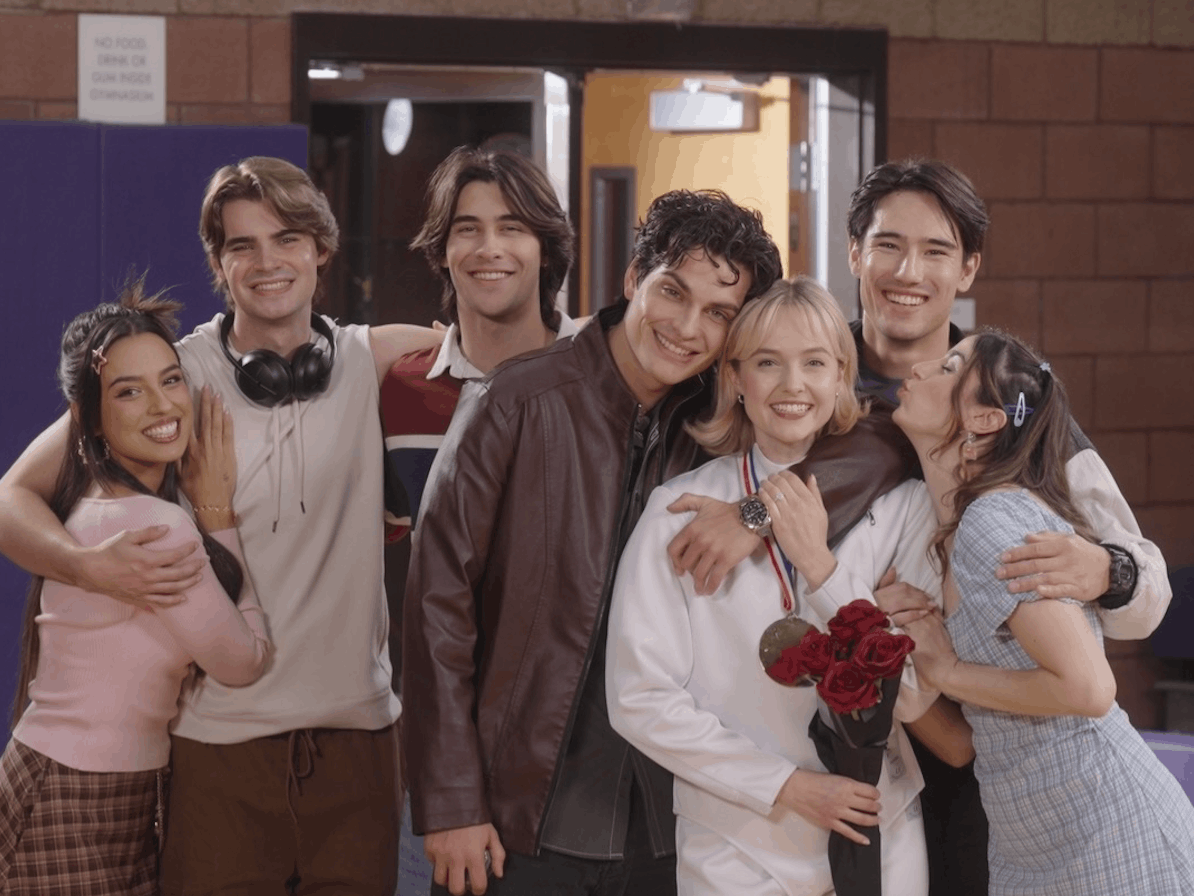
Available on ReelShort
Cast: Meg Bush, Cameron Porras, Bar Daniel, Luke Dodge, Travis Owens, Grant Lowell Garcia, Celine Planata, Stacey Marie Keba, Tigerlily Morales, Heaven Nunez, Mackenna Shults
Images used in this article are sourced from the public internet and are presented for editorial context only. All rights remain with their respective owners.
Credits
Written by Aline
Design & Motion by VØYD
More Reviews From Aline
- Golden Feather: Temptation Game — a ReelShort vertical that reframes the seduction narrative with a gender-flipped premise, built on manipulation, power games, and calculated social hierarchy.
 Aline
Aline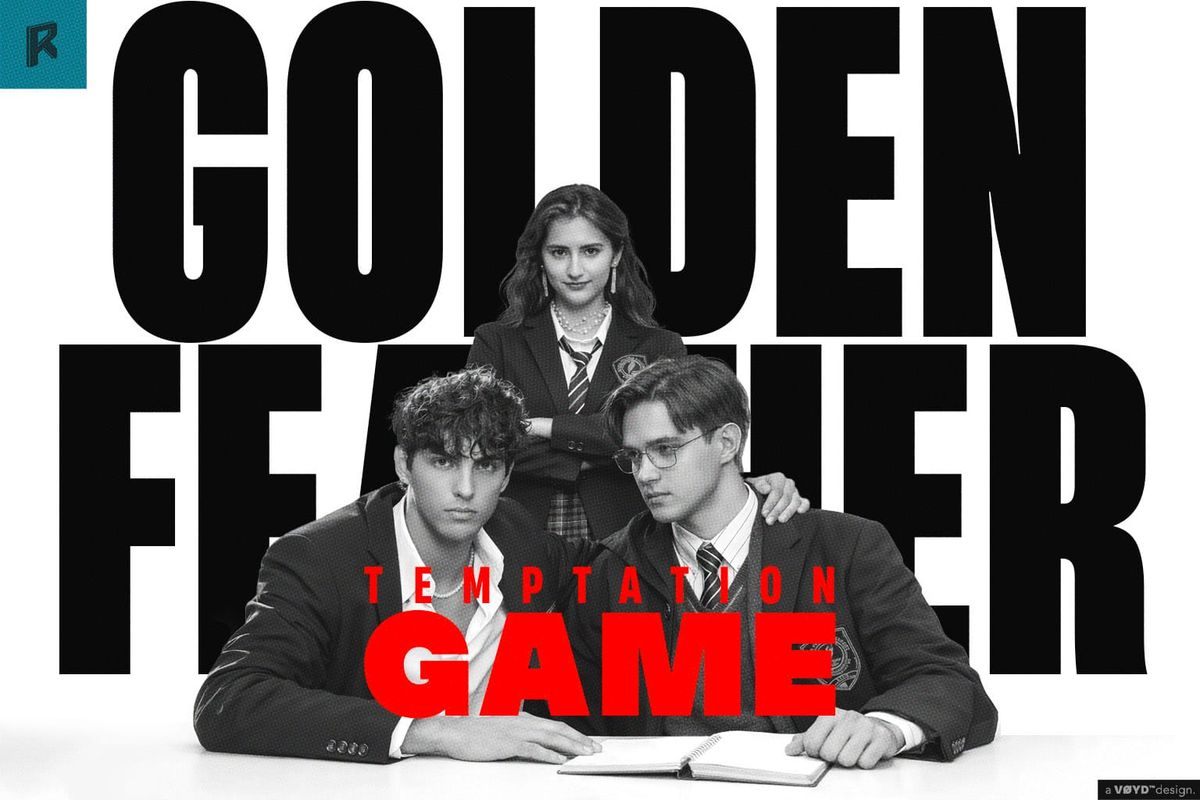
- Next Door — CandyJar's BL vertical drama that treats its characters as emotionally contradictory teenagers rather than simplified fantasy projections, and earns every beat of it.
 Aline
Aline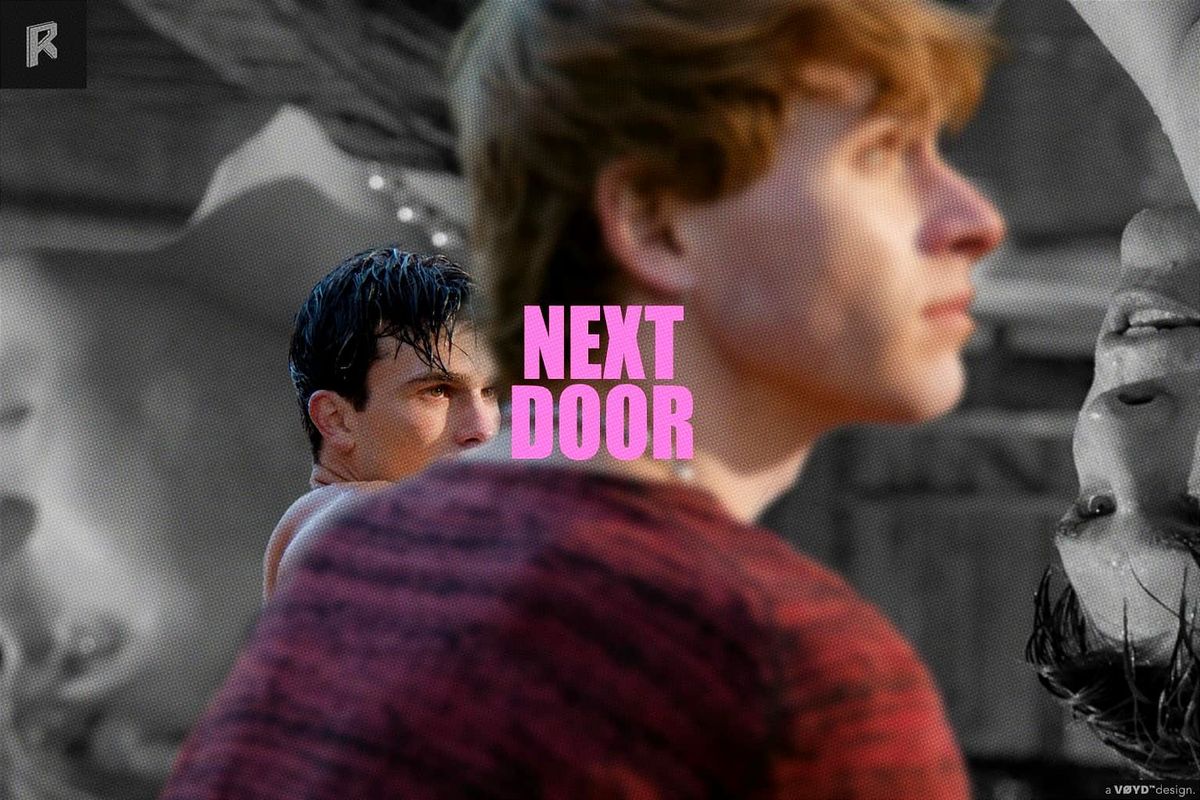
✱