



OBS Talk · Celine Zen × Karla M. Rodriguez
Crocs went to ReelShort. Marc Jacobs stayed largely inside its own social ecosystem. Han Shu connected serialized storytelling directly to commerce. The projects may all fit under the label of branded microdrama, but the businesses underneath them are increasingly different.
As those experiments started to pile up, Real Reel’s Celine Zen and GoodShort’s Karla M. Rodriguez sat down to compare what they were seeing from the production and platform sides. One question kept returning: before a brand makes a microdrama, does it actually know which audience — and which business — it is entering?
⦿⦿
Do you want us to be like a production company and basically give you the masters that you can post on Instagram? Or do you want us to distribute it on our app? Because those are two very different things.
Join Real Reel

Before GoodShort Made the Show, It Gave the Brand Homework
A high-end luxury brand recently approached GoodShort about what could become the platform’s first branded-content project.
The logic was familiar. Vertical drama was gaining momentum. Competitors were experimenting with it. The brand wanted to explore the space too.
Then GoodShort asked a basic question.
“Have you guys seen a vertical?”
They had not.
Karla’s response was immediate:
“Number one, homework assignment is going to be: watch a vertical from our platform.”
GoodShort gave the team five series, with free access, and asked them to come back after understanding what people on the platform were actually watching.
Two or three weeks later, they returned ready to move forward. There was still a problem: the concepts they had originally brought did not fit the platform. So the team went back into development.
Karla is unusually well positioned to see why that gap exists. Before joining GoodShort as Head of Talent Relations and Brand Partnerships, she spent nearly six years across theatrical development, television development and business strategy at Sony, then moved into branded and digital production at Vogue. She entered vertical through ReelShort before moving to GoodShort.
Her career has passed through several of the systems now colliding around branded vertical: Hollywood studios, luxury brands, digital media and dedicated microdrama platforms.
Celine had been seeing the same tension from another side. Brands may be comfortable commissioning a vertical series for their own social channels. The conversation changes when that same project is expected to live inside a dedicated microdrama platform with its own storytelling language and audience expectations.
The brand had arrived thinking about a format.
The platform was thinking about an audience.
▙ ▙
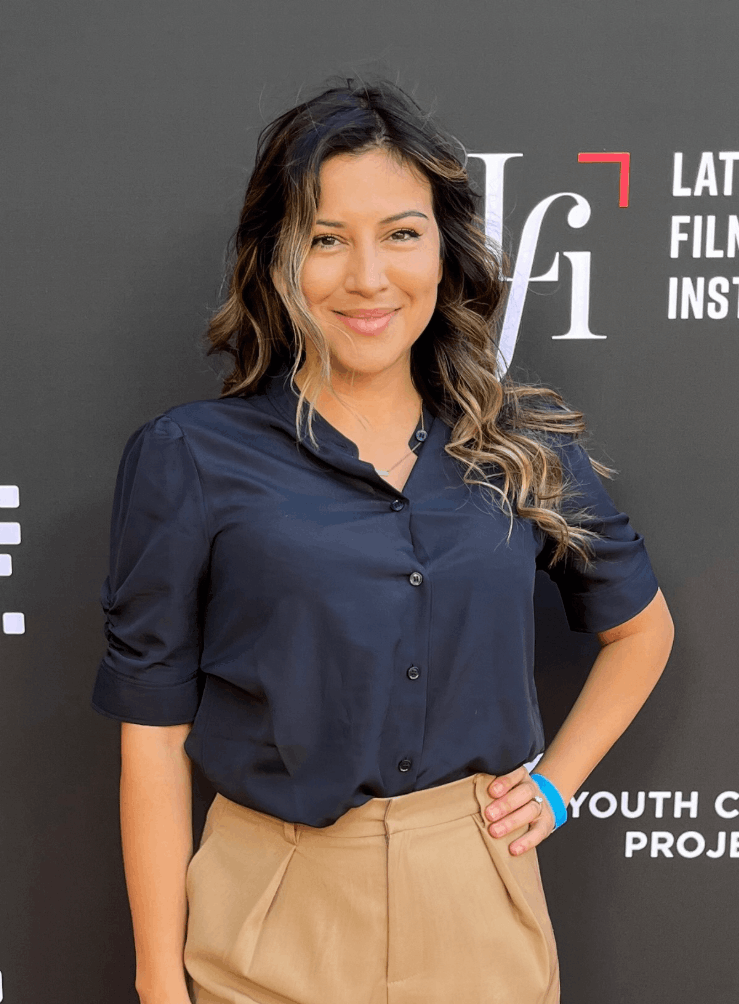
...People are just craving good stories, and whether the production value is there or not, people are obviously tuning in because the story speaks to them...
Karla M. Rodriguez
The First Mistake Is Treating Vertical as 9:16
Karla drew a simple distinction.
A platform can act as a production company: develop and shoot a vertical series, deliver the masters and let the brand publish the work across TikTok, Instagram, YouTube or its own channels.
Or the brand can ask the platform to distribute the series inside its own entertainment ecosystem.
“Do you want us to be like a production company and basically give you the masters that you can post on Instagram? Or do you want us to distribute it on our app? Because those are two very different things.”
Celine immediately pushed the distinction toward the audience.
“So, for a brand that wants to do a vertical drama, the first thing they need to think about is what kind of audience they want to reach. If I go to TikTok, I’m searching for a niche audience. If I go to GoodShort, I need to understand what the GoodShort audience is already looking for.”
That was already where Karla was heading.
A platform is not a blank distribution pipe. It has an audience with habits. It knows which genres those viewers watch, which hooks keep them moving and what kind of storytelling feels native to the environment.
As Karla put it:
“Different platforms have different styles.”
And she was more candid about what that means in practice. A platform can technically take the money and make something glossier, more commercial or simply very different from everything around it. But that does not mean it belongs there.
Karla described the risk in very practical terms: viewers come back because they know the kind of experience they are going to get. Introduce something that feels completely foreign to that environment and they may simply wonder why it is there.
“If we stray too much away from that, we’re not going to be giving our audiences what they’re looking for.”
For her, the responsibility runs both ways. The brand needs to understand the platform, but the platform also has to be honest about what its audience actually expects.
The conversation then moved into a larger question: why are people watching this material in the first place?
Karla kept coming back to story rather than polish.
“Fans initially are watching because of the story and the storytelling aspect.”
She wondered whether part of vertical drama’s appeal comes from the fact that romance — particularly highly serialized, emotionally direct romance — has been underserved by mainstream film and television. Then she made it personal.
“I’m a big romance [fan]. I don’t want to wait another two years to get the next season of Bridgerton.”
She laughed about being one of those viewers herself: sometimes the production value is not the point. The hook works, the romance works, the cliffhanger works, and suddenly you want the next episode.
“People are just craving good stories, and whether the production value is there or not, people are obviously tuning in because the story speaks to them.”
Celine picked up on that.
“Yeah, I think that’s the psychological part too — people are searching for story.”
For a producer, that matters. A brand can spend more, polish more and cast more recognizable talent without necessarily making something more native to the audience.
Production value matters.
But it does not replace audience fit.
Don’t start with the product. Start with the audience.
The first question may not be: How do we put this product into a vertical drama?
It may be: Who are we actually trying to reach, and where are those people already choosing to watch stories?
What Is the Brand Actually Buying?
That question changes the role of the platform too.


