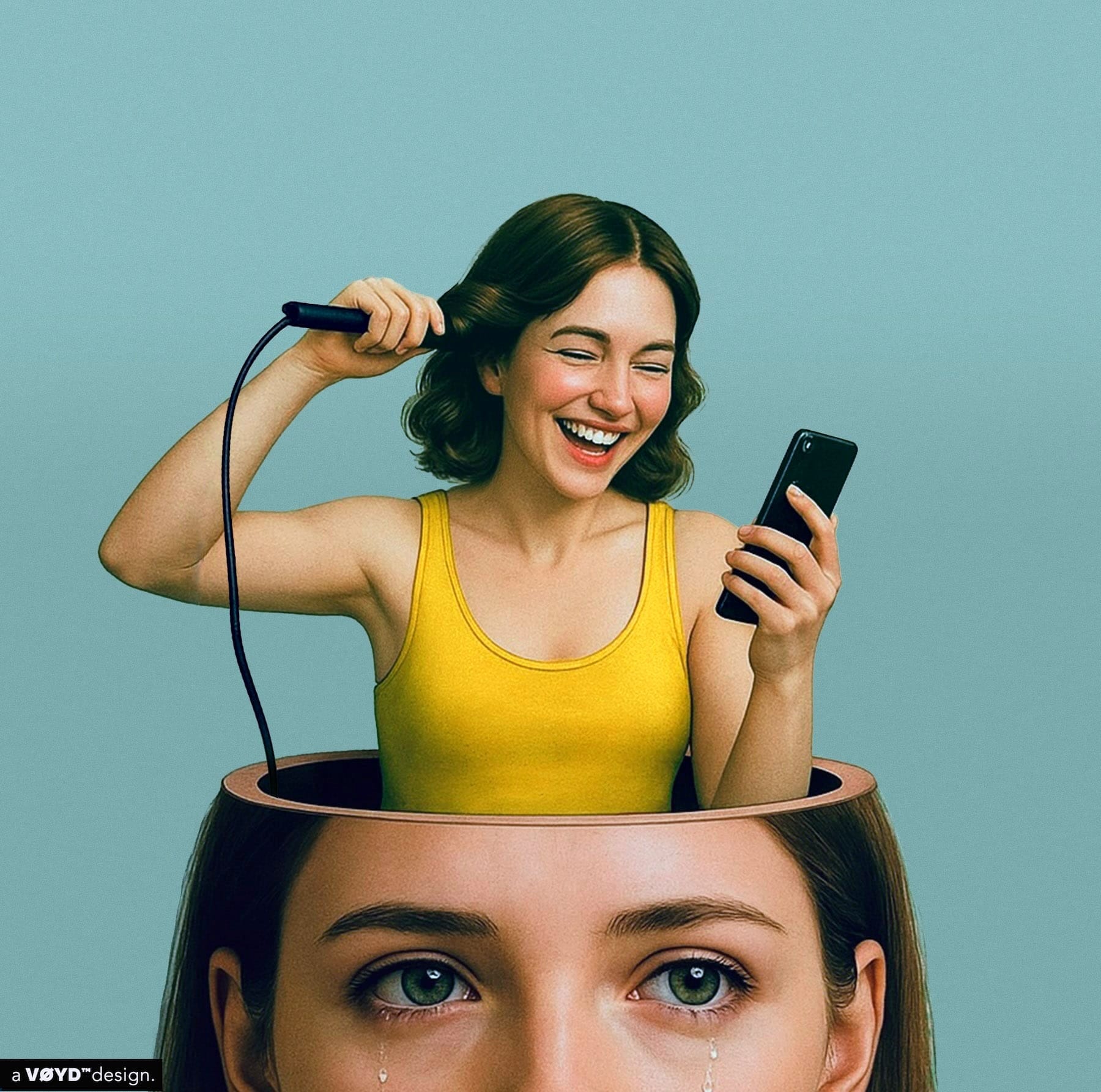
GammaTime’s Skating to Him (2026) enters increasingly familiar hockey BL territory with figure skater Ethan and closeted hockey captain Jack. Aline finds the series strongest not in its premise, but in the time it gives Quinn Holmes and Lonny Presman’s characters to talk, understand each other and build a relationship beyond physical attraction.
⚈ ⚈
It demonstrates how familiar material can feel fresh when character development is given enough attention.
-
Review by Aline
from I Love Verticals
A Hockey BL That Understands the Importance of Emotional Development
Hockey BL romances have become increasingly familiar territory in Vertical drama. The combination makes sense: competitive sports, physical proximity, locker-room dynamics, secret relationships and the pressure surrounding a closeted athlete naturally provide plenty of material for a short-form romance.
But familiarity can quickly become repetition.
So when GammaTime released its first BL Vertical, Skating to Him, I was immediately curious, but also slightly cautious. Another hockey BL? I have watched enough of them lately to recognize the formula almost immediately, and too many suffer from the same problem: plenty of attraction, plenty of drama, but not enough emotional development to make the romance convincing.
Skating to Him surprised me.
The premise itself is not particularly revolutionary, and there are inevitable echoes of Heated Rivalry, but those references never feel forced into the story simply because hockey BL is popular. More importantly, Skating to Him understands something that many romances, Vertical or otherwise, sometimes forget:
The characters actually need to get to know each other.
A Familiar Setup With a Stronger Foundation
Ethan is an openly gay figure skater who begins talking to IceKing on a dating app. IceKing is actually Jack, captain of the hockey team, but neither initially knows who is on the other side of the conversation.
Their anonymous exchanges create an important foundation for the relationship. Before everything becomes complicated by hockey, figure skating, teammates and expectations, they simply talk.
When Ethan eventually realizes who IceKing is, the situation becomes considerably more difficult.
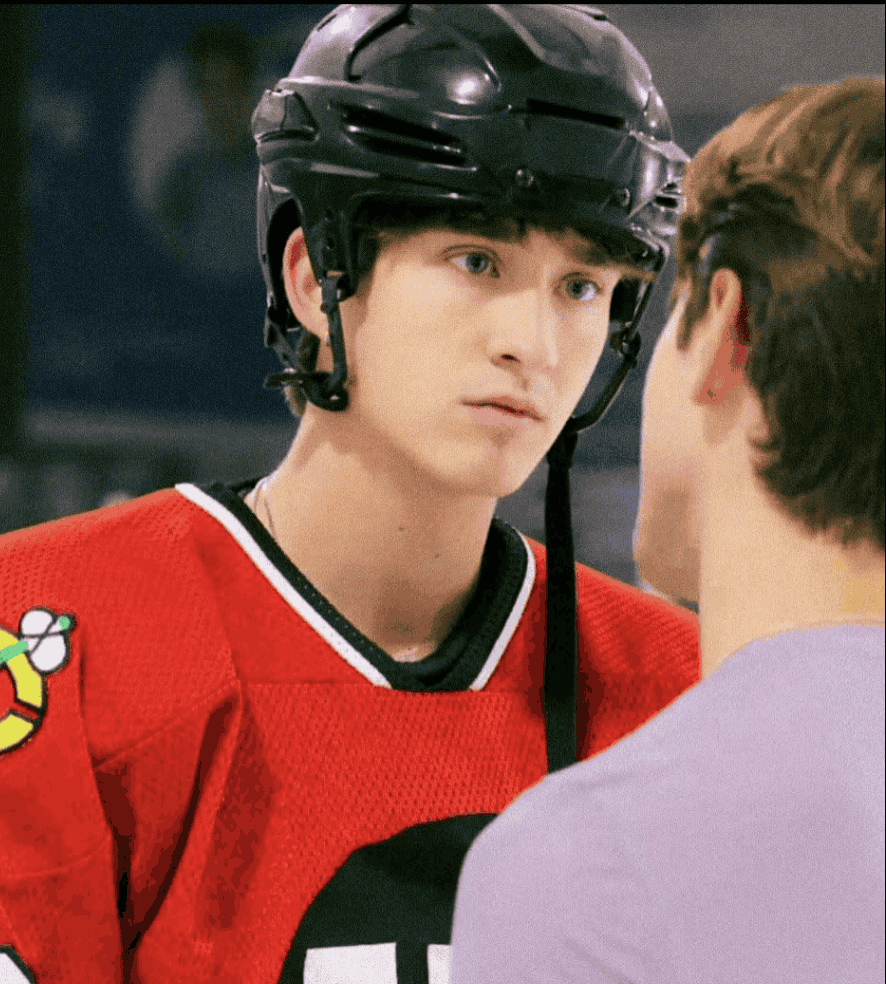
Jack knows he is attracted to men. That is never really the question. But knowing who you are privately and being prepared to tell everyone else are two very different things, particularly when your entire future has been built around a traditionally masculine professional sport.
That distinction is one of the smartest choices in the writing.
▙ ▙
Vertical drama often relies on escalation to maintain engagement, but more conflict does not automatically create more emotional investment...
Aline
Jack Is Closeted, Not Confused
Popular athletes in BL stories are frequently written around denial. They are attracted to another man, panic, become defensive and sometimes direct that fear toward the person they actually like.
Jack avoids much of that pattern.
He initially tries to distance himself from Ethan, but he never becomes his bully. Once he recognizes his attraction, his struggle is not, “How can I possibly like a guy?”
It is, “What happens to everything I have worked for if people know?”
Jack has an NHL dream and a family that has placed significant pressure on him to become a successful hockey player. At the same time, he increasingly wants the freedom to simply be himself.
For him, those two futures do not initially appear compatible.
Lonny Presman handles that internal conflict particularly well. Some of Jack’s strongest moments happen when he says very little. His facial expressions communicate the hesitation, fear and frustration that Jack cannot verbalize.
The character’s actions also prevent his fear from becoming an excuse for cruelty. When other players make fun of Ethan in the locker room, Jack defends him. When Ethan risks being punished, Jack gathers the courage to speak to the coach.
He cannot openly tell everyone how much Ethan means to him yet, but he shows it.
That matters.
Ethan Is Confident, But Not Invulnerable
Ethan won me over almost immediately.
He is openly gay, confident, sassy and completely unapologetic about who he is. If someone has a problem with that, Ethan understands that it is their problem rather than his.
I love characters with that kind of confidence.
But confidence alone would have made him considerably less interesting.
Ethan has his own ambitions as a figure skater, and the series allows us to see the vulnerability underneath his personality. He can flirt aggressively with Jack one minute and then genuinely expose his feelings the next.
Most importantly, he never pressures Jack to come out.
Ethan wants him. He makes that extremely obvious. But he understands that Jack has to make that decision himself.
Quinn Holmes is excellent in the role. Having watched him across several Verticals, BL and otherwise, I have seen noticeable growth in his performances, and Ethan feels particularly well suited to him. He captures both sides of the character: the confident figure skater who can handle himself and the young man who still wants to know that the person he cares about will eventually choose him.
▙ ▙
The characters actually need to get to know each other...
Aline
A Relationship Built on More Than Attraction
This is where Skating to Him distinguishes itself most clearly from several recent BL Verticals.
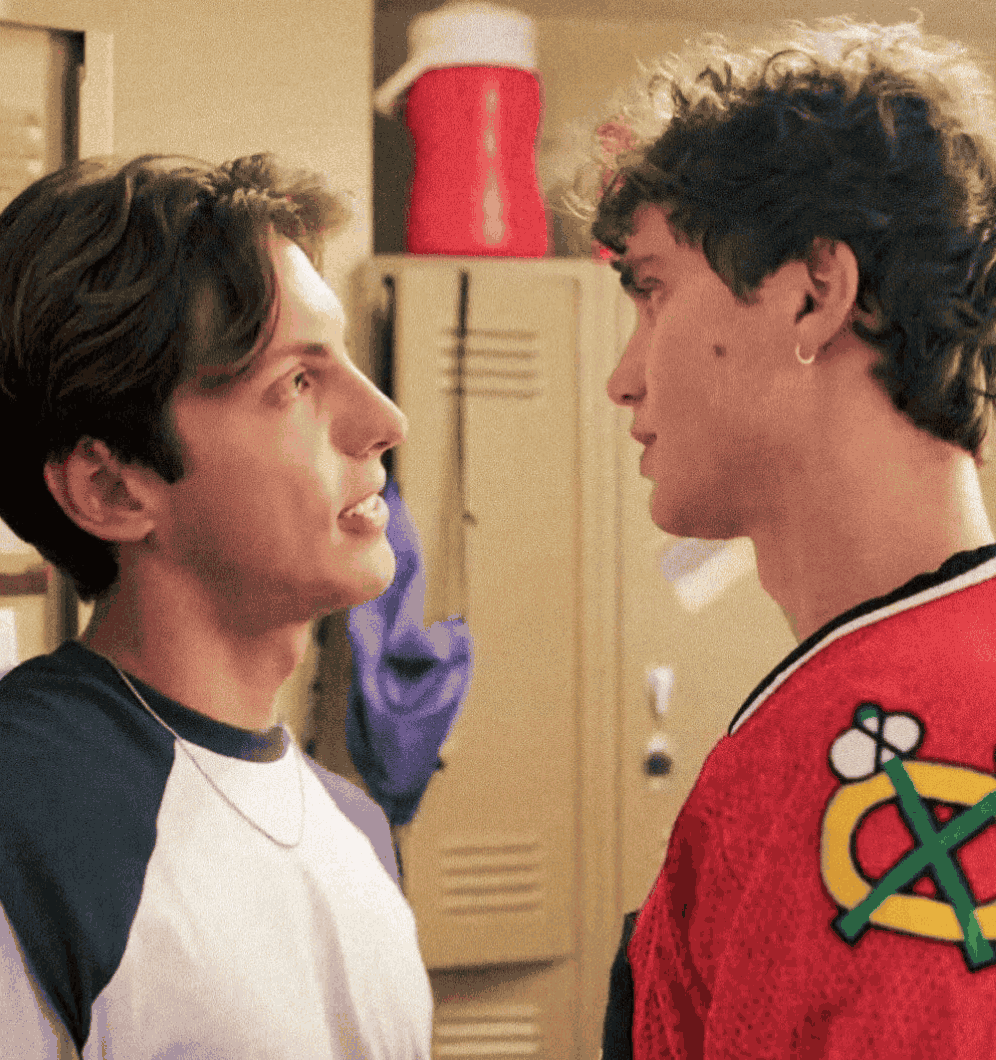
Jack and Ethan actually talk.
That sounds like an incredibly basic requirement for a romance, but VertiLand occasionally treats conversation as an optional feature.
We have all seen the alternative: two characters hate each other, hook up, continue barely communicating and suddenly declare themselves in love.
Here, physical attraction is present early, but it is not presented as the entire relationship.
Jack and Ethan spend time together. They see each other’s vulnerabilities. They discuss what they want. They gradually understand the pressure the other person is experiencing.
Jack learning to figure skate simply because he wants to better understand Ethan’s world may genuinely be one of the most romantic gestures I have seen in a Vertical.
There is no grand billionaire gift. No dramatic rescue. He simply puts himself in an unfamiliar and uncomfortable position because something important to Ethan has become important to him.
Quinn Holmes and Lonny Presman also have excellent chemistry, and their performances make the gradual transition from attraction to emotional intimacy convincing.
They very quickly became one of my favorite recent on-screen couples.
Supporting Characters With Purpose
Lily provides the supportive-best-friend energy every romance needs.
Although she unintentionally contributes to a misunderstanding between Ethan and Jack, her loyalty to Ethan is never questioned. JC Ann makes the character immediately likable, and my main complaint is simply that I wanted more of her.
A storyline of her own would have been welcome. And while we are expanding queer storytelling in VertiLand, there is certainly room for more GL representation too.
Kevin occupies the opposite end of the spectrum.
He is the homophobic hockey teammate the story needs to demonstrate why Jack’s fears are not entirely imaginary. He is irritating from beginning to end, but importantly, the writing keeps his toxicity at a believable level.
He is an antagonist, not a supervillain.
That restraint is important because exaggerated villainy would have undermined the more grounded conflict surrounding Jack.

▙ ▙
VertiLand occasionally treats conversation as an optional feature...
Aline
The Coach Is More Interesting Than He First Appears
The coach initially worried me.
His warnings for Jack to stay away from Ethan seemed positioned to introduce another stereotypical authority figure built around toxic masculinity and homophobia.
Instead, the character becomes more nuanced.
When Jack comes out to him, the coach supports him. At the same time, he gives Jack uncomfortable but pragmatic advice: if he seriously wants to be drafted into the NHL, keeping his relationship private may make his professional path easier.
Of course, we would all prefer a world where an openly gay hockey player does not have to consider that calculation.
But within Jack’s story, the advice makes sense.
The coach does not tell him to break up with Ethan or pretend those feelings are wrong. He recognizes the relationship while acknowledging the professional environment Jack is preparing to enter.
It is another example of the series choosing balance over an easy villain.
The school principal has considerably less screen time but is surprisingly memorable. Her periodic appearances to essentially check that everyone is behaving and nobody has killed each other become a small recurring source of humor.
Sometimes a supporting character does not need an elaborate subplot. A few well-placed appearances can do the job.
Development Is Where the Series Wins
The strongest element of Skating to Him is ultimately its pacing.
Jack does not resolve his conflict immediately.
There are moments when he could speak and stays silent. There are times when fear wins. Then there are increasingly significant moments when Ethan matters enough for Jack to push beyond that fear.
The progression feels natural.
Likewise, Ethan’s confidence does not magically solve Jack’s problems. He can support him, but Jack still has to decide for himself what kind of life he wants.
The series also handles bullying and homophobia with surprising restraint. Those elements exist because removing them entirely would make Jack’s concerns difficult to understand, but they never become the whole story.
That balance is essential.
Vertical drama often relies on escalation to maintain engagement, but more conflict does not automatically create more emotional investment. Sometimes a character quietly deciding to defend someone in a locker room tells us considerably more than another slap, beating or elaborate humiliation sequence ever could.
Final Thoughts
Skating to Him does not reinvent the hockey BL.
What it does is arguably more useful for the format: it demonstrates how familiar material can feel fresh when character development is given enough attention.
Jack is closeted without becoming cruel. Ethan is confident without becoming one-dimensional. Their attraction is immediate without their love feeling instantaneous. Even the antagonistic characters remain grounded enough to support the story rather than overwhelm it.
Nicole Lipp’s direction, Nico Ryder’s writing and the performances, particularly from Quinn Holmes and Lonny Presman, create a romance that understands emotional intimacy is as important as physical chemistry.
For GammaTime’s first BL Vertical, that is a promising start.
I hope it is not the last, because VertiLand does not necessarily need another hockey BL built around the same beats.
But it absolutely has room for more queer romances developed with this much care, restraint and, most importantly, actual conversation.
And yes, I would happily watch Quinn and Lonny together again.
VertiLand does not necessarily need another hockey BL built around the same beats. But it absolutely has room for more queer romances developed with this much care, restraint and, most importantly, actual conversation.
Aline
Images used in this article are sourced from the public internet and are presented for editorial context only. All rights remain with their respective owners.
Credits
Written by Aline
Design & Motion by VØYD
More Reviews From Aline
- How to Lose an F-Boy (2026) — Another GammaTime romance from Aline, examining how a familiar trope can work when character logic and emotional development remain underneath the chaos.
 Aline

- Superfan (2026) — Aline looks at a very different kind of vertical experiment: part kidnapping comedy, part horror parody, part music marketing and part fandom story.
 Aline