Story TV raised $80 million for global microdrama expansion, ReelShort moved bestselling romance IP into vertical production, and VeYou shut its standalone app. Grimes licensed her likeness for an AI-generated feature, while Wētā FX formalized an AI-production partnership in Taiwan. Fox’s $22 billion Roku acquisition made the week’s underlying contest explicit: control of the route between content, audiences and revenue.
⦿⦿
New formats are often discussed as creative categories. This week made them look more like distribution problems.
Week of Nov 02-Nov 08, 2026
Vertical drama attracted capital and recognizable IP, yet one of its most ambitious premium apps disappeared after six months. AI moved from demonstrations into licensed performance and regional production infrastructure. At the other end of the market, Fox bought Roku while British regulators asked whether Sky should control more of ITV.
The shared question is not which screen wins. It is who owns enough of the route—from financing and rights to discovery, billing, data and advertising—to keep the next transaction inside the same system.
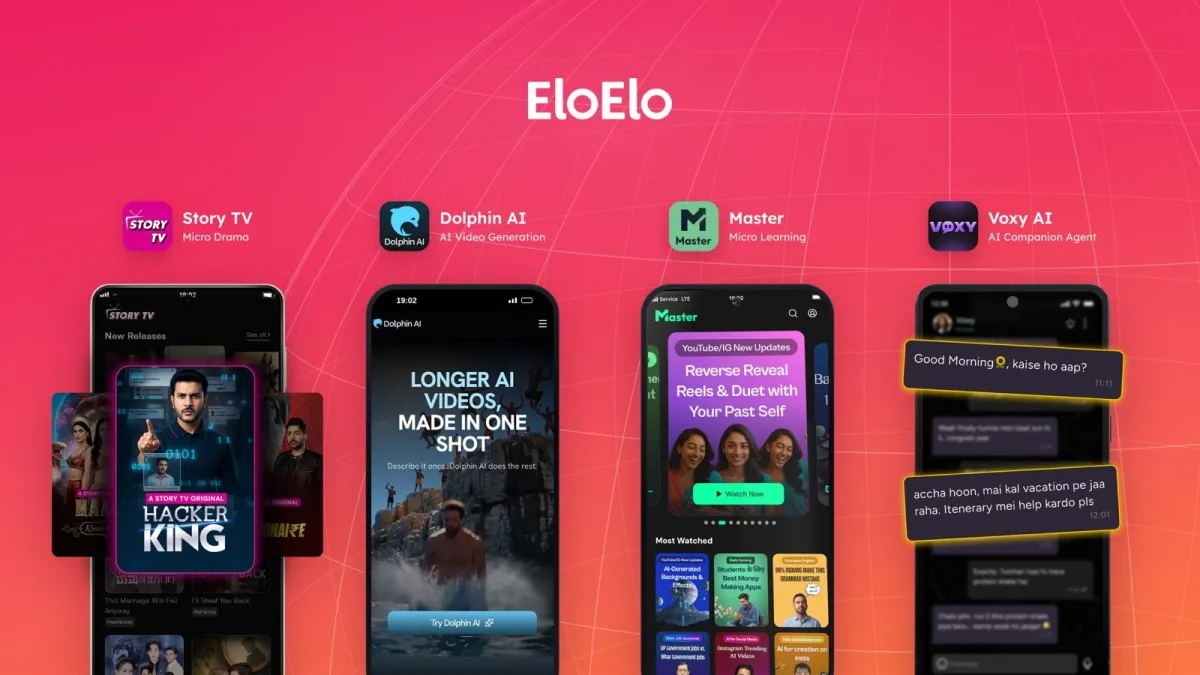
EloElo raises $80 million to take Story TV beyond India
EloElo Group, the parent of microdrama platform Story TV, raised an $80 million Series C co-led by Hornbill Capital and NBCUniversal, with MIT Investment among the participants. The round brings total funding to approximately $130 million.
The company plans to expand original production, develop AI-supported production tools and enter additional international markets, including the United States. That combination matters more than the size of the round alone. Story TV is raising capital for a system that connects content production, audience data, technology and international distribution rather than for a single slate.
Strategic investment from NBCUniversal also gives the category a new kind of institutional endorsement. The unresolved questions are equally important: Story TV has not disclosed its valuation, content economics or the cost of entering the U.S. market. The funding proves appetite for scale. It does not yet prove that an Indian microdrama model will travel profitably.
 Ivan Mehta
ReelShort brings established romance IP into vertical production
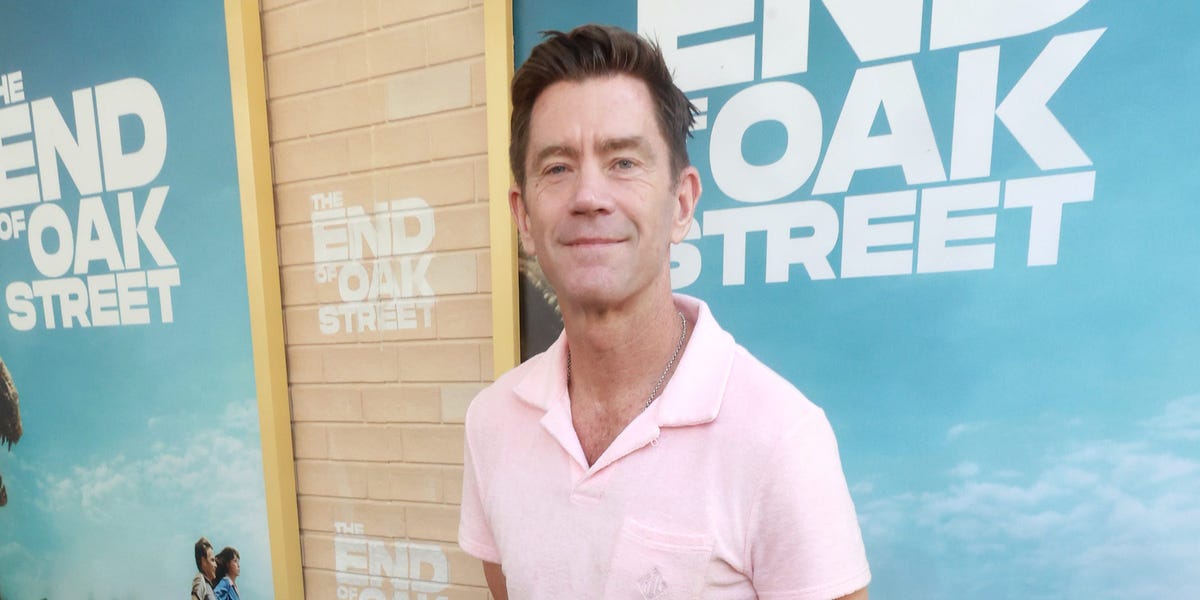
ReelShort has licensed two novels from Tessa Bailey’s Big Shot series, Fangirl Down and The Au Pair Affair, for vertical adaptations. Production on both projects began November 2, with releases expected in early 2027.
Vertical platforms have often built their economics around inexpensive, platform-native stories that can be tested quickly and produced at volume. Bailey brings something different: a recognizable author, an existing romance readership and stories whose commercial value was established before ReelShort entered the picture.
That can reduce the work required to introduce a new title, but it also changes the cost and rights equation. Publishing IP arrives with expectations around adaptation, marketing and audience conversion that anonymous source material does not. The useful test is not whether the books can be compressed into short episodes. It is whether ReelShort can turn an existing reading community into paying vertical viewers—and whether that performance justifies competing for more established rights.
 Tess Patton

VeYou closes its app and keeps the studio alive
VeYou ended service on November 6, roughly six months after launching as a premium microdrama destination. Its original series are moving to TikTok’s PineDrama and YouTube, while founder Tommy Harper plans to continue producing short-form work.
The distinction matters. This is the closure of a distribution product, not necessarily the end of the underlying production operation. VeYou invested in recognizable talent and polished live-action series, but a premium catalogue did not remove the cost of persuading viewers to download, return to and pay inside another standalone app.
Moving the same work onto larger platforms trades some control for existing discovery. It may also change the economics from direct consumer payments toward advertising, licensing or platform revenue share. VeYou’s short life does not prove dedicated microdrama apps cannot work. It shows that content quality and platform viability remain separate problems—and that distribution can outlast the product built to contain it.
 Lucia Moses
Grimes licenses a performance for an AI-generated feature
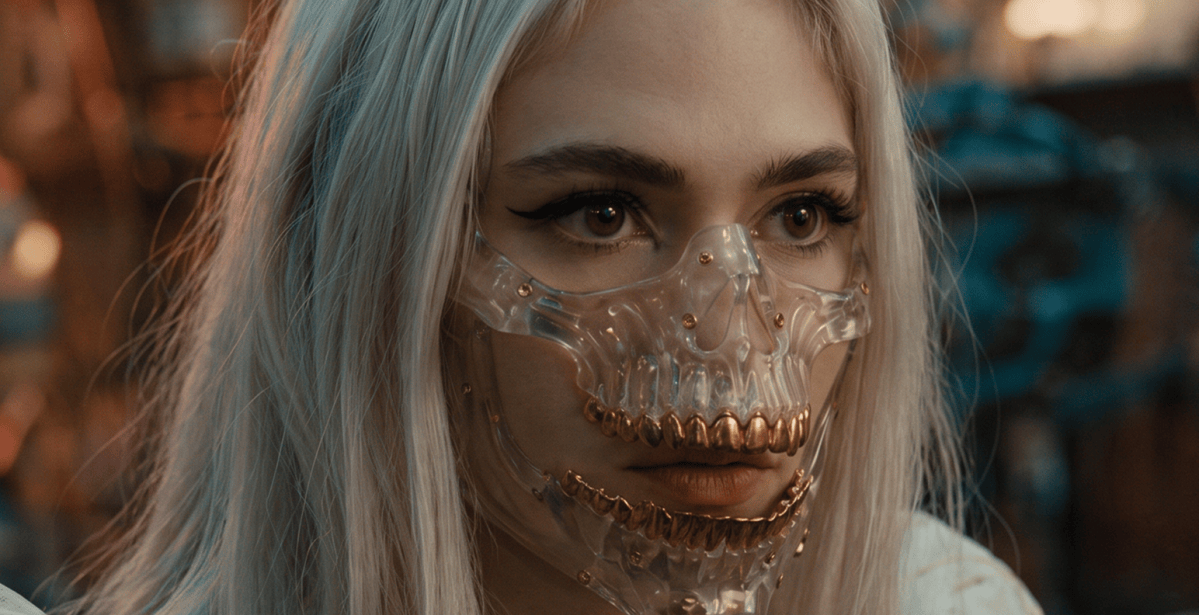
Grimes has joined Gods Don’t Give Gifts, an AI-generated science-fiction feature from Fable and Zack London’s Gossip Goblin. She authorized the use of her likeness and recorded the character’s spoken performance in her own voice. A limited U.S. theatrical release is scheduled for December 4.
The U.S. theatrical plan predates this week. The new development is the casting and rights structure. Rather than presenting a synthetic performer as a substitute for an actor, the production combines an authorized visual identity with a recorded human performance.
That makes the project a more useful industry case than its “first” claim. The practical questions concern consent, compensation, approval rights and how a licensed digital performance can be reused. None of those terms has been disclosed. Even so, the film turns the abstract debate around AI actors into a real transaction involving a known performer, a finished character and a scheduled commercial release.
 Andrew Webster
Wētā FX and TAICCA build an AI-production bridge
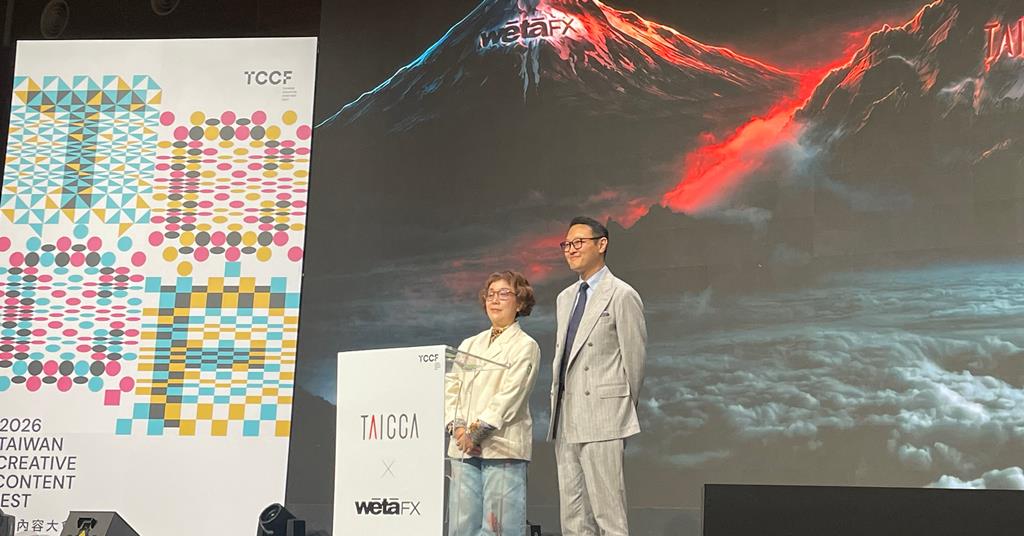
Wētā FX and the Taiwan Creative Content Agency signed a memorandum of understanding on November 6. The agreement is intended to develop Taiwan as an Asian hub for AI-enabled content production while supporting Wētā FX’s AI development.
The parties identified three areas: technical collaboration with Taiwan’s Moonshine Studio, exploration of joint investment in AI research and development, and an international training and talent-exchange program. Those are concrete workstreams, but they are not yet a production slate or a completed investment.
That boundary is important. AI production depends on regional production capacity, trained practitioners and relationships capable of moving work into international pipelines. Wētā brings production experience and global clients; TAICCA brings public-sector investment tools and local infrastructure. The agreement becomes meaningful when it produces named projects, funded research or international talent placements. For now, it establishes the route through which those commercial outcomes could happen.
 Silvia Wong
Druski turns 4LIFERS into a supplier for Netflix
Netflix signed a multiyear agreement with Druski and his company, 4LIFERS Entertainment, to develop and produce exclusive original series. The partnership begins with Collect & Praise, a semi-scripted comedy built around Druski’s megachurch-pastor character, premiering December 1.
Netflix will also license existing shows and sketches. That makes the agreement larger than a talent booking. The streamer gains access to characters and formats already tested with an online audience, while 4LIFERS gains a global distribution partner without disappearing into a conventional studio label.
Creator deals are more useful when they capture an operating business rather than a single personality. Druski brings audience recognition, recurring characters and a production company capable of generating more projects. The open question is ownership: neither party has disclosed who controls the new IP, how existing formats are licensed or what happens outside Netflix. Those terms will determine whether 4LIFERS is building long-term enterprise value or primarily supplying exclusive programming.
 Michael Ehrlich

Fox completes its $22 billion acquisition of Roku
Fox completed its $22 billion acquisition of Roku on November 6, combining a major sports and news programmer with a connected-TV operating system, streaming platform and advertising business.
The transaction gives Fox control over more of the route between content and viewer: device interface, discovery, advertising inventory, audience data and distribution. That vertical integration also explains the regulatory concern. The U.S. Department of Justice closed its investigation after Fox committed to safeguards around confidential information belonging to third-party content partners using Roku’s platform.
Roku’s value is not simply another streaming audience. It is the infrastructure through which competing services and advertisers reach that audience. Fox must convince partners that the platform remains open while using the acquisition to strengthen its programming and advertising position. The deal makes this week’s contest visible at scale: owning content is valuable, but owning the environment in which other content is discovered may be more powerful.

Influence Media and BlackRock consolidate another rights catalogue
Influence Media Partners, working with BlackRock-managed funds, completed its acquisition of substantially all Anthem Entertainment assets for more than $600 million. The package includes music-publishing catalogues, film and television publishing assets and master recordings.
The agreement was announced earlier; this week’s event is the closing. Its significance lies in the breadth of rights moving into an institutionally financed portfolio. Music-catalogue investment is no longer only a search for streaming royalties. Film and television rights create additional opportunities across synchronization, adaptation and licensing. That broader scope gives the buyer several routes to future value.
Scale can make those rights easier to administer and monetize internationally. It can also move exploitation decisions further from creators and smaller rights holders. Influence Media has not disclosed how it will prioritize audiovisual development. The next test is whether consolidated ownership produces new uses for the catalogue rather than simply a larger royalty pool.
 Jem Aswad
Britain adds a public-interest test to the Sky–ITV deal
The U.K. Culture Secretary issued a Public Interest Intervention Notice covering Sky’s proposed £1.6 billion acquisition of ITV’s Media & Entertainment business. The Competition and Markets Authority will examine competition and jurisdiction, while Ofcom will assess media plurality, free expression and the availability of varied, high-quality programming.
The regulators must report by January 27, 2027. This is a procedural step, not a decision to block the transaction. It expands the review beyond the argument that a larger British broadcasting group would compete more effectively with global platforms.
Sky is buying programming, advertising reach, public-service assets and a direct relationship with mass audiences. The intervention asks whether combining those functions creates consequences that cannot be measured through price or subscriber competition alone. As broadcasters and streaming services combine, regulators must decide whether distribution efficiency can coexist with plurality—and which commitments remain enforceable after ownership changes.
 Department for Digital, Culture, Media and Sport

Skydance combines distribution after the Paramount–WBD merger
Skydance named Sarah Bergman and Mickey Carter as executive vice presidents leading distribution across the company created by the Paramount–Warner Bros. Discovery combination. Eight senior executives from the two former organizations are expected to depart.
The new structure spans CBS stations, cable networks, Paramount+, HBO Max, Discovery+, Pluto TV and more than 100 FAST channels. Distribution determines how linear carriage, streaming bundles, advertising inventory and partner relationships are negotiated across businesses that previously had separate priorities.
The immediate move is organizational, but the consequences will appear in carriage agreements, platform packaging and overlapping services. Skydance is targeting at least $6 billion in savings while managing approximately $80 billion in combined debt. Integration is therefore more than administrative housekeeping. The company needs a commercial distribution operation capable of turning scale into leverage without allowing cost reduction to weaken the brands and partner relationships it acquired.
 Lucas Manfredi
Also This Week
ElectricNOW added VueWho through an expanded FAST Channels TV partnership. The microdrama-led service puts short episodic programming inside a free connected-TV environment, testing advertising and lean-back viewing rather than episode unlocks. Its audience scale and content mix remain undisclosed.
Pure Flix Familia launched Novelitas with three Minivela productions. The Spanish-language vertical channel packages microdrama around faith, family and Latino culture. It is a useful test of whether a defined audience proposition can support the format inside a broader subscription service.
Pixie USA announced Christmas at Maple Hollow Inn for Meta’s Series tool. The 20-part romance was developed with Bob Evans and will also appear on YouTube and TikTok. Its November 14 launch will test branded financing across several social distribution environments.
Lighthouse Studios described a joint-venture model for creator-owned YouTube networks. The studio says it fronts production financing and shares ownership of channel brands and production entities, including Lyrical Lemonade TV. Contract terms, revenue and independently verified performance have not been disclosed.
S4C opened social-first and YouTube-specific commissioning routes. The Welsh broadcaster is seeking platform-native social content and factual documentaries for YouTube, with individual documentary commissions worth up to £40,000. The budgets are limited, but the commissioning structure begins with distribution behavior rather than a television edit.
Further Reading
TikTok Is Not a Vertical Drama Platform. But It’s Working On It. — Its examination of discovery, retention and platform economics provides the clearest background for VeYou’s move away from a standalone app and toward PineDrama and YouTube.
 Real Reel
AI Production Wins on Cost. Does It Also Win on Audience? — Its distinction between production efficiency, creative possibility and audience response extends this week’s questions around Grimes, Wētā FX and the commercial use of AI-generated performance.
 Real Reel

✱