Industry analysis of the global vertical drama and microdrama market.
⦿⦿
Everyone agrees on what AI costs. No one agrees on what it's for.
The moves are real. The transformation isn't complete.
Join Real Reel
Vertical drama is where the entertainment industry's biggest open question about AI — production economics, creative possibility, audience behavior, and monetization — already has real data attached to it, rather than speculation. This piece maps five distinct layers of that shift across the U.S., China, and the wider entertainment industry, without assuming they resolve into a single verdict.
The state of AI in vertical drama right now doesn't add up to one story.
It adds up to several things happening on top of each other — how much AI content already exists, what it's unlocking creatively, whether people are actually watching and paying for it, and how differently the industry is treating the same technology depending on who you ask.
None of these layers are fully resolved, and none of them point the same direction.
Start with volume,
because it's the least ambiguous part. In China, roughly 95% of the 100,000-plus microdramas released in the first quarter of 2026 were made entirely by AI, according to state media, and one production complex outside Zhengzhou has seen output fall 60 to 70% year over year as crews shift toward AI-first platforms. HOLYWATER TECH's AI-native app, My Muse, is targeting 100 AI-generated series a month by the end of 2026. On the open web, "Fruit Love Island," a fully AI-generated parody of the reality show, drew 39 million views on a single TikTok episode in March and has since passed 200 million cumulative views across the series — no coin-unlock model, no platform pushing it, just the format working on its own. By any measure, this is no longer a fringe amount of content.
What AI is doing to the creative side is a separate question from how much of it there is.
Real Reel reported in May on "Too Late! The Daughter of Olympus Forsakes You," a ShortMax series built around Greek mythology — golden temples, glowing Fates, a visual scale live-action microdrama budgets were never built to support. That's a different kind of unlock than cheaper production: it's access to genres the format's economics used to exclude outright.
 Real Reel
A newer layer is emerging on top of that. Character.ai is testing series in which the AI characters keep responding after the episode ends, treating the format as something closer to an ongoing relationship than a video.
Dedicated AI-only festivals have appeared as venues for this work — one international AI film festival now runs a sister event specifically for AI microdrama — alongside bigger institutional bets: Critterz, an animated feature that began as an OpenAI staffer's short film, is now headed to a Cannes premiere with a real theatrical release attached, and Tribeca has partnered with OpenAI to fund and mentor filmmakers making AI-integrated shorts.
This is no longer confined to cost-cutting. Some of it is a genuinely different creative bet.
Whether audiences actually want any of this is where the picture gets less clean, because attitude and behavior aren't answering the same question.
Asked directly in a July 2026 report from HOLYWATER TECH and Owl & Co, 89% of My Muse's surveyed users say they'd watch more AI-generated series — 55% call themselves fans already, another 34% say it depends on the story. Separately, general audience research on AI-generated video finds people report lower trust in content they suspect is AI-made, and describe disengaging when they think that's what they're watching. Both of these are self-reported attitudes, not the same thing as behavior, and they're not measuring the same population — one is people who already chose to download an AI-native app, the other is a general online sample.
What actually functions as behavior data sits elsewhere: that same July 2026 report shows My Muse converting free users to paying subscribers at 23.6%, against 23.9% for its live-action app My Drama, with some AI flagship titles retaining subscribers slightly longer at every checkpoint measured. Fruit Love Island's completion and return-viewership numbers tell a similar story from the outside: people are finishing episodes and coming back for more, whatever they say they think about AI content in a survey.
Inside the industry, there's no single position on any of this, and that's worth noting on its own.
ReelShort, the largest platform in the category by revenue, keeps AI out of its writers' room entirely and limits it to visual effects work. HOLYWATER runs both experiments in parallel under one roof — My Drama stays human-written, My Muse is AI-native from the ground up. The same split shows up at a larger scale in traditional Hollywood: some filmmakers are actively building with generative tools through programs like Tribeca's, while SAG-AFTRA has formally opposed the AI performer Tilly Norwood, arguing the technology was built on "countless professional performers" work without their permission and requiring signatory producers to bargain before using a synthetic performer.
Creative openness and formal resistance are sitting inside the same industry, sometimes the same company, at the same time.
China is worth watching as a reference point precisely because it got here first, not because it's a preview everyone else will follow exactly. Its production shift arrived faster than its regulatory response did at first, and the country has since required AI-generated content to carry a disclosure label — a rule the U.S. hasn't matched federally. Whatever gap opens up between how fast production moves and how fast the rules around it catch up, China's the market that's already lived through it once.
None of these layers cancel each other out, and none of them are waiting for the others to resolve first.
AI content already exists at real scale, some of it is unlocking territory the format couldn't previously afford, a meaningful share of a self-selected audience says they want more of it, the money is already moving at rates close to parity with live action, and the industry — across companies, across formats, across the Pacific — hasn't converged on a single stance about any of it. That's not a gap in the data. It's what this moment in the format actually looks like, and it's one Real Reel will keep tracking as it moves.
Further Reading
China Vertical Drama Market Landscape 2026 — how the format's first fully industrialized market got there, and what it signals for markets still catching up.
 Real Reel
Top 20 Vertical Drama Apps: ReelShort, DramaBox — a platform-by-platform look at who's building what, useful context for where each app's AI stance sits within its broader strategy.
 Real Reel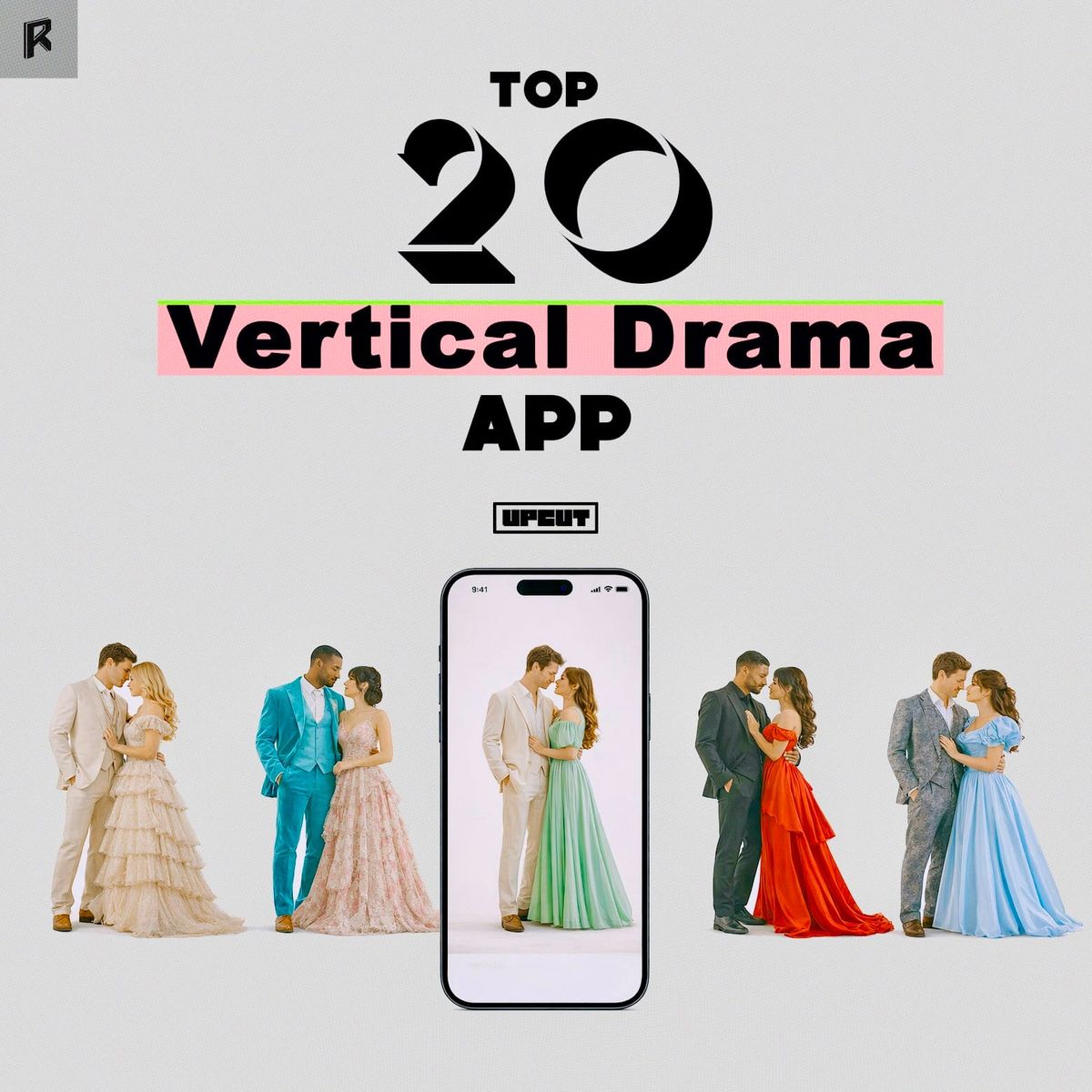
✱