Peacock redesigned its mobile experience around vertical discovery and live video, while Canela.TV, RTLZWEI and M6+ pushed microdrama into ad-supported streaming, legacy television IP and broadcaster apps. Shortical released an AI series built around an actor-approved digital double, Disney expanded proprietary AI workflows with Adobe, and Skydance set the first operating plan for combining Paramount+ and HBO Max.
⦿⦿
Vertical is becoming less a destination than a layer inside someone else’s product.
Week of Nov 09-Nov 15, 2026
New entertainment formats usually begin as destinations: a new app, a new studio, a new channel, a new category. This week, the more important movement happened inside systems audiences already use.
Vertical video became part of product design, franchise management and broadcaster distribution. AI moved deeper into controlled production workflows and licensed performance. Creator-led media became a programming category and an acquisition target. The format is no longer the whole strategy. Increasingly, it is a layer inside a larger entertainment business.
Peacock rebuilds mobile around vertical behavior
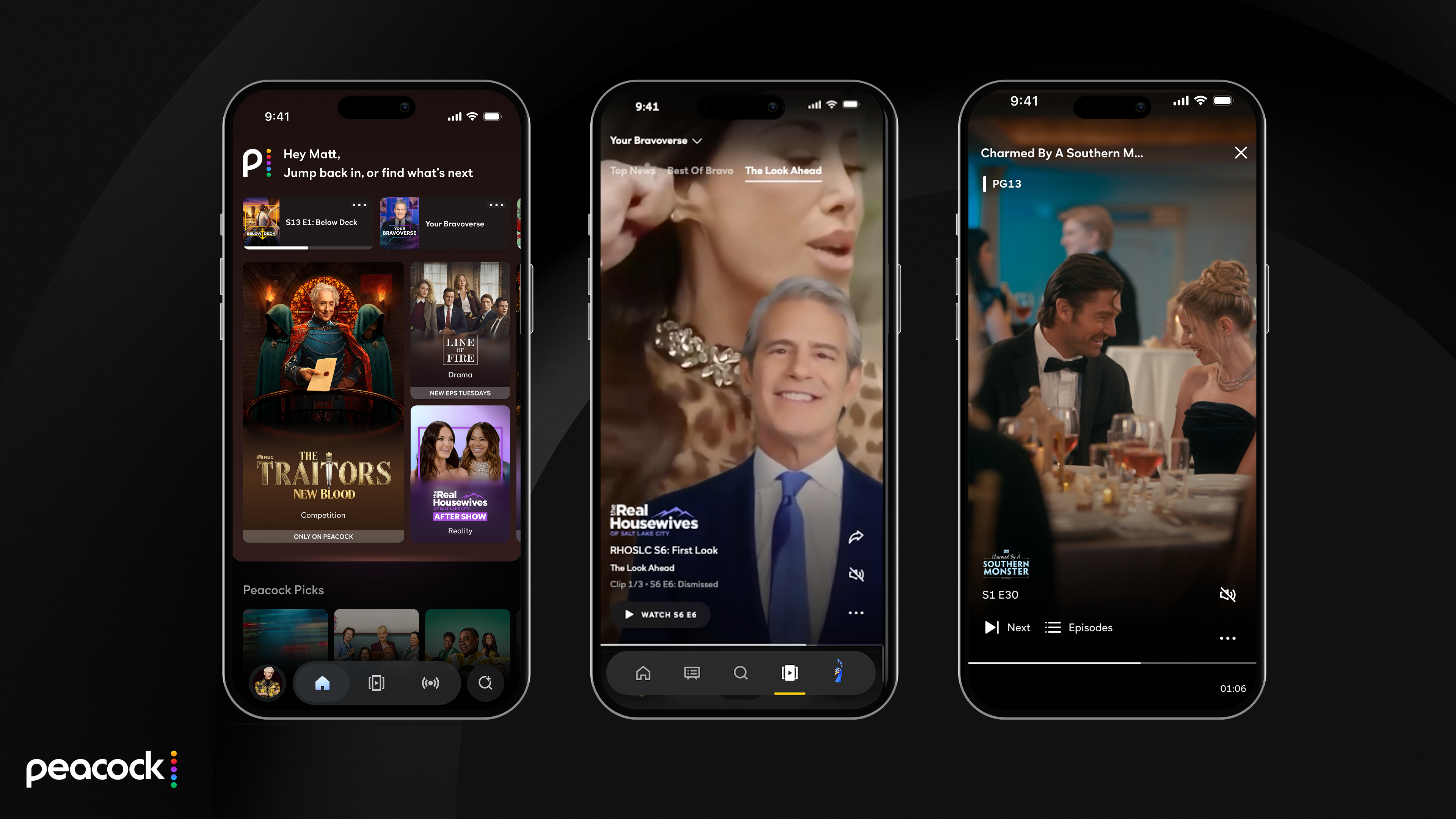
Peacock has begun testing its largest set of mobile updates to date. The redesign brings together franchise hubs, a vertical Clips Feed, adaptive live video, a player that shifts between portrait and landscape, and conversational AI search. Tests will continue into early 2027, with live vertical video expanding to The Voice, NCAA basketball and golf.
The useful change is not any one feature. Peacock is connecting short clips, microdramas, games, podcasts, live moments and full episodes inside the same product journey. Vertical discovery is being treated as an entry point into a broader franchise relationship rather than a separate feed built only to generate engagement.
That makes mobile product design part of the content strategy. Peacock still needs to show that these features increase viewing, retention or subscription value. But the direction is clear: the service wants the phone to do more than reproduce the television experience on a smaller screen.
 NBCUniversal Media
Canela.TV gives vertical drama an advertising model
Canela.TV launched a bilingual slate of vertical microseries combining live action, AI-assisted production, a short-form adaptation of Turkish drama Kuma and restored Mexican films recut into episodes. The programming is available without a subscription or pay-per-episode unlock and can move between portrait viewing on mobile and horizontal presentation on connected television.
The business model is as important as the slate. Canela is offering custom branded series, virtual product placement and social extensions, using advertising and brand integration where dedicated microdrama apps typically rely on coins or subscriptions. Catalogue material also creates a lower-risk route into the format: existing stories can be restored, localized and repackaged instead of developed from zero.
This does not yet prove that advertisers will finance vertical fiction at scale. It does establish a more flexible proposition for Latino and bilingual audiences—one built around free access, multilingual delivery and several ways to monetize the same underlying production.
 Canela Media

RTLZWEI turns a television hiatus into a vertical window
RTLZWEI and filmpool entertainment are extending Berlin – Tag & Nacht with Next Generation, a 60-episode vertical spinoff produced in ten shooting days. Each episode runs 60 to 90 seconds. TikTok will lead distribution, supported by Instagram, Facebook, Snapchat, YouTube Shorts and RTL+, while viewers will help determine the ending through social voting.
The series is designed to bridge the long-running soap’s winter break. That makes vertical drama more than a youth-facing side project: it becomes a scheduling tool that can keep a franchise active when the linear programme is off air. New characters and phone-native storytelling also create room to experiment without rebuilding the main show.
The ten-day shoot is the sharper test. RTLZWEI is asking whether a familiar television brand can support a much faster production rhythm without losing the audience relationship that made the IP valuable. The answer will matter well beyond one German soap.

M6+ makes microdrama a product category
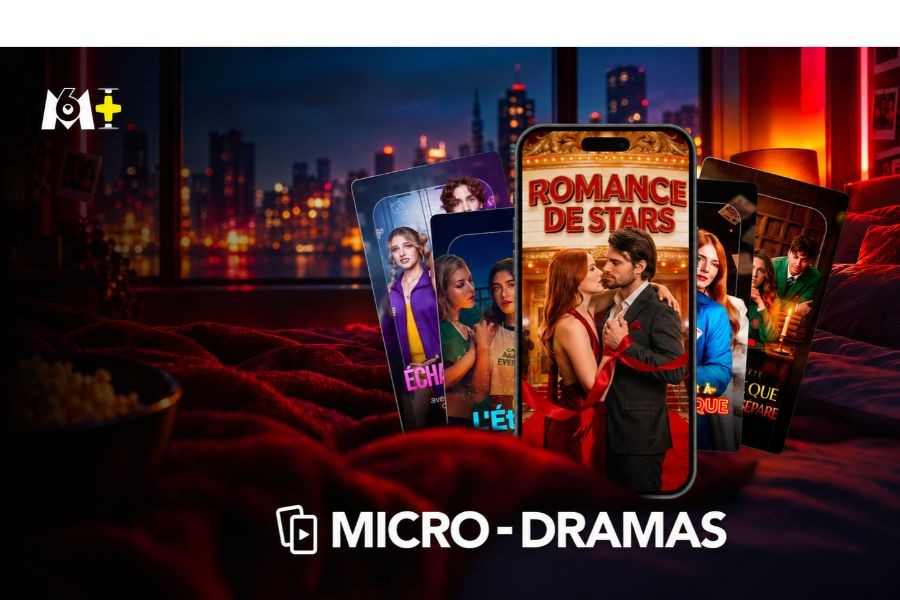
France’s M6+ added a dedicated microdrama section to its mobile app. The opening offer contains five international series and roughly 350 episodes, presented through a portrait player and a navigation tab built for the format. The collection is free and available only on mobile.
That last detail separates the launch from a conventional catalogue acquisition. M6+ is not placing short dramas beside television series and expecting viewers to find them. It is giving the format its own interface, viewing behavior and position inside the app. A broadcaster is treating microdrama as a distinct product category within its core streaming service.
The initial slate is modest and heavily concentrated in familiar romance and young-adult storylines. The real signal will be what follows: whether M6 commissions local work, introduces advertising products around the format or carries successful titles to other screens. For now, the platform is testing demand without asking audiences to install another app.
 SemiColonWeb
Shortical makes consent part of the AI production model
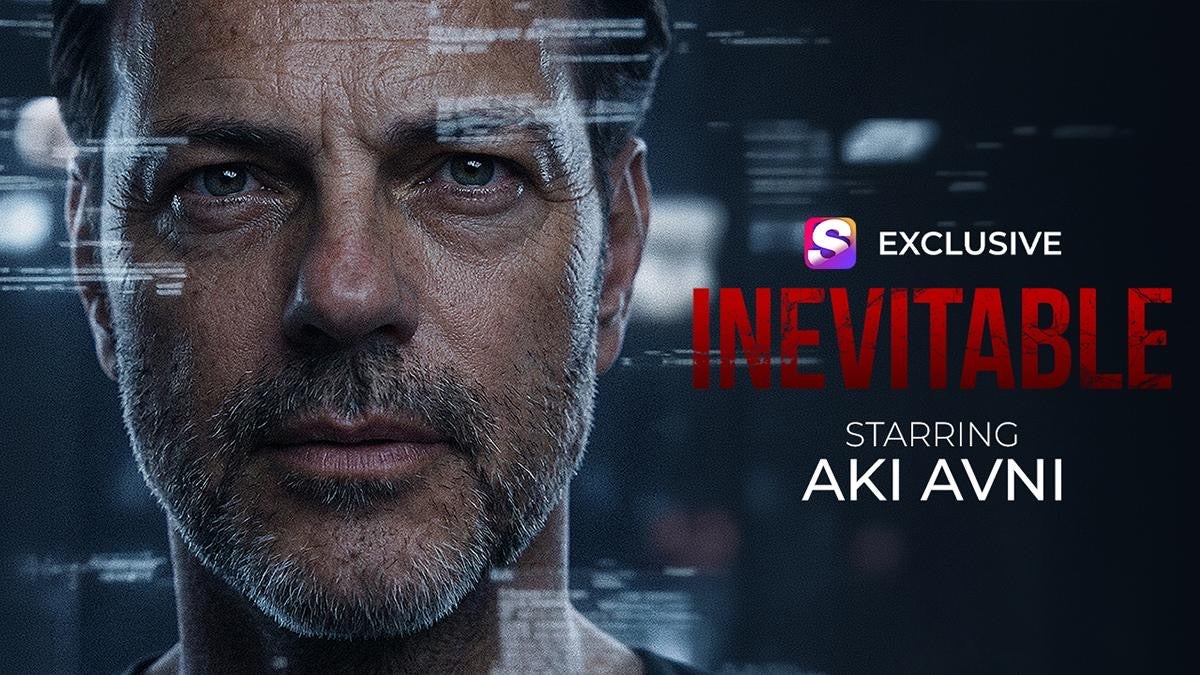
Shortical premiered the first 24 episodes of Inevitable, a 50-part thriller built around an AI version of actor Aki Avni. Avni participated in creating and authorizing the digital double. In the story, an actor licenses his likeness to an AI studio, then discovers that the synthetic version is implicated in a crime.
The production is unusually direct about the question it raises. Rather than presenting a generated performer with no accountable human subject, it ties the image to a working actor who helped define its use. Consent is not a disclaimer added after production; it is part of the workflow and narrative.
One approved project does not settle questions about compensation, reuse, revocation or rights across future versions. It does make those questions more concrete. As AI performance becomes commercially usable, the relevant distinction will not simply be human versus synthetic. It will be whether the person behind the likeness retains meaningful control.
 Tess Patton
Disney and Adobe build AI around controlled IP
Disney named Adobe its official AI innovation partner under a multi-year agreement covering proprietary models, creative tools and engineering support. Through Firefly Foundry, the companies will develop models tailored to Disney characters, environments and visual styles, extending across StudioLAB, ESPN Edge, theme parks and cruise development.
This is not a public model trained to imitate Disney from the outside. It is an enterprise system designed around material the rights owner controls, with the stated goal of producing commercially usable outputs inside established workflows. Custom models promise speed and variation without giving up the boundaries around valuable IP.
The announcement is broader than the evidence currently available. Disney has not disclosed production budgets, labor effects or which screen projects will use the tools. Even so, the partnership moves AI from an experimental vendor relationship toward long-term production infrastructure backed by one of entertainment’s largest rights libraries.

Creator-led programming becomes streaming supply
U.S. streamers added more than 3,700 hours of creator-led programming in the third quarter, according to Ampere Analysis, up from 927 hours a year earlier. Tubi accounted for more than three-quarters of the total, independent producers supplied 94%, and series with average episodes under 20 minutes represented 37% of new releases.
The numbers suggest that creator programming is becoming a repeatable supply category rather than a collection of celebrity experiments. Ad-supported services can license work that has already found an audience on YouTube or TikTok, while creators extend reach without necessarily surrendering ownership. Subscription platforms are increasing distribution, with additions up 75% quarter over quarter.
Volume does not reveal performance. Ampere’s figures do not show which titles retain viewers, generate advertising revenue or convert social audiences into streaming habits. But the structure is taking shape: creators bring tested formats and promotional reach; platforms bring living-room distribution, sales infrastructure and a second window for monetization.
 TV Technology Staff
Entertainment 360 buys creator-business expertise
Entertainment 360 acquired Brigade, the management firm founded by Max Stein, who will join as a partner. Brigade’s team and clients span newsletters, podcasts, fashion and digital culture, while Entertainment 360 brings representation, production and business-development capabilities. Financial terms were not disclosed.
The transaction is small compared with a studio merger, but it points to a useful change in representation. Creator careers increasingly cross categories once handled separately: a newsletter can become a podcast, consumer brand, live business or source material for film and television. Managing that path requires more than negotiating a single media contract.
Entertainment 360 is buying a network and a way of working with talent whose businesses begin outside Hollywood. The unresolved question is ownership. Better access to production and capital can help creators expand, but the value of the model depends on whether they retain control of the audiences, brands and intellectual property that made them attractive.
 Etan Vlessing
Skydance starts turning merger scale into an operating plan
Skydance will offer Paramount+ and HBO Max in a single bundle in early 2027, describing it as the first step toward a fully unified streaming product. The company also expects at least $6 billion in run-rate savings within three years, including cuts to overhead, marketing and technology.
The bundle is the consumer-facing part of the integration. Paramount and Warner Bros. now sit inside one company with approximately 203 million streaming subscribers, major libraries, broadcast and cable networks, sports rights and global distribution. The opportunity is scale; the pressure is turning that scale into profit while carrying substantial debt.
Cost savings can remove duplicated systems and make a combined platform more competitive. They can also weaken the programming and partner relationships that give the services value. Skydance’s next year will test whether consolidation creates a better route to audiences or a narrower one—with fewer internal buyers, fewer separate services and tighter control over content spending.
 Matt Donnelly
ITV’s streaming growth does not protect its content budget
ITV expects fourth-quarter advertising revenue to fall 5% to 10% and has identified £30 million in temporary savings, including £25 million from content. Its 2026 programming budget is now expected to be about £1.2 billion. Over nine months, ITVX viewing hours increased 29% and digital revenue grew 7%.
Those figures expose the tension inside the transition from broadcasting to streaming. More viewing on ITVX does not automatically replace the advertising economics supporting the wider commissioning system. When advertiser demand weakens, content spending remains one of the fastest costs to adjust—even when digital audiences move in the right direction.
The cuts arrive as ITV prepares to sell its Media & Entertainment business to Sky and position ITV Studios as a standalone global producer. ITV has not identified which programmes will be affected. For independent suppliers, that uncertainty is the point: platform growth can coexist with fewer near-term orders when monetization develops more slowly than consumption.
 Naman Ramachandran

Also This Week
Inter Medya licensed its Turkish microdrama catalogue to TelevisaUnivision’s ViX, El Salvador’s Canal 2 and Colombia’s Ditu. The agreements span streaming and linear television across the United States and Latin America, turning mobile-first Turkish fiction into a multi-window international rights product rather than an app-only export.
The BFI awarded £400,000 to the National Film and Television School and nearly £250,000 to Falmouth University for applied programmes in AI, virtual production and emerging capture technology. Over two years, both initiatives combine training with funded experiments and will publish practical guidance for independent filmmakers.
Ofcom strengthened its welfare guidance for constructed-reality programmes involving emotional or physical intimacy. A new risk matrix asks broadcasters to identify foreseeable harms and appropriate safeguards before casting and filming begin, making participant welfare a more explicit, formal part of format development and production planning.
RoseBerry Media’s Epis added two vertical true-crime series from Fremantle-backed Silvio Productions. Its factual offer now spans 75 projects and more than 2,250 short episodes, showing how established rights catalogues can move into vertical through reformatting and licensing at relatively low development risk rather than original romance production.
Talpa Studios and creator-led Signal.Stream secured an eight-part German adaptation of the paranormal YouTube format The Drop for ProSiebenSat.1’s Joyn. Produced locally by Studio Flitz, the commission gives a creator-originated digital format a route into professional streaming production and international adaptation without abandoning its original digital identity.
Further Reading
Branded Vertical Drama Is Not One Business — Its distinction between platform distribution, brand-owned social channels and audience fit provides useful context for Canela.TV’s advertising-led microseries model.
 Real Reel

EVNT. AI Can Make the Movie. Now What? — The production discussion around creative control, model choice and scalable workflows extends this week’s questions around Shortical, Disney and Adobe.
 Real Reel