At GMI Summer Signal ’26, Ali Albazaz, Steve Bannerman, Gray Crawford and Yujing Qian moved past the usual question of what AI can generate — and into what filmmakers, studios and platforms actually do once the tools are good enough to use.
By the time the closing panel began at GMI Summer Signal ’26, the audience at San Francisco’s Exploratorium had already spent hours watching multimodal AI at work.
Inworld put AI characters into live conversation. MiniMax and Runway demonstrated video generation. Utopai showed agentic filmmaking. GMI Cloud presented the infrastructure underneath it all. The day’s theme was clear: multimodality is moving from demos into real products.
The final panel, From Hollywood to AI-Native Entertainment, picked up from there.
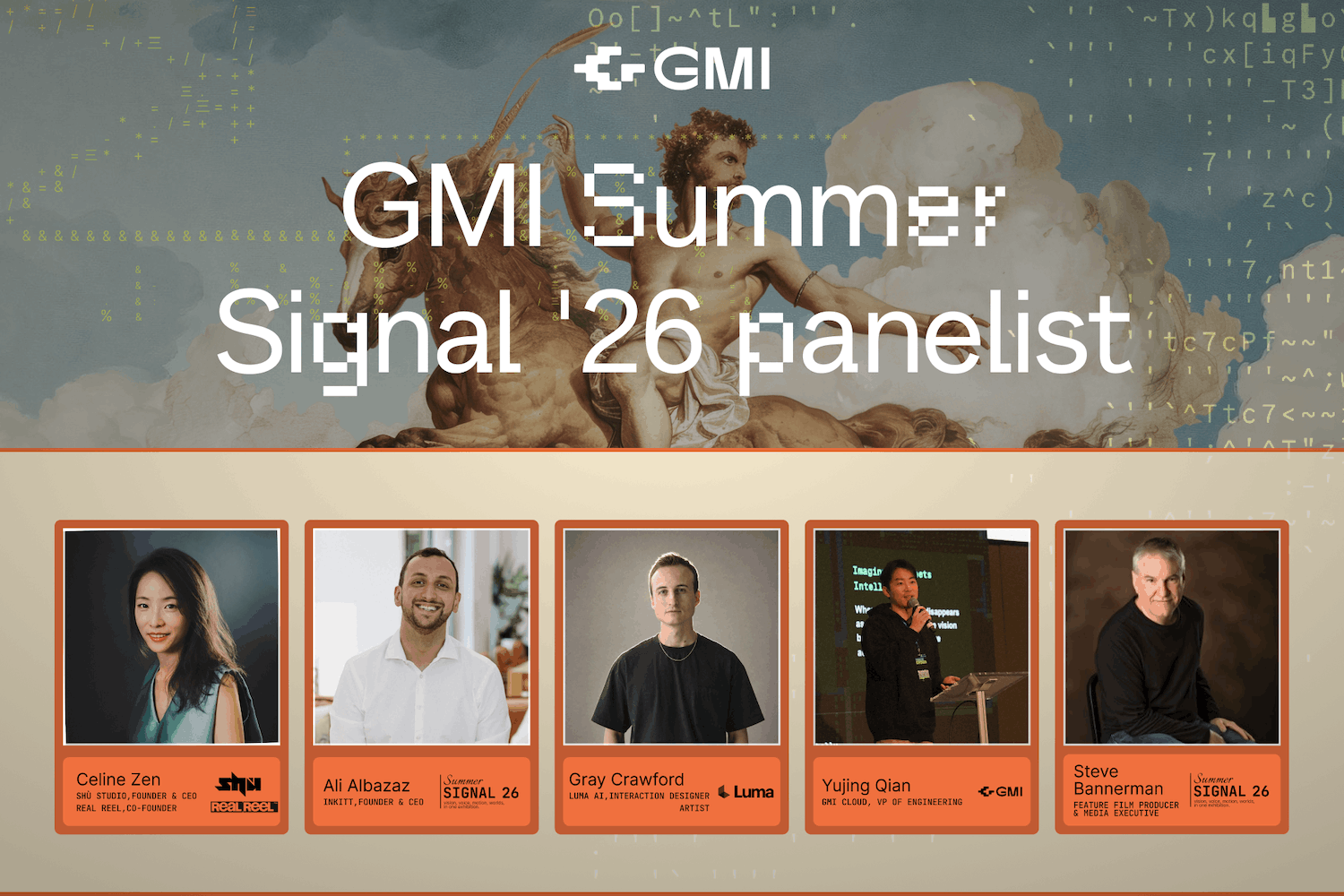
Moderated by SHÙ Studio founder and Real Reel co-founder Celine Zen, the conversation brought together Ali Albazaz, founder and CEO of Inkitt; feature film producer and media executive Steve Bannerman, formerly of Amazon MGM Studios; Gray Crawford, interaction designer and artist at Luma AI; and Yujing Qian, VP of Engineering at GMI Cloud.
Celine opened with a question filmmakers have always had to answer:
What gets made?
If AI makes content faster and cheaper to produce, does choosing the right idea become any easier?
Steve’s answer, from the traditional film side, was essentially no.
Hollywood already makes far more films than audiences have time to watch. The traditional system, as he described it, often works backwards: someone has an idea, the film gets made, and only afterward does the market reveal whether people wanted it.
What interested him about businesses coming out of mobile storytelling and microdrama was that some had begun reversing that sequence — looking at audience behavior first, then deciding what to make.
Ali was sitting beside him with a company built around almost exactly that idea.
“The whole reason I started the company,” he said, was watching gatekeepers make bad decisions.
When Inkitt began, books offered a relatively inexpensive way to test another model: put stories in front of readers, observe how they actually read, then invest in the stories already proving they could hold an audience.
When the company moved into video, that logic came with it.
Inkitt already knows how readers responded to the source material. It can test cliffhangers and different potential openings on social media before committing to production. Rather than making the film and asking questions afterward, Ali described going into production with far more information about what had already connected.
From there, Celine took the question one step back:
If data can increasingly help decide which story gets produced, where does the story itself come from?
For a company using AI throughout its operation, Ali drew a clear boundary.
The author still matters. The writer still matters. AI may accelerate parts of the process, but somebody has to understand the audience, judge the material and make the creative choices.
▙ ▙
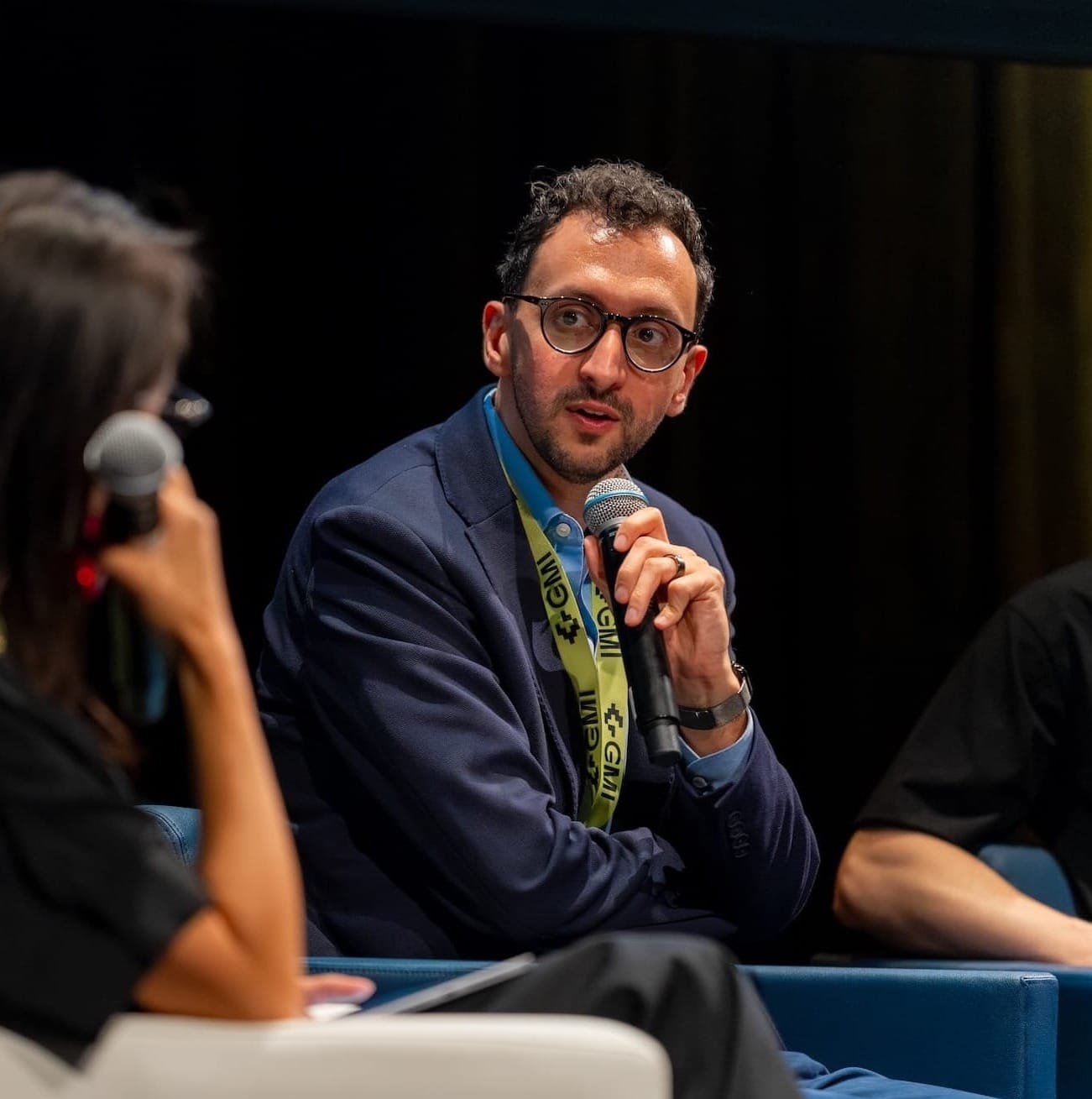
There’s always a human decision maker involved.
Ali Albazaz
That is also why Inkitt is hiring AI video producers rapidly. The company has stories ready to move into video; the constraint is having enough people who can turn generated material into deliberate creative decisions.
And access to the same models does not give everyone the same advantage.
Ali put it bluntly: AI can help a bad writer become an okay one. Getting beyond okay still requires something else.
Gray came at the question from the creative-tool side.
What interests him about generative production is not simply getting an image or shot faster. It is that the creative process can stay open longer.
Instead of resolving every decision before production begins, a filmmaker can make something, react to it, adjust it and keep discovering while the work is taking shape.
That led to a more familiar filmmaking problem:
Control versus Accident
Sets have always produced things nobody planned. An actor does something unexpected. A location behaves differently. A shot works for a reason that was never on the page. Generative models create their own version of that situation. Sometimes the result is wrong, but interesting.
Steve answered first by separating the technical process from the creative one. Hollywood has always looked for ways to make production more efficient, he said. For Steve, the value of saving money on the technical process is being able to put more resources back into the creative one.
He pointed to VFX budgeting as an example. Teams may need to estimate complicated work from a script that is still changing. If AI can help break that work down earlier and produce a more accurate budget, it can prevent very expensive problems later.
“When humans hate doing something,” Steve said, “they do it badly.”
That is the kind of task where he sees an obvious use case.
But better tools do not provide better taste.
▙ ▙
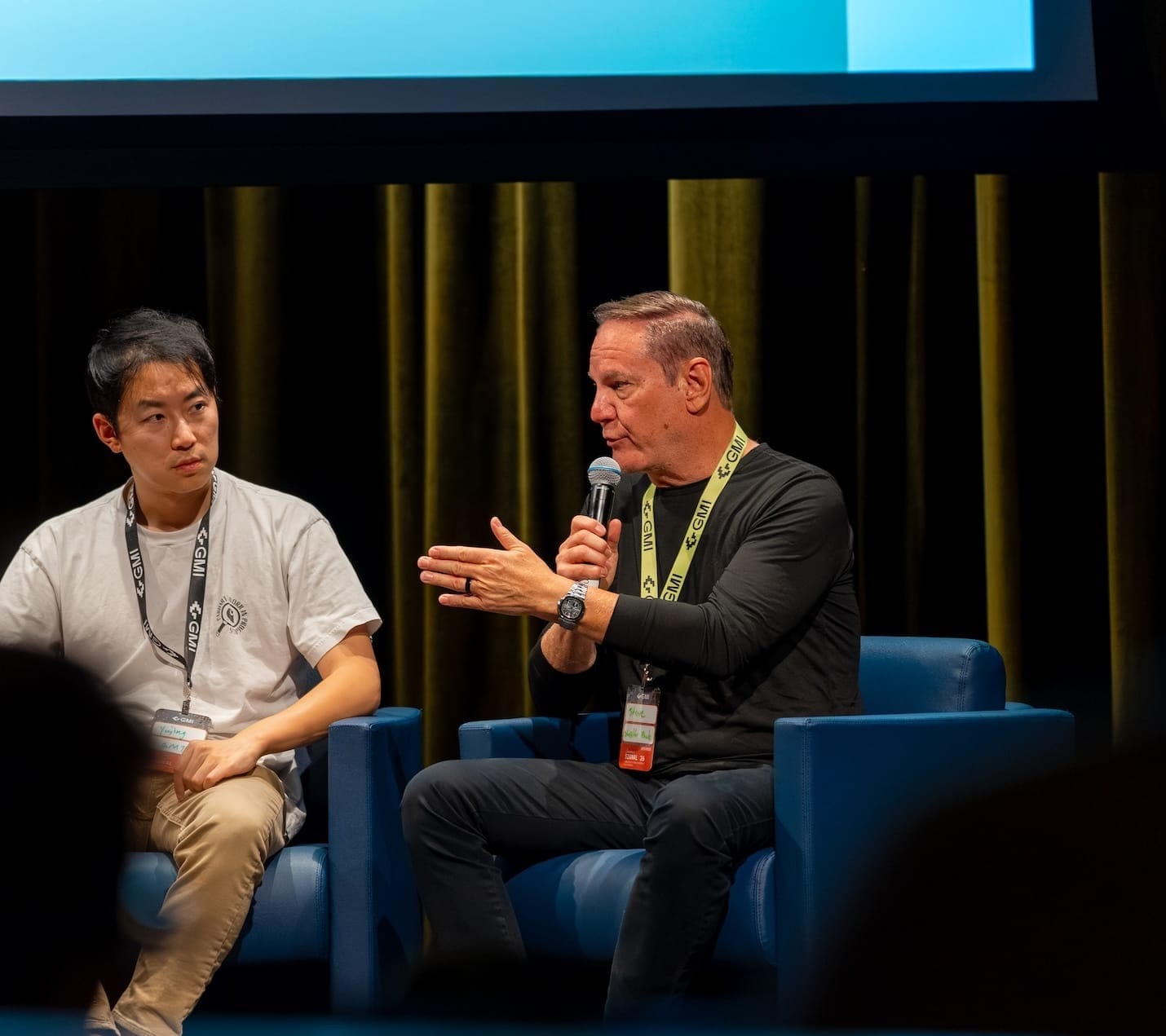
If you’re a bad filmmaker, it will allow you to make bad films faster.
Celine then put the original question directly to Ali.
If Inkitt already knows the story it wants to make, what happens when the model generates something unexpected that turns out to be interesting?
Ali’s answer was that the producer still decides whether to follow it. But AI gives the team another option beyond arguing over which creative direction is right. They can test it.
On Inkitt Ironblood, the company’s AI-native streaming platform, different viewers can already encounter different openings. Ali also described a superhero film where the team tested a longer fight sequence against a shorter one.
The creative choice had become an A/B test.
The conversation moved on — into infrastructure, adoption and the demands of producing at scale — before Celine returned to that example. “I think I missed one thing,” she said, bringing the A/B test back to Gray.
If different versions can now be produced and tested much more easily, what happens to the idea that a film has to settle on one version so early?
Gray said it was the first time he had heard of a production using A/B testing in this way. Audience testing itself is old. But putting the test this close to production and distribution changes the situation.
Gray described a familiar moment in a creative room: one person wants to go one way, another wants another, and eventually the production has to choose. Months of work then follow that decision.
With generative tools, there are cases where both directions can actually be made.
He also pointed further back. Stories were not always fixed objects. Oral storytelling changed with each telling; every audience receiving exactly the same version is only one model of storytelling.
Steve picked up from the studio-testing side. Hollywood has shown unfinished films to audiences for decades. But those tests come with an obvious problem: the film is unfinished.
A screening may happen before the film is finished and, crucially, before final music. The audience then says the middle feels slow.
“You don’t have music,” Steve said. Yet music is one of the tools filmmakers use to control pace.
For him, AI could make testing more useful not simply because filmmakers can generate more alternatives, but because those alternatives may be much closer to what the audience will eventually see.
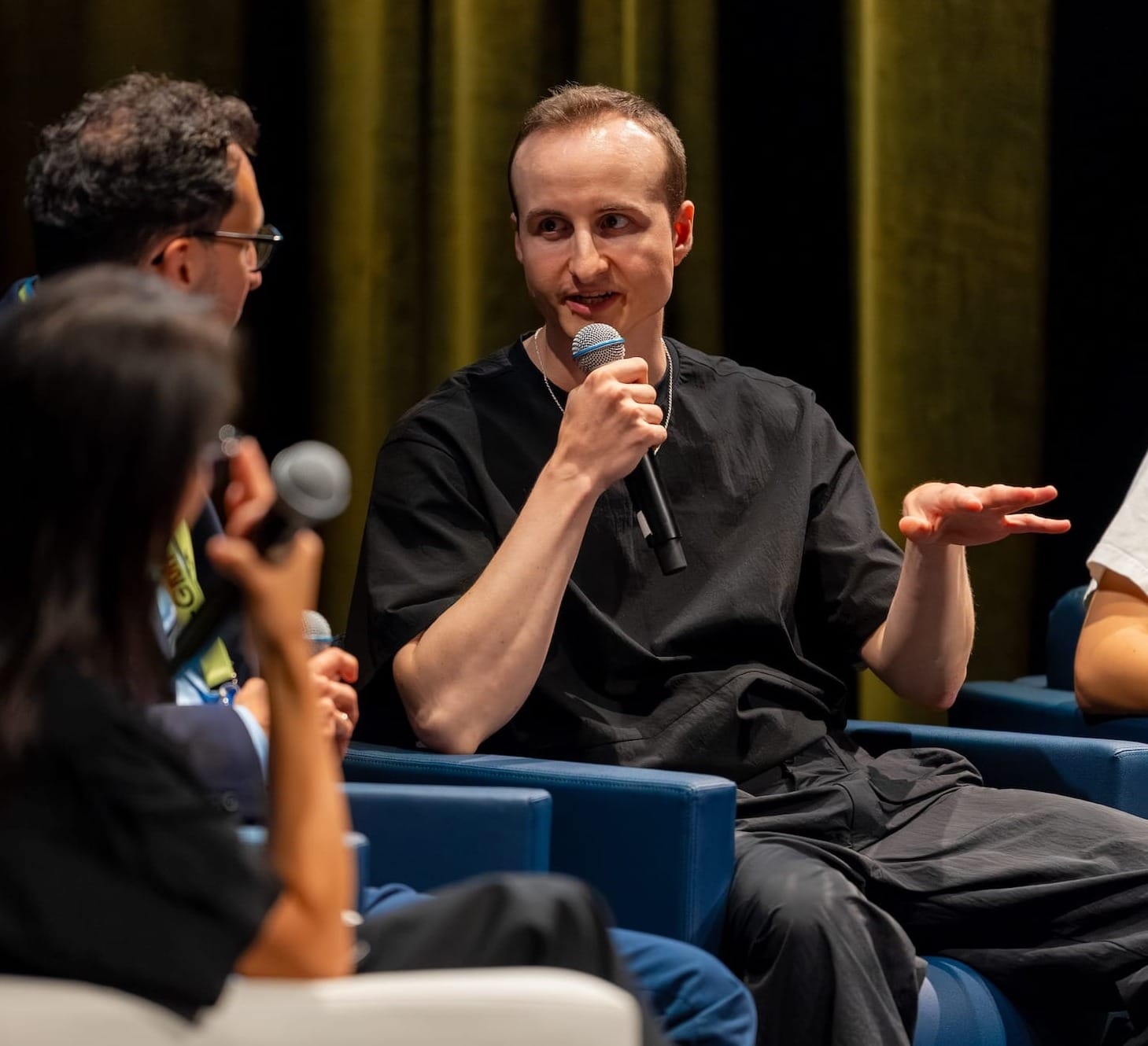
▙ ▙
It’s especially valuable when you’re in a creative process to be able to iterate in real time.
Gray Crawford
When Celine asked what the panelists actually wanted from a video model, their answers were noticeably different.
Ali went straight to quality. Inkitt wants cinematic output, he said, and even a relatively small improvement can matter if it reduces failed generations or produces a better usable shot. His team tracks not just what can be generated, but how many generations it takes to get something that can actually go into the film.
Gray wanted more control. A model can produce an extraordinary result once and still be difficult to use professionally if the filmmaker cannot reliably direct timing, movement or specific events. He wants the process to feel less like repeatedly pulling a lever and hoping the right image appears.
Yujing heard both answers from the infrastructure side. GMI sees customers optimizing for very different things, he said. Some will spend considerably more for a small increase in quality. Others are working at greater volume and care much more about speed and cost.
“Everyone has their own focus.” GMI can optimize workloads, help route work between models and reduce compute costs, but it cannot decide what compromise is creatively right for the producer.
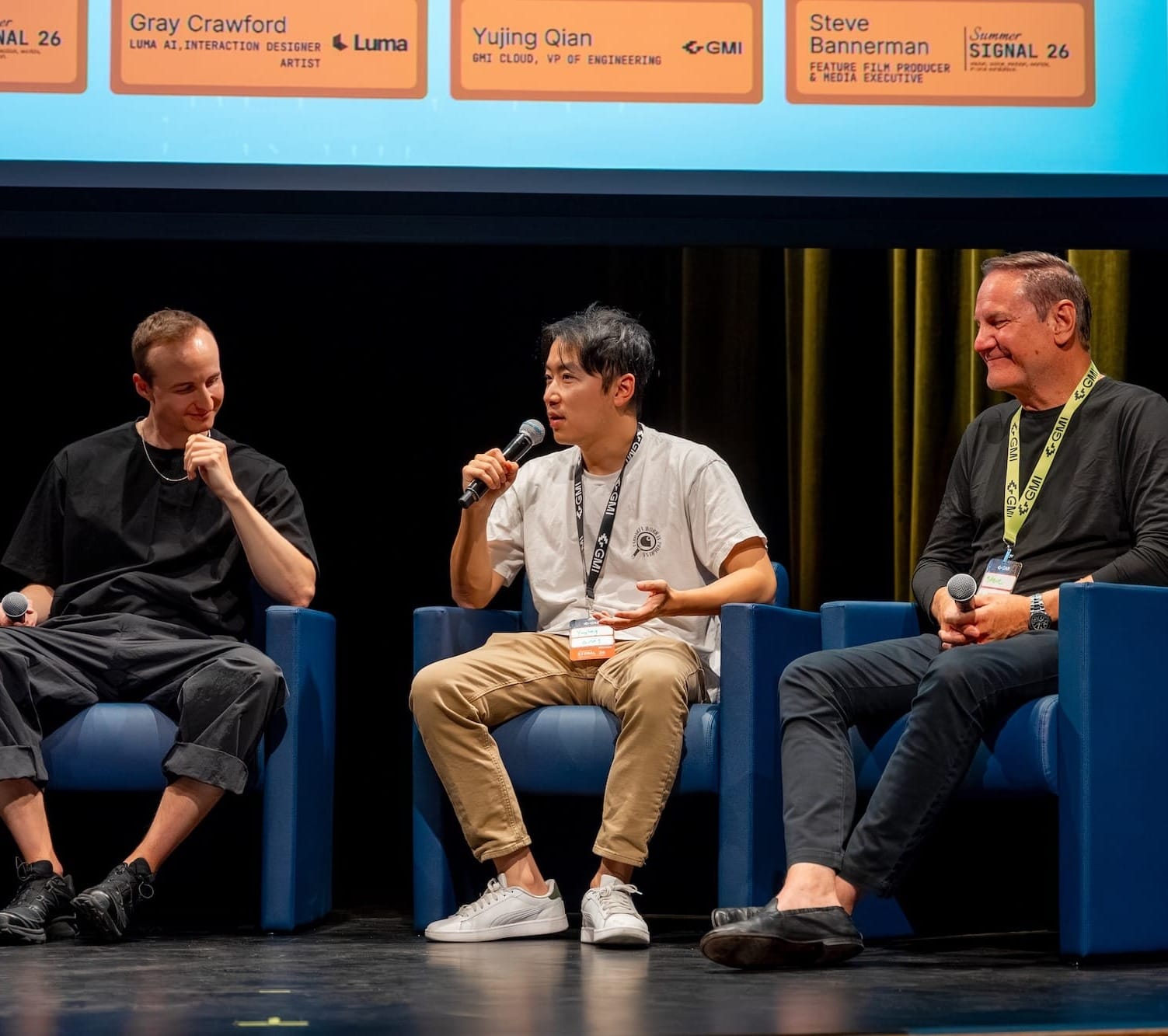
▙ ▙
We couldn’t choose for them. It’s just providing recommendations.
Yujing Qian
Steve’s production answer was perhaps the simplest: use more than one. On a recent feature using AI-generated imagery, his team built a pipeline that could move between different systems depending on what a particular shot required.
One model might perform well for one task and badly for another. Another could produce the right image but reject an action sequence because of its safety restrictions. Resolution could become another constraint.
“So the model may be really good at doing something,” Steve said, “but you still can’t use it.”
With models changing this quickly, the valuable production asset is not necessarily the model itself. It is a workflow flexible enough to change with them.
Celine followed by asking what still does not work.
Ali pointed to physical space and continuity. Change perspective and distances can shift; objects may move or turn in ways they should not. The models are already usable enough for his company to produce with, but harder shots can still require repeated attempts.
Gray agreed on consistency, but his concern went further. Models learn from what already exists. For an artist, the question is not only how to keep a generated world coherent, but how to push beyond that learned distribution and find imagery that does not simply feel like another polished recombination of familiar material.
Yujing saw the same limitation underneath the creative layer. Today’s models have advanced quickly, but maintaining a coherent world and simulating it consistently remains an open problem.
Steve wanted something much more practical. Smaller models.
“It needs to run on my phone,” he said, adding that he wants the same kind of local access on his laptop rather than depending constantly on cloud infrastructure.
Otherwise, he joked, he might run out of tokens before he gets the movie finished.
By the end of the hour, the panelists were talking about the kinds of problems that tend to appear once a technology starts becoming useful: budgets, failed shots, audience tests, control, model switching, continuity and compute costs.
For Celine, that back-and-forth was part of the point.
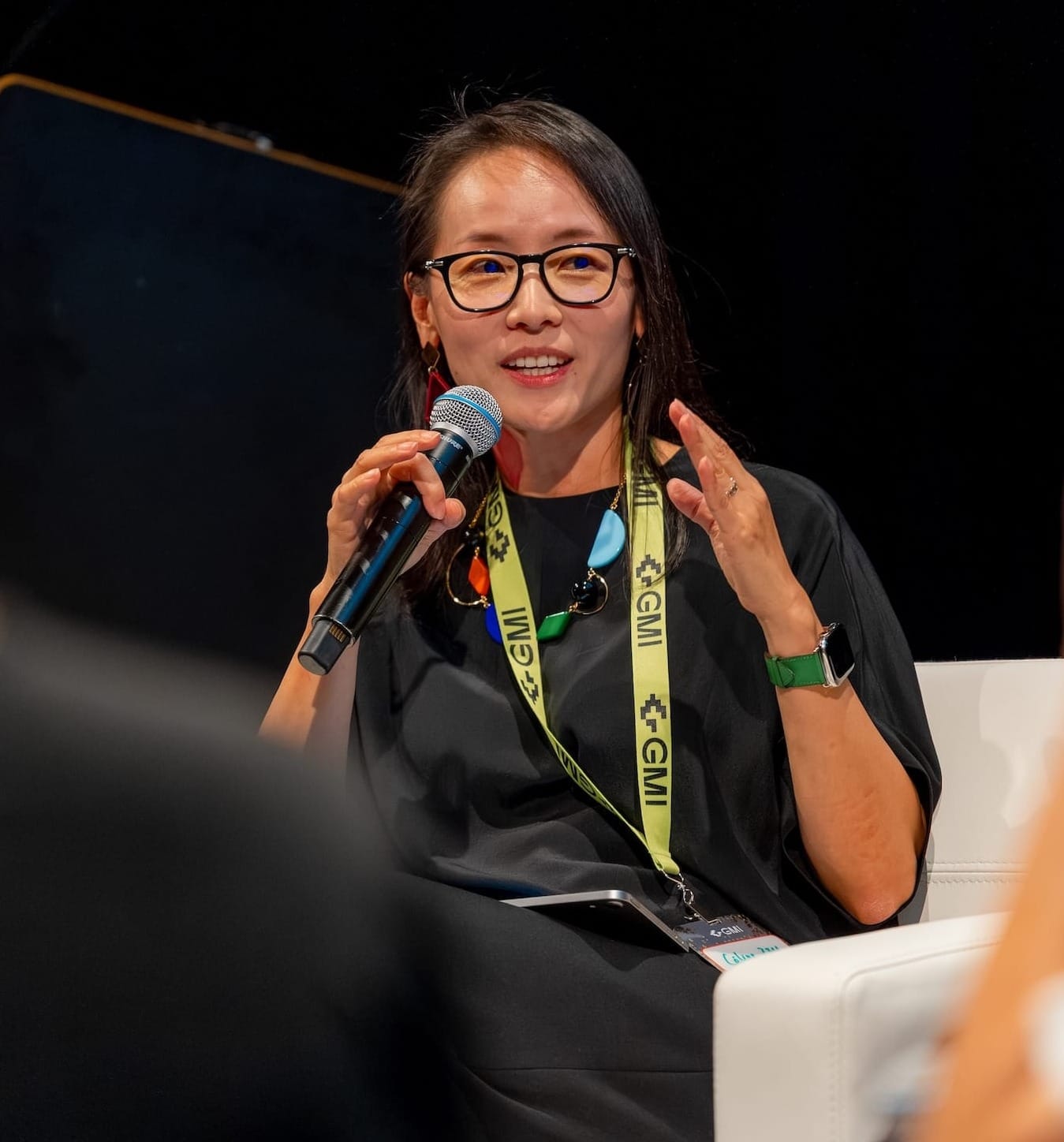
▙ ▙
It’s not just about telling people something. It’s the exchange that makes things better.
Celine Zen
Steve was still waiting for something else. He has watched other technologies arrive in entertainment with enormous promises. CG, stereo 3D and VR all created their own waves of experimentation. For him, the real breakthrough comes when someone stops using a new technology simply to reproduce something that could already have been made.
He is waiting for the creator who figures out what AI makes possible that the old process did not.
“Maybe it’s one of you guys,” he told the room.
After a day spent demonstrating what the technology can already do, it was a fitting place to stop.
The harder question is what somebody decides to do with it.
Further Reading
AI Production Wins on Cost. Does It Also Win on Audience? — Real Reel’s earlier framework on AI production’s tradeoffs between cost, creative possibility and audience preference — useful context for the panel’s discussion of quality, testing and audience behavior.
 Real Reel
The Infrastructure Week: AI Quietly Took Over Vertical Production — A look at AI moving beyond individual production tools and into the infrastructure, platforms and workflows underneath content production — the shift this panel was already confronting in practice.
 Real Reel
✱