Period drama is one of vertical storytelling's least explored registers — the format usually runs on contemporary settings and familiar social hierarchies. MyDrama's Behind Enemy Lips (2026) sets its dark romance in 1920s Chicago, pairing underground crime, forbidden desire, and period costuming with a question the vertical space rarely frames this directly: when everyone around a woman believes they have the right to decide her future, what does it actually take to choose your own life?
⚈ ⚈
Sometimes freedom begins with the courage to choose for yourself.
-
Review by Liz
@portraitstorydiaries
I used to think freedom meant being able to leave.
Behind Enemy Lips made me think about something more complicated: what happens when everyone around you believes they have the right to decide what your life should look like?
Set in 1920s Chicago, this dark period romance immediately drew me in with its old-money glamour, smoky clubs, underground fights, dangerous men, and gorgeous costumes. I absolutely love period pieces, whether they're horizontal or vertical, so seeing a vertical drama take this kind of swing had my attention from the beginning.
But underneath all that beautiful styling is a much more personal story about a young woman trying to take ownership of a life that has always been planned for her.
Emilia Fairfax is wealthy, well-connected, and surrounded by privilege, yet she has very little control over her own future. When her family falls into debt, her mother, Beatrice, arranges her marriage to Viktor Kane, a powerful Chicago criminal who sees Emilia as a future wife and mother to his heir. Emilia refuses to accept that fate and attempts to escape, eventually crossing paths with Cassian Wolfe, Viktor's best underground fighter.
Cassian has his own complicated history with Viktor, and what begins as an unlikely alliance slowly develops into a forbidden romance. Yet the more I watched Emilia fight her way through the world around her, the more I realized that her story wasn't simply about finding someone who could protect her.
It was about finding the freedom to decide who she wanted to become.
Behind the Velvet Curtain
Right from the beginning, I was completely taken by the way this drama looks.
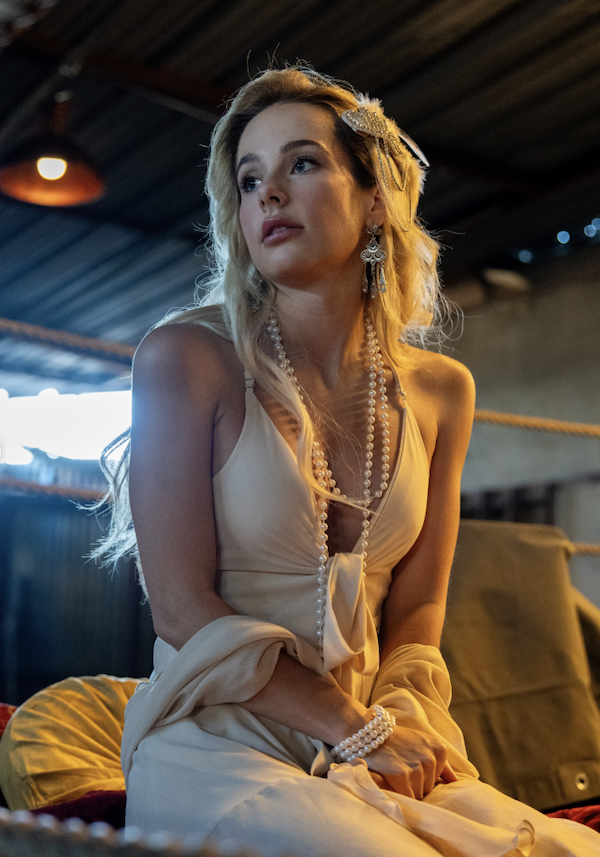
The 1920s Chicago setting is gorgeous. The wardrobe, hairstyles, Emilia's makeup, the interiors, and the overall atmosphere work together so well that I genuinely found myself forgetting I was watching a vertical drama at times. There is a real commitment to the period aesthetic here, and I appreciated that the production didn't treat the setting like background decoration.
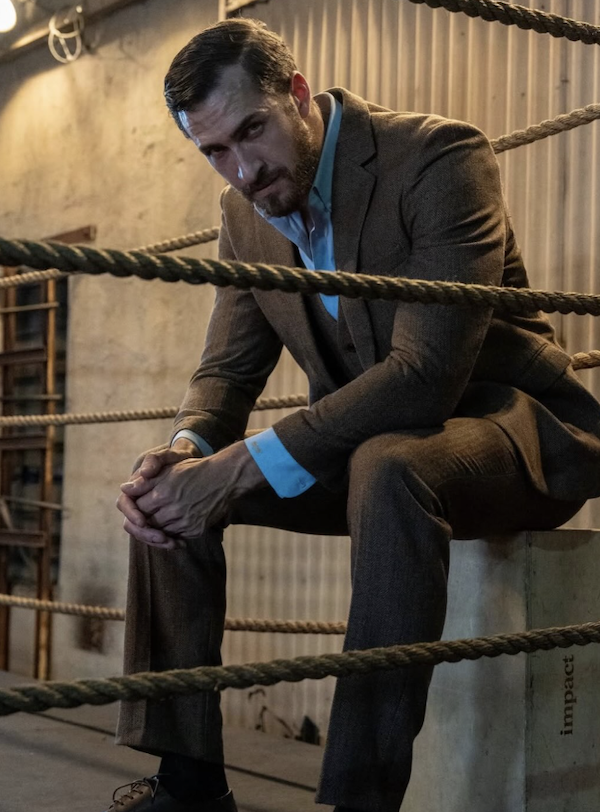
I especially enjoyed the contrast between Emilia's polished world and Cassian's much rougher one. She comes from wealth and old-money expectations; he belongs to a world of underground fights, crime, and violence. Even their clothes tell you something about who they are before they say very much.
And underneath all those beautiful dresses, Emilia is fighting for something she has almost never been allowed to have.
A say in her own future.
“Her privilege gives her everything except the one thing she actually wants: freedom.”
That idea became increasingly important as the story progressed because Emilia's lack of freedom isn't limited to one person. Her mother expects obedience. Viktor expects possession. Her family expects her to sacrifice herself for their survival. Everyone seems to have already written the next chapter of her life for her.
I do have to be honest, though. The first few episodes were difficult for me because of how much violence is directed toward Emilia. I understand why the story places her in such a brutal environment, particularly given the period and the criminal world surrounding her, but there were moments when I felt the drama pushed her suffering further than necessary.
We already understand that Emilia is trapped. I don't think the story always needed to show her being threatened, humiliated, or overpowered again and again to make that clear. There were moments when I wanted the drama to trust us a little more and allow us to see Emilia beyond what was happening to her.
Thankfully, as the story moves beyond establishing her circumstances, there is more room to see the woman underneath them. And that is where Emilia became much more interesting to me.
She doesn't suddenly become fearless. She simply becomes more willing to act while she's afraid.
▙ ▙
Her privilege gives her everything except the one thing she actually wants: freedom...
Liz
Bloody Knuckles & Burning Kisses
And then there is Emilia and Cassian.
I love a good star-crossed romance, and these two have the kind of chemistry that makes you understand exactly why this relationship becomes so difficult to resist.
Emilia Rose and Tim Stein are electric together. They're opposites in almost every way. She's the wealthy girl from Millionaire's Row. He's the underground fighter who calls her “Millionaire.” She thinks he's crude, he thinks she's spoiled, and neither of them initially knows what to make of the other.
I loved that friction. Even their first meeting feels like something pulled straight from a dark-romance fantasy. Emilia is running from danger and ends up in Cassian's arms while he's holding roses with bloody knuckles.
It's ridiculous. And I absolutely loved it.
But what made their relationship more meaningful for me was the way it gradually became about something bigger than attraction.
Viktor wants to possess Emilia.
Beatrice wants to control her.
Cassian eventually understands that loving Emilia means giving her something neither of them has been willing to give her before.
A choice.
“Cassian doesn't save Emilia by choosing for her. He matters because he eventually lets her choose for herself.”
That distinction changed the way I viewed their romance.
Emilia's determination existed long before Cassian arrived. She has spent years being told what to wear, how to behave, whom to marry, and what kind of woman she is supposed to be. Cassian doesn't create her desire for freedom. He gives her space to act on something she already knows she wants.
He may open the door.
Emilia is the one who walks through it.
I did wish the romance had been given more breathing room. Their attraction develops quickly, and because so much of their relationship happens while they're surrounded by danger, I wanted more opportunities to see them simply getting to know one another.
What does Emilia dream about when nobody is telling her what she should want?
Who is Cassian when revenge isn't driving him?
Those quieter questions could have given their relationship even more emotional depth. Sometimes the smallest conversations between two characters can tell us more about why they belong together than another dramatic kiss ever could.
Still, there are romantic moments here that genuinely worked for me.
Without spoiling it, I especially loved that Cassian remembers telling Emilia her first time should be special rather than happening in a dirty, smelly basement underneath a boxing ring. When they finally share that moment on the ring, surrounded by candles and away from the chaos, the scene becomes surprisingly tender.
For someone whose life has been controlled by other people, there is something beautiful about a moment where her wishes are finally being considered.
Not decided for her. Not assumed.
▙ ▙
Cassian doesn't save Emilia by choosing for her. He matters because he eventually lets her choose for herself...
Liz
The Woman Behind the Dress
Emilia Rose gives the story its emotional center because she never allows Emilia to become defined entirely by what happens to her.
There is a delicateness to Emilia that fits the wealthy world she was raised in, but Rose keeps that stubbornness underneath it. I enjoyed watching Emilia move from simply trying to escape her circumstances to learning how to navigate them. She becomes more strategic, more confident, and more willing to take risks, without losing the vulnerability that makes her feel human.
What I appreciated most was that her growth doesn't require her to become a completely different person.
She doesn't stop being afraid.
She learns that fear doesn't have to make the decision for her.
“Emilia doesn't become fearless. She becomes willing to choose despite her fear.”
Tim Stein brings the physical intensity Cassian needs as an underground fighter, but I was even more interested in the moments when that toughness begins to soften around Emilia. There is an appealing contradiction in the character: the man with bloody knuckles who can also be unexpectedly gentle.
Stein also handles Cassian's more aggressive side early in the story, although I did feel that some of his attraction toward Emilia developed faster than the emotional foundation between them. I wanted to see more of the moments that transformed fascination into genuine understanding.
Still, once Cassian begins to recognize what Emilia actually needs from him, Stein gives that change enough vulnerability to make it believable.
The chemistry gets you into their story. Their growing understanding of each other is what makes you want to stay.
The People Behind the Power
Sean McHugh makes Viktor Kane thoroughly unpleasant, and I mean that as a compliment.
Viktor doesn't need to shout to make his presence felt. There is a quiet confidence to him that makes his obsession with control especially unsettling. I also appreciated that the drama never tries to disguise his desire to possess Emilia as love. He doesn't want to understand her. He wants her to belong to him.
I did think some of his cruelty could have been written with more restraint. Repeated violence eventually communicates less than a single carefully controlled threat can. I found myself wishing the story would trust the character's presence a little more because there is something much more frightening about a man who doesn't have to prove how dangerous he is.
Rochelle Vallese may have made me hate Beatrice even more.
Beatrice's cruelty feels painfully personal because she is Emilia's mother. Viktor is openly dangerous, but Beatrice uses family, social expectations, guilt, and money to control her daughter while convincing herself that she is doing what is best for everyone.
She treats Emilia less like a daughter with her own hopes and more like an answer to the family's problems.
That makes her one of the most uncomfortable characters in the story.
Logan Hunt also surprised me as Oliver. I initially expected him to be another man working for Viktor, but his loyalty to Cassian gives him a much more interesting role. The brotherly bond between them adds an emotional layer to Cassian's story, particularly when that loyalty is tested. I only wish we had been given more time with Oliver because there is clearly more to him than the story has room to explore.
David M. Edelstein brings another kind of complexity to Alistar Fairfax. I expected him to follow the same path as Beatrice, but his regret and guilt give him more emotional depth. His eventual attempts to make things right feel like the actions of someone finally confronting the consequences of the choices he made.
“Not every threat in Emilia's life carries a weapon. Some of them carry a family name.”

▙ ▙
The chemistry gets you into their story. Their growing understanding of each other is what makes you want to stay...
Liz
When Love Stops Being Possession
There is a reason dark romances can be so compelling.
They take love and place it somewhere dangerous, where desire, power, obsession, and control can easily become confused with one another.
Behind Enemy Lips understands that distinction more clearly as Emilia and Cassian's relationship develops.
For much of Emilia's life, people have told her that controlling her is a form of protection. Her mother believes obedience will save the family. Viktor believes possessing her gives him what he wants. Even the world she comes from has already decided what her life should look like.
Cassian's greatest change isn't simply that he falls in love with her.
It's that he begins to understand that loving her means allowing her to remain her own person.
“Being protected isn't the same as being possessed.”
That is where the romance became more meaningful to me. Because Emilia doesn't need someone to choose her future. She needs someone who trusts her enough to choose it herself.
When the Gunsmoke Clears
I went into Behind Enemy Lips expecting a glamorous 1920s crime romance, and it certainly gives you that. The costumes are beautiful, the atmosphere is richly styled, the romance is intense, and there is enough danger, betrayal, underground fighting, and forbidden desire to keep the story moving.
But the part of Emilia's journey that stayed with me had very little to do with the glamour. It was the gradual realization that escaping one person isn't necessarily the same thing as becoming free. You can leave one cage and still find yourself surrounded by people who believe they know what is best for you.
That is why Emilia's development mattered to me.
She begins the story with almost every important decision already made on her behalf. By the time she starts fighting for herself, the question is no longer simply whether she can escape Viktor or her family's expectations.
It's whether she can finally become the author of her own life.
I still think the early violence could have been handled with more restraint, and I wanted Emilia and Cassian to have more quiet time together outside the chaos. I wanted to know what they would talk about when nobody was chasing them. What they would dream about. What their relationship would look like when survival was no longer the thing holding them together.
Those missing moments aside, there is something genuinely satisfying about watching Emilia slowly reclaim her ability to choose.
Her mother sees a daughter who should obey.
Viktor sees a woman who should belong to him.
The world she was born into sees a future that has already been decided.
Cassian, eventually, sees something different.
He sees Emilia.
And maybe that is the simplest definition of love this story gave me.
Not I will decide what is best for you.
Not I will protect you, therefore you belong to me.
Just: You get to choose.
When I think back on Behind Enemy Lips, I don't just remember the beautiful dresses, the bloody knuckles, or the forbidden kisses.
I remember a young woman who spent so much of her life being told who she should be, finally realizing that her future belongs to her.
And perhaps that is the freedom she was fighting for all along.
The freedom to choose her own life.
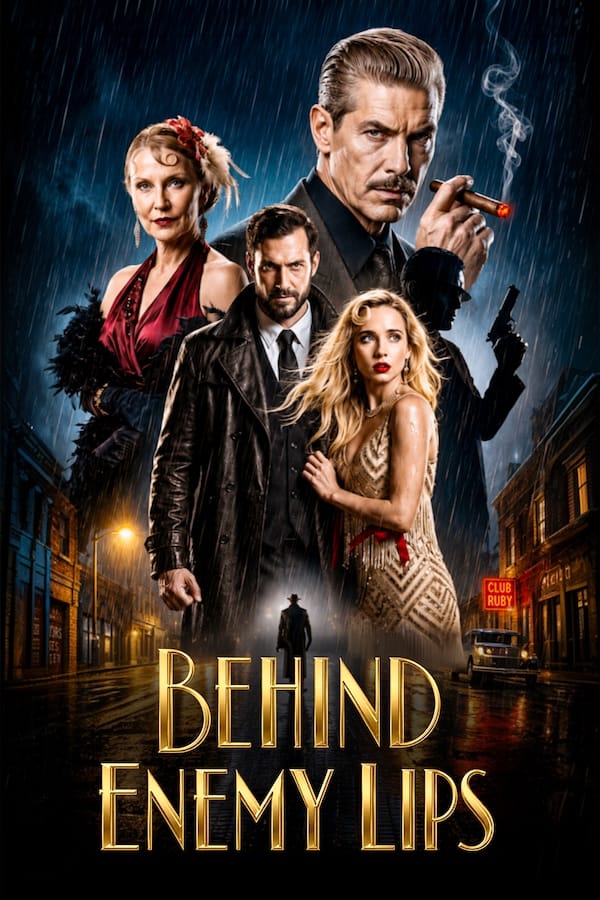
Images used in this article are sourced from the public internet and are presented for editorial context only. All rights remain with their respective owners.
Credits
Written by Liz
Design & Motion by VØYD
More Reviews From Liz
- Tie Me Up, My Dom CEO — a ShortMax vertical that uses its provocative premise to examine trust, consent, and emotional safety in ways the dark romance format rarely attempts.
 Liz
Liz
- The Golden Pear Affair — a branded vertical drama rom-com that hides product integration inside a genuinely fun story, and in doing so reveals how light the format can travel.
 Liz
Liz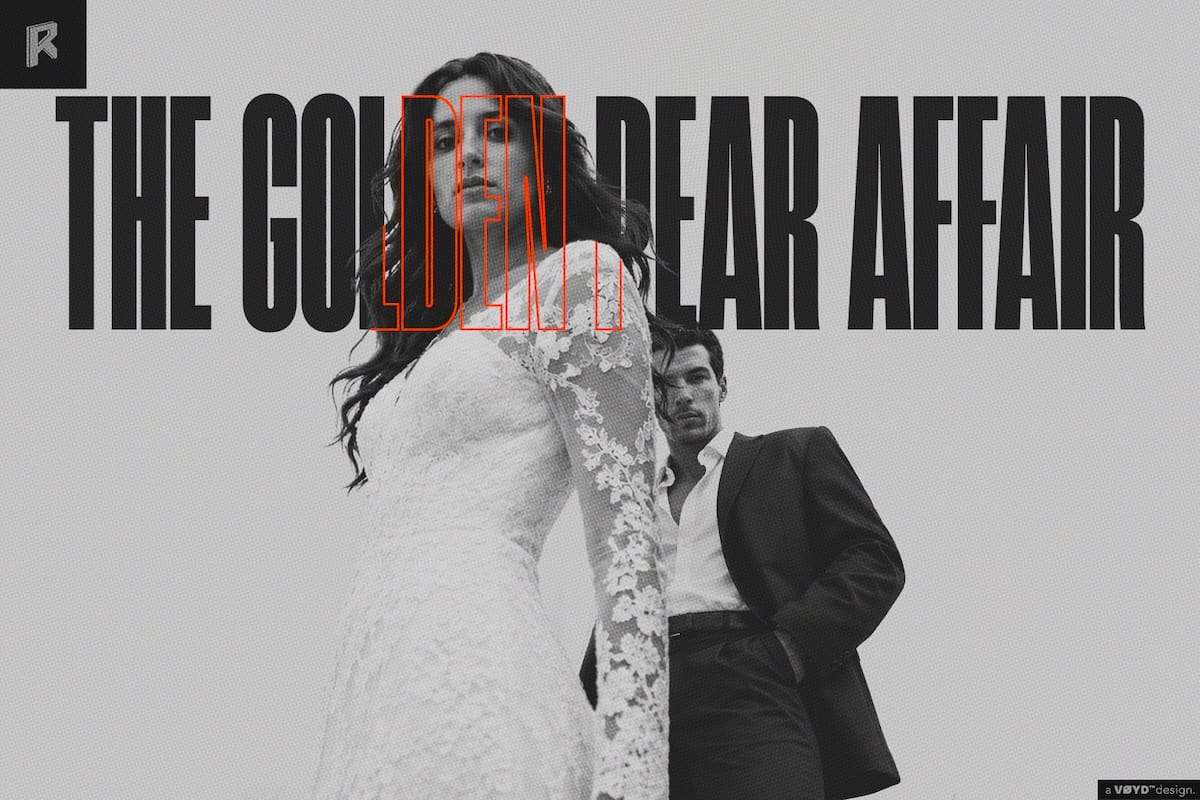
✱