Mobile-first and AI-native entertainment moved further into the business mainstream this week as IQSTEL detailed a telecom model for microdrama, Lime Pictures entered vertical drama, and Dhar Mann joined MIPCOM's main stage. Meanwhile, China revealed the scale of AI microdrama production, capital moved into AI-native content infrastructure, and feature-length AI films began testing commercial and theatrical distribution.
⦿⦿
The content proved the audience was there. Now the business infrastructure is starting to catch up.
Week of Sep 14-Sep 20, 2026
New entertainment formats are beginning to face a different test.
Vertical storytelling, creator-led studios and AI-native films have spent the past few years proving they can attract attention. Increasingly, the harder question is whether they can build the distribution, production systems, financing and institutions required to operate as real entertainment businesses.
This week, more of those pieces came into view.
IQSTEL puts numbers behind a telco model for microdrama
Nasdaq-listed IQSTEL outlined the economics of a telecom distribution model for mobile-first entertainment this week, building on its partnership with Colombian microdrama platform IDILIO TV. Instead of relying primarily on app-store discovery and in-app purchases, the model would allow consumers to subscribe through participating mobile operators for roughly $4–$6 per month.
Revenue would be shared among the mobile operator, content partner and IQSTEL, with carriers handling customer access and billing while IQSTEL provides integration and distribution infrastructure. The company modeled $14.4 million to $21.6 million in annual consumer billings at 300,000 active paid subscriptions—but importantly, those figures are illustrative scenarios, not existing revenue or subscribers.
The underlying idea is more interesting than the projection. IQSTEL already has commercial relationships with more than 600 telecom operators across 24 countries. If vertical platforms can plug into those existing billing and customer relationships, carrier distribution could become another acquisition and payment rail alongside app stores, paid advertising and social discovery.
Microdrama distribution may not always begin with an app download.
 iQSTEL
Dhar Mann brings creator-led entertainment to MIPCOM's main stage
Dhar Mann and Dhar Mann Studios CEO Sean Atkins will become the first pre-opening Headliners in MIPCOM Cannes history, the market announced this week. Their October 11 session will focus on how audience-first creator businesses build IP around communities, scale storytelling and develop partnerships with brands and the traditional entertainment industry.
The placement puts a creator-led studio on the same programme as the global studios, broadcasters, distributors and buyers that traditionally define the international television business. DMS will also co-host a private dinner bringing together 25 CMOs and leaders from the brand and creator industries.
For creator-led entertainment, it is another step in a broader transition. Large creator businesses are increasingly being treated not simply as marketing channels or talent pools, but as studios capable of developing IP, building audiences and entering the same partnership ecosystem as traditional entertainment companies.
Creator businesses are entering the global content market as studios, not just channels.


Lime Pictures brings the production logic of soaps into vertical
Banijay-backed Lime Pictures, the producer behind Hollyoaks, entered vertical drama this week with Revenge Is a Dish, a 57-episode romantic thriller co-produced with RoseBerry Media for its vertical-first streaming service epis.
What makes the move interesting is not simply another traditional producer entering vertical. Lime explicitly connects the format to its experience in continuing drama: fast storytelling, frequent hooks and the ability to produce large volumes of scripted material efficiently. A second epis Original, Make Me a Match, is also in production.
That suggests one possible bridge between traditional television and mobile-first drama. The production system most naturally suited to vertical may not be prestige television at all. It may be the decades-old machinery of soaps and continuing drama—already designed around speed, recurring characters, high episode counts and constant narrative hooks.
Vertical may inherit more from the soap opera than from prestige television.
 mariahjl
MIPCOM puts vertical, AI and brands inside the same marketplace
The broader MIPCOM 2026 programme is beginning to show how quickly the boundaries between traditional entertainment and emerging formats are eroding.
This year's programme includes the Global Microdrama and Vertical Leaders' Summit, the MIP AI Entertainment Forum and MIP BrandWorks, alongside the traditional market for television and IP. Studios and broadcasters including Netflix, BBC Studios, Banijay, Fox, Fremantle and Lionsgate will share the wider marketplace with YouTube, TikTok, Holywater, Crazy Maple Studio, Dhar Mann Studios and other digital players.
The significance is not simply that a major television market is discussing new formats. Vertical storytelling, generative AI, creator-led media and brand-funded entertainment are increasingly being placed inside the same commercial ecosystem where projects, IP, financing and distribution relationships are built.
Emerging entertainment is moving from specialist conversations into the marketplace where the global content business gets done.
 Tubefilter Staff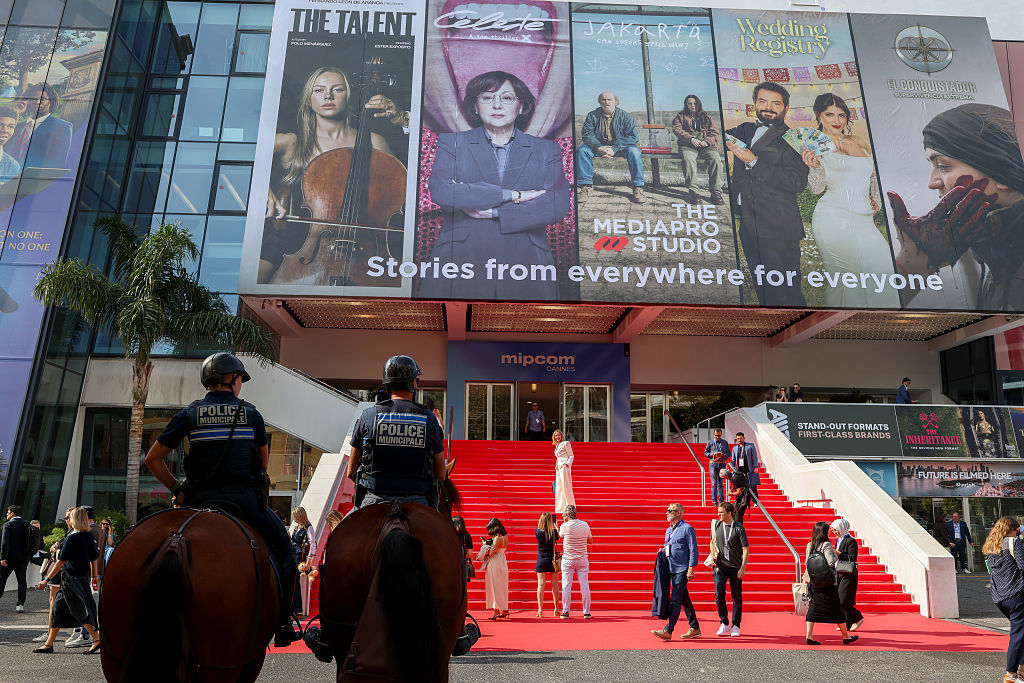
European broadcasters start asking where vertical fits
Executives from ARTE France, Play Media and ZDF will join Content London's third Vertical Programming & Microdrama Summit, with discussions focused on what is driving European investment in vertical content and how mobile-first formats fit into broader broadcaster strategies.
The distinction is important. European broadcasters are no longer being asked only whether vertical matters. The conversation is moving toward production models, commissioning, investment and what kinds of projects broadcasters may actually want.
Belgium's Play Media has already moved further, launching Play Shorts with locally produced microdramas alongside vertical entertainment and non-fiction. ARTE and ZDF have not announced equivalent commissioning moves, so it would be premature to describe this as a broad European broadcaster pivot. But the questions being asked have clearly changed.
For broadcasters, vertical is beginning to move from format discovery toward content strategy.
 C21 Reporters 15/09/2026
China says AI dramas now account for more than 90% of microdrama releases
China's broadcasting regulator disclosed the scale of AI production in the country's microdrama industry this week.
At a September 17 State Council Information Office briefing, Wang Xiaoliang, director general of the Network Audio-visual Program Management Department of the National Radio and Television Administration, said 430,000 microdramas went online during the first eight months of 2026—13 times the total for all of 2025—and AI dramas accounted for more than 90% of them. China's microdrama audience has also surpassed 800 million.
The policy response is equally revealing. Wang described live-action as the mainstay of premium production and said regulators would encourage platforms to create dedicated live-action sections and provide financial support. AI dramas, meanwhile, must carry content labels, while platforms are required to enforce authorization for likenesses and voices.
China may therefore offer an early look at what happens when AI moves from an experimental production tool to a dominant content category: supply expands dramatically, while human production becomes something the industry may need to deliberately support.
When AI makes content abundant, live-action may become the scarce product.
Capital moves into the AI microdrama production system
Nasdaq-listed Jinxin Technology Holding Company entered an agreement this week to acquire economic interests corresponding to 40% of the seller's equity interest in Shanghai Yuanwei Network Technology, a company developing and distributing AI-generated microdramas.
The distinction matters: Jinxin is not acquiring 40% legal ownership or control of Yuanwei. The agreement gives it economic participation rights tied to that stake, for an aggregate purchase price of approximately RMB14.3 million, paid through the issuance of more than 284 million Jinxin shares.
Yuanwei's disclosed operations extend beyond generating individual shows. They include multimodal AI production, character consistency, multilingual localization, domestic distribution and international distribution through platforms including TikTok and YouTube.
That makes the transaction an early example of capital being directed toward the production-and-distribution system behind AI-native microdrama, rather than simply financing individual titles.
AI microdrama infrastructure itself is beginning to become an investable asset.
 PR Newswire Vietnam Investment Review
Shorts and Full Moon Artists test a recurring production lane
Vertical streamer Shorts has partnered with Full Moon Artists Productions on Love in the Hamptons, a new romantic microdrama created by Sarah Moliski and Rebecca Stoughton and scheduled to begin production in East Hampton later this month.
The individual show is less significant than the structure around it. Love in the Hamptons is the first project under a new FMAxShorts branded strand, suggesting an attempt to build a more repeatable producer-platform relationship rather than treating every title as an isolated commission.
Vertical platforms are beginning to experiment with more repeatable producer relationships.
 Deadline
AI filmmaking starts building institutions beyond the film festival
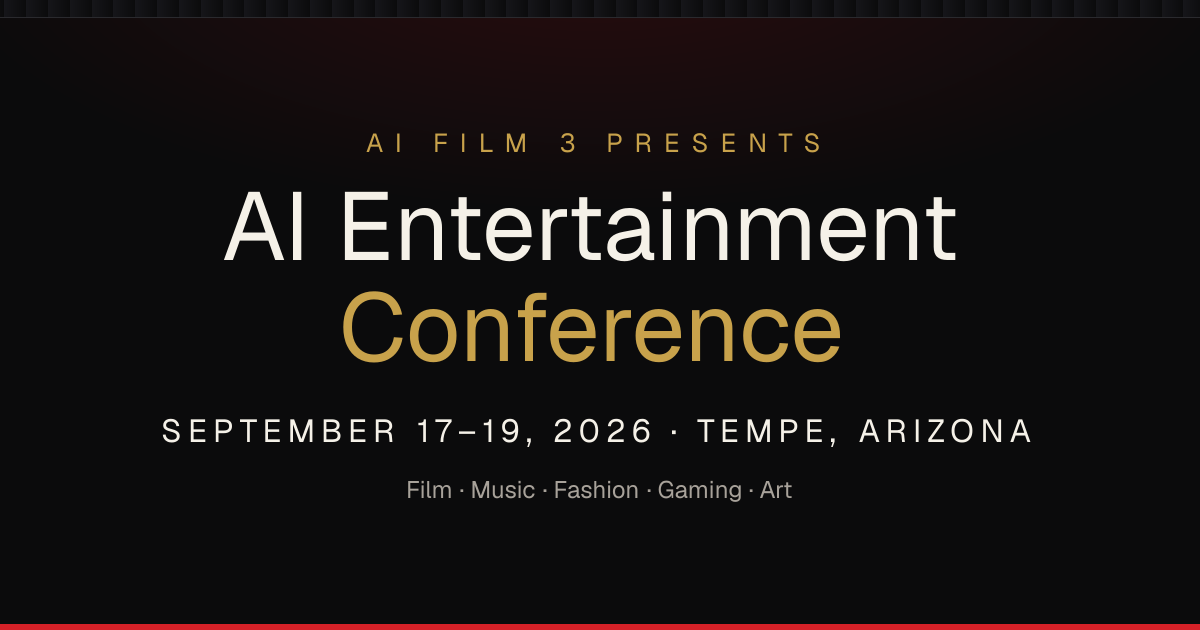
The third edition of AI Film 3 took place in Tempe, Arizona this week, but its positioning has expanded beyond an AI film festival. The event now calls itself an AI Entertainment Conference, bringing film together with music, fashion, gaming and generative art.
Organizers say this year's programme drew 754 film submissions from 117 countries, alongside 23 speakers and judges and 11 public sessions. One conference does not establish an industry, but the expansion reflects a broader shift: AI-native creators are beginning to build festivals, communities and professional gathering places around the work itself.
AI-native entertainment is starting to build institutions around the work, not just technology to make it.

AI-native films begin testing real distribution
Fountain 0 commercially released Odysseus: The Fall this week, a 150-minute AI-generated feature created by writer-director Ash Koosha. The company presents the project as evidence that AI can support feature-length production at a scale previously associated with much larger filmmaking teams.
The release also makes the technology's current limitations harder to hide. The Verge criticized inconsistent characters and environments, synchronization problems and narrative incoherence—problems that become more consequential across a two-and-a-half-hour feature than inside a short AI demo.
But Odysseus is not the only AI-native feature testing distribution. Gossip Goblin creator Zack London's Gods Don't Give Gifts, produced with a human creative team and AI production tools, is scheduled for a U.S. theatrical release beginning October 30. Earlier reporting described plans for a rollout across several hundred U.S. screens.
The two projects represent very different approaches: one built largely around a single creator and direct commercial distribution, the other around creator-originated IP, a broader production team and theatrical exhibition.
That makes the next test more interesting than whether AI can technically generate a feature.
It is whether audiences want one.
AI filmmaking's next benchmark isn't generation. It's audience demand.
 Andrew Webster
 William Smith
This Week's Take
Taken separately, these developments belong to different corners of the entertainment business.
One is about telecom billing. Another is about a soap producer making vertical dramas. Others involve creator studios entering traditional television markets, European broadcasters examining mobile commissioning, capital moving into AI production, or AI filmmakers attempting feature-length releases.
Together, they point toward the same transition.
Vertical storytelling, creator-led scripted entertainment and AI-native production have spent much of the past few years proving that new forms of entertainment can be made and audiences can be found. Now, more of the systems required to turn those formats into businesses are beginning to appear.
Telecom operators can become distribution channels. Traditional producers can become vertical suppliers. Creator studios can enter global content markets. AI production pipelines can attract capital. And AI-native films can move from online experiments toward commercial and theatrical distribution.
None of that guarantees that every model will work—or that every piece of content will be good.
But it changes the question.
Emerging entertainment becomes an industry when the systems around the content begin to matter as much as the content itself.
Further Reading
Decoding the Global Vertical Drama Market: International Markets and Projections — An earlier look at why international vertical drama had already achieved financial credibility while the infrastructure supporting its next stage was still taking shape.
 Real Reel
How Vertical Drama Makes Money — A breakdown of the IAP, subscription and episode-unlock models behind microdrama, useful context as this week's Pocket Saga numbers make the economics of AI-native entertainment more visible.
 Real Reel
✱