Industry analysis of the global vertical drama and microdrama market.
⦿⦿
Six unrelated companies spent this week building the pipes AI runs through, not the shows that run on it.
Week of Aug 17-Aug 23, 2026
This week, AI moved from individual production feature to structural layer across vertical drama. Snips launched with studio deals to convert TV libraries into AI-generated vertical episodes. The Motion Picture Association settled its copyright dispute with ByteDance over Seedance. AI video company Higgsfield raised $400 million. WEBTOON adapted its comics into live-action microdrama, and COL Group formalized its own AI production studio.
Snips: an AI startup turns TV libraries into vertical episodes, with studios' blessing
Snips launched on August 18 with content deals already in hand from Banijay Rights and BIG Media, positioning itself as the first non-Chinese vertical platform built on licensed, studio-partnered library content rather than original production. Its system uses AI — an in-house "AI Film Director" — to cut full-length shows and films into roughly 60 vertical micro-episodes of 45 seconds to two minutes each, preserving story order and tone while ending every episode on a cliffhanger. Titles from Big Brother to Humans are among the first adapted. Studios keep IP ownership; Snips shares revenue back.
Where most microdrama platforms compete on original production volume, Snips doesn't produce anything — it converts what studios already own, then hands back completion and engagement data per title.
Snips doesn't have a writers' room. It has a licensing team and an editing algorithm, and apparently that's enough to launch with two studio partners already signed.
 mariahjl
MPA × ByteDance: a truce, with one big gap left open
Six months after ByteDance's Seedance 2.0 generated unauthorized clips of actors including Brad Pitt and Tom Cruise, the Motion Picture Association and ByteDance signed a memorandum of understanding on August 17 covering copyright guardrails across Seedance, Seedream, and their distribution through TikTok, CapCut, and Dreamina. ByteDance has since added watermarking, C2PA credentials, and face-blocking to newer releases.
What the deal doesn't touch: whether copyrighted footage was used to train the underlying models in the first place. This MOU governs what the tools can output going forward, not what they were built on.
Ask an MPA lawyer whether Seedance's training data included copyrighted film, and this week's agreement gives them no new answer.
 Alex Weprin
Higgsfield: $20 million to $700 million in a single year
Higgsfield's annualized revenue went from roughly $20 million a year ago to $700 million this month. That trajectory is what got the company a $400 million Series B on August 17, at a $5.4 billion valuation — four times what it was worth eight months earlier. The company counts 30 million users and 390 Fortune 500 clients, and its Cinema Studio tool has already been used to premiere AI-generated shorts at Cannes and in New York.
DST Global led the round, with Goldman Sachs Alternatives and Intel Capital among the participants — names more associated with infrastructure bets than creative-tool investing.
Thirty-five times revenue growth in twelve months is the kind of number that makes "AI hype" sound like an understatement rather than an accusation.
 Dominic-Madori Davis
WEBTOON: the audience already existed. Only the format was new.
Six webcomics went live-action this week, as WEBTOON launched its first Short Dramas on August 17 — 40-to-50-episode adaptations of titles including Love Bites and Maybe Meant to Be, run through the platform's existing Coins unlock system. As comics, the source titles have racked up more than 1.2 billion combined views; Maybe Meant to Be alone accounts for over 650 million.
Every other microdrama launch this week had to solve two problems at once: build an audience, and build a monetization mechanic to capture it. WEBTOON walked in with both already working.
The hard part of launching a microdrama platform is usually finding an audience willing to pay by the episode. WEBTOON skipped that step entirely.

COL AI Studios: the biggest distributor in the category picks a side
COL Group, whose distribution catalogue has grown from roughly 1,000 to more than 5,000 titles, launched COL AI Studios this week — a formal division for developing IP with AI alongside traditional production, backed by over 500 staff across Los Angeles, China, and Southeast Asia. The company says it has delivered more than 300 AI productions already through its existing operations.
General manager Timothy Oh described AI as "another way of delivering a story," not a replacement for one — a deliberately modest framing, coming from a company with enough catalogue leverage to make that framing stick industry-wide if it wants to.
Whether AI ends up as one tool among many in microdrama, or the dominant one, may come down less to what the technology can do and more to what companies this size decide to call it.
 Naman Ramachandran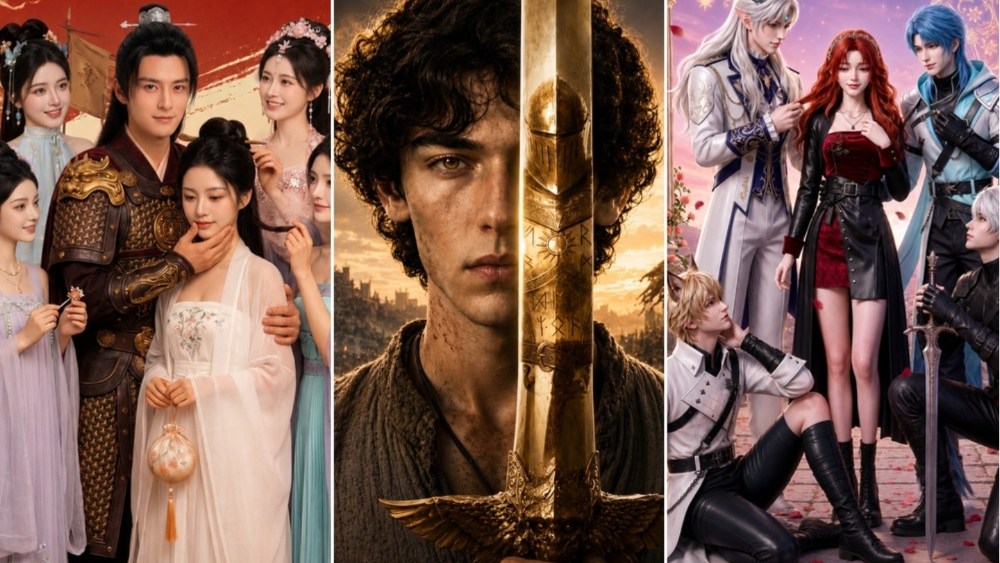
Sun TV Network: 65,000 hours of library beats a five-week production sprint
Sun TV Network launched Sun NXT Shorts on August 21 across Tamil, Telugu, Kannada, and Malayalam, pulling from a 65,000-hour library that includes Rajinikanth's Endhiran and Suriya's Ayan alongside more than 150 new and remastered titles. Executive Director Kaviya Maran positioned the launch around decades of regional broadcast relationships rather than production speed.
No pure-play microdrama startup can replicate five decades of regional TV library and distribution infrastructure overnight, no matter how fast it can shoot new content.
Sun TV isn't competing on how quickly it can make something new. It's competing on how much it already owns.
 Siddhesh Shirsat
EPIC Studios × Rusk Media: 50 titles now, 250 by 2027
EPIC Studios and Rusk Media announced a 50-title vertical drama slate on August 20, spanning mythology, mystery, thriller, and romance for Rusk's Alright! TV platform. The Epic Company's Aditya Pittie called it "just the beginning," with a stated target of more than 250 owned titles by mid-2027.
Unlike Snips or Sun TV's library-first approach, this deal is built around retaining ownership from the start — a bet on long-term franchise value over near-term licensing fees.
Fifty titles is what gets announced. Two hundred fifty by 2027 is what actually gets budgeted for.
 Naman Ramachandran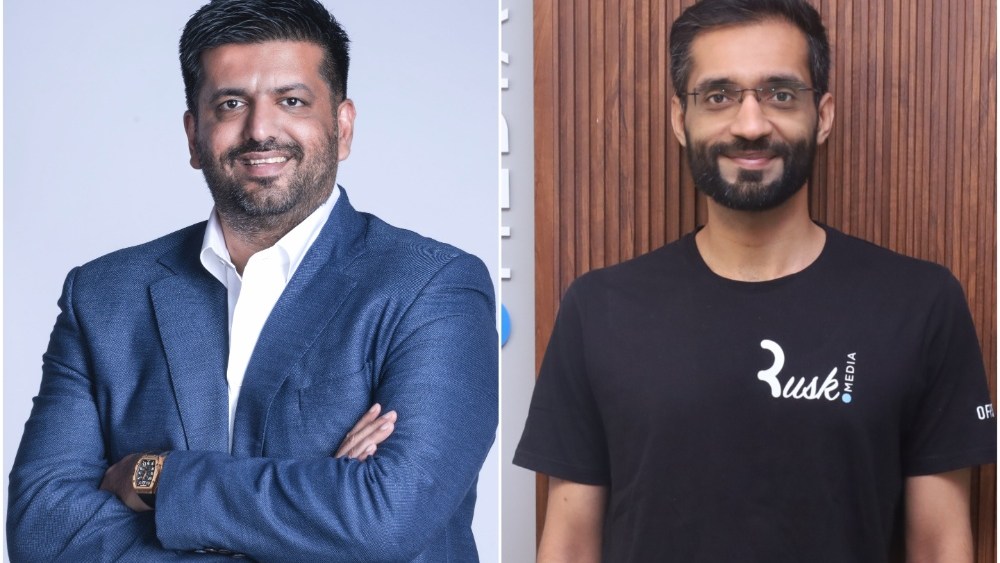
FlareFlow × Shorts: genre, not volume, is the next constraint
FlareFlow and Belgium's Shorts unveiled a four-title co-production slate on August 20 — fantasy, action, supernatural, and revenge stories, rolling out weekly starting August 21. Notably absent: romance, the genre that built the category. FlareFlow CMO Timothy Oh described the goal as testing whether "bigger worlds" can hold up under microdrama's fast, hook-driven pacing.
Most microdrama growth stories are about producing more. This one is about producing differently.
Microdrama solved the romance genre years ago. Whether it can solve any other genre at the same pace is still an open question — this is one answer being tested in public.
 Jesse Whittock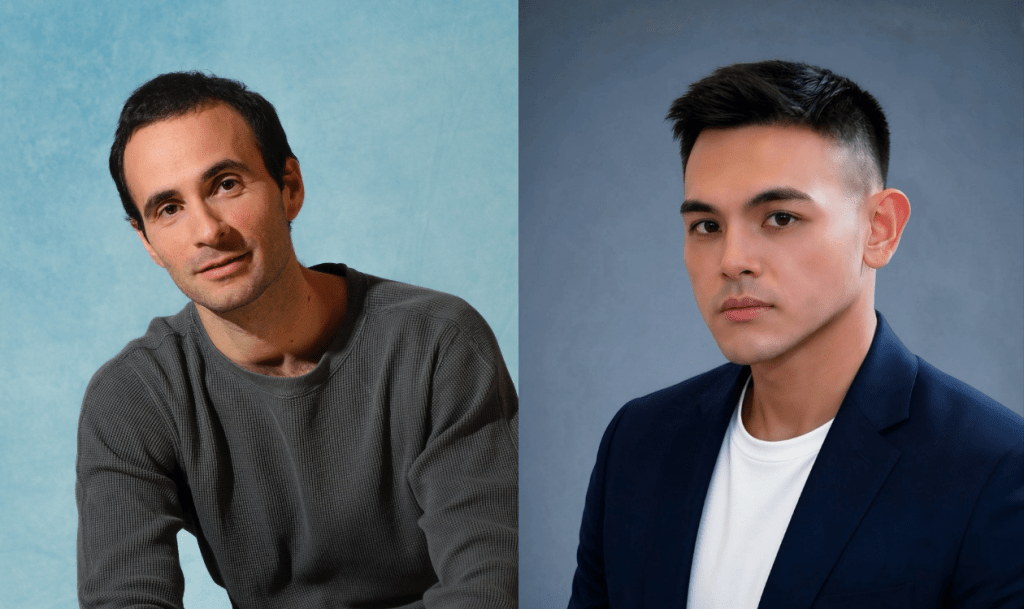
RIDI: the one company that walked away
Korean company RIDI is shutting down Kanta, its short-form live-action platform in Japan, roughly 13 months after launch. The company says it will fold Kanta's production expertise and user data back into its core comics and web-novel business rather than keep funding a standalone vertical app.
Thirteen months is a short runway for a standalone platform, even in a format known for fast iteration. RIDI's exit doesn't say much about vertical drama generally — but it says something about what happens when a company decides the format doesn't fit its core business, even with existing IP and infrastructure to draw on.
Every other story in this Weekly is a company walking into vertical production. This is the one walking out.

A secret Hollywood-Silicon Valley coalition surfaces its AI framework
Since November 2023, a group convened by Lucasfilm's Kathleen Kennedy and AFI dean Susan Ruskin has met privately with Silicon Valley executives to work out how AI fits into film production. This week, following a 120-person meeting, the coalition published a framework: AI tools that "serve human creative vision" produce copyrightable work; prompt-based generation that "substitutes for human creative work" doesn't. Attendees reportedly include Ben Affleck, A24's Scott Belsky, and CAA's Greg Siegel.
Three years of closed-door meetings is a long time to arrive at a definition rather than a rule — but a shared definition is still more than most of Hollywood's AI conversations have managed to produce in public.
The framework doesn't decide any actual case. It just gives everyone a shared vocabulary to argue the next one with.
 Corbin Bolies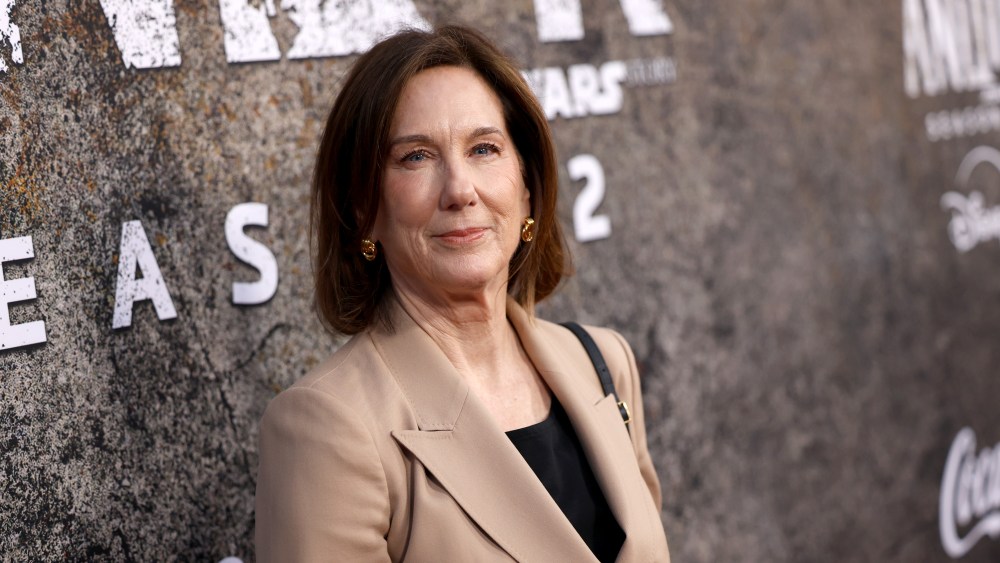
Story TV: what AI was actually used for here
Story TV premiered The Bose Network on August 15 — a historical thriller following Netaji Subhas Chandra Bose's wartime escape across four countries — calling it India's first microdrama built on an AI-integrated production pipeline. AI handled post-production reconstruction of 1940s Calcutta, wartime Berlin, Frontier Kabul, and submarine interiors. Actors, writing, and direction remained entirely human.
Most of this week's AI stories are about distribution, licensing, or capital. This one is about something narrower and more specific: a production that couldn't have afforded four countries and four historical periods without AI handling the environments.
Nobody in this production got replaced by AI. What changed is what a vertical drama's location budget is now capable of pretending to be.
 Authors Corner
Also this week
A handful of smaller stories rounded out a packed week. Belgian distributor Primitives picked up international sales rights to 20 microdramas from Play Media, taking Europe's first large-scale independent microdrama catalogue to MIPCOM buyers in October. Jamie Oliver entered the format with Life360-backed comedy Finding Jamie While He's Finding Himself. Clothing rental brand Nuuly skipped its usual fall ad campaign in favor of a 12-part microdrama, Heart on My Sleeve, starring Overcompensating's Wally Baram. Keke Palmer extended her Lady Miss Jacqueline character into a three-part Audible microseries. Former UK tech minister Damian Collins joined microdrama intelligence firm Screenburn Group as chairman ahead of an autumn funding round. Showrunner Eric Gardner shot the 80-episode legal docuseries Legal Queens entirely on iPhones, treating vertical as its own shooting grammar rather than a horizontal show cropped down after the fact. And Reddit began testing TikTok-style audio and video versions of its posts — not scripted or serialized yet, but worth watching if that changes.
Further Reading
AI Vertical Drama: Cost vs Audience — Real Reel's earlier framework on AI production's tradeoffs between cost, genre access, and audience preference — useful context for weighing this week's infrastructure shift.
 Real Reel
TikTok, Fox and the Vertical Drama Infrastructure Play — Earlier coverage of AI displacement moving into casting and performance, including audience data showing 93% still prefer human actors.
 Real Reel
✱