Vertical drama is usually explained through film and television — shorter episodes, faster pacing, a portrait frame. That misses where its grammar actually came from. Years before ReelShort or DramaBox, TikTok, Reels, and YouTube Shorts had already trained mobile audiences how to decide, in seconds, whether to keep watching. This piece traces that lineage, and what it means for vertical storytelling.
From hooks and creator personas to cliffhangers and serialized worlds, the phone is changing how stories are told.
When people try to explain vertical drama, they usually compare it to traditional film and television. They talk about shorter episodes, faster pacing, the frame turned from horizontal to vertical. They read its characters through the language of soap operas, its cliffhangers through serialized television, its business model through mobile games and web fiction.
Those comparisons are useful, but incomplete. Vertical drama did not begin as a television format later squeezed onto a phone. It emerged inside a viewing environment that TikTok, Instagram Reels, and YouTube Shorts had already built. Before vertical dramas existed, social video had spent years training audiences how to watch on a phone: how to decide within a second whether to stay, how to read a face before understanding context, how to expect an emotional payoff on a compressed timeline.
Vertical drama is what happened when that training met a longer, more character-driven story. Understanding that lineage also points to a larger category than vertical drama alone — vertical storytelling.
Vertical drama inherited a new relationship with the audience
The most important thing social video and vertical drama share isn't the aspect ratio. It's the relationship to the viewer.
In a theater, the audience has bought a ticket. With a TV series, someone has usually made a preliminary decision to watch. In a social feed, viewing is never guaranteed — the audience is one thumb movement from leaving, and every piece of content has to earn a reason to stay, then keep renewing that reason.
This is why social video leans so hard on the hook: a line, an unexpected image, a confrontation already in progress. Vertical drama inherited the same logic and turned it into a denser system. A social video usually spends its hook on a single payoff. A vertical drama has to deliver enough payoff to satisfy the episode while still creating a reason to open the next one. Social video normalized the hook. Vertical drama turned it into the cliffhanger — momentary attention converted into serialized desire.
The phone is not a smaller screen. It's a more intimate medium.
Going vertical isn't just losing the sides of the frame. A phone is held close. A face can fill most of the screen — eye contact, hesitation, a change in expression all read at a scale a wide shot never allows. When someone speaks directly into a phone camera, it can feel less like watching a performer and more like being spoken to.
Social creators understand this instinctively — without elaborate sets, they build connection through a face, a voice, a pause, a direct address. Vertical drama inherits that intimacy. Traditional film and television often use space and production design to reveal a world. Vertical storytelling is better suited to putting one person's anger, fear, or desire directly in front of the viewer.
Both formats have seconds, not minutes, to make sense
Where the viewer can leave at any moment, confusion is expensive. A social video has to establish who this person is and why the viewer should care almost immediately. Vertical drama faces the same constraint at the level of plot: the audience needs to place the characters, the relationships, and the central conflict fast. Who has power, who's been wronged, what does each person want, who's in the way — these can't wait for a slow setup.
That pressure has produced a shared toolkit: legible character types, direct dialogue, strong emotional positions, captions and sound cues doing real narrative work. It's sometimes read as simplistic. It's also a basic condition of feed-based distribution — a story has to survive the feed before it earns the right to get more complicated. The more useful question isn't whether vertical storytelling should be this legible up front. It's whether creators use that clarity as an entry point rather than a ceiling.
These stories are shaped by platforms, not just distributed on them
Traditional film and TV projects are largely finished before they reach a theater or a platform. Distribution matters, but it doesn't usually rewrite the scene that already got shot.
Social video and vertical drama are more platform-native than that. The swipe shapes the opening. Completion data shapes pacing. What gets clipped for an ad can shape what a season leans into next. A social creator can watch where viewers drop off and let that inform the next post. Vertical drama is moving toward the same loop: concepts get tested, scenes get recut, marketing creative reveals which premise actually pulls people in, and that data feeds back into what gets written next. Creation and distribution are no longer fully separate stages — and social creators, who have been living inside that loop for years, arrived at vertical drama already knowing how to work inside it.
Vertical drama is not just a longer social video
A shared viewing environment doesn't make the two formats the same thing. The real difference isn't episode length or budget — it's the promise made to the audience.
A social video usually delivers a self-contained unit of value: a joke, an insight, a complete miniature story. Even a daily poster is mostly followed for personality — the creator persona is what carries continuity from post to post, and each video can stand alone. Vertical drama makes a different promise. It asks the audience to care about an unfinished fate: will she find out, will they end up together, how does the protagonist get out of this. Social video usually answers "what does this give me." Vertical drama runs on "what happens next." One is built to be complete on its own. The other is built to leave something owed.
From creator persona to fictional character — and back
Social video is driven by personality. Over time, a creator gives the audience a working sense of who they are, real or performed, and that person's voice is what holds a channel together across unrelated videos.
Vertical drama is driven by character. The viewer isn't tuning in to hear what an actor wants to share today — they're watching to find out what the character wants and what's standing in the way.
That line is getting less clean in both directions. Social creators increasingly work in fictional personas, POV formats, and recurring characters — their accounts function less like a diary and more like an expandable story world. Meanwhile, vertical drama is starting to formalize the opposite move. In March 2026, Tubi and TikTok launched the Creatorverse Incubator: TikTok identifies creators, Tubi funds and develops scripted and unscripted projects from them, with the resulting series debuting on Tubi's platform. It's not a vertical-drama-specific program, but it sits directly on top of the same talent pool vertical drama draws from — creators whose instinct for a feed audience is the asset being formalized into a production pipeline. TikTok made a similar move in the other direction in June 2026, partnering with Sundance Collab on a micro-series writing program aimed specifically at creator-led short-form storytelling — putting platform-native instincts through something closer to a traditional screenwriting curriculum. Both are early evidence that the industry is already treating "creator" and "screenwriter" as overlapping training, not separate tracks.
From authentic people to authentic emotion
Social video's sense of authenticity usually comes from proximity to real life — handheld footage, first-person address, things unfolding in real time. Vertical drama can't reproduce that directly; it runs on fiction and construction. What it can do instead is hold onto emotional truth. The premise can be absurd and the plot wildly improbable, but the shame, jealousy, or fear underneath it still has to be recognizable, or the heightened story world around it won't hold. The lesson vertical drama should take from social video isn't the raw visual style — it's the creator's ear for how people actually sound and which beats a viewer will recognize as true.
From one payoff to three levels of narrative
A lot of effective social video follows hook, setup, payoff. Vertical drama keeps that shape but has to run it on three levels at once: the scene (something changes — a secret's out, an advantage shifts), the episode (a clear way in, and an ending that creates pull toward the next one), and the season (objectives and relationships that can sustain dozens of episodes without collapsing). That's the specific difficulty of the format — it can't lose social video's immediate pull, and it can't skip the accumulation that long-form storytelling depends on. Every unit has to work like a piece of social content while still building toward something bigger than itself.
Two creative cultures are converging
Creators and filmmakers have historically worked in different production cultures. Creators are built for speed — one person or a small team develops, shoots, edits, publishes, and reads the audience's reaction, often within the same week. Filmmakers are trained to build more complex systems: character arcs, layered conflict, sustained performance direction.
The Tubi-TikTok and TikTok-Sundance programs above are early, concrete evidence that these two tracks are being deliberately merged rather than left to develop separately. YouTube reported Shorts averaging 200 billion daily views in 2026 — a scale that gives a creator a real audience test before a studio ever takes a meeting. What creators bring to that meeting is platform fluency: how to read the data, move fast, and build a direct relationship with an audience. What filmmakers bring is the ability to develop a character and a conflict that can survive eighty episodes without running out of road. Neither instinct replaces the other. Data can show where a viewer's attention drops off; it can't decide who a character should become.
Vertical drama is only one branch of vertical storytelling
Treating vertical video as synonymous with short drama undersells the scale of what's actually shifting. A growing amount of vertical content sits between "social video" and "drama": serialized real-life stories, POV series, short-form documentary, character accounts, narrative-driven explainers, interactive stories shaped by audience participation. Much of it doesn't use professional actors or a conventional script, and doesn't monetize through episode unlocks. It still uses character, desire, obstacle, and change to organize the audience's attention.
That's the actual scope of vertical storytelling. It isn't defined by the line between fiction and nonfiction, and it doesn't require every project to run on vertical drama's commercial model. The question it asks is broader: how are stories created, experienced, and distributed on a phone. Under that definition, the basic unit isn't necessarily the episode — it might be a character interview, a real-time update, a fictional monologue, a single post from a fictional account. The relevant question for any of it is the same: does it move a story forward.
Where will the next generation of vertical stories come from?
The next influential vertical stories may not all come out of today's vertical-drama studios. They may come from social creators who already know how to build a recognizable character, from documentary filmmakers using a phone to capture something real, from journalists and educators looking for a tighter way to explain something, from brands trying to build a character-based property that lasts, from people bringing AI and interactive mechanics into narrative for the first time.
Vertical drama will likely stay the most mature and commercially significant format in this space. But it shouldn't be mistaken for the outer edge of what storytelling on a phone can be. It's more useful as a laboratory — a place to watch attention turn into suspense, creator personas turn into characters, and individual views turn into serialized engagement.
Further Reading:
- Breaks down how TikTok's discovery-optimized algorithm differs from vertical drama's pay-through model.
 Real Reel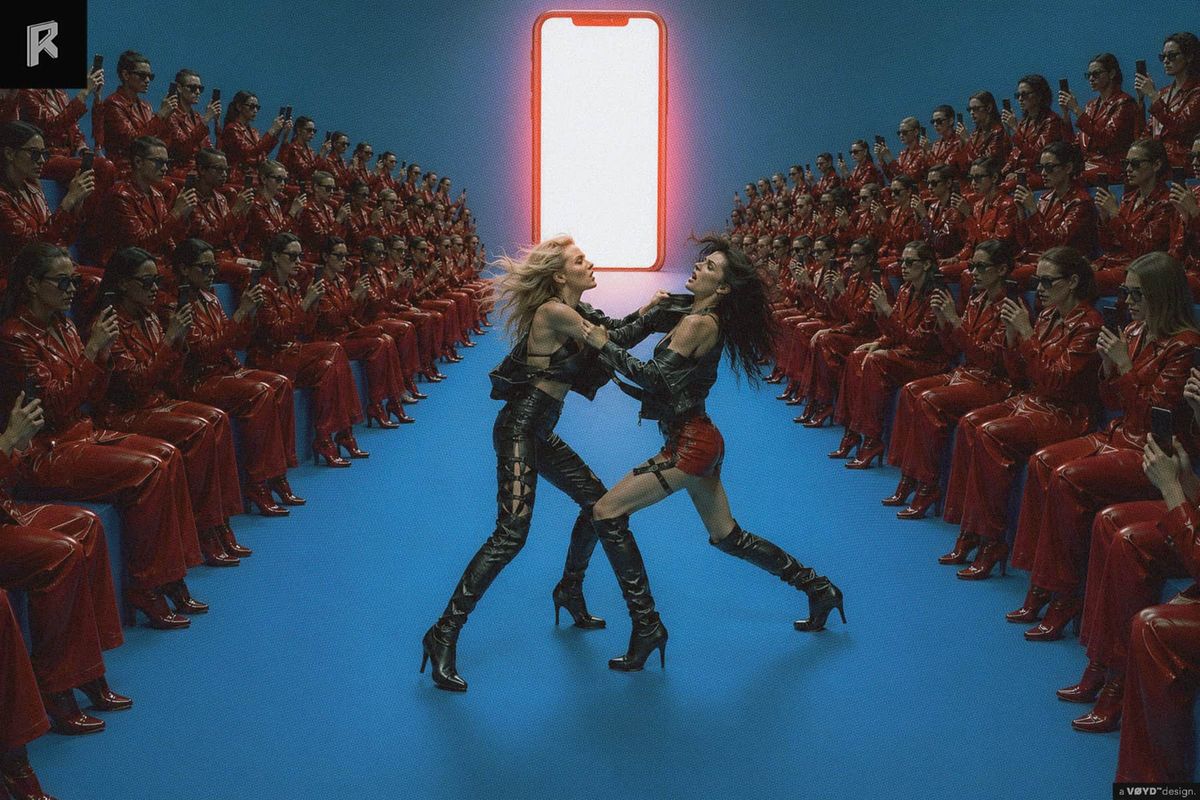
- Covers the Creatorverse Incubator and the early creator-to-studio pipeline referenced in this piece.
 Real Reel
Real Reel Playbook covers the craft and structure of vertical drama for creators who take the format seriously.