Vertical Drama Weekly: TikTok Goes Original, Amazon Enters India, and Hollywood Finally Shows Up
TikTok is making its own dramas. Amazon is bringing microdrama to India for free. And Hollywood's institutional gatekeepers are finally in the room. This week, the format grew up.

Industry analysis of the global vertical drama and microdrama market.
✱
Platforms are moving into production.
Studios are turning vertical into a product line.
Business models are starting to diverge across markets.
Week of Mar 23-29, 2026
Join Real Reel
This week, vertical drama crossed a threshold. TikTok filed a trademark for original short drama and began casting. Amazon MX Player launched Fatafat, India's first free microdrama platform. Series Mania and HRTS both put the format on their official agendas. The question is no longer whether microdrama belongs in the mainstream industry conversation, it's who controls what comes next.
TikTok Files "TikTok Drama" Trademark, Begins Casting Its Own Original Series
TikTok has moved beyond testing. The platform quietly filed a U.S. trademark for "TikTok Drama" in November and, as of this month, has begun casting actors for original short drama productions in the U.S. market. The internal feed, surfaced publicly this week, showcases categories including "Crime Lord," "CEO," and "One-Night Stand," with some top-performing slots already occupied by AI-generated content. Third-party microdrama partners currently operating inside TikTok's app, including SnackShort, NetShort, and YuzuDrama, have reason to pay attention: TikTok is no longer just a distribution pipe for vertical drama, it is building its own supply.
The trademark filing and casting activity together confirm a full-stack ambition. Discovery, consumption, and now original production, TikTok is positioning to compete directly with the platforms it has been feeding.
If TikTok controls both the top-of-funnel and the content layer, it restructures the economics for every vertical drama platform currently dependent on TikTok ads for user acquisition.
 Dan Whateley
Amazon MX Player Launches "Fatafat" India's First Free Microdrama Destination
Amazon MX Player launched Fatafat on March 23, a dedicated microdrama service operating fully within its free, ad-supported interface. Available on mobile across India, the platform launches with romance, thriller, and youth-led titles, no paywall, no coin system. Actor Munawar Faruqui fronts the launch campaign, which positions Fatafat explicitly against paid competitors by pointing out what else audiences could spend that money on. The service was previewed at Amazon MX Player's annual slate event earlier this month and is backed by a Lumikai report released simultaneously: India's microdrama market hit $300M in 2025 from near zero a year prior, with 450 million downloads and 100 million monthly active users recorded across the category.
Amazon MX Player head Karan Bedi described the launch as extending the platform's existing free-access promise to a new format. A companion international content section called Vdesi, pulling Korean, Chinese, and Turkish titles, is also in development.
Amazon entering India's microdrama market as a free AVOD service changes the competitive pressure immediately, pay-to-watch platforms now have to justify their model to an audience being offered the same genre for nothing.
 Jesse Whittock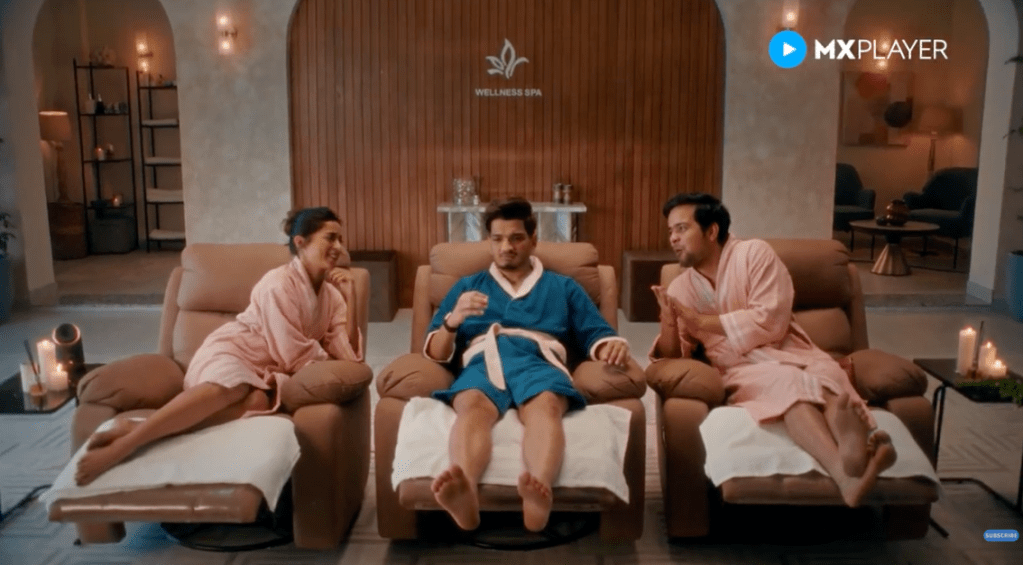
Hollywood Radio and Television Society Puts Microdrama on the Warner Bros. Lot
On Thursday evening, the Hollywood Radio and Television Society held an Associates panel on the Warner Bros. lot in Burbank dedicated entirely to the microdrama business. The session featured Susan Rovner, former Chairman of Entertainment Content at NBCUniversal, now Chief Creative Officer of MicroCo, alongside Matthew Ko (CEO, Knockout Shorts), Silas Wang (Head of Talent and Brand Partnerships, DramaBox), and Vivian Anan Wang (Head of Content, Crisp Momentum). Fox Entertainment Studios' Sara Chiang-Pistono moderated.
The panel's central corrective: the core microdrama audience is not teenagers. It is largely women between 30 and 60, a demographic that traditional television has systematically underserved. Rovner framed MicroCo's mission as converting "doom scrolling" into "joy scrolling," while Wang of DramaBox noted that the format is giving working actors a sustainable career path for the first time in years. On AI, the room was candid about anxiety, but aligned on the view that the format's production speed makes some degree of AI integration functionally inevitable.
HRTS hosting this conversation on the Warner lot is an institutional signal, vertical drama is no longer a side conversation at digital panels, it is inside the traditional industry's own rooms.
 Kennedy French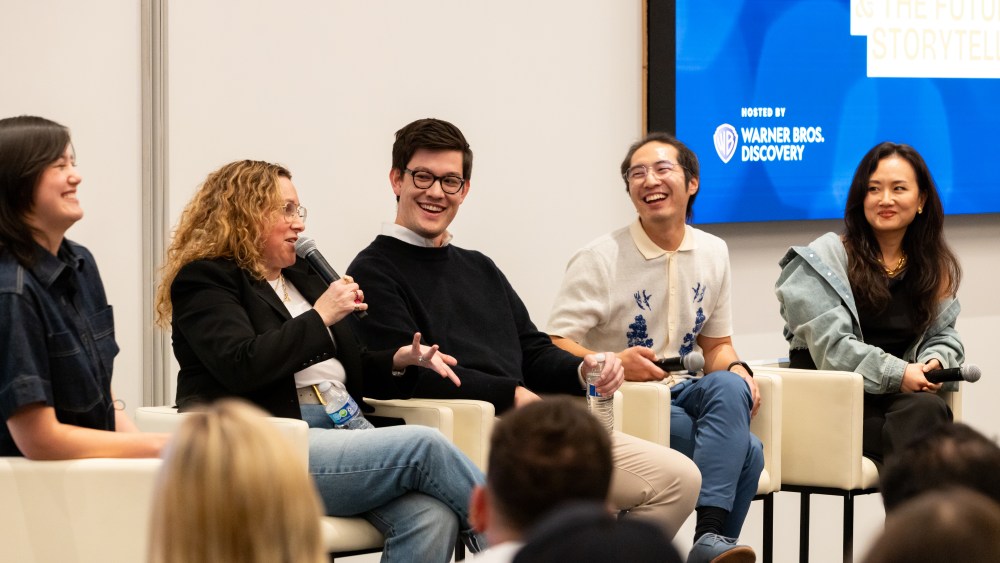
Series Mania Forum Programs Microdrama Into Its Official Agenda
Series Mania Forum, one of Europe's most established television markets, opened its second day in Lille this week with a dedicated microdrama panel titled "When Drama Goes Micro, Who's Winning Big?" Speakers included Hasret Özcan of Inter Medya, Steve Matthews of Banijay Entertainment, Bethany Thomson of Sea Star Productions, and Krystof Safer of Vertifilms. The session opened with data: time spent on short drama apps has increased more than 300% since 2024.
Panelists noted that the current market is heavily anchored in romance and female demographics over 25, the most reliable paying audience in the category, while acknowledging that horror, sci-fi, and thriller genre economics remain underdeveloped. Safer positioned the format not as a genre but as a behavioral shift: vertical drama competes for the same attention as Instagram and TikTok, not against Netflix.
When Banijay and Inter Medya are on stage at Series Mania discussing microdrama economics, the format has cleared the threshold from "emerging" to "something the traditional European TV business has to have a position on."
 Editor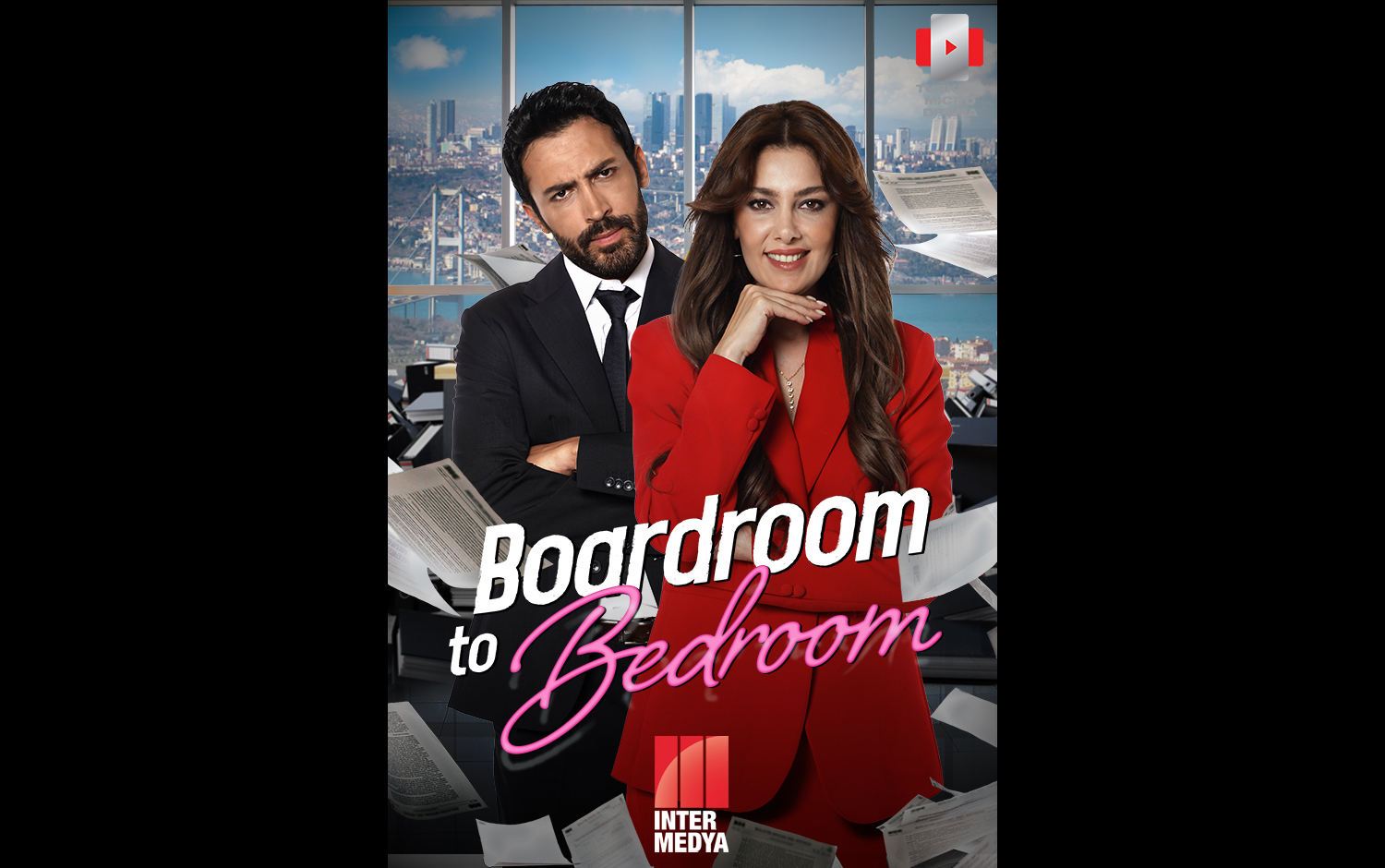
Banijay Expands Microdrama Across Finland, Iberia and Germany
Banijay is scaling microdrama as a multi-market strategy rather than a localized experiment. At Series Mania, Banijay Finland and Yle unveiled Survival Sisters, a 20×5’ mockumentary produced in both 16:9 for streaming and 9:16 for social distribution. In parallel, Banijay Iberia introduced three vertical projects spanning live-action, anime-influenced visuals and AI-assisted production workflows. Shortly after, Banijay Germany confirmed completion of its first microdrama, a 28-episode mobile-first series built around creator-led storytelling.
Taken together, these moves reflect a coordinated rollout across regions and formats, integrating vertical storytelling into Banijay’s broader production ecosystem. The emphasis on dual-format delivery and mixed production techniques suggests a flexible approach to distribution and cost structure.
Microdrama is being formalized as a scalable product line within major studio groups, not treated as a one-off innovation.
 Maisey Malden
FlareFlow Backs Inaugural Vertical Drama Love Fan Awards
FlareFlow, the COL Group International platform with 33 million registered users across 200+ countries, has signed on as presenting partner for the first-ever Vertical Drama Love Fan Awards, to be held April 23 at the El Portal Theatre in Los Angeles. The awards were created and are independently operated by Jen Cooper of the VerticalDramaLove platform; FlareFlow has no influence over nominations, shortlists, or results. The platform's role adds one new category, the FlareFlow Spark Award, recognizing a production company or creator that took the most adventurous creative risk of 2025. Voters from more than 100 countries participated across six continents. Additional sponsors include BuzzFeed Studios and its vertical arm Halogen Cinema, Eris Talent, and Zak Barnett Studios.
A fan-voted awards ceremony landing in Los Angeles with a sponsor roster that includes BuzzFeed Studios is a cultural legitimacy marker, vertical drama now has the infrastructure of a recognized genre, not just a format experiment.
 Naman Ramachandran
✱