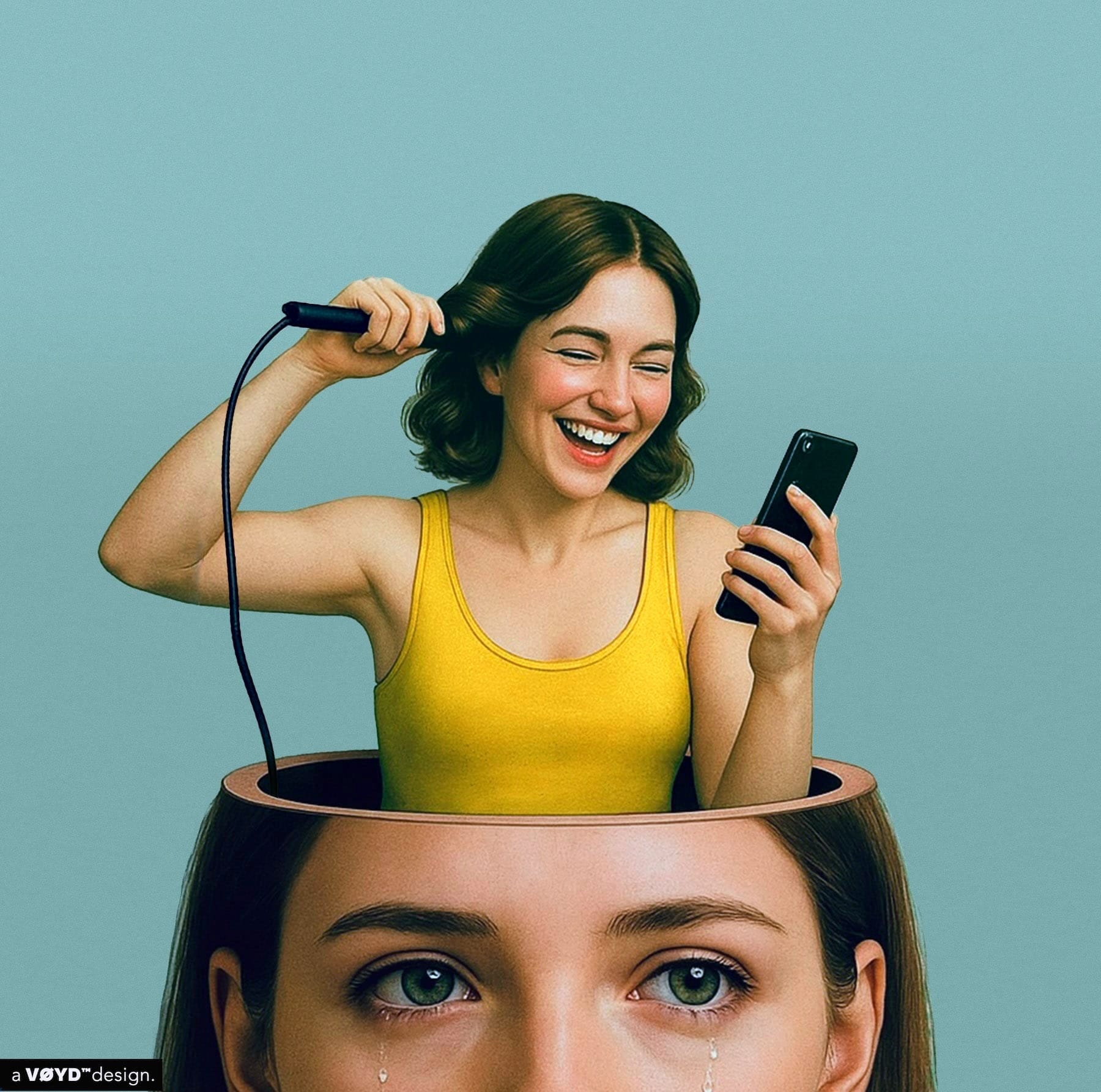
Supernatural premises in vertical drama tend to arrive as spectacle — fast reveals, heightened stakes, death as a plot device rather than a theme. DramaBox's Dying for Love (2026) takes the opposite approach: a grim reaper romance built on emotional restraint, quiet character work, and the idea that mortality makes love more meaningful rather than less. It's a microdrama that asks more of its audience than most vertical video releases attempt.
⚈ ⚈
Maybe death isn't the end of the story after all. Maybe it's what gives every ordinary moment its value because none of it is guaranteed to last.
-
Review by Liz
@portraitstorydiaries
What if we've been looking at death the wrong way?
I found myself asking that after finishing Dying for Love. We spend so much of our lives treating death as the villain, something to outrun, bargain with, or refuse to accept. Then this little twenty-episode vertical drama on DramaBox app quietly nudged me toward a different thought. Maybe death isn't what steals meaning from life. Maybe it's the reason love feels so precious in the first place.
And yes, before I get too philosophical, let me say what I shouted the second the credits rolled: Twenty episodes?! That's it?! I was genuinely offended on behalf of my own heart. This story had barely unfolded before it was asking me to say goodbye, and I was nowhere near ready.
Maybe love isn't powerful because it can defeat death. Maybe it's powerful because it can't.
Life Before the Goodbye
I was instantly drawn to this because it avoids the usual clichés of vertical romances. It’s about a grim reaper whose next assignment is a young doctor. But instead of just taking their life and moving on, he actually starts second-guessing the job he's done forever.
It sounds simple on paper, yet the series wraps that idea in an atmosphere that feels dreamy, mysterious, and just a little eerie. Instead of chasing one surprise after another, it quietly pulled me in with the feeling that every tender moment carried the weight of an inevitable goodbye. I didn't want to look away because I was never quite sure whether the next scene would make me smile or quietly break my heart.
The funny thing is, I never found myself wanting the story to slow down. I just wanted it to last longer. There's a difference. My biggest frustration was never with what the series gave me, but with how quickly it had to move through ideas that deserved a little more space. The mythology surrounding the grim reapers, the rules they live by, Tobias and Eliza's shared history, and even Gabby's search for a cure all felt rich enough to support a much longer story. Instead, everything has to move rather quickly to fit the twenty-episode format. I couldn't help but see the ghosts of what this world could have been, if only it had been granted the space to survive on its own terms.
What if we've been looking at death the wrong way?
Learning to See Each Other
What makes that conflict work so well, though, is how believable Gabby feels as a person. Amanda Jordan has this wonderfully grounded screen presence that made Gabby feel like someone I could actually know. She isn't written as the kind of heroine who needs big speeches to convince us she's good. Instead, it's the smaller moments that stayed with me. The way she keeps showing up. The way she refuses to let hope disappear, even when the odds keep telling her otherwise. I never felt like Gabby was trying to be extraordinary. She simply couldn't look away when someone needed saving, and somehow that quiet persistence said more about her than any dramatic scene could.
If Gabby provides the story's emotional optimism, Tobias becomes its quiet emotional center. Mark Ballantyne ended up being one of my favorite discoveries in the cast. It took me an embarrassingly long time to realize he was the same actor who played Tucker in the 2025 romance film Kissing Is the Easy Part. Once I made the connection, I couldn't stop thinking about how completely different the two performances felt. Tobias carries himself with so much restraint that he almost seems afraid of his own emotions. He watches more than he speaks. He hesitates more than he acts. Then, almost without noticing, those guarded edges begin to soften. He doesn't suddenly become a different person. He simply lets someone in. I loved that the series trusted us to notice those changes instead of announcing them.
Together, those two performances are what make the romance feel so convincing.
The relationship never felt like it was trying to convince me to root for it. It simply gave me enough little moments to understand why these two people kept choosing each other. I loved that there wasn't a constant need to manufacture romance. Sometimes it was just a conversation, a lingering look, or the feeling that neither of them had to pretend around the other anymore. Those quieter moments carried the relationship far more than any grand romantic gesture could have. My only wish was that a few of them had lasted just a little longer. The series occasionally moves through emotional turning points so quickly that I found myself wanting another minute or two to simply sit with what the characters were feeling before the story carried them forward.
Ironically, whenever the drama slows down, those become some of its strongest moments.
I never found myself wanting the story to slow down. I just wanted it to last longer. There's a difference.
The World Beyond the Living
Sarah Desouza-Coelho also makes quite an entrance as Eliza. I mean... that pool scene? Absolutely iconic. She walks into the story with so much confidence that I couldn't help but smile. I never really saw Eliza as a traditional villain. She felt more like someone carrying unresolved feelings while trying to stay loyal to the world she knows. I only wish we had spent a little more time with her because there were glimpses of a much more layered character beneath her sharp exterior.
I also have a soft spot for Milo. Dylan Mills-Capote gives him such a gentle sincerity that every scene with Gabby felt comforting. I'll probably always have a weakness for childhood best friends who quietly love someone without expecting anything in return. Those characters rarely ask for attention, but they often become the emotional safety net that keeps the story grounded. Like Eliza, Milo's role left me wanting a little more. He adds warmth whenever he's on screen, and I found myself wishing the story had explored his perspective a bit further.
The atmosphere deserves its own little moment too. There were several times when I didn't even realize how much the music and visuals were affecting me until I noticed myself slowing down with the story. Everything feels suspended between life and whatever comes after it. It's romantic without becoming overly sweet, mysterious without losing its warmth, and just eerie enough to keep reminding us that this isn't an ordinary love story.
I began this story wondering if death would be the thing standing in the way of love. I finished believing something entirely different.
Love Doesn't Need Forever
I started watching because the supernatural premise sounded intriguing. I finished it thinking about something much quieter: maybe love isn't powerful because it can defeat death, but because it can't.
Dying for Love reminded me to appreciate the ordinary moments we so often take for granted, because they're never guaranteed to last. I do wish DramaBox had given us twenty more episodes because I wasn't ready to say goodbye to Tobias and Gabby, and I would have happily spent more time in their world.
If this review has made you even a little curious, I'd genuinely recommend giving the full vertical drama a chance. It tells a simple story with a surprising amount of heart, and by the end, it left me appreciating not just love, but everything that comes before an ending.
Available on DramaBox
Images used in this article are sourced from the public internet and are presented for editorial context only. All rights remain with their respective owners.
Credits
Written by Liz
Design & Motion by VØYD
More Reviews From Liz
- Swapped Bodies with My Secret Crush — a body-swap romcom that commits fully to its own chaos and comes out the other side with something genuinely sweet.
 Liz
Liz
- Tie Me Up, My Dom CEO — a ShortMax vertical that uses its provocative premise to explore trust, consent, and emotional safety in ways the format rarely attempts.
 Liz
Liz
✱