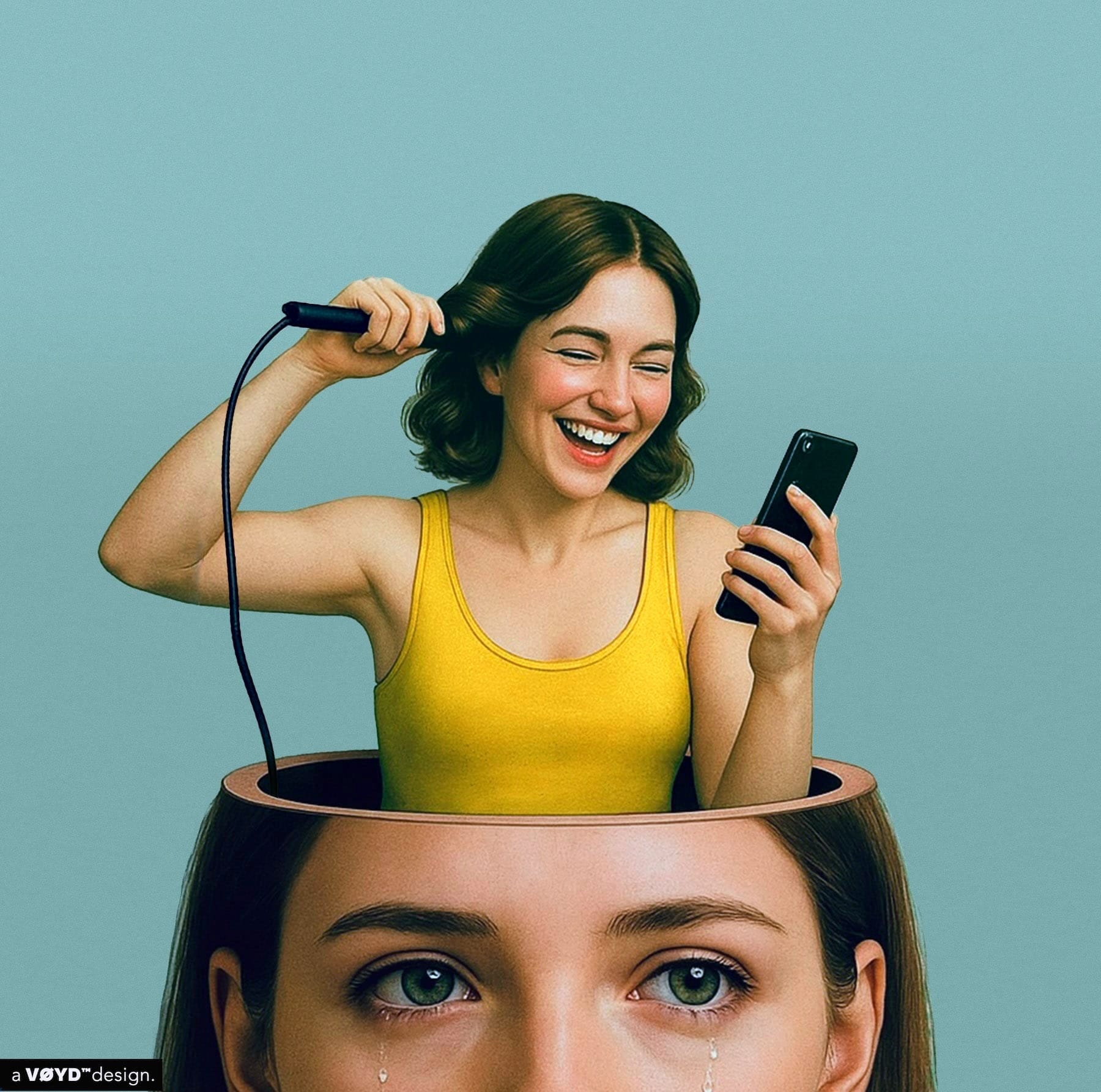
The vertical drama love triangle is one of the format's most reliable — and most exhausted — narrative structures. MyDrama's The Summer In Between (2026) tests whether microdrama can carry genuine psychological complexity without defaulting to shock value, introducing queer romance and class tension into what initially reads as a familiar vertical video YA setup. The result is one of the platform's more tonally ambitious originals to date.
⚈ ⚈
MyDrama Delivers
a Refreshingly Twisted Take on the Classic Love Triangle
-
Review by Aline
from I Love Verticals
The Summer In Between arrives as another ambitious original release from MyDrama, and once again, the platform proves it is willing to experiment with formulas that have become increasingly predictable within VertiLand.
While love triangles are hardly new territory for Vertical dramas, this series manages to refresh the trope by shifting the emotional center of the story and introducing a darker psychological layer beneath the usual YA romance structure.
Directed by Dylan Vox and starring Bella Mraz, Kaileigh Jenkins, Nate W. Smith, and Sarah Wines, the series blends manipulation, class tension, queer romance, and psychological games into something that feels surprisingly fresh for the format.
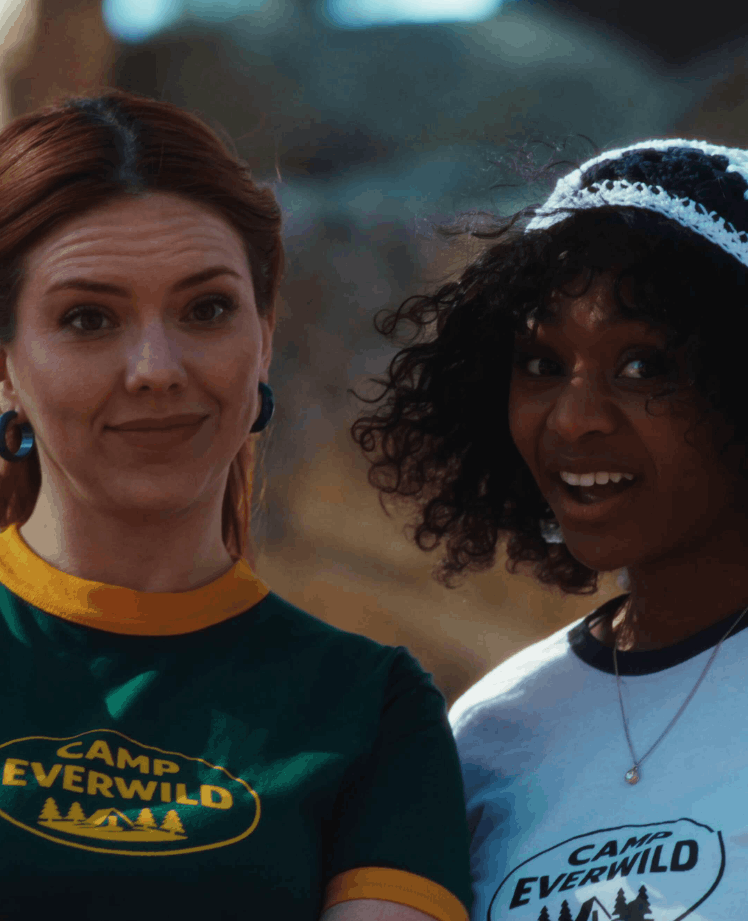
The story follows Emily, an orphan entering Camp Everwild with one clear objective: winning the scholarship that could secure her future and allow her to attend college. Emily begins the story as shy, innocent, and honestly far too trusting for the environment she walks into. She is clearly the outsider from the moment she arrives. While the camp itself remains somewhat vaguely defined, one thing becomes immediately obvious: almost everyone there comes from wealth and privilege, making Emily stand out before she even says a word.
Interestingly, the series never fully explains why these rich teenagers are attending Camp Everwild in the first place. Under different circumstances, that missing detail could have become distracting. However, the narrative stays so focused on the emotional and manipulative dynamics between the central characters that the unanswered question surprisingly does not hurt the experience much.
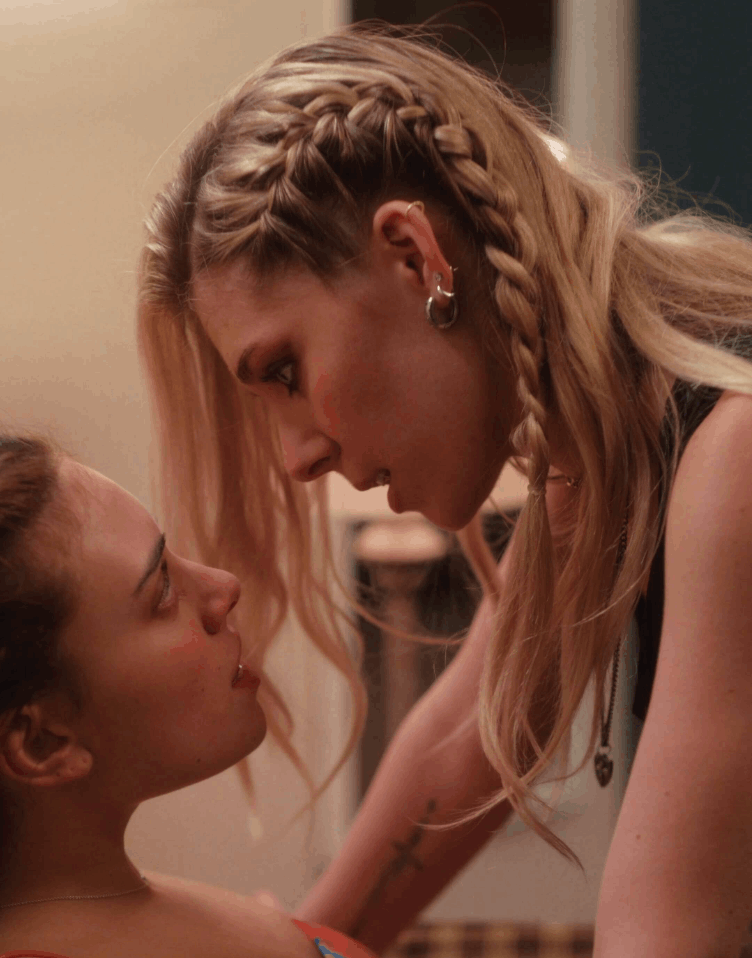
At the center of the story are siblings Kris and Kat, who immediately establish opposing energies. Kris appears first as the ideal romantic lead: charming, attentive, attractive, and eager to help Emily navigate camp life. Kat, meanwhile, enters with a completely different aura. She carries the reputation of the camp’s troublemaker, openly queer, rebellious, provocative, and seemingly uninterested in following social expectations.
Naturally, Emily gravitates toward Kris. Not only is he kind to her initially, but he also represents familiarity and emotional safety. Kat, on the other hand, appears intimidating and unpredictable. The audience quickly learns, however, that neither sibling is fully honest. Kris and Kat have secretly made a bet over who can sleep with Emily first.
That revelation sets the stage for what initially looks like a standard manipulation story. Yet the series becomes far more interesting once the emotional complexity underneath the bet starts surfacing.

▙ ▙
His charm never disappears completely, which makes his manipulation more unsettling...
Aline
The camp environment itself follows many recognizable Vertical conventions.
Emily is repeatedly targeted because she is poor, an outsider, and socially vulnerable. Several students openly bully her, though two secondary antagonists stand out most clearly: Sydney and Mia.
Sydney functions as the classic mean girl archetype. Her hostility toward Emily appears almost entirely unmotivated beyond social cruelty, and she quickly initiates several bullying incidents. Interestingly, Sydney is expelled relatively early, temporarily creating the illusion that Camp Everwild does not tolerate harassment.
Mia, however, introduces a more nuanced dynamic. Unlike Sydney, her hostility toward Emily stems from jealousy and emotional insecurity. Mia is deeply attached to Kris and immediately sees Emily as a threat. Rather than attacking openly, she operates through manipulation and performative kindness. She befriends Emily while simultaneously undermining her behind the scenes. Because Kat already has a “bad girl” reputation, Mia often succeeds in redirecting blame toward her.
This dynamic ultimately reveals one of the series’ more interesting thematic observations: institutions often tolerate cruelty as long as it remains socially convenient.
Sydney becomes the visible scapegoat, while Mia’s more calculated manipulation goes largely unpunished. Still, the emotional core of the story belongs entirely to the siblings.
Kris is one of the more effective manipulative male leads seen recently in VertiLand. Nate W. Smith plays him with a level of ambiguity that constantly destabilizes the audience’s perception of him. Even after learning about the bet, there are moments where it almost feels possible that Kris has developed genuine feelings for Emily. His charm never disappears completely, which makes his manipulation significantly more unsettling.
▙ ▙
Her rebellious image functions largely as self-protection...
Aline
The turning point comes with the arrival of his father. Suddenly, Kris’ carefully maintained persona cracks. His fear becomes visible almost immediately, and the audience begins to understand that his behavior did not emerge in isolation. His father represents emotional cruelty, class obsession, and toxic masculinity in their purest form. While this does not excuse Kris’ actions, it contextualizes them. The series smartly avoids turning him into a cartoon villain too early, allowing viewers to recognize the emotional damage beneath his behavior.
Kat’s storyline, however, becomes the most emotionally compelling aspect of the series.
Unlike Kris, Kat did not grow up fully accepted within the family structure. She is the result of an affair between her father and one of his employees and only entered his life later in childhood. Despite now benefiting from wealth and privilege, she clearly understands that she was never truly wanted emotionally. Her rebellious image functions largely as self-protection.
What makes Kat so effective as a character is the contrast between perception and reality. She presents herself as emotionally detached and dangerous, but underneath that facade is someone desperate for genuine affection and connection. When she develops real feelings for Emily, the emotional stakes become very real for her very quickly.
Kaileigh Jenkins delivers one of the strongest performances in the series here. Kat could easily have become another stereotypical “edgy bad girl,” but Jenkins injects vulnerability into nearly every interaction, especially during quieter moments where the bravado fades.
Emily’s perspective creates much of the audience frustration throughout the middle section of the story. From the viewer’s standpoint, it becomes increasingly obvious that Kris is manipulating her while Kat genuinely cares for her. Yet Emily continues choosing Kris for a significant portion of the narrative. Importantly, though, this frustration feels intentional. Emily is not operating with the same information as the audience, and her internalized assumptions about safety, relationships, and attraction strongly influence her choices.
▙ ▙
Institutions often tolerate cruelty as long as it remains socially convenient...
Aline
The series shifts dramatically once Kris fully aligns himself with his father’s agenda. When instructed to sabotage Emily and ensure she loses the scholarship, he complies without hesitation. Any lingering ambiguity around his morality disappears, allowing Kat’s emotional sincerity to fully emerge.
The ending, however, feels noticeably rushed. After Emily and Kat win the final competition, Kat’s father suddenly accepts both the scholarship outcome and their relationship far too easily considering the values he previously represented throughout the series. The emotional payoff works conceptually, but the transition lacks sufficient narrative buildup.
Despite those pacing issues, The Summer In Between remains a compelling and surprisingly layered Vertical drama. Its greatest strength lies in its willingness to complicate familiar archetypes rather than simply reproducing them.
Most importantly, the series demonstrates that Verticals can successfully experiment with morally messy characters, queer romance dynamics, and psychological manipulation without relying entirely on shock value or excessive violence.
It is imperfect, occasionally inconsistent, and sometimes rushed, but it also feels genuinely distinct. And in today’s increasingly formula-heavy VertiLand, that already makes it stand out.
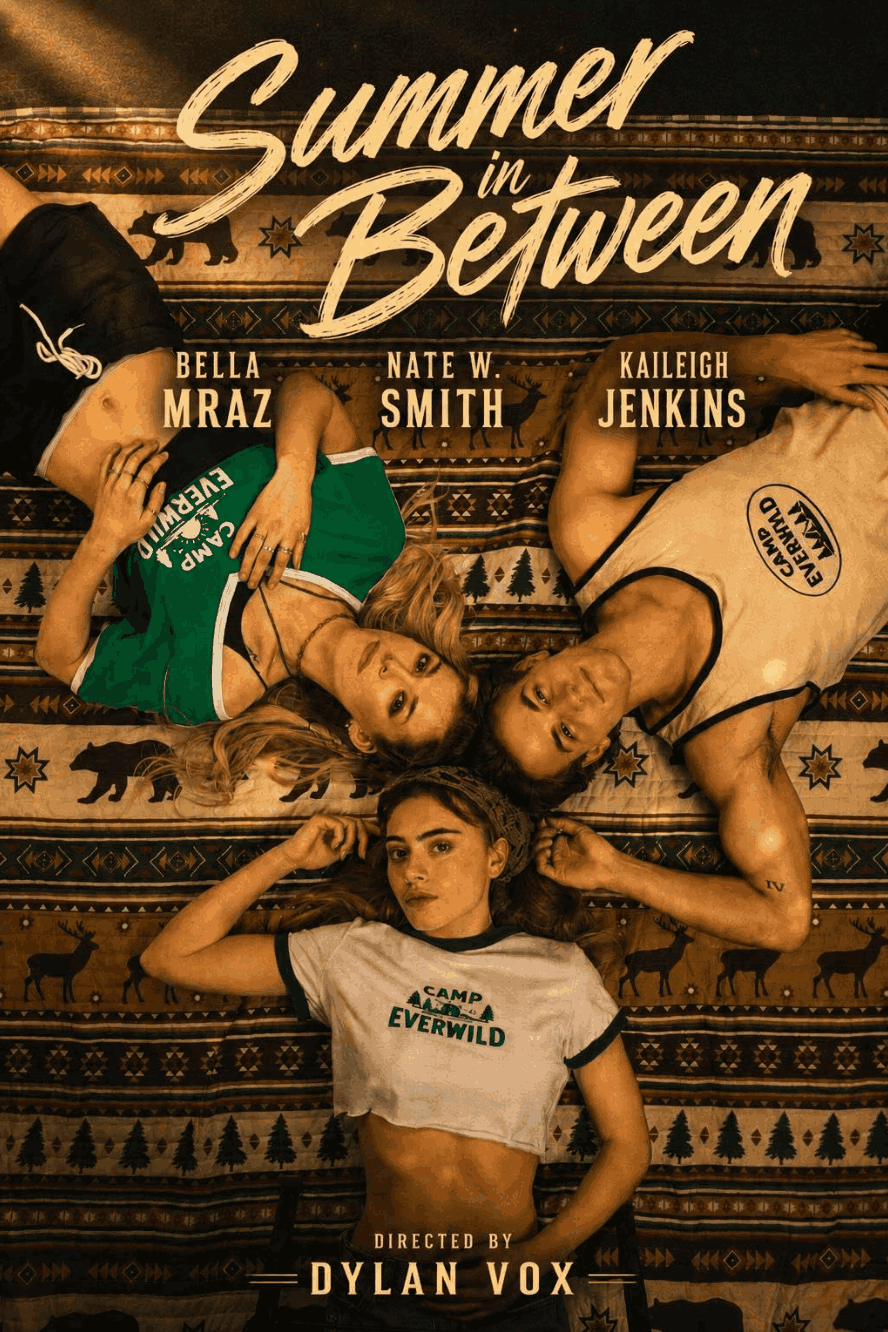
Available on MyDrama
Directed by Dylan Vox
Starring Bella Mraz, Nate W. Smith, Kaileigh Jenkins, Sarah Wines, Noah Blake
Images used in this article are sourced from the public internet and are presented for editorial context only. All rights remain with their respective owners.
More Reviews From Aline
- A TasteLife vertical rom-com that proves shock value was never the point. No slaps, no villains, no manufactured outrage — and somehow, a better story because of it.
 Aline
Aline
- DramaWave's Call Me Your Boy doesn't reinvent the genre. It just executes it better than most — with a "green flag" male lead and a central romance that actually earns its emotional arc.
 Aline
Aline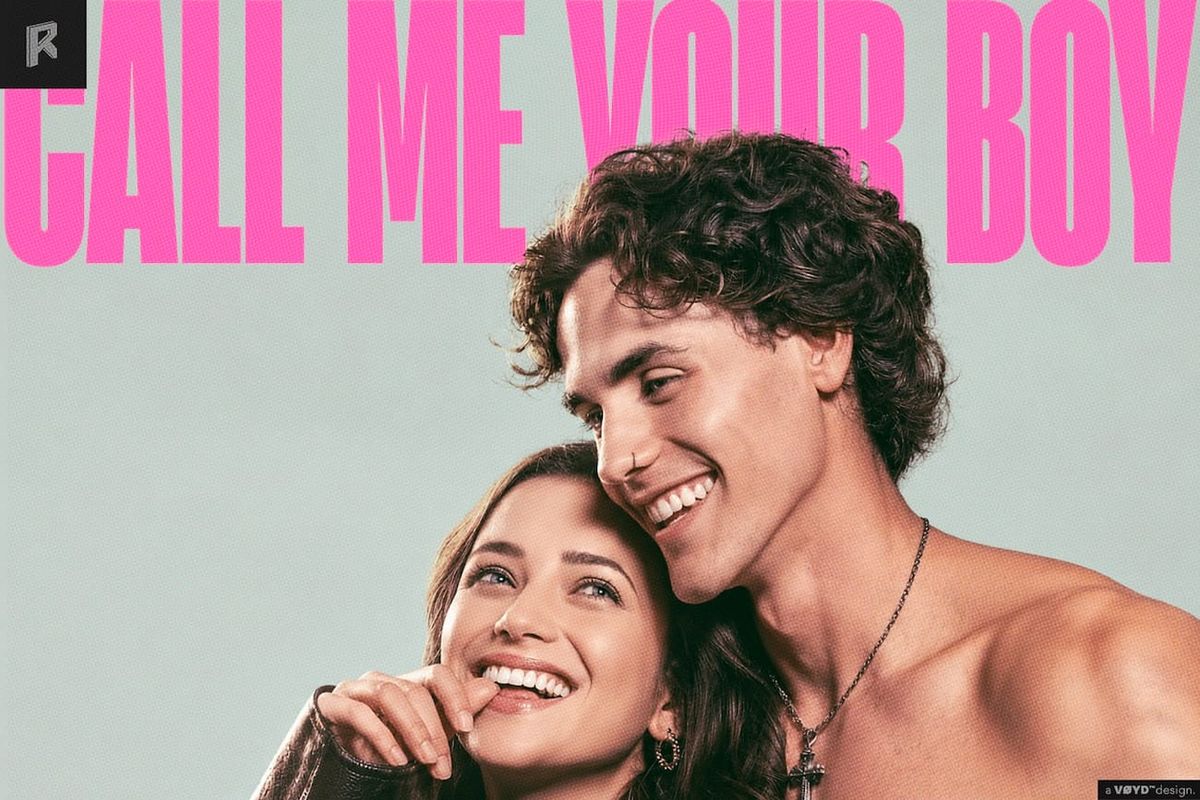
✱