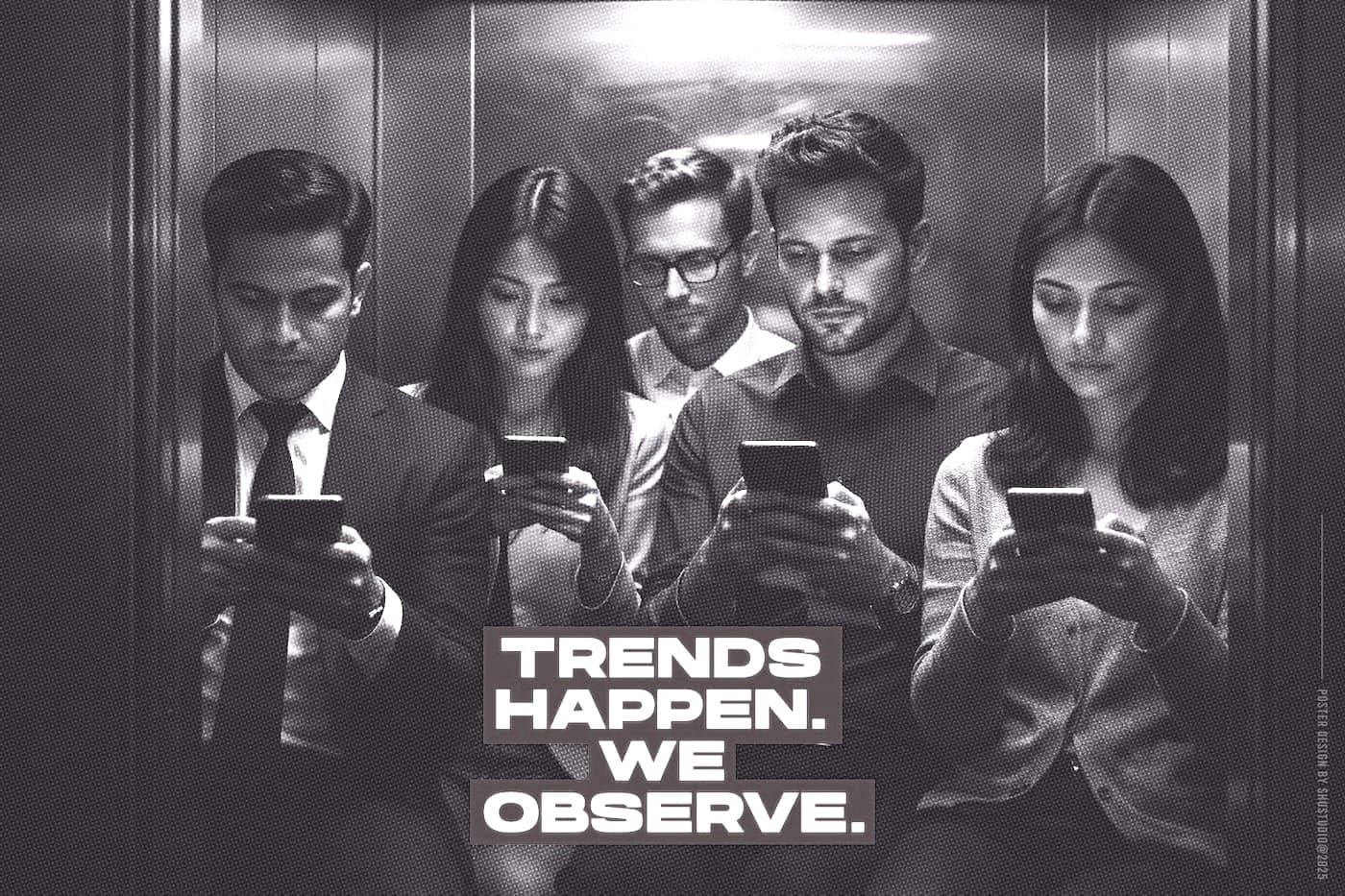
This week wasn't defined by a breakout series. It was defined by the businesses being built around mobile-first entertainment.
⦿⦿
Mobile-first entertainment is no longer looking for a business model. It's starting to build businesses.
Week of Aug 31-Sep 07, 2026
Mobile-first entertainment took another step toward becoming a permanent industry this week. Across Hollywood, Europe and Asia, companies announced new platforms, dedicated business units, AI production infrastructure and distribution strategies designed specifically for mobile audiences. Together, the week's developments show how mobile-first storytelling is evolving beyond individual hit series into a broader entertainment business.
Hollywood builds a platform, not just another app
Mobile-first entertainment gained one of its strongest Hollywood endorsements this week with the official launch of aTwist, a new microseries platform led by former Showtime president Jana Winograde, former NBCUniversal Entertainment chairman Susan Rovner, and former ABC Entertainment chairman Lloyd Braun. Rather than positioning itself as another vertical drama app, aTwist launches with ten original series across multiple genres and a programming strategy that borrows more from traditional television than mobile gaming.
That strategy became even clearer with the announcement of an exclusive slate of more than 20 original microseries from Kevin Hart's Hartbeat, including adaptations of bestselling author Blake Karrington's novels. Instead of relying on a single breakout romance title, aTwist is betting that audience retention will come from programming, scheduling and franchise building—skills Hollywood has refined for decades but that mobile-first entertainment has only recently begun to adopt.
Mobile-first entertainment isn't just attracting Hollywood talent anymore. It's beginning to adopt Hollywood's operating model.
 Tess Patton
Showbox launches Showbite, bringing Korean cinema into short-form entertainment
If aTwist represents Hollywood's commitment, Showbox represents something equally significant from Asia.
The Korean film studio and distributor—known internationally for films including The Attorney, Assassination and The Outlaws franchise—announced Showbite, a dedicated short-form entertainment label scheduled to release around twenty original productions this year. The first five titles will premiere this month on Korean short-form platforms before the company presents the initiative to international buyers at both BCWW and the Asian Contents & Film Market (ACFM) during the Busan International Film Festival.
The announcement matters because Showbox is not experimenting with vertical storytelling as a marketing exercise. It is creating a dedicated business division, complete with its own production pipeline, release strategy and international sales ambitions.
Legacy film studios are no longer watching mobile-first entertainment from the sidelines. They're building dedicated businesses around it.
 장진리
장진리
Flipkart turns microseries into a commerce product
India's Flipkart introduced scripted microdramas directly inside its main shopping app this week, marking another step in the convergence between entertainment and ecommerce.
Rather than asking users to download a separate content platform, Flipkart's new Play experience integrates serialized dramas alongside shopping, with original productions from Terribly Tiny Tales and Pratilipi's Double Tap Films. The goal is straightforward: increase engagement inside the app while opening new opportunities for branded storytelling, product placement and eventually commerce-driven entertainment.
For mobile-first storytelling, this may be one of the week's most important shifts. Distribution is beginning to move beyond entertainment apps and into products people already use every day.
The next generation of mobile-first storytelling may arrive through shopping apps as often as streaming platforms.
 ETtech
Sports Teams Start Thinking Like Studios
The Chicago Cubs premiered Nine Innings to Love, a 17-part romantic comedy released through the club's official TikTok account. Produced by the team's in-house content studio, the series expands beyond game highlights and behind-the-scenes content, using scripted storytelling to keep fans engaged between baseball seasons.
The project reflects a broader shift across mobile-first entertainment. Rather than directing audiences to another platform, organizations are beginning to create original scripted content for communities they already own. As entertainment moves closer to where audiences already spend their time, fandom itself is becoming a distribution strategy.
The next wave of mobile-first storytelling may be built around existing communities, not new platforms.
 Sam Gutelle
Europe starts building its own mobile-first studios
Europe also took a significant step this week with the launch of Sweetz, a new French mobile-first platform created by AI studio Nation and mobile publisher Kovalee.
Backed by more than €1 million in seed funding, Sweetz counts M6 Group, The Originals Group, Duo Productions and several established European media companies among its investors. Unlike earlier European experiments that primarily licensed international titles, Sweetz combines original production, AI-assisted workflows and local distribution into a single business.
Rather than importing an existing model from Asia or North America, Europe appears to be building its own version of a mobile-first entertainment company.
The question is no longer whether Europe will adopt mobile-first storytelling. It's what kind of companies it will build around it.
 Ed Waller
India's next challenge isn't growth. It's monetization.
A new report from Redseer suggests India's mobile-first entertainment market is entering a new phase.
While user growth remains strong, the research argues that the industry's next opportunity will come from advertising rather than subscriptions alone. With millions of users already familiar with serialized short-form content, the report predicts that AVOD could become the market's biggest long-term revenue driver as platforms shift their attention from acquisition to sustainable monetization.
That shift mirrors a broader trend emerging across the industry. After several years of chasing downloads, platforms are increasingly focused on building businesses capable of generating predictable long-term revenue.
The mobile-first race is gradually shifting from finding audiences to building sustainable economics around them.
 Javed Farooqui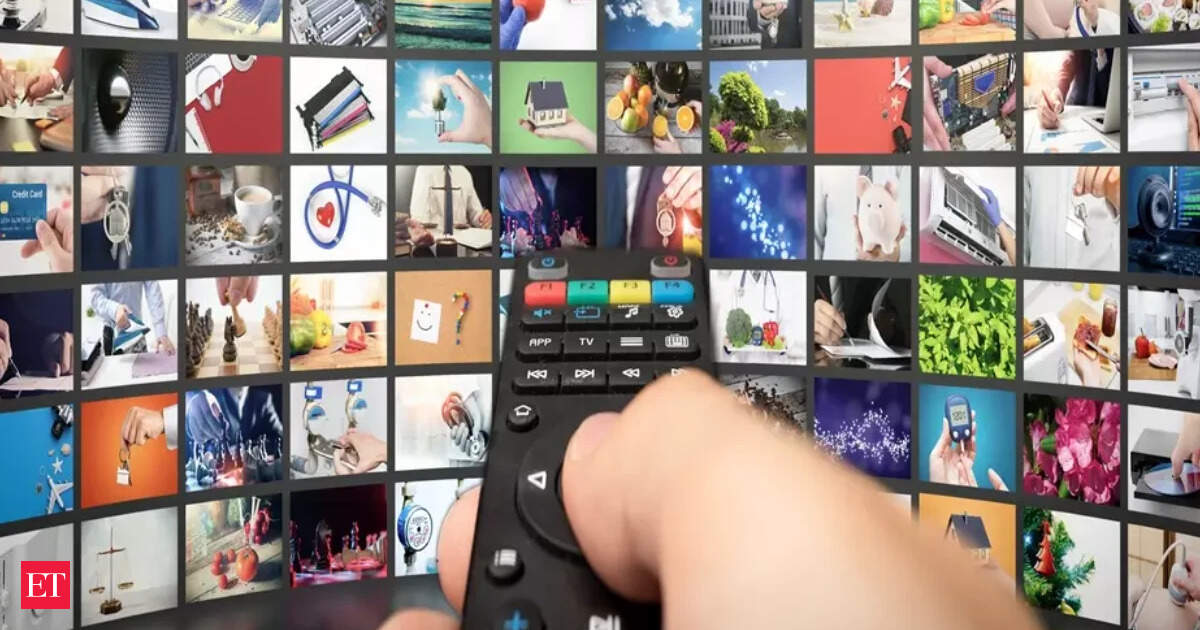
Infrastructure catches up
The industry's infrastructure continued evolving this week as well.
ByteDance secured a $29.6 billion financing package to support its global AI expansion, including computing infrastructure expected to strengthen products such as Seedance, CapCut and other AI video initiatives. At the same time, Eluvio introduced new workflow technology capable of automatically generating vertical versions of traditional broadcast content directly inside streaming distribution pipelines.
Neither announcement is specifically about mobile-first entertainment.
Together, however, they illustrate a broader reality: the technology required to produce, adapt and distribute mobile-native video is increasingly becoming part of mainstream media infrastructure rather than a separate experimental workflow.
The future of mobile-first entertainment may depend as much on infrastructure as on storytelling.


China's new microdrama regulations officially take effect
China's Administrative Measures for the Development of Microdramas officially came into force on September 1, marking the first comprehensive regulatory framework specifically targeting the format.
The new rules formalize requirements around AI-generated content labeling, platform responsibilities and content standards. While many of the policies were announced earlier this summer, this week marked the point at which they became enforceable.
For an industry increasingly built across multiple markets, regulation is becoming another layer of infrastructure—one that may shape how AI-native and hybrid productions are financed, produced and distributed in the years ahead.
This Week's Take
Viewed individually, these announcements seem unrelated.
Together, they tell a remarkably consistent story.
Hollywood is building dedicated platforms. Korean film studios are launching new labels. European broadcasters are backing mobile-first startups. Ecommerce companies are integrating serialized storytelling into shopping. AI infrastructure is adapting itself to vertical distribution. Regulators are beginning to define the rules.
For years, mobile-first entertainment has been measured by the success of individual series.
This week suggested the industry may have entered a different stage—one where the most important developments are no longer the shows themselves, but the organizations being built to create, distribute and monetize them.
Further Reading
The Infrastructure Week: AI Quietly Took Over Vertical Production — Last week's look at Snips, ByteDance, Higgsfield, COL AI Studios and the infrastructure layer forming underneath vertical production.
 Real Reel
Vertical Drama Is Still Growing. So Why Is Live-Action Production Shrinking? — An analysis of how AI-native production, changing economics and new business models are reshaping the industry's production landscape.
 Real Reel
✱