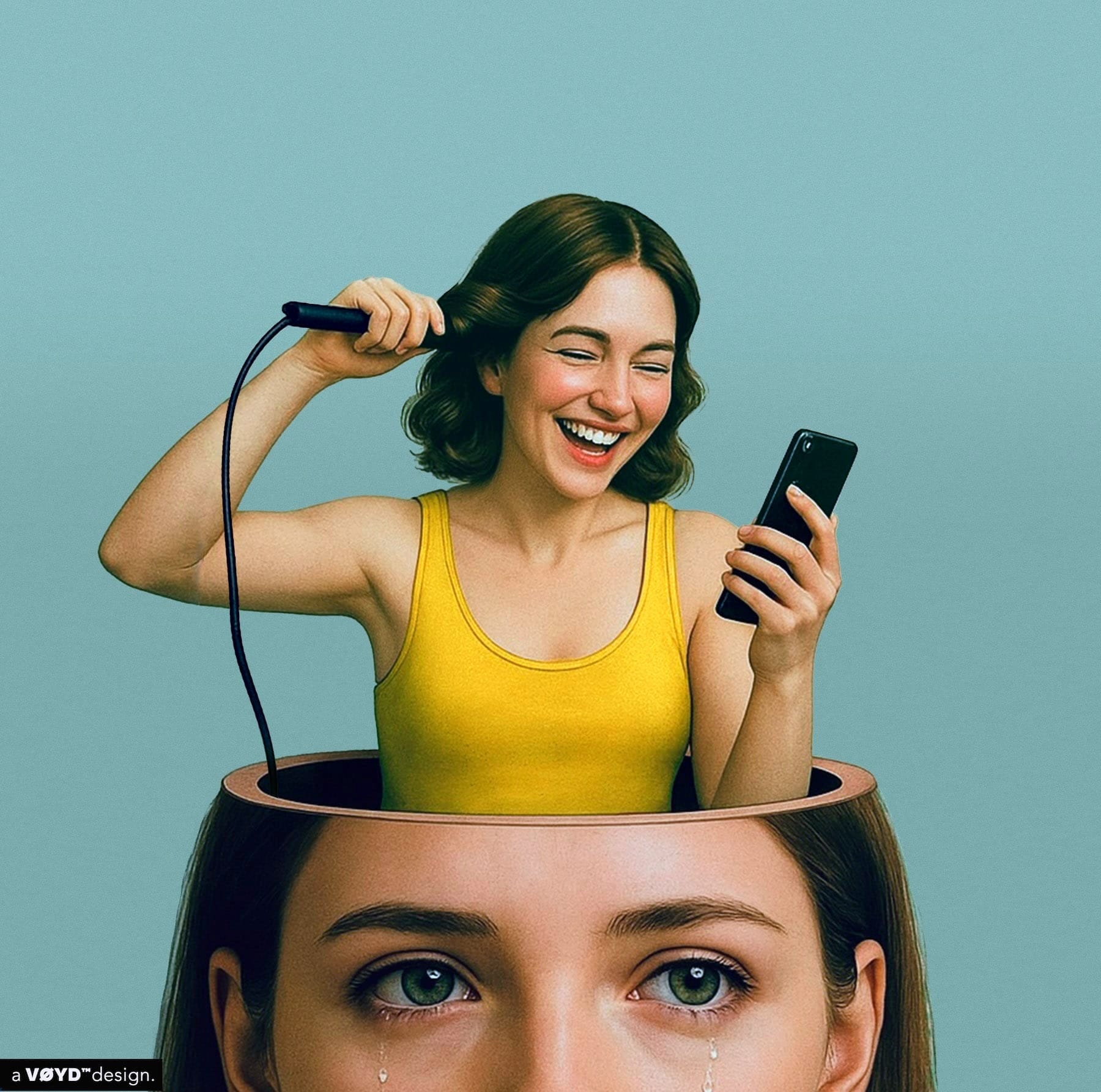
Literary adaptation is one of the hardest moves a vertical drama can attempt — the format's pace and episode structure were never designed to carry the interior moral architecture of a novel. MyDrama's Sins of Dorian Gray (2026) tests how far a microdrama can stretch by transposing Oscar Wilde's classic into the world of modern celebrity and music, preserving its central question — what does ambition cost a person — inside a vertical video format built for speed.
⚈ ⚈
Honoring a classic doesn't mean copying it.
Sometimes it means discovering where its ideas belong today.
-
Review by Liz
@portraitstorydiaries
Composing the Fall: How Sins of Dorian Gray Reimagines a Classic
You're not evil... you're just human.
I've always believed the most frightening villains were the ones who knew exactly who they were.
This drama quietly challenged that belief.
Instead of giving us a monster, it follows someone whose downfall unfolds through a slow, quiet surrender of his own morals. One compromise. One lie. One opportunity that seems too good to refuse. Before long, these decisions become inseparable from the person making them.
Adapting Oscar Wilde's classic into a 9:16 format sounds almost impossible because the novel relies on the internal corruption of a soul rather than spectacle. Yet, the adaptation wisely avoids a direct recreation. By turning Dorian into a struggling singer, it preserves the story's timeless questions through the lens of modern celebrity. His dream feels tangible, making the ensuing choices carry genuine emotional weight.
"Behind every exquisite thing that existed, there was something tragic." — Oscar Wilde
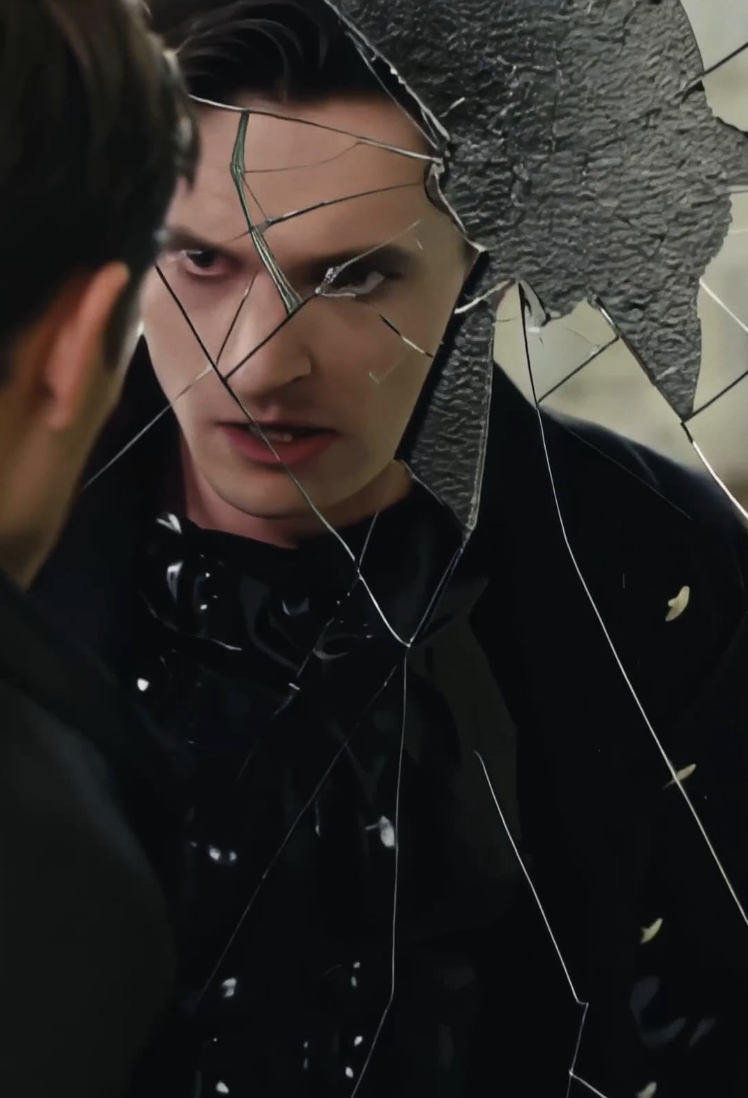
The series handles Dorian's transformation with striking patience. Rather than relying on a single terrible event to change him, every episode quietly chips away at his principles. Long before the physical painting reveals any damage, the psychological deterioration has already taken hold. Just as impressive is how seamlessly the show blends gothic fantasy, romance, and mystery without losing sight of its emotional core. The elegant costumes, moody lighting, and carefully chosen music create a beautiful yet unnerving world. Even the portrait itself is handled with remarkable subtlety and never feels like a cheap horror gimmick.
▙ ▙
The painting may reveal Dorian's corruption, but the true tragedy is watching the man behind it slowly disappear...
Liz
Every time the painting appeared, I found myself looking beyond the damage on the canvas to focus on the man slowly disappearing behind it. The true tragedy isn't the cursed artwork; it's watching Dorian lose himself piece by piece.
Stories about ambition often ask what someone is willing to sacrifice for success. Sins of Dorian Gray asks something even more unsettling: what if every concession feels completely justified in the moment? He isn't driven by cruelty, nor does he set out to destroy himself. Instead, he convinces himself that each compromise is necessary, until the person he once was becomes almost impossible to recognize.
One of the most powerful scenes comes when Basil gently tells him, "You're not evil... you're just human." Though meant as compassion, Dorian receives those words like a condemnation. That moment captures the tragedy at the heart of the story: Dorian is no longer afraid of becoming a bad person; he is afraid of admitting he was never perfect to begin with. By grounding its emotional peaks in character rather than relying only on shock value, the production becomes far more than a standard retelling. It demonstrates that a vertical format can be just as layered and emotionally complex as traditional television.
A Performance That Anchors the Entire Story
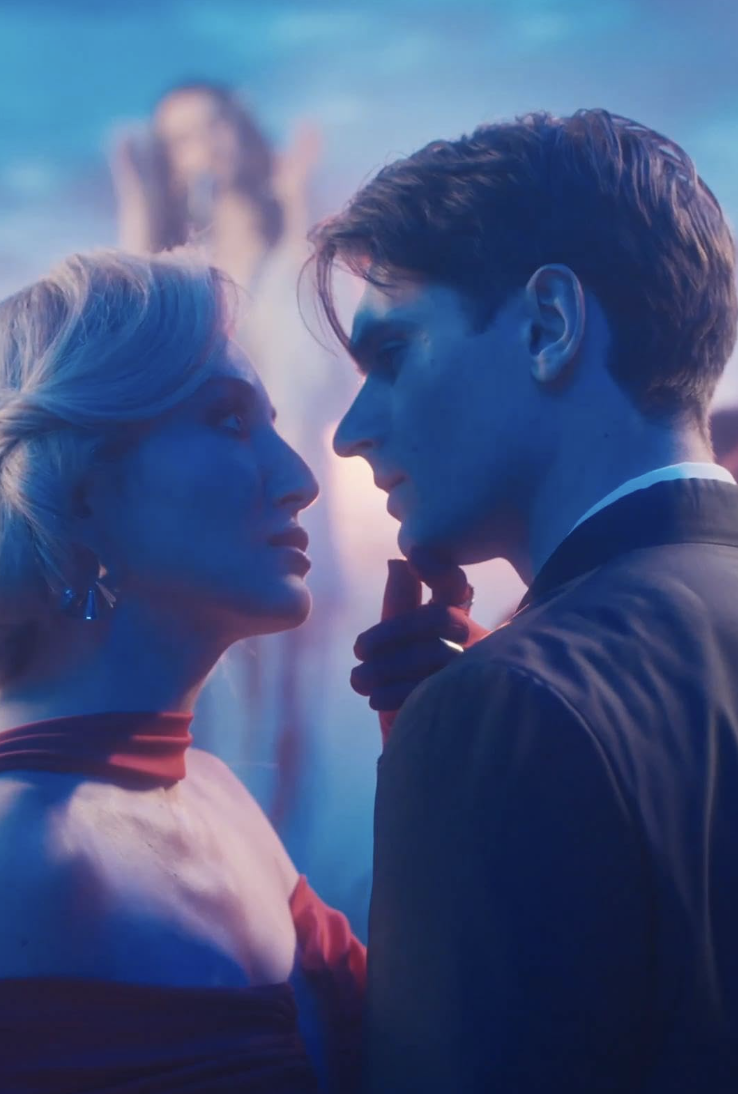
If there's one reason to watch this vertical drama, it's Eugene Lisnychyi. I don't think I've ever seen Eugene this magnetic on screen. Dorian Gray is an incredibly difficult character to portray because he isn't simply a villain or a victim. He is someone constantly fighting between the person he was, the person he wants to become, and the person he is slowly turning into. Somehow, Eugene makes every single version of Dorian feel completely real.
▙ ▙
Eugene had completely disappeared into the role. I wasn't watching an actor anymore. I was watching Dorian Gray unravel in front of me...
Liz
What left me absolutely in awe was how fearless he was in showing that transformation. He doesn't just perform the downfall; he makes us feel every painful step of it. The excitement of finally being discovered, the confidence that comes with fame, the temptation of having everything he's ever wanted, and the devastating emptiness that follows are all visible in the smallest details. A change in his expression. A moment of silence. The way his eyes slowly lose the warmth they had at the beginning. But beyond the emotional shifts, I was genuinely impressed by how daring he was with this role. He fully embraced every complicated, uncomfortable, and vulnerable side of the character without hesitation, allowing him to be messy, unpredictable, and impossible to look away from.
And then there is the scene at Sybil's grave where Eugene's performance reaches an absolutely devastating level. He doesn't simply show grief; he completely surrenders to it. The pain, regret, and desperation behind every reaction feel piercingly real, making it impossible not to feel the weight of everything he has lost. What makes the scene so powerful is that Eugene never turns the emotion into something artificial or exaggerated. Even in his most vulnerable state, there is a heartbreaking sense of truth because I wasn't watching someone pretend to mourn, I was witnessing a person completely consumed by guilt and heartbreak.
His musical performances add another vital layer to his transformation because he doesn't just make us believe Dorian wants fame; he makes us understand why that dream mattered so much to him. We hear the passion, the ambition, and the hope that existed before everything began to change. By the final episode, Eugene had completely disappeared into the role. I wasn't watching an actor anymore. I was simply watching Dorian unravel in front of me.
A Cast That Gives Dorian's Tragedy Its Heart
Beyond Eugene's extraordinary performance, the strength of this adaptation comes from the carefully assembled ensemble surrounding him. The tragedy would never have carried the same emotional weight without the people who enter his life and shape his journey. Each character represents a different force pulling him in a new direction: temptation, love, redemption, and the possibility of becoming someone better. They are not simply supporting figures; they are essential pieces of his transformation. Without them, we would never fully understand what is gained, what is lost, and everything left behind.
▙ ▙
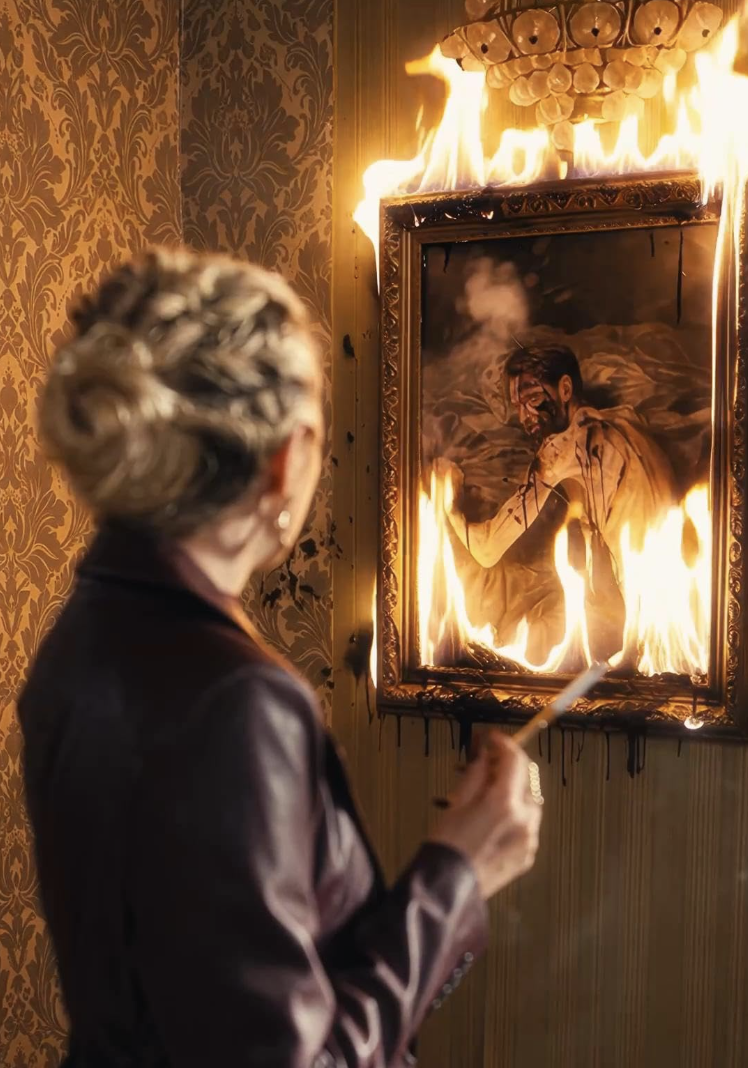
The real tragedy isn't watching someone become a monster. It's watching someone convince himself that every compromise is justified...
Liz
Li Berlinskaya is captivating as Henrietta, bringing a perfect balance of elegance, mystery, and quiet manipulation. She never needs to overpower a scene because her confidence alone changes its entire atmosphere. Every conversation feels like a carefully calculated game, making it impossible to tell whether she is guiding him, controlling him, or simply revealing the desires he already carries within himself.
On the other side of the journey, Lyubomyr Valivots gives Basil such emotional depth and sincerity that his role as the story's moral compass feels completely earned. His unwavering belief in Dorian's goodness makes their connection genuinely heartbreaking, especially as he continues seeing the person his friend used to be even when others only see the star he has become. Meanwhile, Kateryna Belinska brings warmth, innocence, and authenticity to Sybil, creating a character who represents the genuine love and simple happiness that could have been chosen. Her chemistry with Eugene feels natural and heartfelt, making every betrayal carry real emotional weight. Together, these performances give the tragedy its impact because they remind us that his downfall does not only affect him. It affects everyone who once saw the good still remaining inside him.
"Each of us has heaven and hell in him." — Oscar Wilde
Ultimately, the greatest achievement of Sins of Dorian Gray is that it understands what made Wilde's story timeless while still having the confidence to create something uniquely its own. Rather than simply condensing the original novel into a vertical format, the series transforms it into an intimate character-driven drama about ambition, identity, love, and the choices that define who we become. The strongest moments aren't just found in the supernatural elements or the dramatic twists, but in the quiet emotional battles where we watch Dorian struggle between the person he is and the person he wants to be.
What makes this adaptation especially interesting is how it takes a classic tragedy and explores its themes through a modern vertical drama lens. By placing Dorian's journey in the world of music, fame, and celebrity, the story finds a fresh way to explore timeless questions about regret, redemption, and whether people can ever truly change. The era has shifted, the medium has evolved, but Dorian's longing to be seen and understood remains unchanged.
When I think back on his journey, I don't just remember the star he became. I remember the young man who simply wanted someone to hear him sing, and the powerful reminder that our choices can shape the person we become.
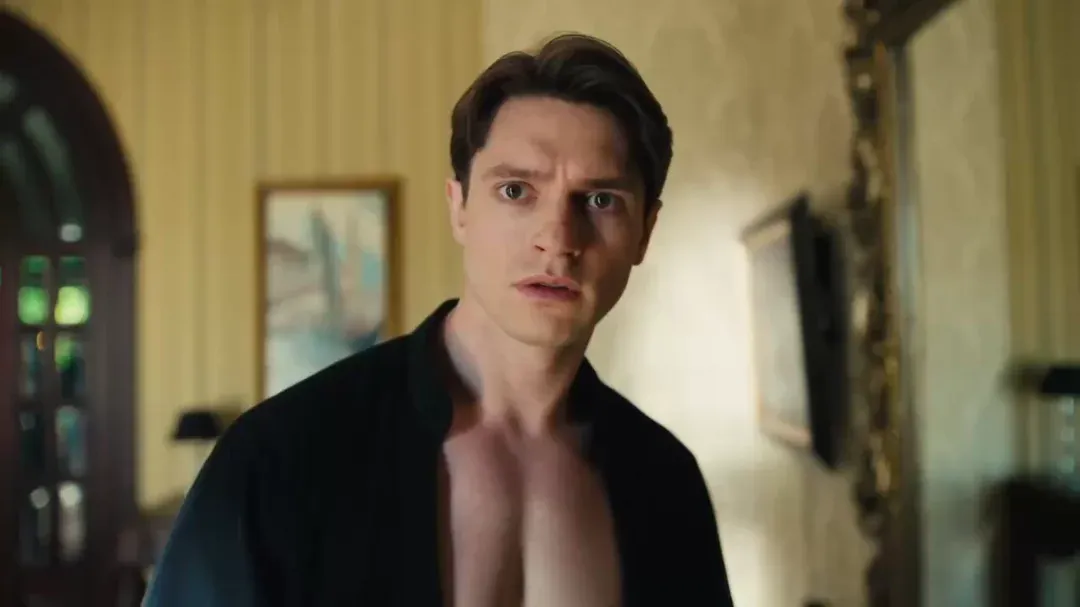
Images used in this article are sourced from the public internet and are presented for editorial context only. All rights remain with their respective owners.
Credits
Written by Liz
Design & Motion by VØYD
More Reviews From Liz
- Dying for Love — DramaBox's supernatural vertical romance about mortality and emotional restraint, built on two performances that make the format's constraints feel like a deliberate choice.
 Liz
Liz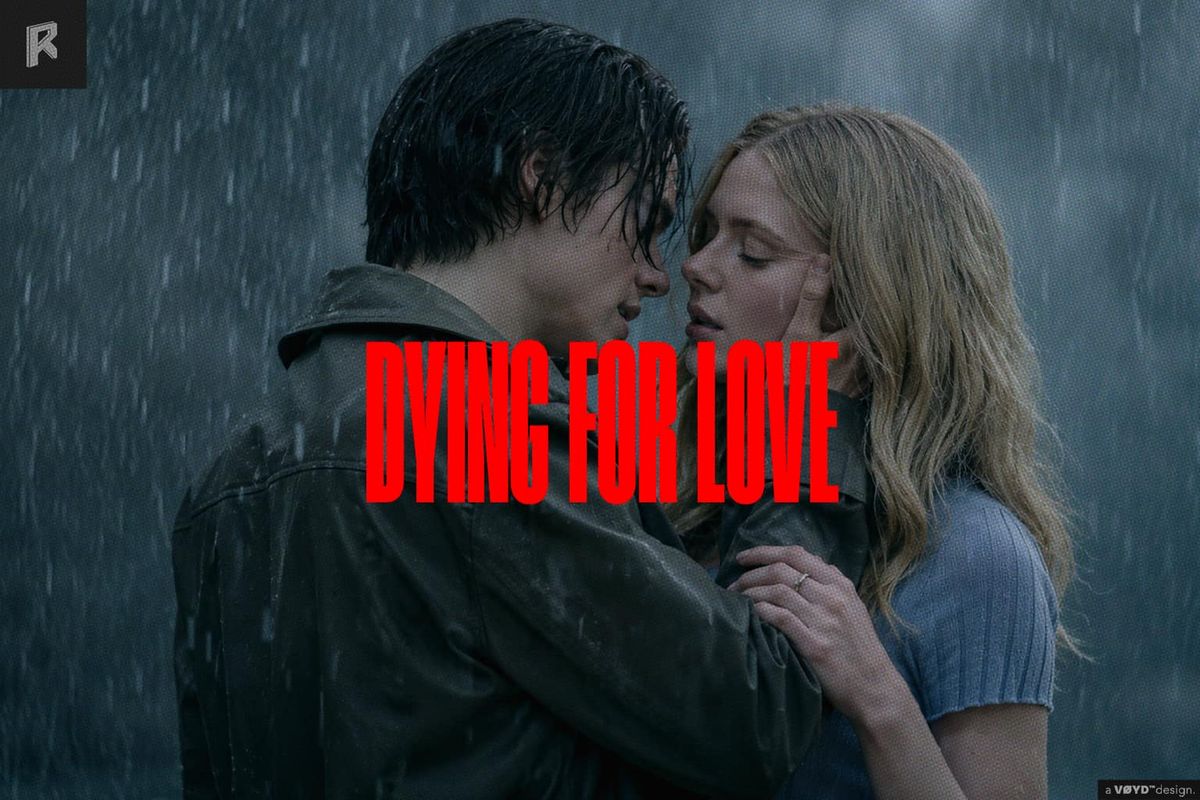
- His Princess From Nowhere — a self-produced vertical drama that builds psychological depth through restraint, silence, and atmosphere rather than escalation.
 Liz
Liz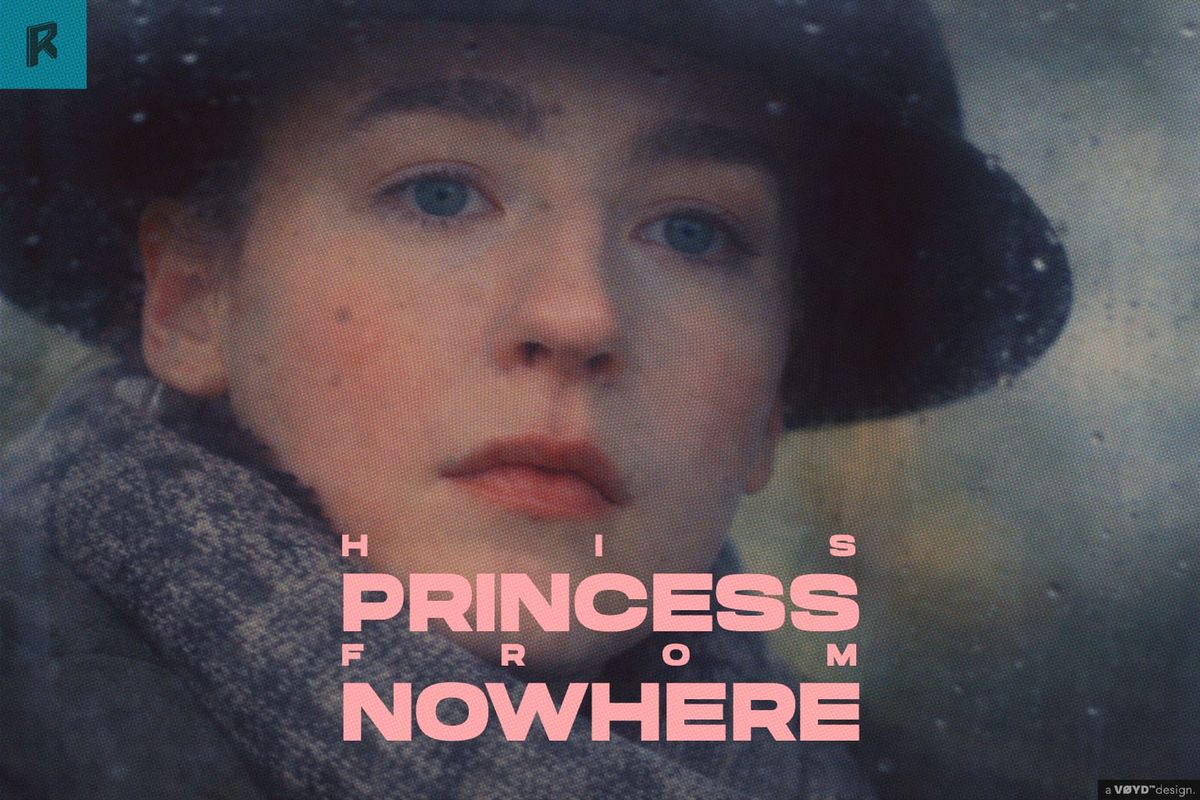
✱