Industry analysis of the global vertical drama and microdrama market.
⦿⦿
From Showbox to Albertsons, the companies entering vertical drama this week don't have vertical drama problems — they have churn, reach, and distribution problems.
Week of Jun 15-21, 2026
APOS 2026 produced the week's densest concentration of vertical drama deal-making — ReelShort, COL Group, Viu, and iQIYI all moved simultaneously in Southeast Asia and Korea. Outside the conference, P&G and Albertsons launched the format's first retail-media-funded production, the DGA finalized AI protections for directors, and the DOJ cleared the $111 billion Paramount–Warner Bros. Discovery merger without conditions.
Showbox × ReelShort: Korean film studio commits to platform exclusivity
Showbox — behind Exhuma, A Taxi Driver, and Itaewon Class — signed a co-production agreement with ReelShort announced on the eve of APOS. Showbox will initially adapt existing ReelShort IP into Korean-language microdramas, with original Showbox-developed titles to follow. All content distributes exclusively on ReelShort. The first batch — Tell Me Not to Love You, My Secret Lover Is His Brother, Queen Never Cry — stays in romance, with Showbox signalling genre expansion once the relationship is established.
The exclusivity is the notable choice. Showbox had already distributed two December 2025 microdramas across DramaBox and Vigloo simultaneously. Choosing a single-platform commitment here is a different posture — and it comes after a 2025 theatrical slate that misfired following Exhuma's record 2024 run. Vertical drama is functioning as a low-cost revenue hedge, and ReelShort is getting production credibility from one of Korea's most recognised institutional names in exchange for a guaranteed global pipe.
When a studio of Showbox's weight chooses exclusivity over hedged distribution, vertical drama partnerships start functioning like development deals — with all the leverage dynamics that implies.
 Patrick Brzeski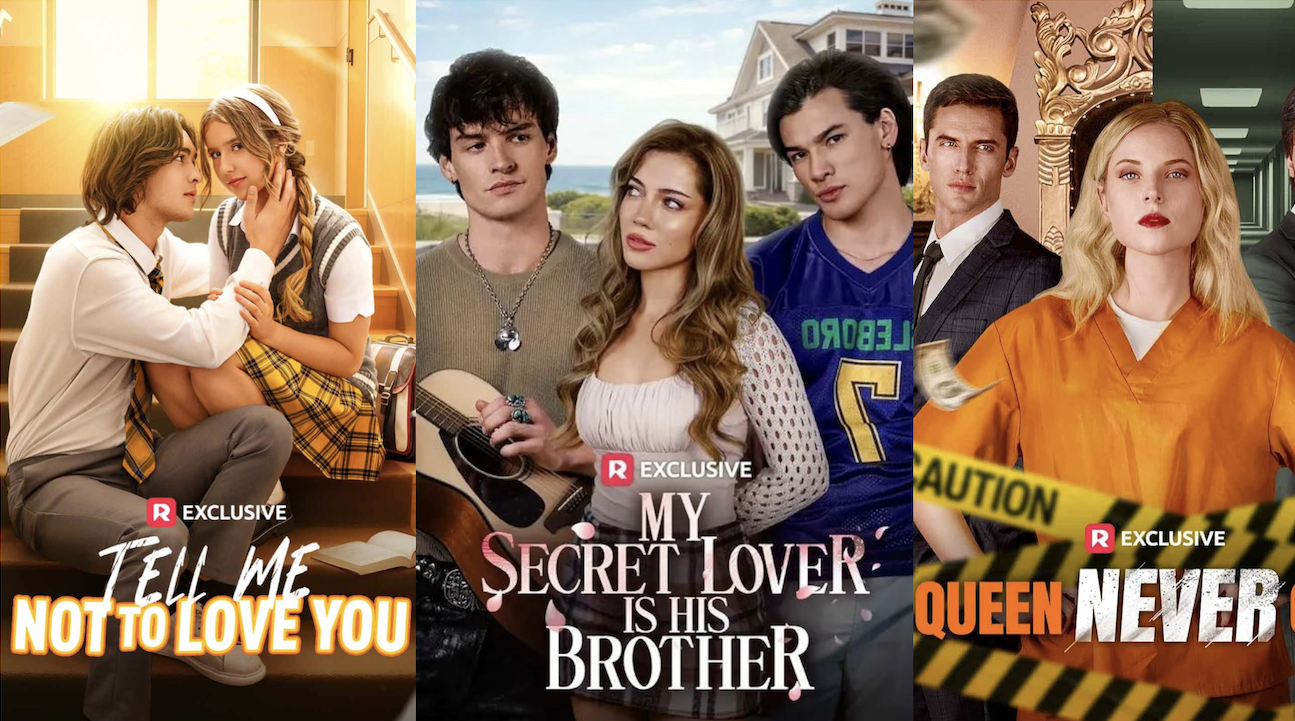
FlareFlow × Neymar: COL Group bets AI production can unlock a male audience
COL Group's FlareFlow announced at APOS on June 17 a 16-title AI-powered live-action franchise with Neymar Jr., timed to the FIFA World Cup. The first six titles launched June 19 — including The Way Back to Glory and Fake Neymar, Real God — with the remainder rolling out across the football season, simultaneously on FlareFlow globally and Xiaohongshu in mainland China. CMO Timothy Oh called it "the true dawn of our Vertical 2.0 strategy": an explicit push at male audiences in a format whose core users are women aged 20 to 35.
The economics behind it matter. COL's net loss widened roughly 50% year-over-year in H1 2025, driven by overseas marketing costs. A 16-title franchise at live-action budget would be untenable; AI production is what makes the slate financially viable. The World Cup timing is the reach vehicle; Neymar's 220 million-plus social following is the conversion argument. Whether the genre's established melodrama conventions translate to a sports-motivated male viewer is a question this franchise will answer in real time.
The first attempt to engineer a male vertical drama audience at scale — and a live test of whether AI production can absorb the cost of a celebrity IP play that traditional budgets could not justify.
 Jesse Whittock
ReelShort × Globe Philippines: second carrier deal in two months
ReelShort announced at APOS on June 18 a distribution deal with Globe, the Philippine telecom backed by Ayala Corporation and Singtel, brokered by AR Global Media Network. The deal gives Globe subscribers access to ReelShort's library of nearly 3,000 titles and follows the April AIS partnership in Thailand by two months. At APOS, CEO Joey Jia was direct: North America is becoming saturated, Asia is the next phase, and telco bundling is the mechanism — removing the standalone sign-up barrier that has historically capped the format's paid conversion rate.
The Showbox co-production and the Globe deal were announced in the same week deliberately. ReelShort is simultaneously building a content localisation strategy and a distribution infrastructure in Asia, not sequentially. Jia also confirmed at APOS that local-language production is already running in Brazil, Mexico, and Colombia — suggesting the company is executing a coordinated international expansion across multiple markets in parallel.
Two telco deals in eight weeks, a Korean content co-production, and a public declaration that North America is saturated — this is a strategy, not a deal flow.
 Lin Ying-Hsuan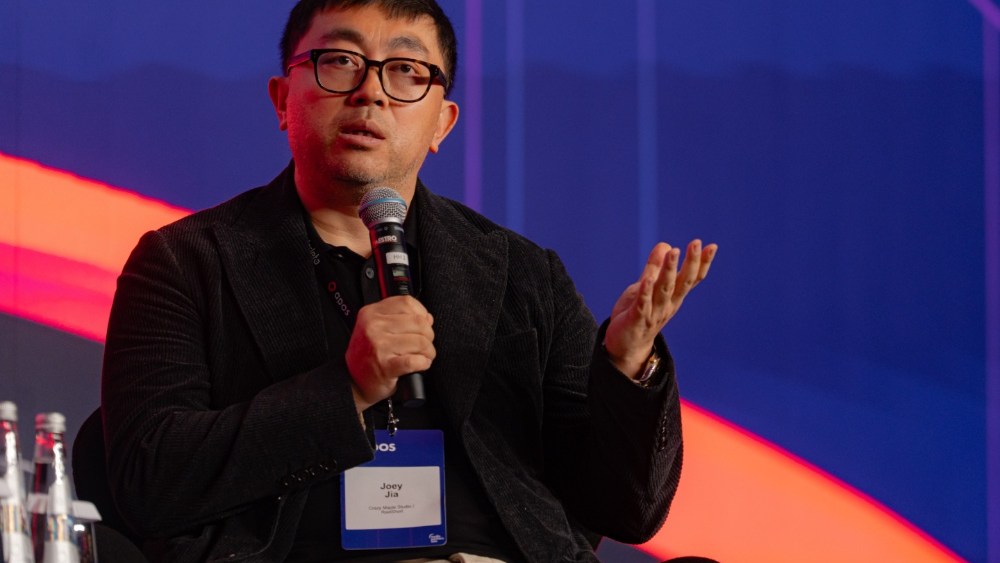
P&G × Albertsons × Minivela: retail media enters vertical drama as funder and distributor
P&G and Albertsons Media Collective announced on June 17 Rico's Tacos, a vertical drama co-produced with Minivela and Brilla Media, launching June 23 across Albertsons' YouTube, social channels, and in-store screens with weekly episodes through August. The series was filmed inside Albertsons stores; the creative brief was built from shopper data before production, not applied as a targeting layer after. Albertsons is positioning this as an open model — explicitly inviting other brands to bring creative concepts to the same pipeline. An episode debuts at Cannes Lions.
The structural novelty is the distribution channel. In-store screens at a grocery chain reaching tens of millions of weekly shoppers is an audience layer no vertical drama platform has previously accessed. Minivela provided the showrunner and Latino-audience framing; P&G brought consumer intelligence and its long institutional history with serialised branded entertainment. The Cannes Lions debut signals this is an announcement directed at advertisers as much as audiences — the pitch is that retail media networks can now function as vertical drama commissioners and distributors simultaneously.
A production funding model and a distribution channel the format has not previously accessed — and a template Albertsons has explicitly invited the market to replicate.
 Peter Adams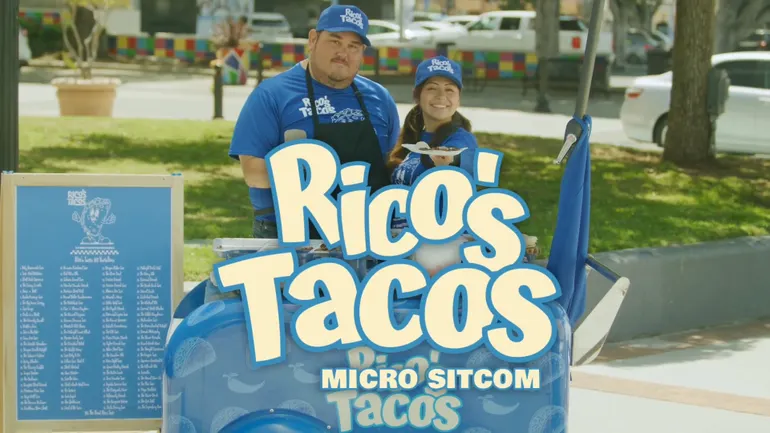
Viu × iQIYI International: microdrama bundled in as standard, not optional
Viu and iQIYI International announced at APOS on June 17 a combined subscription launching H2 2026 across Indonesia, Thailand, the Philippines, and Malaysia — iQIYI International's first cross-regional streaming alliance. Viu brings Korean and Chinese dramas, Southeast Asian originals, and its Viu Shorts microdrama slate; iQIYI International contributes Chinese dramas, anime, variety, and its own microdrama library. Both services bill together but are consumed separately. Financial terms were not disclosed.
Lee separately disclosed that nearly 20 percent of Viu's existing long-form user base already consumes Viu Shorts — a format launched only months ago. That figure is the deal's most significant data point: users already paying for long-form content will consume vertical drama without additional friction when it is embedded in the same interface. Both platforms are treating their microdrama slates as standard library components, not pilot programmes — and that bundled positioning, rather than standalone app competition, may be the premium streaming distribution model the format has been missing.
20 percent adoption among existing long-form subscribers is the conversion argument vertical drama has needed to make to premium streaming partners — Viu is now making it with its own numbers.
 Lin Ying-Hsuan
DGA × AMPTP: director control over AI footage established in four-year deal
The DGA's National Board unanimously recommended ratification this week of a four-year agreement with the AMPTP — the third major guild deal of 2026's negotiations cycle, following the WGA and SAG-AFTRA. Membership vote closes June 25. The deal covers health plan increases, residual hikes, and a new provision limiting multi-hyphenates without a directing track record from taking episodic directing slots — a direct response to a 40 percent drop in production employment over four years.
The AI terms are the ones with the longest reach. The agreement establishes directorial authority over AI-generated footage, treating it "like footage created with a camera" — meaning it remains under director control. Studios must disclose AI usage plans during employment negotiations. A new employer-funded programme will help members develop generative AI workflows. The one notable gap: no revenue sharing when studios license content for AI training, with the AMPTP arguing the commercial model does not yet exist in tangible form.
Directorial control over AI-generated footage sets a precedent that will travel — including into vertical drama pipelines where AI-assisted production is already standard and creative authority over generated material has been largely unaddressed.
 Katie Kilkenny
Paramount × Warner Bros. Discovery: DOJ clears merger, EU review opens
The DOJ cleared Paramount Skydance's $111 billion acquisition of Warner Bros. Discovery on June 12 without conditions — no divestitures, no concessions. The DOJ framed the approval around streaming competition, noting that the combined entity would create a more robust alternative to Netflix, Amazon Prime, and Disney+. China's antitrust authority issued unconditional clearance on June 17. WBD shareholders approved the deal in April. Paramount CEO David Ellison has committed to closing by September 30.
Significant regulatory risk remains. The European Commission opened its review this week with a July 14 preliminary deadline, and is separately examining foreign subsidy concerns given sovereign wealth fund backing from Saudi Arabia, Qatar, and Abu Dhabi. California AG Rob Bonta has opened a state investigation. If the deal closes as targeted, HBO Max and Paramount+ merge into a single platform — creating a combined content and subscriber base that will directly reshape the streaming landscape vertical drama platforms are simultaneously trying to penetrate.
A merged Paramount–WBD streaming entity changes the competitive weight every platform — including vertical drama's emerging players — is positioning against for the rest of the decade.
 Lillian Rizzo and Julia Boorstin
✱