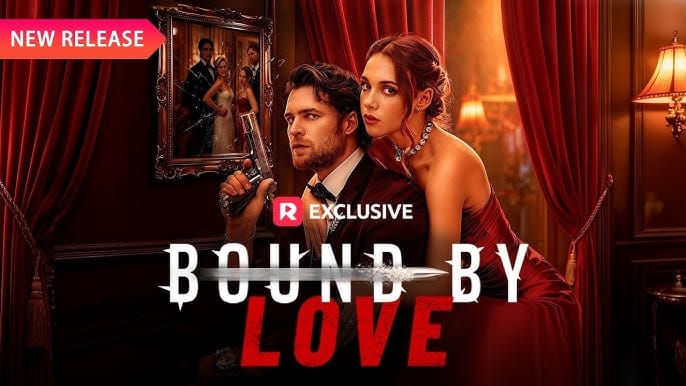
ReelShort's Bound by Love, the first sequel in the platform's microdrama catalog, opened to 23.7 million views — a strong signal that vertical drama audiences will follow characters across installments. But the series also surfaces a structural tension that the short-form vertical video format hasn't fully resolved: as romance narratives grow more complex, intimacy is increasingly used as an emotional shortcut, and the desire-driven storytelling that drives paywall conversion begins to erode.
⚈ ⚈
Sex isn't the story. It's the reward.
Desire is the story.
-
Review by Amy
Here's an uncomfortable truth about romance: the more it relies on sex, the less sexy it becomes.
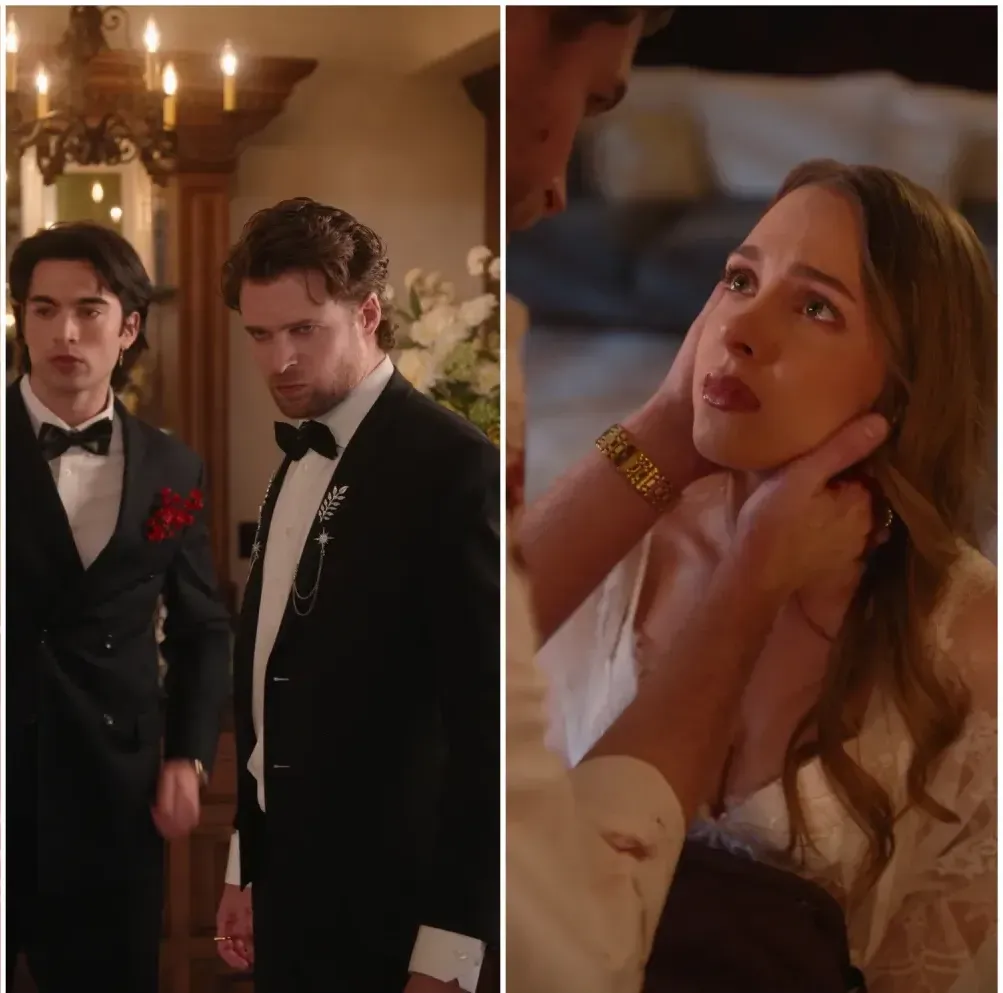
Which sounds ridiculous, considering Bound by Love, ReelShort's follow-up to the enormously successful Bound by Honor, clearly understands what its audience likes. Beautiful people, forbidden attraction, enough steamy moments to keep the comment sections thriving — all present and accounted for. And to be fair, the sequel goes bigger in almost every way. More family drama, more betrayals, more secrets, more people trying to ruin everyone else's lives. At some point I honestly expected another long-lost relative to emerge from behind a curtain.
But bigger isn't always the same thing as stronger.
One of the reasons Bound by Honor worked so well was that, underneath all the mafia drama, the central question was surprisingly simple: will Luca and Aria end up together? Everything revolved around that. Every scene pulled toward the same answer, and every small moment carried weight precisely because you knew what it was building toward. Bound by Love, by contrast, introduces babies, siblings, rivalries, family wars, and enough complications to fuel several different shows. As the relationship itself becomes just one storyline among many, something interesting happens — intimacy starts doing a lot of heavy lifting. Need an emotional high point? Sex. Need reconciliation? Sex. Need to remind viewers these two people are still wildly attracted to each other? Sex again.
There's nothing inherently wrong with that. But the more frequently intimacy is used to solve narrative problems, the less valuable it becomes.
Because romance has never really been about sex in the first place. It's about desire. And desire is far more expensive.
Women were never buying sex
Research on female audiences has repeatedly arrived at the same conclusion: sex creates curiosity, but desire creates obsession. People may click because something is spicy, but they stay because they fall in love with the characters, because the question that keeps romance audiences awake at night isn't will they do it again? It's will they finally choose each other? Will he tell the truth? Will she forgive him? Will they stop being idiots long enough to find their way back?
Romance audiences aren't addicted to satisfaction. They're addicted to anticipation.
Which is why some of the most sensual stories ever made contain remarkably little sex.

▙ ▙
Romance audiences aren't addicted to satisfaction. They're addicted to anticipation.
Amy
Wong Kar-wai understood desire
In the Mood for Love may be one of the sexiest films of the last twenty-five years, and almost nothing happens in it. There are no graphic scenes, no grand declarations, no desperate attempts to convince us these people are attracted to each other.
Instead there are glances, rain, narrow hallways, a recurring piece of music that sounds like longing itself, and two people wanting something they know they shouldn't have.
The restraint becomes unbearable in the best possible way. Wong Kar-wai understood something that many modern romances forget: desire grows in absence. The less he gives us, the more we want.
Jane Austen was doing this two hundred years ago
Long before BookTok and streaming algorithms, Jane Austen had already figured out that yearning is infinitely more powerful than gratification. Pride and Prejudice has become famous — or at least the 2005 adaptation has — for a scene that contains absolutely nothing scandalous.
Mr. Darcy helps Elizabeth Bennet into a carriage, their hands touch briefly, he walks away, and then comes that hand flex: one tiny involuntary movement, and generations of viewers collectively lost their minds.
Not because the scene was explicit, but because it wasn't. Because two hundred years of accumulated longing — Austen's on the page, Wright's on screen — had built the tension to such a point that a single hand gesture could carry the weight of everything unspoken. Sometimes longing is louder than fulfillment.
▙ ▙
Desire grows in absence. The less he gives us, the more we want.
Amy
Normal People already proved this for a generation closer to home
Sally Rooney's Normal People — the Hulu adaptation, the one that made people cry on public transport and text their exes at 2am — is remembered as one of the most intimate shows of its era. And yes, it has sex, quite a lot of it, handled with a directness that felt almost radical for prestige television at the time. But that's not what people remember. People remember the missed calls, the years spent loving each other badly, Connell's chain, that particular cruelty of two people who were clearly meant for each other finding every possible way to be out of sync.
The sex scenes worked precisely because the emotional scenes arrived first.
Because by the time physical intimacy happened on screen, the audience had already spent hours understanding what it cost these two people to simply be in the same room together. The bodies mattered because the feelings mattered more. Strip away the emotional architecture — the longing, the miscommunication, the unbearable almost — and the intimacy becomes just two people in a room. That's the challenge Bound by Love is navigating right now.
The story isn't over
Bound by Love opened to 23.7 million views in its first days on platform — a number that tells you the audience followed, that they came back for Luca and Aria not because of a new hook but because of the emotional investment built by the first series. Whether it can sustain that, whether it can convert those opening numbers into the kind of long-tail obsession that carried Bound by Honor to 400 million views, depends less on how many intimate scenes it delivers and more on whether it can rebuild that single, clear, aching question at its center.
Give the audience something to want. The rest will follow.
Available on ReelShort
Images used in this article are sourced from the public internet and are presented for editorial context only. All rights remain with their respective owners.
More Reviews From Amy
- A chart-topping vertical romance that hit Top-2 on MyDrama — and spent its entire run being a near-perfect copy of something that already existed. A case study in how distribution beats originality, and why that should make creators uncomfortable.
 Amy
Amy
- Twenty slaps in the first ten minutes, a forced-abortion plot by episode ten, and a billionaire pickup you can predict down to the episode number. NetShort's buzzy hit is shameless, engineered, and — if you're paying attention — genuinely instructive about how vertical drama converts.
 Amy
Amy
✱