In vertical drama and microdrama, emotional structure isn't a creative choice, it's a retention mechanism. This guide breaks down the four dominant vertical drama genres, Romance, Revenge, Power Fantasy, and Family Ethics, and maps the most common Shock, Hurt, and Release patterns for each, with script checks writers can run against any outline.
Knowing the emotional pattern is one thing.
Knowing where each beat tends to break down on the page is another.
This is a working reference. Run it against any outline.
1. Romance
The question: "Can someone like me be chosen, openly, by someone who could choose anyone?"
Romance converts because this question is personal. Almost every viewer has wondered, at some point, whether they would be chosen, not just wanted, but publicly claimed. That's the nerve the genre keeps pressing.
Shock: small, but it breaks the normal day
In vertical romance, the first shock doesn't need to be spectacular. It needs to be fast, and it needs to close a door.
- Dumped on a birthday → meets the lead that same night
- Awkward encounter at a hospital or office → next day, he's the new boss
- She's in real trouble — assault, debt, accident → he intervenes and gets tied to her problem
The function isn't surprise. It's displacement. Today is not a normal day in her life, and she can't go back to the one she had.
Hurt: not believed, not enough
- She tells the truth about a betrayal. He refuses to believe her.
- His family, his ex, his colleagues say it directly: you don't deserve him.
- She sacrifices something real — a job, her health, her reputation — and everyone around her treats it like nothing.
These scenes are easy to write badly. They land when they're specific and grounded, because almost every viewer has felt I'm not being taken seriously at some point.
Release: public choice + one crack in the armor
- He takes her side in front of people. Family dinner, company meeting, wedding, press conference. "This is my wife." / "I stand by her decision."
- The cold character finally loses control for a moment. Admits he was scared. Shows care in a visible, practical way — dragging her out of a toxic room, putting the ring back on.
Script check
Is there a clear "life-changing day" shock in episode one?
Can you circle at least three moments across the season where one character chooses the other in public?
Are your Hurt scenes specific, or just generic arguments?
If you can't find public choices on the page, the romance promise isn't being delivered.
2. Revenge
The question: "If everything is stacked against me, will I ever see the system crumble in front of me?"
Revenge works because the setup does most of the emotional labor. Once the audience has watched someone lose everything unfairly, they don't need to be convinced to care about the payoff. They're already invested. The genre just has to deliver what it promised.
Shock: life wiped clean
- Framed, jailed, disowned, left for dead
- Company stolen, child taken, reputation destroyed
- Sometimes literal death → rebirth at an earlier point in time
The function is simple. Give the audience a clear reason to enjoy what happens to the villains later. Don't skip this, and don't soften it.
Hurt: a long ledger of humiliation
- Relatives, in-laws, ex-partners, bosses take turns stepping on the lead
- The lead remembers everything but pretends not to — it's not time yet
- Every insult is a new line in an emotional debt ledger
The audience is keeping score. Let them.
Release: one scene pays many debts
- A board meeting, a wedding, an awards ceremony, a court hearing — everyone in the same room
- One reveal flips multiple lines at once: money, status, family position, love life
- The villain understands they've lost, and there are witnesses
Script check
Can you list your Hurt beats in sequence, like a bill? Are there enough to justify a big finale?
Do your major reversals happen in public, or in small rooms where no one else sees?
Does at least one climax scene pay off several old humiliations at once, not just one?
If all the revenge happens in private, the audience will feel short-changed.
3. Power Fantasy
The question: "What if I had a cheat code, while everyone else treats me like I'm nobody?"
Power fantasy runs on a specific pleasure: knowing something the bullies don't. The audience is in on the secret from the start. Every scene of underestimation becomes enjoyable, not painful, because the viewer is already waiting for the flip. That gap between what the bullies see and what the audience knows is the engine.
Shock: the cheat code, now
- A system that talks to you
- A skill or knowledge no one else has
- A sudden reveal that you're the real heir, the hidden boss, the key player
This shock has to arrive early — often in the first 10–15 seconds. The entire genre promise depends on the audience knowing something the bullies don't. If they don't know it yet, there's nothing to enjoy.
Hurt: universal underestimation
- Family, in-laws, classmates, coworkers call you useless, a gold-digger, a loser
- You could crush them. You decide to wait.
- The audience's pleasure comes entirely from knowing what the bullies don't know yet
Release: quiet control
- One signature, one transfer, one phone call flips the situation
- A "small" decision reveals you own the building, the company, the key asset
- An accidental moment briefly exposes your real level — and then you pull it back
Script check
Does the cheat code appear on screen, clearly, in episode one?
In each episode, can you point to at least one moment of visible control?
Are your underestimation scenes building anticipation for a flip, or just repeating the same insult?
If the audience has to wait too long to see the power in action, they'll swipe away. This genre has the least patience of the four.
4. Family Ethics
The question: "If I've held this family together for years, will anyone finally recognize it — and give me a real say?"
Family ethics hits differently from the other three because the injustice is quieter. No villain, no cheat code, no dramatic origin story. Just years of invisible work that everyone took for granted. That's why the release, when it finally comes, lands so hard. The audience has been waiting for someone to just see it.
Shock: the structure breaks
- Children decide to sell the house or move the parents out
- A quiet partner files for divorce or suddenly remarries
- A long-hidden secret surfaces: a second family, major debts, a serious illness
This isn't a loud argument that can be ignored. It's a break in the structure of the family. Something that can't be undone.
Hurt: invisible labor, zero credit
- The person who cooks, cleans, cares, mediates — usually an older woman or a "boring" spouse — never gets thanked
- We see the work on screen. Other characters act like it doesn't exist.
- They're told you're too much, you're old-fashioned — while everyone quietly relies on them
Release: recognition + a shift in who decides
- A real apology, from someone who matters, in front of others
- A will rewritten, keys handed over, decisions publicly reassigned
- From here on, this person decides something that counts: where to live, how to spend, who moves in or out
Script check
Is your big Shock something that forces the family to change, or just a loud argument that everyone forgets by the next episode?
Do we clearly see who has been doing the invisible work — on screen, not just implied?
In the final episodes, does anything about the decision-making actually change, or does it end with a group hug and nothing different?
If nothing in the family's power structure shifts, the release will feel hollow.
How to use this
For any new project, four questions:
Which of the four questions are you actually answering? Not the genre label. The question underneath it.
What are your default patterns for Shock / Hurt / Release in this genre? Name them specifically. Vague answers mean the pattern isn't locked in yet.
Where in the season do you place the non-negotiable Release? Pick the episode number. Put it in the room.
If you read only the emotional beats, could you still tell which genre this is? If the answer is no, you don't need a new twist. You need a clearer emotional pattern.
Read next:
The framework behind this piece. Four genres, four emotional questions, and why the difference matters before you write a single scene.
 Real Reel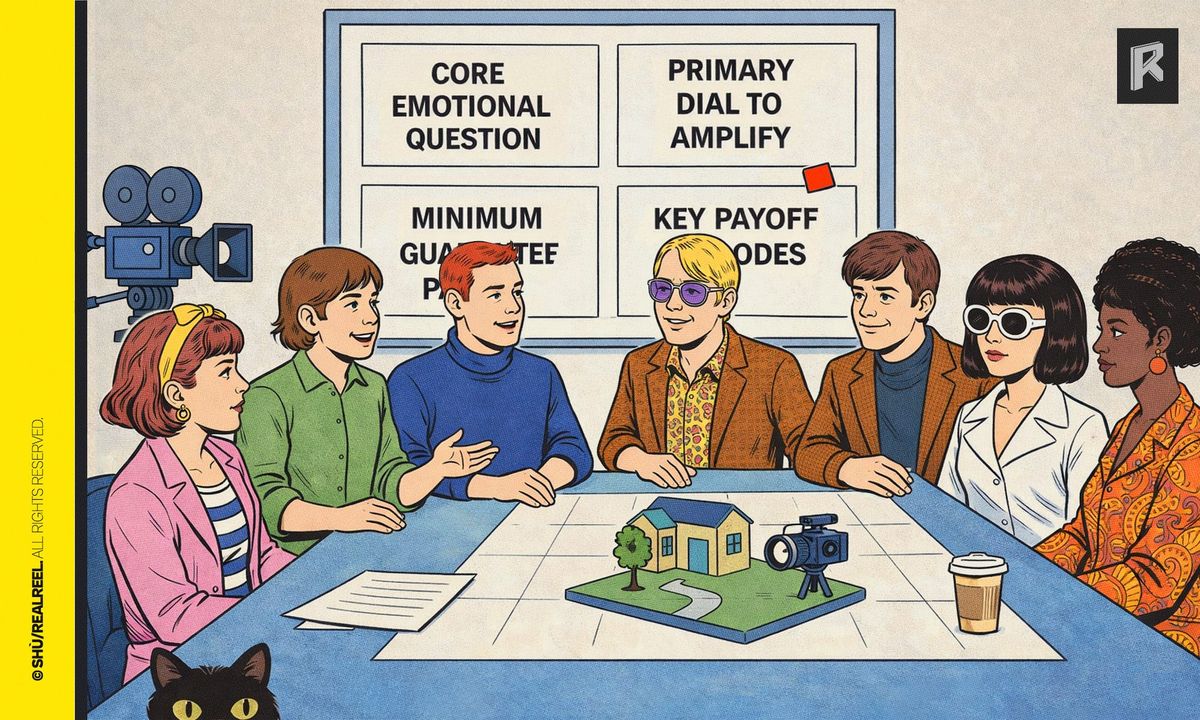
Part 2 gives you the season-level pattern. This one breaks down how to execute the same loop inside a single episode.
Real Reel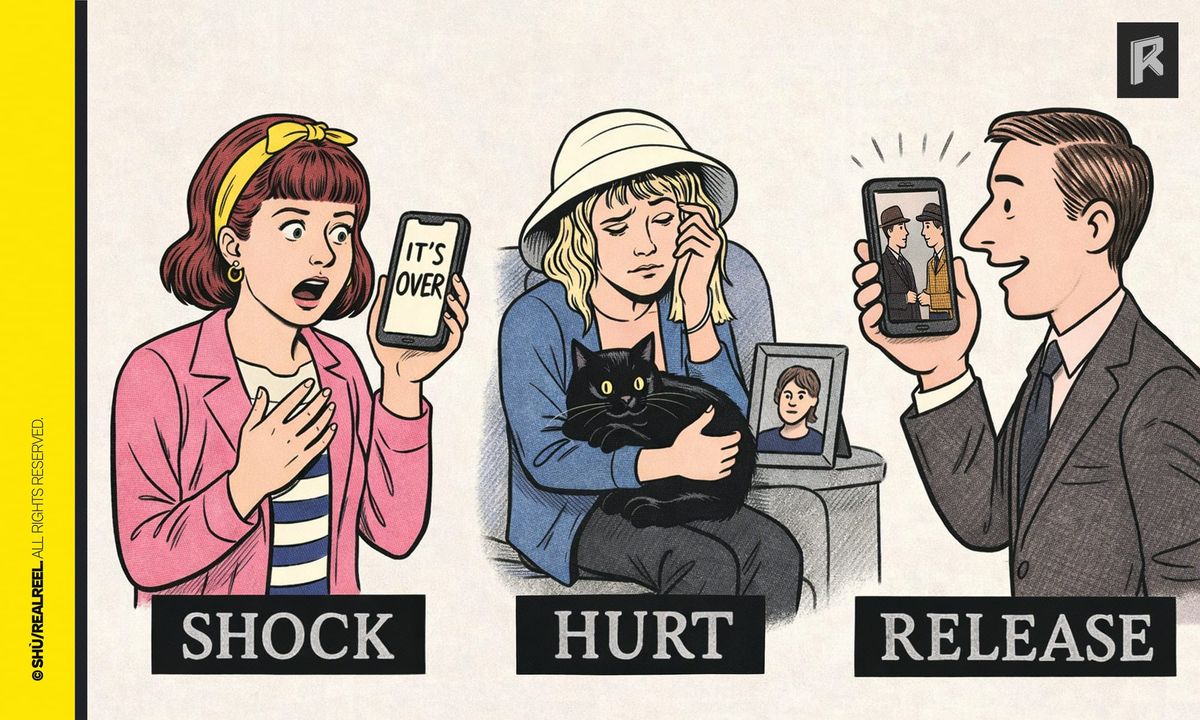
Once the emotional structure is clear, the next question is who carries it. A field guide to the four character types that drive retention in vertical drama.
Real Reel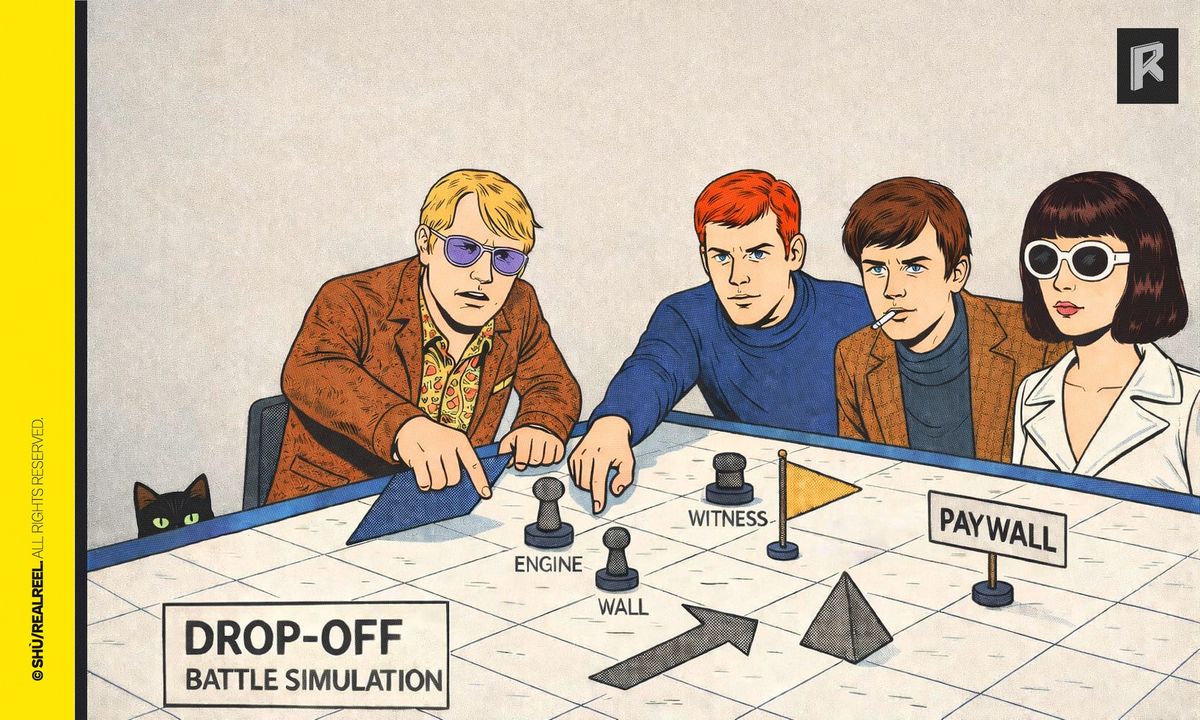
Real Reel Playbook covers the craft and structure of vertical drama for creators who take the format seriously.