Industry analysis of the global vertical drama and microdrama market.
⦿⦿
Romance built this industry. This week the industry started building without it.
Week of Jul 06-Jul 12, 2026
Between July 6 and 12, vertical drama expanded on two fronts at once. Bravo premiered a 52-episode unscripted microseries on Peacock, while Character.ai launched AI-animated series whose characters keep talking after the credits. A Variety column argued microdrama is one genre inside a larger vertical language, and an Israeli platform financed user acquisition with credit priced against retention.
Peacock × Bravo: reality microseries arrives as vertical's first genre expansion
Salon Confessionals with Madison LeCroy premiered July 8 on Peacock — 52 episodes, produced with Micromaker and Haymaker East, and Bravo's second unscripted microseries after Campus Confidential: Miami. TheWrap reported the same week that FlareFlow and the not-yet-launched aTwist will release unscripted slates later this summer, and that Fox recut Farmer Wants a Wife Season 3 into 101 vertical episodes for My Drama. Peacock's Jenna Rosa, SVP of unscripted development at Bravo: scripted microdramas can engineer the cliffhanger, but in unscripted "they did not naturally appear in the shoot."
The cost structure inverts. aTwist's head of unscripted Josh Silberman told TheWrap that with no script and double the footage, the edit runs 10 to 15 weeks on productions budgeted around $200,000. Refinery Media's Karen Seah, who took SupermodelMe vertical with FlareFlow, was blunter: a 45-minute format does not transplant into two minutes. The spend moves from the shoot to the post.
The savings that made microdrama investable were never in the script. They were in the certainty, and unscripted has none of it.
 Tess Patton
Character.ai: chatbot platform launches AI-animated microdramas its characters survive
Character.ai launched c.ai Series on July 9 — three original AI-animated vertical series (Last Summer, The Nighttime Game, Eden Fall) inside a new entertainment tab in its app. An in-house studio team with credits at Nickelodeon, DreamWorks, Netflix and Blumhouse wrote and directed; AI runs through the production workflow. The mechanic that distinguishes it: over-18 users can chat with the characters once an episode ends and roleplay new storylines. CEO Karandeep Anand said direct in-episode roleplay is at least a year out. The company says the studio-led model is a step toward creator tools.
Character.ai is not buying an audience, it has one, spending 950-plus minutes a month on the platform per Sensor Tower. That inverts the cost that defines every other vertical platform. Choosing animation over live action also sidesteps the US market's demonstrated resistance to AI actors.
The episodes are not the product. They are the on-ramp to a chat relationship Character.ai already knows how to charge for.
 Steven Zeitchik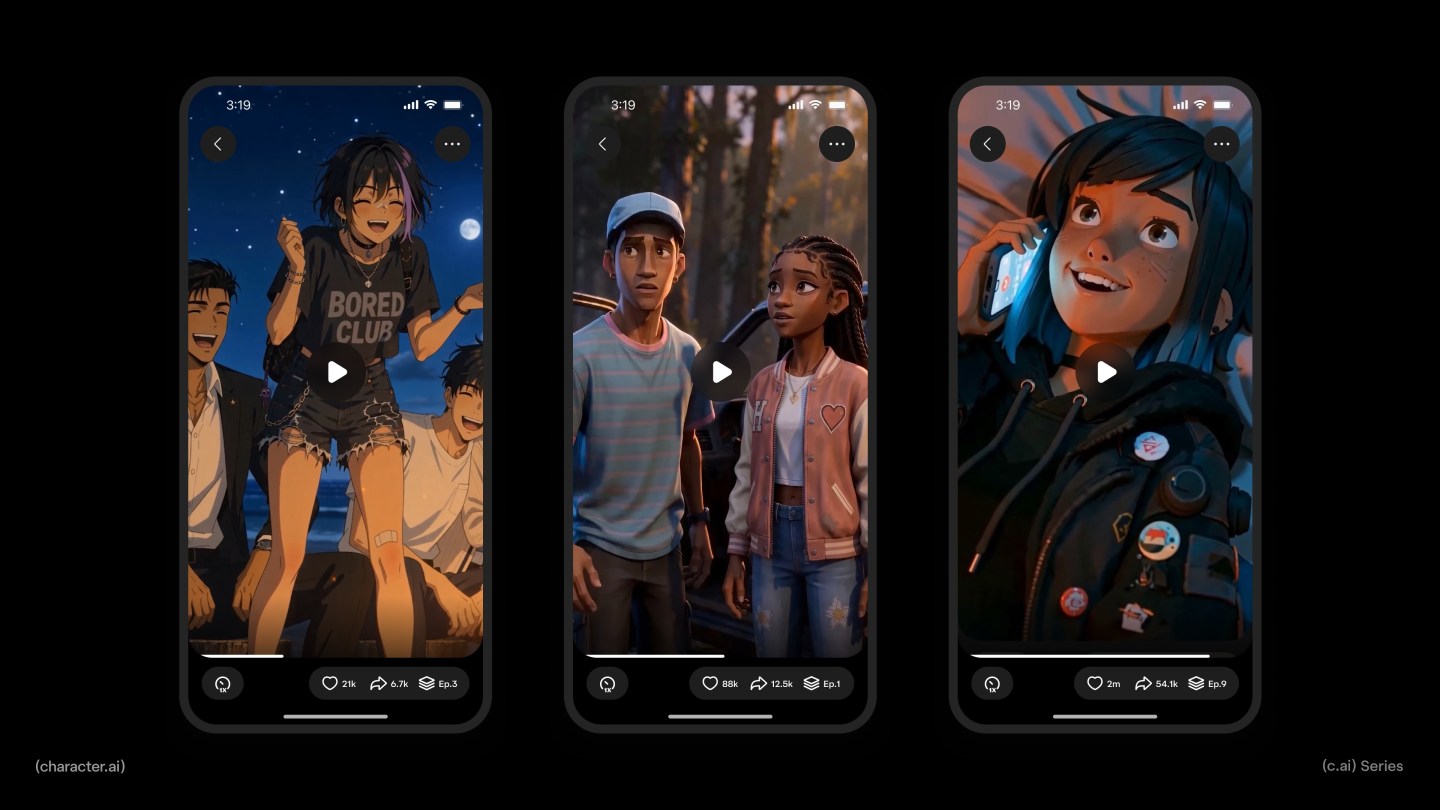
Variety: a column argues microdrama is one genre, not the whole format
A Variety column published this week argues that vertical is a third audiovisual language rather than a genre, and that microdramas stand in relation to it roughly as 1950s soap operas stood to television — an early form, not the medium. The author, a former television executive who now advises media companies, notes that when he convened a vertical summit in Hollywood last month, every major streamer, studio and tech platform sent representatives, weeks after a leading streaming executive dismissed the format outright at a May upfront. His firm estimates vertical video outside China will generate $150 billion this year.
That figure needs handling. It includes Meta's Reels, which the company put at a $50 billion annual run rate — meaning it measures something categorically different from Omdia's $14 billion microdrama estimate. The two numbers are not comparable and should never appear in the same sentence.
The argument survives without the number. The number is what will get quoted.
 Hernan Lopez
Shortical × PvX Partners: $100M in user-acquisition credit, not equity (catch-up, July 1)
Tel Aviv-based Shortical secured $100 million in user-acquisition financing from Singapore's PvX Partners on July 1 — one of the largest such deals in the category this year. The structure matters more than the number: this is non-dilutive credit, with repayment tied to cohort performance, a mechanism imported from mobile gaming rather than a venture equity round. Shortical previously raised $15 million in equity. The platform entered the top 10 highest-grossing US microdrama apps within a year, reports over 20 million episode views monthly in the US, and launched its first fully AI-generated series, Bound by Fire, in May.
PvX CEO Joe Wadakethalakal said what stood out was the strength of Shortical's retention metrics and the consistency of its engagement. That is a lender describing its underwriting: the loan is priced against how long users stay.
When user acquisition becomes a credit product, retention stops being a content question and becomes a covenant.
 Ed Waller
Sky × ITV: McCall concedes a Phase 2 review and a 2027 close
Following the £1.6 billion ($2.13 billion) agreement for Sky to acquire ITV's networks and ITVX, ITV CEO Carolyn McCall told media on July 6 that she expects UK regulatory scrutiny to be "very thorough and comprehensive" and to go to Phase 2, with approval taking 12 to 18 months and the transaction closing in the second half of 2027. ITV Studios spins off as a standalone listed company; McCall called a sale of it "unlikely," pointing to its £200 million acquisition of Love Productions as evidence it will be a buyer.
The timeline is the story. Sky and ITV are consolidating to defend against YouTube and Netflix, but in the UK, mobile-first vertical apps already out-engage some major streamers on daily usage. The defence takes 18 months to authorise.
A defensive merger that takes eighteen months to clear is a plan for a market that will have moved by the time it closes.
 Scott Roxborough
✱