ReelShort was thinking about a larger Bound by universe before the first season had proven anything. In this BKSTG conversation, Head of Content Abby Dzeng and Senior Executive Producer Bofan Zhang explain the greenlight logic behind the platform's franchise move, what "cinematic" actually instructs a crew to do inside 90-second episodes, and where data stops being useful to a producer.
"The question was never, 'Can we do a sequel because the first one was successful?' It was, 'Does this world have enough emotional and narrative depth to support a return?'"
Senior Executive Producer
Bofan Zhang
ReelShort
Vertical drama does not usually make sequels. The format has run on one-title-and-done economics almost since it existed: a hit gets replaced by the next hit, not extended. So when ReelShort decided to continue Bound by Honor — its adaptation of Cora Reilly's mafia romance, a show that ran 93 episodes, logged 400 million views, and topped Real Reel's list of the best vertical dramas of 2025 — it was doing something the format has little precedent for.
It also handed the writers a problem specific to romance: the central couple had already fallen in love. Romance runs on approach — the meeting, the resistance, the slow closing of distance — and Luca and Aria had used all of it: the arranged marriage, the danger, the slow build of trust. By the conventions of the genre, their story was finished. Bound by Love, the first sequel in ReelShort's catalog, had to reopen that story and convince an audience that had already watched the payoff to pay again. There was no meet-cute left to write.
Dzeng, ReelShort's Head of Content, took the commercial half of that problem head-on.
"There really is no way to guarantee a vertical's 'box office,' though I wish there was," she said. "The challenge here is to bring the fans a story that feels completely fresh, with exciting new dynamics and challenges, while maintaining the original character relationships that they have grown to love."
Bound by Honor topped our list of the best vertical dramas of 2025, and when we reviewed Bound by Love this June, one question kept following us out of the show: how do you build a sequel in a format that has never really needed one? We put that question to Dzeng and Senior Executive Producer Bofan Zhang, in writing, and asked them to walk through the decision from the inside — the greenlight, the script, and the set.
The World, Not the Title
The decision that created the problem came earlier — earlier, in fact, than the success that seems to explain it. "The 400 million views absolutely made the conversation impossible to ignore, but it was not purely a numbers decision," said Bofan Zhang, ReelShort's Senior Executive Producer. "Even when we were developing Bound by Honor, we were already thinking about the possibility of building out a larger Bound by universe. That was because the story had a strong emotional engine, the characters had unresolved tension, and the IP gave us a world that could grow beyond one title."
"Internally, the question was never simply, 'Can we do a sequel because the first one was successful?'" Zhang said. "It was, 'Does this world have enough emotional and narrative depth to support a return?' With Bound by Love, the answer was yes."
That kind of claim is easy for any platform to make after a hit — the interesting part is the detail Zhang volunteered to back it up. The Bound by universe was under discussion, she said, while Bound by Honor was still in production, before anyone knew it would reach 400 million views. If true, that timeline is the difference between a sequel decided by a spreadsheet and one the team was already building toward.
Dzeng described the same threshold from the audience side. "When a show garners that level of viewership, we start looking at the title from a wider perspective, including its character archetypes and world building," she said. "People love the plot and the characters, sure, but there's also something about that world that immerses them. These are the worlds that we choose to build our sequels in."
That is also how Zhang now talks about IP evaluation in general. Bound by Honor had the advantage of coming from one of Cora Reilly's most recognized titles, with an active, emotionally invested fandom and a core fantasy that had already been proven — arranged marriage, danger, power, innocence, loyalty, and the slow build of trust between the leads. But the lesson, she said, was not simply to option books with fans attached.
"It taught us to evaluate IP less as a title and more as an emotional architecture," Zhang said. "Does it have a relationship dynamic that viewers can understand immediately? Does it have visual, high-stakes moments that work on a phone screen? Is the fantasy clear enough for new viewers while still honoring what existing readers loved?"
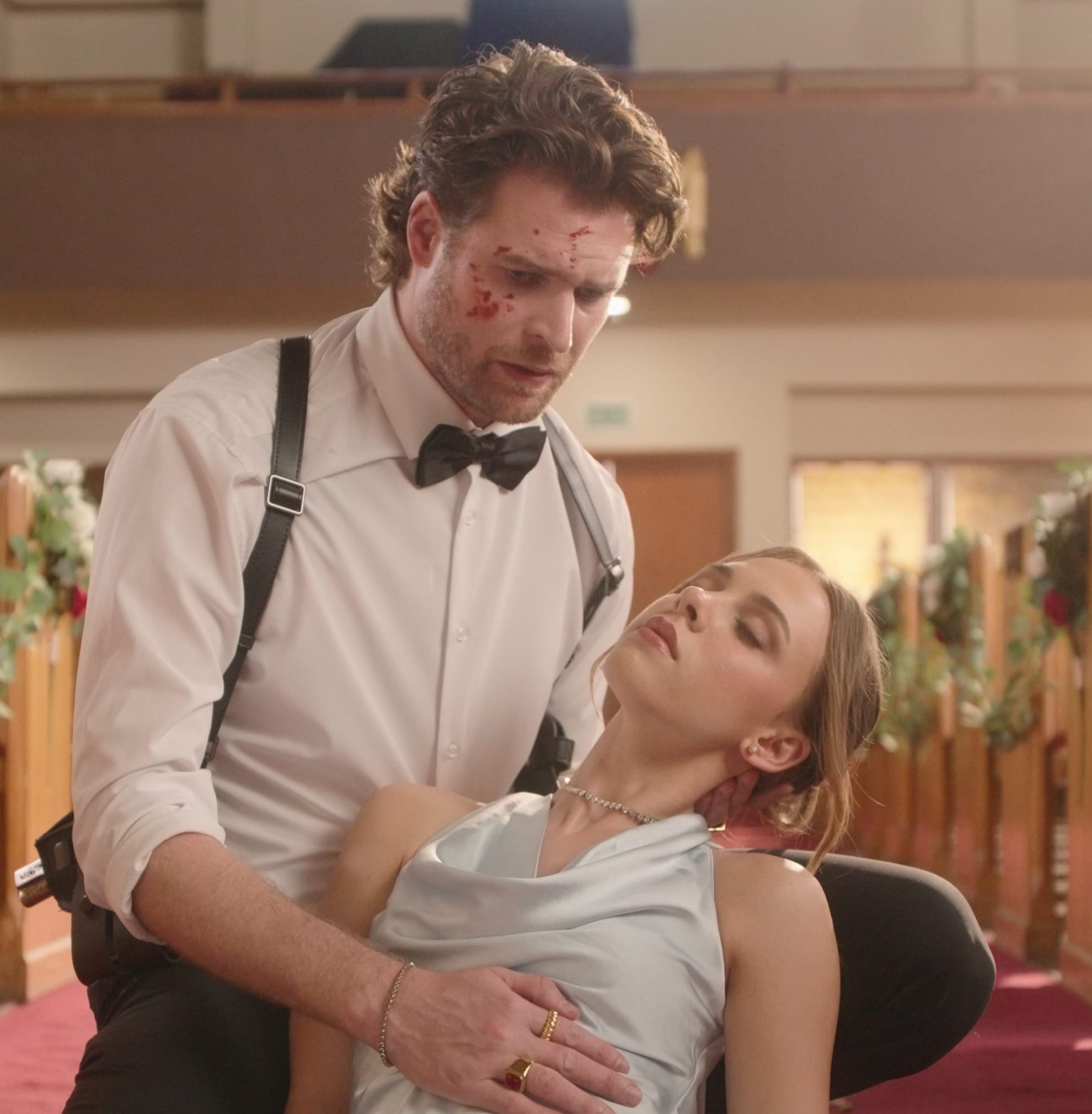
"It is hard to grasp the fact that most of these on-the-nose repetitions are necessary, and could even make or break a vertical sometimes, when the art of subtext is so highly praised."
Head of Content, Abby Dzeng, ReelShort
Writing Around the Meet-Cute
At the script level, that architecture had to hold for two audiences at once: viewers arriving fresh, and viewers returning from Bound by Honor with a relationship to the leads already in place.
Dzeng's team leaned on constant callbacks — reminding viewers how the characters got here, what their relationship currently was, what new challenges they were facing. But the show could not simply extend the first season either. "We approached it more like two familiar characters experiencing a brand new story together," Dzeng said. Having the novel to work with helped — "I'm sure it was written with a similar goal in mind" — but the hardest part, she said, was keeping the tone and feel familiar enough for the viewers who loved Bound by Honor while delivering something entirely different, and thus worth paying for again.
"We wrote the script with the understanding that not everyone who saw Bound by Love necessarily watched Bound by Honor, but also the hope that most people who watched Bound by Honor would want to check out Bound by Love," Dzeng said. "Every script-level decision was aiming to satisfy both types of audiences."
Writing for two audiences at once is the kind of counterintuitive demand the format keeps making — and the reason Dzeng pushes back on the assumption that short means easy. The steepest learning curve for traditional screenwriters, she said, is pacing and scene design — starting with something viewers notice too: the repetition of certain lines and information.
"It is hard to grasp the fact that most of these on-the-nose repetitions are necessary, and could even make or break a vertical sometimes, when the art of subtext is so highly praised," she said. "I always tell them it really is a science. Once they understand the science, they can start making art on the basis of it."
There is no easy fix, in her experience — "just like there is no easy way to pick up chemistry." Her advice is volume: watch as many successful verticals as possible. "Pattern recognition is a powerful thing."
Cinematic Doesn't Mean Slower
The production faced its own version of the same demand. Zhang had described Bound by Love elsewhere as both "intimate and cinematic," so we asked her what that word actually instructs a crew to do inside a 60-to-90-second episode — and her first move was to take the obvious meaning of it off the table.
"Cinematic needs to be redefined in the context of microdrama," she said. "It does not mean turning a microdrama into a traditional film or prestige TV show. In fact, if you follow that pacing too closely, it often does not work, because of the different viewing behavior, ad performance logic, and emotional consumption."
For Zhang, cinematic in Bound by Love — and across ReelShort's slate — is really about precision: not longer takes or slower pacing, but using cinematography, lighting, production design, blocking, and performance to serve a dense emotional narrative that a phone screen has to deliver instantly. "On a phone screen, the audience needs to understand everything quickly: power, desire, danger, betrayal, love, and mistrust," she said. "A beautiful shot that carries no emotional information is not valuable in this format."
The difference between the two productions was how confidently that standard could be applied. On Bound by Honor, the team was still working out how to translate the novel into ReelShort's language: how much world-building the format could carry, how quickly the central relationship had to land, how to make the mafia fantasy feel clear on a phone screen.
"With Bound by Love, we had a much sharper understanding of what the audience was responding to," Zhang said. "We were more decisive and precise about which emotional beats needed to be pushed."
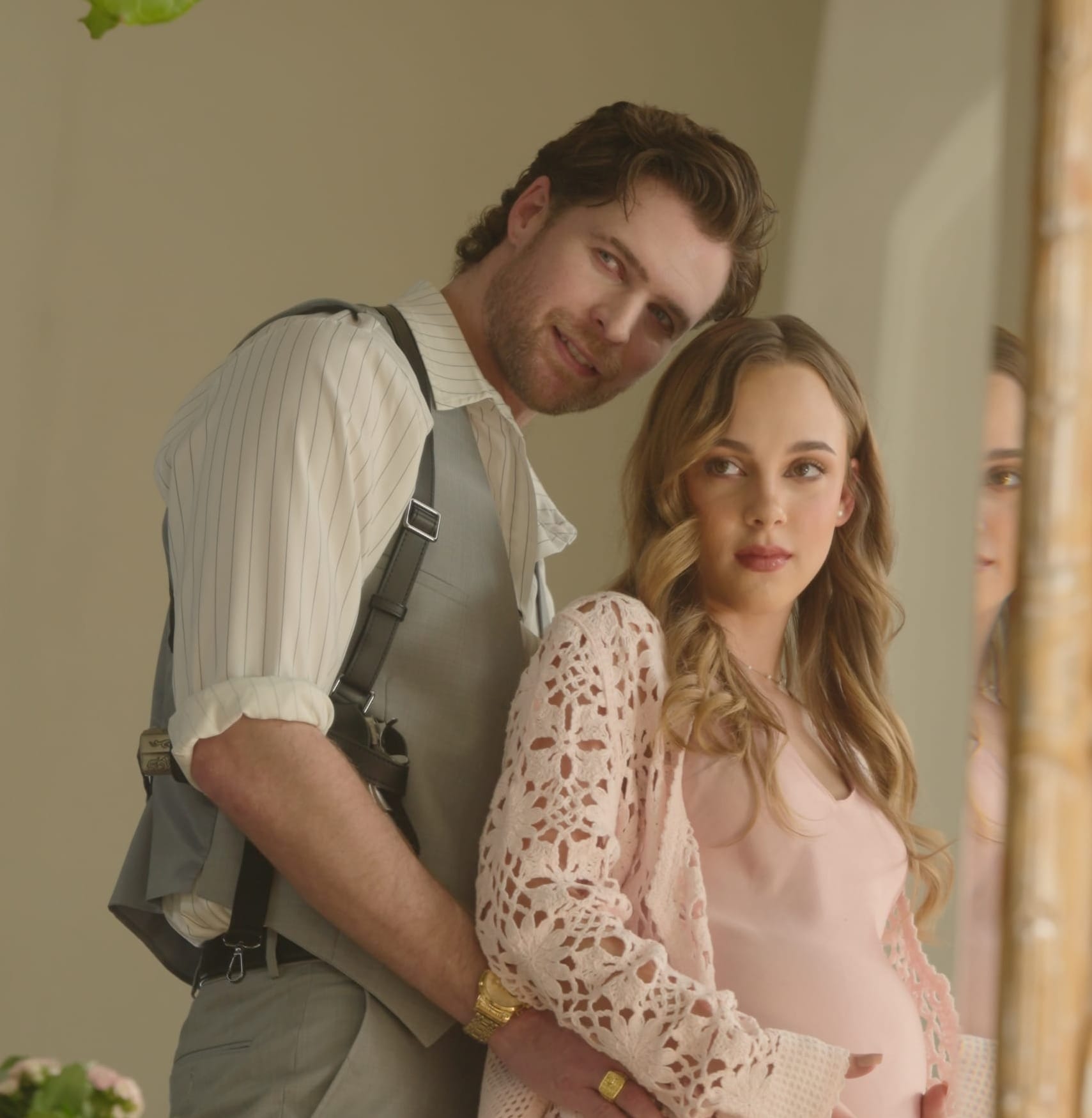
"Microdrama can be data-informed, but it cannot be data-created."
Senior Executive Producer, Bofan Zhang, ReelShort
What the Data Can't Tell You
Knowing which beats to push sounds, in this industry, like a data question, so we asked Zhang what analytics consistently fail to capture. She drew the line more carefully than we expected: data can show where audiences pay, where they drop off, which episodes perform better — but not why.
"What it cannot fully tell us is how they felt in those moments," she said. "That is where producers still have to interpret the emotional reason behind the behavior."
Experienced writers and producers have watched hundreds of microdramas, she said, and start to recognize patterns quickly — whether a story engine has enough momentum, whether a character dynamic feels fresh, whether an emotional payoff will actually work in the format. But that judgment has to run ahead of the numbers.
"Data is usually looking backward, while producers have to make decisions before the audience has seen anything," Zhang said. "The tricky part is that the market keeps changing, and the audiences constantly want a new flavor. So our methodology has to evolve too. My take is that microdrama can be data-informed, but it cannot be data-created."
The format moves forward, she said, because creators keep innovating on top of what has already been proven — and that "still comes down to instinct, craft, and the genuine human feeling we bring as storytellers."
Not a Studio Yet
A platform extending its biggest title into a franchise is starting to behave like a studio, so we asked Zhang if that framing was fair. She was careful with it: the format has proven itself, she said, but the industry system around it is still being built.
The comparison she offered was Netflix. Streaming launched in 2007, and shows like Lilyhammer and House of Cards proved audiences would accept original programming from a new kind of platform — but Netflix did not become a true studio overnight. That next phase came with global distribution, a real original slate, long-term creative relationships, major talent deals, and physical production infrastructure.
"I could only say that the biggest shift is that people are no longer comparing microdrama to traditional television," Zhang said. "They are starting to judge it on its own terms."
What comes next, in her view, is building a real ecosystem around the format: franchises instead of one-off hits, long-term IP, investment in creative talent, refined production methodology.
Bound by Love opened to 23.7 million views in its first days on platform — an early sign that vertical drama audiences will follow characters across installments, and a first data point for the ecosystem Zhang describes. Our own review of the series was less settled on whether the sequel earned that follow-through: we found Bound by Love leaning on intimacy where Bound by Honor built on desire, a trade we weren't sure the show meant to make. Zhang and Dzeng didn't say what happens next in the Bound by universe — whether the rest of Reilly's Born in Blood series is in development, or whether this becomes ReelShort's model for its other hits — so the franchise Zhang describes is still, for now, a franchise of one.
 Amy
Amy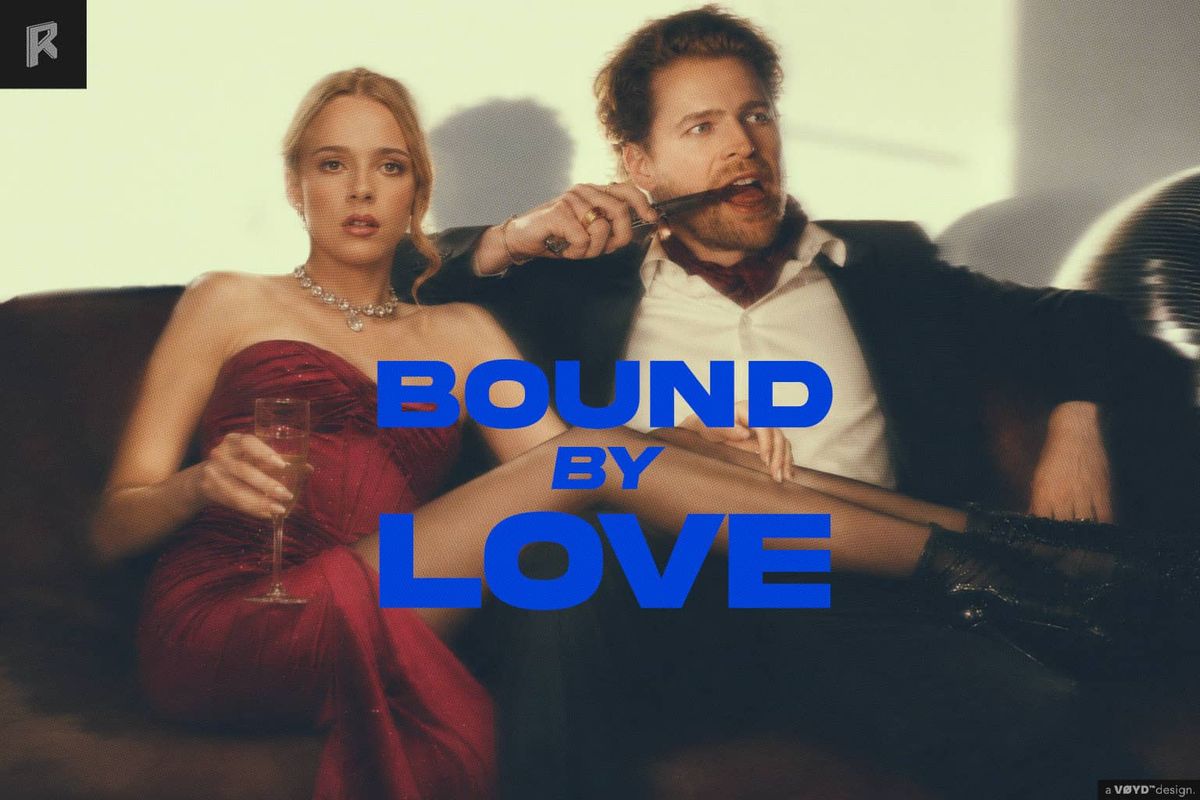
Dzeng agreed the format is evolving faster than traditional film and TV, and that the industry is still learning as it goes, trying to build a firm foundation for writers. For the vertical writers she knows, she said, that is precisely the appeal: "It's still a big mystery to be solved."

If This Found You More From the Field From the Same World
BKSTG: Producing a Vertical Drama on Your Own Terms
Producer Lee C. Zhang on making His Princess from Nowhere with no platform brief, eight days on set, and a cinematographer's approach to a format that usually doesn't allow for one.
 Real Reel
BKSTG: Formula 1 Without Formula 1
Inside the LED volume and AI pipeline that turned one retired racing car into a full Formula 1 championship.
 Real Reel