The LGBTQ+ streaming wars never ended — they just changed shape.
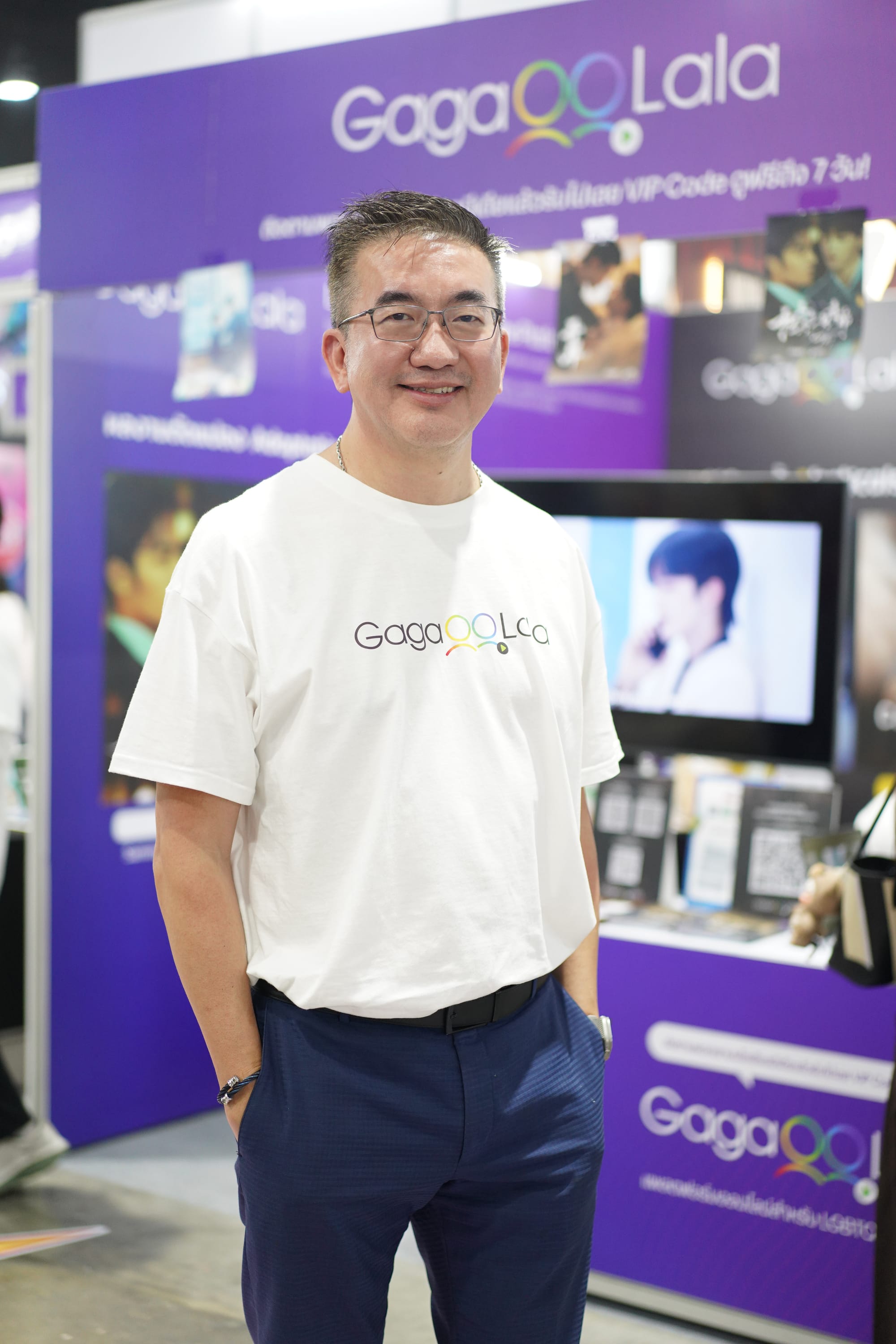
Jay Lin, the founder of GagaOOLala — the Global LGBTQ+, BL and GL streaming platform from Asia, with 5.5 million members across 248 territories. In this R:ID conversation, he talks about how it survived the streaming wars, the vertical moment he couldn't ignore, and why the next decade is about building ecosystems, not catalogs.

⁙
Opening
If you don’t move, then you die. That’s where we are with vertical.
There are two kinds of people who built streaming platforms for LGBTQ+ content in Asia: those who didn’t survive, and Jay Lin.
GagaOOLala launched in Taiwan in 2016, when the market for queer streaming outside the Hollywood mainstream barely existed as a category. What followed wasn’t a smooth ascent — it was nine years of navigating content gaps, audience fragmentation, technology debt, and the steady encroachment of platforms with budgets that dwarfed anything a niche operator could field. Netflix started buying BL (Boys’ Love, the popular genre featuring male-male romance). HBO noticed GL (Girl's Love). Disney+ began its own LGBTQ+ programming push.
GagaOOLala survived anyway — and then, earlier this year, it moved into vertical drama.
Jay Lin is the founder and CEO of Portico Media, GagaOOLala’s parent company. He has been a filmmaker, a media executive, an LGBTQ+ rights advocate, and one of the architects of Taiwan’s marriage equality movement. He is also, as he freely acknowledges, a 52-year-old man who found himself getting pulled into vertical drama content he had no intention of watching.
We spoke over Zoom — Lin from Kaohsiung, Taiwan — about why the streaming moment has passed, what made vertical drama feel like 2016 all over again, and what GagaOOLala needs to become in order to still matter in five years.
⁙
Q&A
R:ID:
You’ve lived through cable TV, OTT, the BL explosion, the streaming wars. If you had to pick one inflection point that was most underestimated — what was it?
Jay:
There are two. One is from our own perspective as an operator, and one is from the industry side.
From our side: technology. We weren’t a tech company that happened to do content, we were a content company that had to build technology as we went. Companies like Netflix or Amazon came from a tech background, so their UI, their infrastructure, their platform architecture, that was already built into their DNA. For us, every technical upgrade was a grind.
We were building the runway while trying to take off.
And I think I underestimated how much that gap would cost us, in time and in strategy.
The industry-level underestimation is different. It’s niche content. Streaming is fundamentally good at one thing: taking fragmented audiences scattered across geographies and clustering them. You can build a genuine global service around a community that no single territory could sustain on its own. That should have been obvious to everyone from the beginning. But the assumption was that you needed to be Netflix-scale to win. What’s actually emerging now is something different — not a second Netflix, but a lot of smaller, tighter communities with real economic weight. Creators going straight to YouTube subscriptions, merchandise, community-building, fan economies. That model is working.
R:ID:
Netflix is buying BL. Disney is doing LGBTQ+ content. Prime is everywhere. What is GagaOOLala’s actual moat?
Jay:
Honestly, a few things. Part of it is just operational. Our base is in Taiwan, in Asia — so our costs, people, infrastructure, everything, are significantly lower than if we were running this out of France or the UK or the US. That’s not glamorous, but it’s real, and it matters enormously for sustainability.
Then there’s the content. There’s still a large body of BL, GL, and LGBTQ+ content from Asia that mainstream platforms haven’t moved on yet. Netflix is paying attention now, HBO started noticing after things like Heated Rivalry — but for a long stretch, while all of this was exploding in Asia, the major platforms weren’t there. We were. That window wasn’t nothing.
And then community. We run 39 social media channels — Thai, Chinese, English, Spanish — talking to gay audiences, lesbian audiences, different communities within LGBTQ+. That kind of grassroots building is something a platform like Netflix doesn’t do and honestly can’t do.
They’re a mass platform. We’re a destination. The people who come to us have usually already found us through some kind of discovery or reference path — they’re not stumbling in.
That’s a fundamentally different relationship.
R:ID:
You’re an activist and a commercial founder at the same time. Has one ever genuinely gotten in the way of the other?
Jay:
All the time. It’s a constant tension.
The founding instinct behind GagaOOLala was representation — giving visibility to LGBTQ+ identities, stories, and communities that weren’t getting it elsewhere. If I had to put it in one word: representation. That’s why we exist.
But the commercial reality is that not all representation performs equally. Gay male content — BL — has a paying audience that’s large and growing. Lesbian content has an audience, but reaching them has genuinely been harder for us. I’ll be honest: I’m a gay man, and I’ve wondered whether I have certain blind spots when it comes to understanding what the lesbian audience actually wants, or whether our current approach is somehow mismatched with how that community communicates. Transgender content is even harder — the audience is more globally fragmented, and it’s difficult to build the critical mass you need.
But we still bring it in. We’re not going to abandon those categories. What I’ve had to make peace with is that sustainability requires a certain amount of prioritization, and that prioritization doesn’t always feel good when you look at it against the original mission. If we’re not still here in ten years, then we can’t represent anyone.
It’s representation versus sustainability, and finding a long-term approach to that tension.
R:ID:
In the past two years, has there been a piece of user behavior data that genuinely surprised you — something that actually changed a decision?
Jay:
TV apps. We spent significant resources building out our connected TV presence — Amazon, Roku, Samsung, LG, Android TV. We had reasonable expectations for uptake, especially in Western markets where CTV penetration is high.
It didn’t perform the way we expected. And when I look at why, I think the answer is fairly straightforward: our audience skews young, and young audiences don’t throw content onto the big screen the way an older demographic might. They’re watching on phones and laptops. They want mobile-first.
The intimacy of watching on your own device — not in a shared living room — is actually part of how this content gets consumed.
That realization changed how we think about product investment. We’re not abandoning TV, but we recalibrated. Mobile is where our audience actually is.

▙ ▙
... The people who come to us have usually already found us through some kind of discovery or reference path — they're not stumbling in...
R:ID:
If you were starting GagaOOLala from scratch today, would you still build a subscription streaming platform?
Jay:
No. The window has closed.
I want to be clear: I’m not saying GagaOOLala was a mistake. We launched in 2016 when we were one of the only OTT platforms in Taiwan. The timing made sense.
But you’re not going to build another GagaOOLala today, the opportunity is gone, the dust has settled.
If I were starting from scratch now, I think streaming would only be one small component. Look at what Thai studios like GMM are doing — they’ve largely moved to YouTube for their international distribution. YouTube monetization, ad revenue, fan economy, talent management, licensing, sponsorship. Streaming is just one revenue line, not the whole business.
What I’d build is probably a set of drones, not an aircraft carrier. Go fast, stay light, find the markets where there’s still room, ride the platforms that already exist. I’d be the drone that works alongside the aircraft carrier — not the one trying to build another carrier from scratch.
R:ID:
When did you personally become convinced that BL would travel globally? Not from data. Was there a specific moment?
Jay:
I think the honest answer is that I was always more cautious than optimistic about it, at least in the early years.
Asian LGBTQ+ content didn’t have real global visibility for a long time. What changed things was what happened in Thailand around 2020 with BrightWin’s 2gether, the BL series that broke through, Addicted in China, that whole wave. That was the first time I saw the content actually pull an international audience, not just an Asian diaspora audience. Investors started paying attention. Production companies started paying attention.
Before that, pushing Asian LGBTQ+ content to global markets was genuinely difficult. After that, you could feel the foundation shift.
It stopped being something you had to convince people was real, and started being something you had to figure out how to execute on.
What I think is interesting now is that the genre question is becoming less and less relevant. Is this BL? Is this LGBTQ+? Is this mainstream? The boundaries are blurring. East and West, Asian story with Western cast, Chinese production scale, it’s all mixing. What determines whether content travels globally isn’t the genre anymore. It’s the execution. The cast, the storytelling craft, the IP strategy, the partners you bring in to push it.
Many countries might restrict BL or not be friendly to same-sex content, but that’s a government regulation issue, not a reflection of what consumers actually want to watch. Those are two different things.
R:ID:
GL grew 750% in 2025. Do you think it follows the same road as BL, or does it have a different market logic?
Jay:
Both surprised me and didn’t surprise me.
The surprise: that 750% increase did not happen on GagaOOLala. We’ve been building the lesbian audience for years and it hasn’t been easy. Finding that community, speaking to them in a way that actually lands — there’s something about how we’ve been communicating that hasn’t fully connected yet. I’ll admit that. So when I see that number from the broader market, I’m genuinely puzzled about why we’re not capturing more of it.
The part that doesn’t surprise me: I’ve seen what’s happening with Thai GL. Go to Thailand right now and look at who’s on the biggest out-of-home advertising boards — everywhere. Actors like Rambeeb, LingLing, Orm, they’ve basically taken over. They’re showing up at Cannes Film Festival, at Paris Fashion Week. The economic power is already there.
And what makes them different from a K-pop group is that they’re a couple — there’s an intimacy to it, a girl-power energy that’s distinct. They can act, sing, dance. They look gorgeous. And whether they’re performing together or separately, they’re just bound for fandom.
They could form a girl group or keep acting — they have so many directions to go. That’s a lot of longevity.
What’s different about GL from BL is that GL still has first-mover runway. There aren’t that many established GL actors yet, so the ones who break through early will capture a disproportionate share of audience loyalty. The idol economy is forming — BL already figured this out, GL is only starting to unlock it. When it fully unlocks, the scale could be significant.
R:ID:
GagaOOLala entered vertical drama earlier this year. Other platforms moved in 2023, 2024. Why did you wait, and what finally made you decide you couldn’t?
Jay:
I didn’t decide in a conference room. I decided because I got pulled into content I had absolutely no intention of watching.
I’m a 52-year-old man. I don’t normally watch dramas about stepmothers and inheritance conflicts or CEOs and their secretaries. But the vertical drama ads started appearing everywhere — not just on DramaBox or ReelShort, but woven into my regular social media. And at some point I found myself watching. The hook mechanics, the pacing, the way these things are constructed, it’s completely different from long-form. I didn’t choose to engage, I was pulled in.
That experience as a consumer told me something.
If this format can capture someone like me, it can capture anyone who’s predisposed to this kind of storytelling. The pull is real.
The strategic confirmation came from two other directions. I’ve had conversations with people working inside the Chinese vertical content ecosystem, and what they’re doing feels like a second revolution. I remember being at Cannes Lions in 2019 and watching Jeffrey Katzenberg and Meg Whitman pitch Quibi — short-form content, mobile-first. That was the early version of this idea. It didn’t work then, partly because the conditions weren’t right. But the underlying logic was sound. What I see now looks like that vision, matured.
We also looked hard at whether to build a separate app or integrate vertical into GagaOOLala. We decided to integrate — one platform, where if you have more time you go to long-form, if you have less time you go to short-form. Then we started sourcing content. And what we found was that there was already enough available to start experimenting without producing anything ourselves yet. So we did.
The decision wasn’t complicated in the end. If you don’t move, then you die. That’s where we are.
R:ID:
Your core users associate GagaOOLala with quality. How do you manage that brand tension when vertical drama sits next to your high-budget originals on the same platform?
Jay:
Most BL content — the majority of what we have on the platform — is not arthouse. It’s popular, accessible, genre storytelling. The content you might think of as representing “GagaOOLala quality” — the kind of LGBT film that might screen at Berlin or Cannes — that content actually already struggles on our platform in terms of viewership. It doesn’t perform as well as people might assume.
So when you ask about brand tension: that arthouse category isn’t really what’s going on GagaOOLala’s vertical feed. What we’re focusing on is BL, GL, dramatic and romantic content, and that stuff actually fits vertical well. The storytelling beats, the emotional hooks, the way these narratives are structured, it works in short-form.
Where it really would be a problem — what you might call a dissociative experience — is if we tried to put genuinely artistic, experimental LGBT content into vertical format. The format and the content would be fighting each other. That’s not what we’re doing. We’re being selective, and for the categories we’re focused on, the format fits.
R:ID:
You’ve mentioned using vertical to pilot-test IP before committing to a full series. What happens when the vertical format itself has already shaped what the audience expects — and that limits what you can do next?
Jay:
It’s a real risk, and yes, for certain types of IP it would be a problem. For content that’s intrinsically more niche or artistically driven, taking it vertical would essentially pre-define how the audience reads it in ways that could close off other possibilities.
But for the categories we’re actually focused on — BL, GL, romantic and dramatic content — I think the calculus is different.
Making a long-form series from scratch is an enormously long process. Development, funding, sponsorships, casting, production, post-production, distribution. Months, sometimes years. Multiple stakeholders, significant capital at risk, before you have any signal from an actual audience.
Vertical changes that equation. You have an IP, you build a short-form version — ten, twenty, thirty episodes — and you get real feedback quickly.
Do people like these characters? Does this story work? Is there a hardcore fan base forming? If yes, you have something concrete to build from, those early fans can become a community, give you feedback, tell you what’s working. If no, you’ve learned something valuable without betting everything on it.
We’re actively thinking about whether vertical can serve as our pilot testing infrastructure for future productions. If we move into original production in 2027, I want a way to validate the IP before we commit to the full investment. Vertical might be that way.


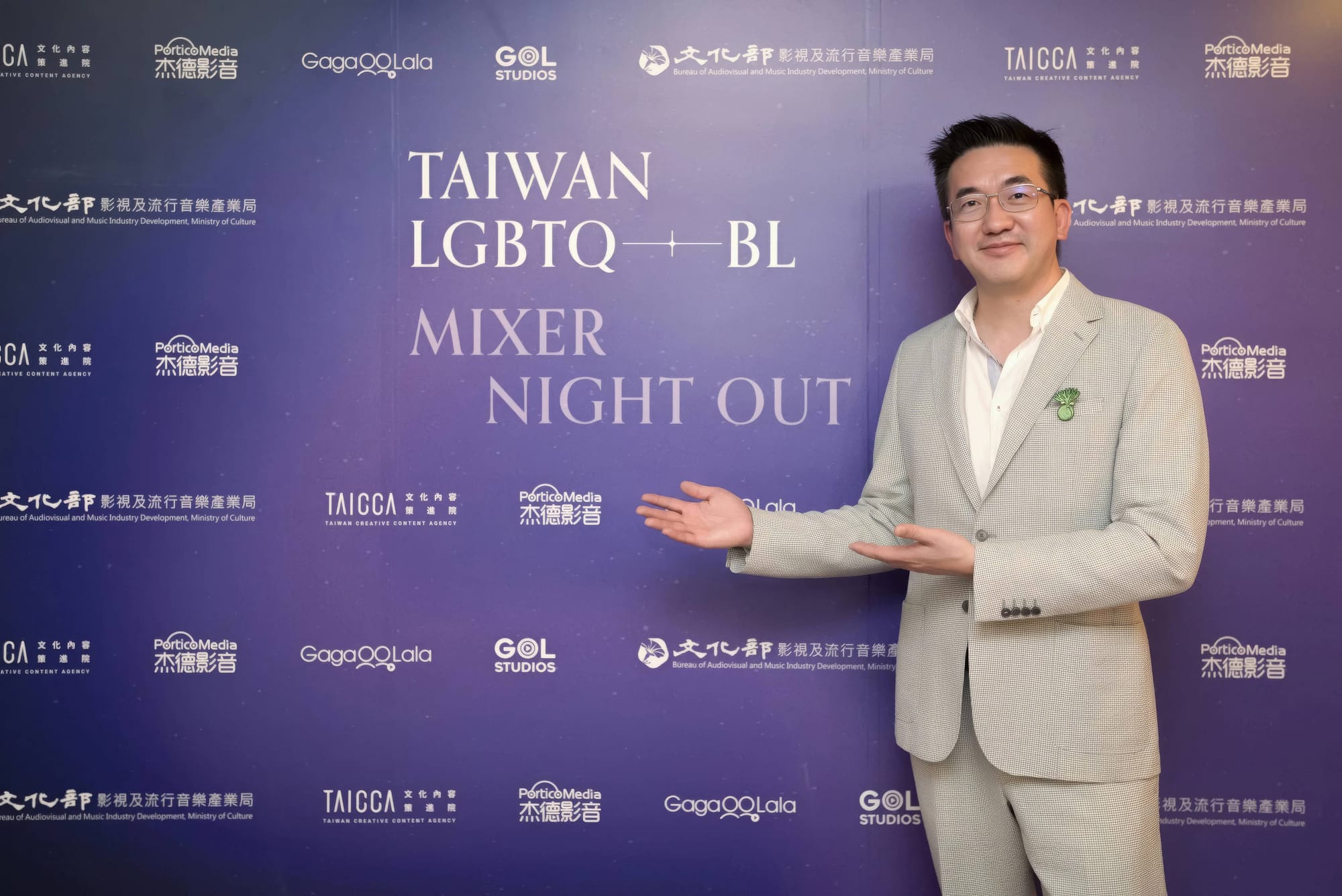
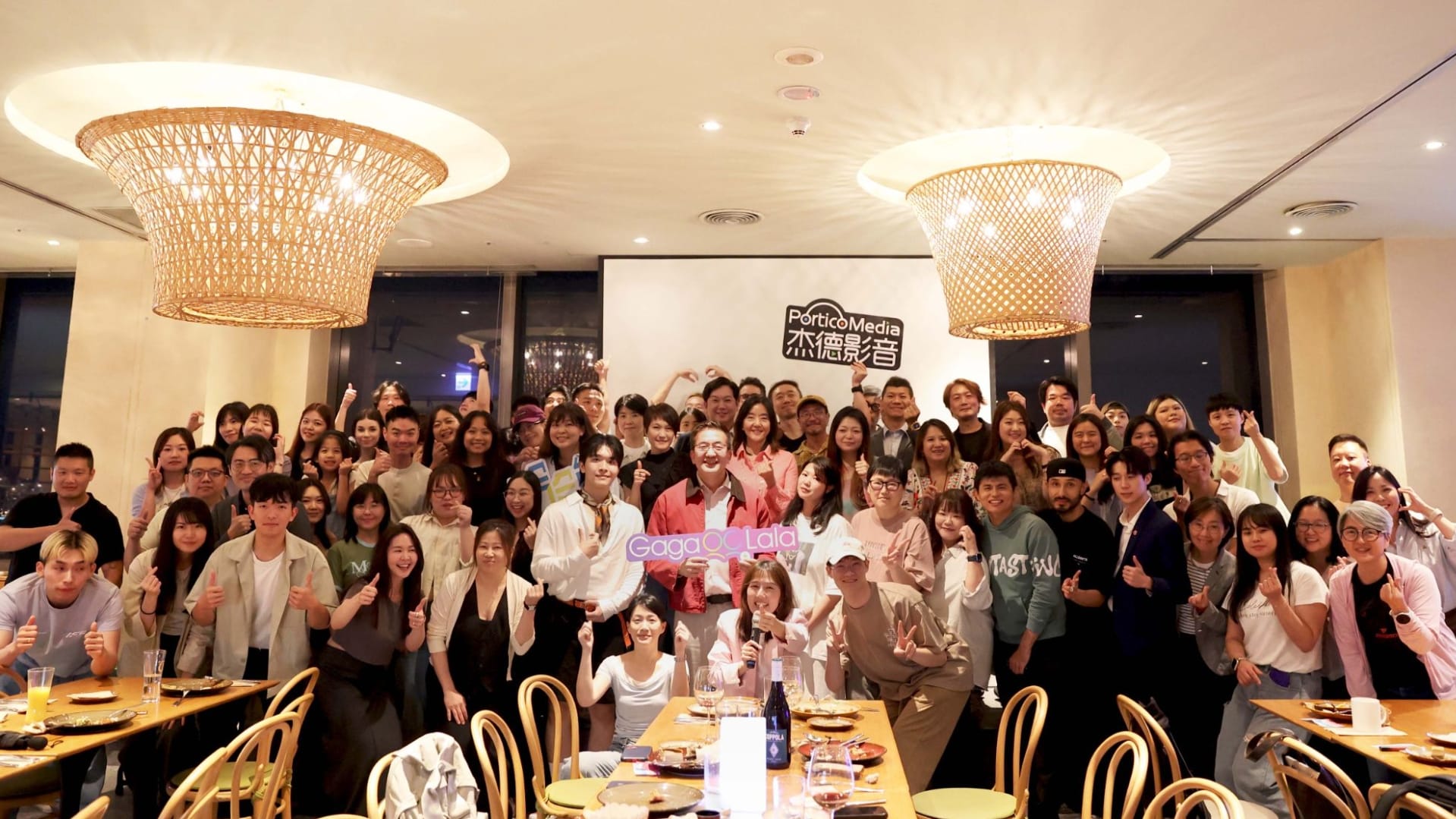
Images courtesy of GagaOOLala. All rights reserved.
R:ID:
BL, GL, vertical, AI — rank these four by how much they’ll reshape GagaOOLala over the next decade.
Jay:
BL first. It remains our core.
Then vertical — that’s where we are right now, that’s the next structural shift.
Then GL, then LGBTQ+ more broadly.
AI I’d put outside this ranking entirely — not because it doesn’t matter, it matters enormously — but I think of it as a production tool that cuts across everything else, not a content category of its own.
R:ID:
For a creator making their first BL, GL, or vertical series right now, where is the real opportunity?
Jay:
Don’t do what’s already been done. That’s the advice. I’ll also say — I don’t always follow it myself, because it’s genuinely hard.
The temptation is to look at what’s working and replicate it. But if several companies have already executed on a formula, you’re entering a red ocean. That market can be brutal.
The harder path is finding the blue ocean — the story, the format, the audience combination that isn’t saturated yet.
That takes real courage and real research. But that’s also where the asymmetric opportunity is. The person who gets there first gets to define what it looks like.
That’s what I tell people. And then I have to remind myself the same thing, because knowing the advice and doing it are two very different things.
R:ID:
Five years from now, someone writes the story of GagaOOLala. What do you want that story to say was the core judgment you made — not the achievement, but the bet?
Jay:
That we understood, early enough, that this was never just about buying and selling content. Or making it and distributing it.
What I want to build is an ecosystem. Something that connects production and distribution and community and talent and IP in a way that’s bigger than any single one of those things.
We’re already starting to feel that what we do exceeds pure content transactions — there’s community infrastructure, there’s talent relationships, there’s market intelligence, there’s the ability to move culture in certain directions.
The bet I want to be remembered for is that we saw this platform as the beginning of an ecosystem, and that we built toward that, even when the easier and more obvious move would have been to stay in our lane as a streamer.
Whether that bet pays off, we’ll see. But that’s the direction.
⁙
R:ID Epilogue
Nine years into running a queer streaming platform, Jay Lin has arrived at a conclusion that most streaming founders resist: the platform itself was never the point.
GagaOOLala’s survival is a data point, not a template.
The conditions that made it possible — a content category with no institutional home, an audience with nowhere else to go, a window of time before the majors arrived — don’t exist in the same form anymore. What Lin is building toward now is something harder to categorize and, if it works, harder to replicate: an infrastructure for LGBTQ+, BL and GL culture that runs deeper than a subscription catalog.
The vertical bet is part of that. So is the production ambition for 2027. So, quietly, is the question of whether a platform that started as a library can become something closer to an ecosystem — one that shapes what gets made, who makes it, and which audiences find it. That is a much larger claim than “we survived while others didn’t.” Whether it can be made good on is a different question entirely.
About Jay Lin
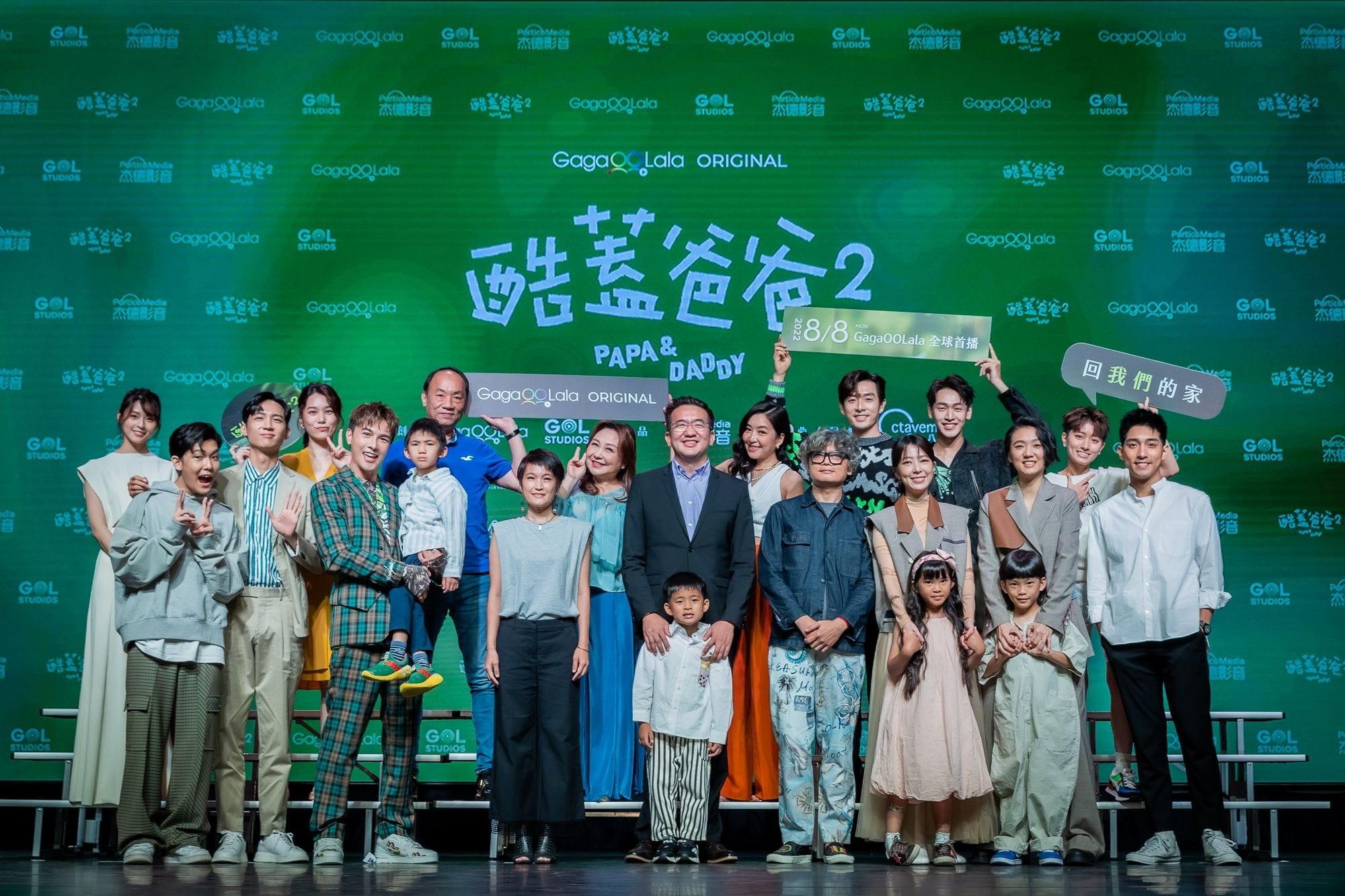
Jay Lin is the founder and CEO of Portico Media and GagaOOLala, the global LGBTQ+, BL and GL streaming platform from Asia, headquartered in Taipei, Taiwan. Launched in 2016, GagaOOLala currently serves 5.5 million audiences across 248 territories with a catalog of over 1,600 titles. Lin has been a leading figure in Taiwan’s marriage equality movement and co-produced several of the platform’s original series, including award-winning titles recognized at international festivals and by Taiwan’s Golden Bell Awards. In 2026, GagaOOLala formally entered the vertical drama space with the launch of its Verticals and Discover features.
✱

R:ID #10
╳ Jay Lin
R:ID™ is Real Reel’s interview column
on creative identity in the algorithm age,
studying not the work,
but the makers and the identities
shaped through their practice. ☻
MORE R:ID ⇲
 Real Reel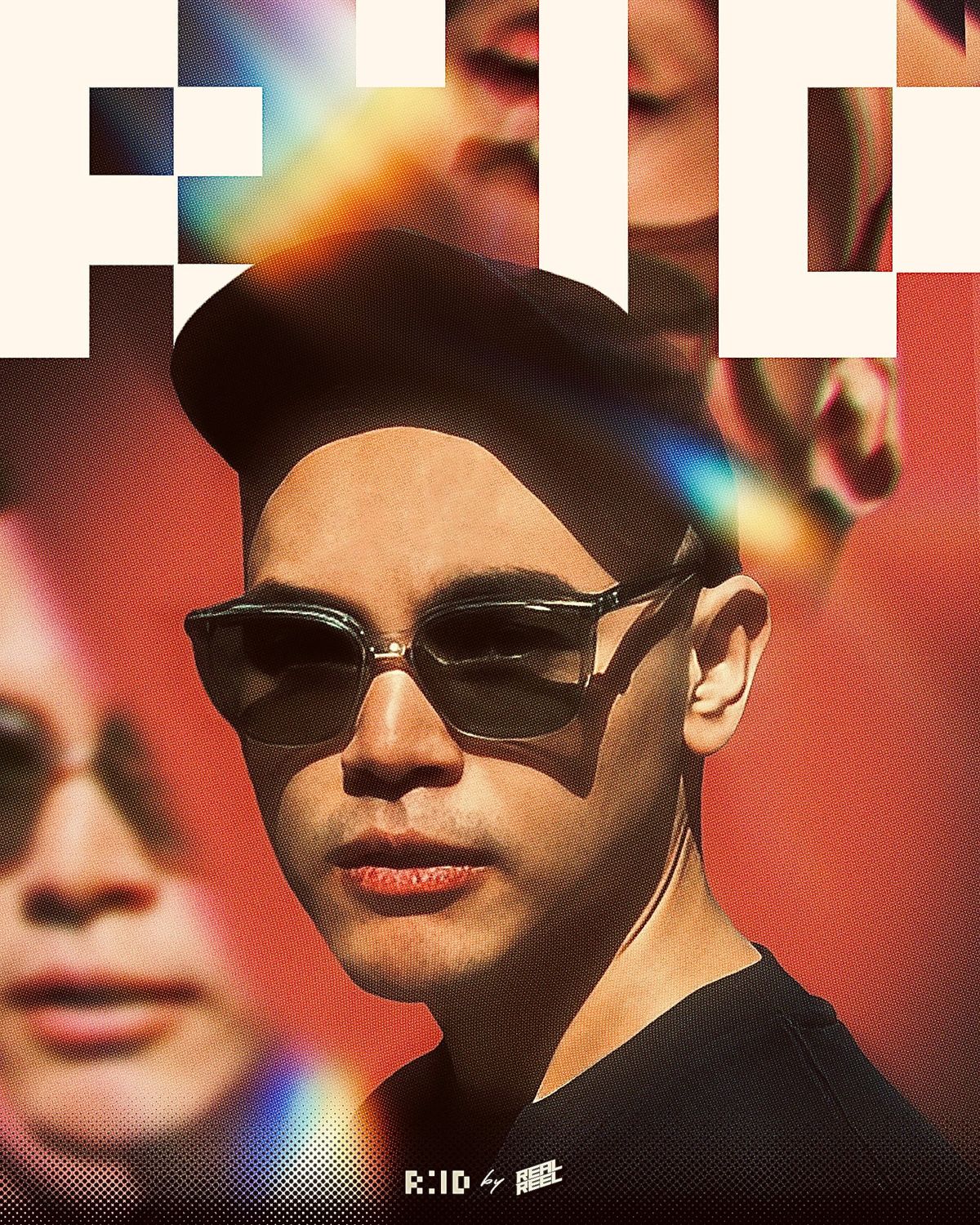
 Real Reel
 Real Reel