Top 20 Vertical Drama Apps in the U.S. (2026)
The U.S. vertical drama market is no longer experimental. From ReelShort to GammaTime, a new generation of apps is turning microdrama into a scalable, competitive, and increasingly industrialized streaming ecosystem.

The vertical drama market in the U.S. is entering a new phase as competition intensifies across platforms built around microdrama and vertical video storytelling. What began as a format largely driven by Chinese production models is now evolving into a global platform race, with companies competing on content, distribution, monetization, and production scale. From ReelShort and DramaBox to newer entrants like GammaTime, this list of the Top 20 vertical drama apps in the U.S. reflects a broader shift from experimentation to industrialization, signaling that mobile-first storytelling is becoming a core layer of the streaming ecosystem.
If you look at the vertical drama market from the outside, it can feel crowded, even chaotic. New apps keep appearing, catalogs overlap, and the same story structures repeat across platforms. But once you look a little closer, a clearer picture emerges.
This is not a flat market. It’s layered.
Some companies built the system.
Some are scaling it globally.
And a growing number are learning how to optimize it faster than anyone expected.
Tier 1: The System Builders
These are the companies that didn’t just enter the space. They defined how it works.
ReelShort
ReelShort still feels like the app that turned vertical drama from a curiosity into a real U.S. habit. It was launched by Crazy Maple Studio in 2022, with the app hitting the U.S. App Store in August that year, and its real advantage was never just timing. Crazy Maple had already spent years building female-skewing IP ecosystems through romance-driven products like Chapters, while its parent backing traces to COL Group, one of China’s major digital publishing and IP companies. That gave ReelShort something its rivals were still trying to assemble: story inventory, user data, and a tested understanding of compulsive serialized consumption. The breakout title everybody still comes back to is The Double Life of My Billionaire Husband, while Fated to My Forbidden Alpha helped prove how well the app’s werewolf-and-billionaire fantasy logic could travel in the U.S. market.
To know more about ReelShort:
 Real Reel
DramaBox
DramaBox is what happens when a company rooted in online reading decides it wants to own the next screen. The app launched in April 2023, but the more important story is the company behind it: StoryMatrix is the operating entity, while the larger content DNA points back to Dianzhong Technology, a Chinese digital-content company built around online literature, serialized reading, and now short drama. That lineage matters because DramaBox doesn’t feel like a single app so much as an industrialized content machine. It moves fast, leans hard into romance, melodrama, suspense and family conflict, and by 2025 it had become important enough to land in Disney’s Accelerator program. That was one of the clearest signals yet that traditional entertainment was no longer treating vertical drama as a fringe format.
Tier 2: The Global Scalers
These players understand the system, and are pushing it across markets.
ShortMax
ShortMax has become one of the clearest examples of how quickly a later entrant can catch up when it has enough content muscle behind it. The app launched in September 2023 under Jiuzhou Culture, and the company has framed it as a key part of a much broader overseas expansion play. Jiuzhou is not just dabbling in vertical drama; it is building around it. What makes ShortMax stand out is that it has never felt as narrowly “U.S.-only” as ReelShort. It built real traction in Southeast Asia and Japan while still pushing hard into North America, and its signature flavor is loud, fast, highly emotional genre storytelling: alpha romance, revenge, rebirth, family payback, underdog comeback. Titles like Forbidden Desires: Alpha’s Love and Awesome Dad show the platform’s instincts clearly. It knows that subtlety is rarely the point.
GoodShort
GoodShort feels less like a pure-play drama startup and more like an ecosystem extension from a company already fluent in digital serialized storytelling. The app launched in June 2023 under Singapore New Reading Technology, whose broader app footprint includes reading and audio products such as GoodNovel and GoodFM. That background explains a lot. GoodShort often feels more like a content library built by people who understand serialized reader behavior first and short-form video second. It has leaned heavily on romance, fantasy, and translated Chinese content, and that has helped it grow quickly among users who want volume and familiarity more than prestige. In the U.S. conversation, GoodShort matters because it shows how webnovel logic keeps feeding the vertical drama pipeline.
NetShort
NetShort came later than some of the better-known apps, but it arrived with a very familiar strategic pattern: start with translation and proven story logic, then push toward originals once the traffic is there. The app was released in the U.S. in July 2024 through NETSTORY PTE. LTD., and the content pipeline is closely tied to Maiya Culture, a Chinese short-drama company. That connection helps explain why NetShort has felt efficient from the start. It is built by people who understand that translated libraries can open the door, but localized originals are what help an app stop looking disposable. NetShort’s on-platform positioning leans into tightly packed, addictive plotting, and the company’s own marketing increasingly frames it as a destination for viral, high-intensity drama rather than a dumping ground for recycled catalog.
To know more about NetShort:
 Real Reel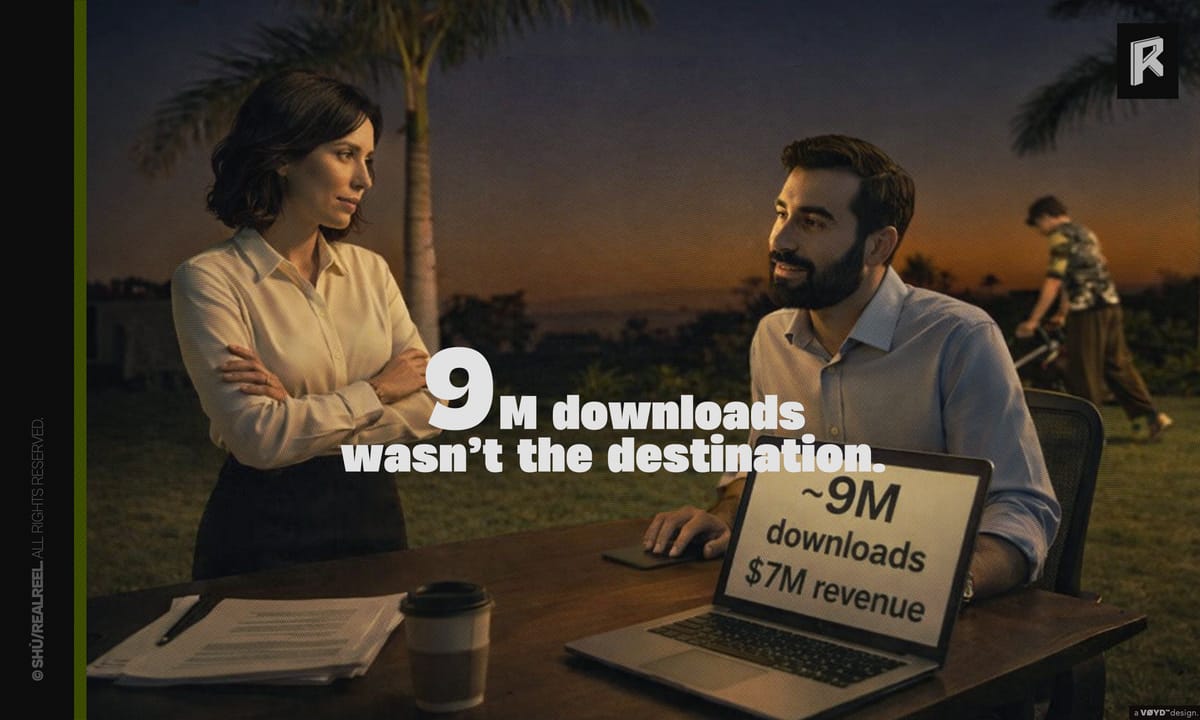
Tier 3: The Infrastructure & Tech Layer
Where the conversation starts moving beyond content.
DramaWave
DramaWave is one of the more interesting second-wave players because it sits so close to an AI company that is trying to turn infrastructure into entertainment. The app launched in September 2024, and it is operated by Skywork AI under the broader Kunlun Tech universe. Kunlun does not describe itself as a traditional studio; it talks about AGI, AIGC, models, and commercialization. In that context, DramaWave is not just a content app. It is part of a larger attempt to fuse AI tooling, recommendation, and short drama into one system. The platform pitches a huge multilingual catalog, but what really makes it notable is its position inside a company that also launched an AI short-drama creation platform, SkyReels. That makes DramaWave one of the clearest signs that the next competition may not just be about better stories, but about faster story manufacturing.
FlareFlow
FlareFlow is one of the strongest signs that COL did not intend to stop with ReelShort. Launched in April 2025, FlareFlow is another global micro-drama push from the same broader group, but its arrival suggested something bigger than sequel logic. COL was effectively testing whether it could build multiple international vertical brands at once. The company says FlareFlow focuses on emotionally charged stories with global themes and local adaptation, and it has also explicitly tied the platform to its proprietary AI tools for script development. By fall 2025 it was already climbing into the top five entertainment app ranks in the U.S., which made it less of an experiment and more of a warning shot. If ReelShort was phase one, FlareFlow looks like phase two: more scale, more output, more industrial confidence.
To know more about Flareflow:
 Real Reel
My Drama
MyDrama has a very different feel from the China-rooted giants, and that is exactly why it deserves attention. The app launched in May 2024 under HOLYWATER, a Ukrainian media-tech company that openly positions itself as AI-first and has been building across books, audio, and video. MyDrama is important not because it has outscaled ReelShort or DramaBox, but because it offers another version of the future: a vertical drama company that thinks like a startup, talks like a tech company, and uses AI not as a side tool but as part of its entire operating philosophy. It tends to present itself with a slightly slicker, more modern brand language than many of its rivals, and the company has tied the product to character chatbots and synthetic-content workflows. That makes it one of the most closely watched non-Chinese stories in the space.
To know more about MyDrama:
 Real Reel
Tier 4 — The Structured Operators
More corporate, more repeatable, more system-driven.
Vigloo
Vigloo is one of the more credible Korean entries in the global vertical drama race, and that alone makes it strategically interesting. It launched globally in mid-2024 under SpoonLabs, a Seoul-based company better known for audio and creator platforms than scripted video. SpoonLabs describes Vigloo as a short-form series service built around two-minute episodes, and that Korean origin gives the platform a different tonal identity. Where many U.S.-facing apps lean hardest into outrageous billionaire or werewolf fantasy, Vigloo often foregrounds cleaner K-drama-adjacent setups: contract marriage, secretary-CEO reunions, single-mom romance, emotional melodrama. Titles such as My Secretary Who Once Was My Wife show how clearly it understands the K-drama-to-vertical pipeline. It feels less chaotic than the market leaders, which may turn out to be either its ceiling or its edge.
To know more about Vigloo:
 Real Reel
FlexTV
FlexTV is one of the earlier overseas apps and one of the clearest examples of a public-company-backed push into short drama. The app arrived in late 2022 under Mega Matrix, a U.S.-listed company that has repeatedly described FlexTV as a core growth engine. That public-market framing changes the way the app reads. FlexTV is not just trying to go viral show by show; it is trying to demonstrate repeatable output, monetizable genres, and international partnership potential at scale. Its release cadence and official announcements make clear that romance, revenge, fantasy, and time-travel are not side categories for the company. They are production lanes. If ReelShort often feels like the category’s proof of concept, FlexTV feels more like a company trying to prove the format can sustain ongoing industrial volume.
CandyJarTV
CandyJar is one of the few vertical drama platforms whose backstory will feel immediately familiar to American publishing and romance audiences. The app launched in late 2023 under Inkitt and is explicitly part of Inkitt’s story-to-screen ecosystem, sitting alongside the Galatea reading app. That matters because CandyJar is not built around generic “content supply.” It is built around adaptation. Inkitt’s whole promise is that data can identify reader obsession early and then turn those stories into bigger commercial franchises. CandyJar carries that logic straight into vertical video. The platform’s current face is unapologetically romance-heavy, with titles like Secrets of Sin, Keily, and His Nerd, and it often feels more female-audience-specific than many of the Chinese-backed competitors. In Hollywood terms, it looks less like an app company and more like a romance IP machine discovering its video form.
Tier 5 — The Optimization Layer
Where the format becomes performance-driven.
GammaTime
GammaTime feels like part of a newer wave of U.S.-facing platforms trying to reinterpret vertical drama through a more localized lens. Unlike many of the earlier players built on translated IP or overseas production pipelines, GammaTime leans into content that feels closer to Western digital storytelling: slightly cleaner in tone, more character-driven, and less reliant on extreme narrative escalation. The platform doesn’t compete on sheer volume or speed. Instead, it positions itself around a more curated approach, with an emphasis on watchability and audience familiarity. That makes it stand apart in a market often dominated by intensity and repetition. GammaTime isn’t trying to outscale the category, it’s trying to reshape how it fits into the U.S. content landscape.
To know more about GammaTime:
 Real Reel
Stardust TV
StardustTV sits in an interesting middle ground: not quite as high-profile as the biggest names, but clearly large enough to matter. The app launched in the U.S. in July 2024 and is operated by Hongxing Media, whose own company description stretches across novels, micro short drama, production, artist management, advertising, distribution, and tech. That broad remit helps explain the platform’s feel. Stardust TV comes across less like a single-genre bet and more like a vertically integrated content business trying to turn multiple assets into attention. Its pitch to viewers leans into romance, fantasy, revenge, suspense, and literary adaptation. In market terms, it matters because it shows how many companies are no longer just licensing or translating short dramas. They are building full-stack operations around them.
FlickReels
FlickReels is a good example of the new middle tier: not yet a household name, but clearly optimized for the same emotional grammar that has powered the category’s bigger winners. The app launched in July 2024 through FARSUN PTE. LTD., and its official positioning is direct: high-energy short drama, exclusive mini-TV, vertical-screen storytelling, under-five-minute emotional payoff. Its genre taxonomy on the platform tells the story even more clearly than its corporate language does. Billionaire, revenge, secret identity, Cinderella, underdog rise, family, feel-good, cute baby, it is a market-tested menu, not an auteur slate. FlickReels is worth watching because it shows how quickly newer entrants can replicate the category’s strongest storytelling patterns once the distribution template is clear.
DreameShort
DreameShort does not get talked about as much as some of the louder brands, but it has quietly positioned itself as a professionalized operator with a distributed production network. The app launched in September 2023 under Crater Pte. Ltd., and public-facing materials linked to the platform point to a web of production partners rather than one giant in-house identity. That can make the brand feel a little less distinct on the surface, but it also suggests flexibility. DreameShort’s catalog positioning is broad and heavily commercial, and the app’s place in the U.S. rankings shows it has managed to become more than a background player. In a market crowded with louder marketing, DreameShort reads like a company that would rather keep shipping than keep talking.
MoboReels
MoboReels comes out of Changdu’s ecosystem, and that lineage is telling. Changdu is better known in digital reading through MoboReader, so MoboReels fits a familiar pattern in the sector: a company built on serialized fiction stepping into serialized video. The app reached the U.S. in mid-2023 and has positioned itself around a wide genre spread that includes romance, fantasy, martial arts, and time travel. On paper that sounds broad, but the real pattern is clear enough. Like many webnovel-adjacent platforms, it uses readerly appetite as a programming guide. It is not trying to reinvent what people want. It is trying to deliver a screen version of tastes already proven somewhere else.
Playlet
Playlet is one of the more fascinating stories in the space because it moved fast enough to make other operators nervous. The app launched in late 2023, and reporting around it emphasized just how quickly it reached early revenue milestones in the U.S. market. The company behind it, MicroShowtime, has described Playlet as a vertical-drama specialist with dedicated global filming teams across countries including the U.S., Canada, Australia, Spain, Morocco, New Zealand, and the Philippines. That is a bigger production footprint than many people assume when they first see the app. Playlet’s identity is less about one signature genre than about proving it can self-produce, release frequently, and move faster than incumbents expect. In that sense, Playlet is less interesting as a catalog and more interesting as an operating story.
DramaPops
DramaPops stands out because its parent company does not come out of publishing or traditional media at all. It comes from Codeway, a Turkish consumer-app powerhouse that talks the language of scale, product performance, and AI-enabled app building. The app launched in August 2024, and that background shows in its tone. DramaPops feels less like a classical drama studio and more like a polished consumer product designed to slot into a broader mobile-app portfolio. Its pitch is pure convenience: quick entertainment, short-form stories, mobile-first design. That may sound generic, but it is exactly why the platform is worth watching. DramaPops represents the possibility that vertical drama becomes not just a media business, but a repeatable app category for global product companies that know how to acquire and retain users.
Kalos TV
Kalos TV is a good example of a platform that does not dominate international conversation but still reveals where the market is headed. The app launched in September 2023 and is run by Qinron Technology, which describes itself as an internet company focused on online literature and short drama. That pairing should sound familiar by now. Once again, the bridge between novels and microdrama is doing the heavy lifting. Kalos pitches high-quality original short dramas, and outside reporting on Qinron frames the company’s broader strategy around literature and short-form storytelling rather than just one app. Kalos may not be the first name a U.S. executive brings up, but it belongs in the conversation because it reflects how many more reading-first companies are now converting themselves into drama operators.
IDrama
IDrama feels like a product of the market’s next phase, one where the format is no longer being defined, but optimized. It doesn’t come with a legacy content system or a strong brand identity. Instead, it leans directly into what already works. Its catalog is built around high-conversion genres like billionaire romance and revenge arcs, with fast hooks, aggressive pacing, and precisely timed paywalls. There’s little experimentation here, and that’s intentional. IDrama isn’t trying to expand the language of vertical drama, it’s refining it for performance.
What this Top 20 really shows
Taken together, these apps tell a more interesting story than a simple leaderboard ever could. The first wave of winners mostly came from companies that already understood serialized IP, especially online fiction and digital publishing. The second wave is broader. It includes public companies, AI-first startups, romance adaptation engines, Korean content platforms, and general consumer-app builders moving into drama because the format has started to look less like a novelty and more like infrastructure. In the U.S., that matters because mobile viewing time is no longer the sideshow here. According to Omdia figures cited in Chinese trade coverage, daily mobile viewing time on microdrama apps in the U.S. has already surpassed major streamers on a per-user basis, even if the biggest streamers still win on absolute scale.
The vertical drama market is still messy, and that is part of what makes it worth watching. The leaders are no longer just testing whether Americans will watch one-minute soap operas on their phones. That question has already been answered. The real question now is which companies can turn that behavior into lasting platform identity. ReelShort proved the appetite. DramaBox proved the field would not stay open for long. The rest of this list shows where the fight goes next: toward IP pipelines, regional specialization, AI-assisted production, and a much more serious battle over who gets to define mobile-native entertainment at scale.