Playbook | How to Write a Vertical Drama Script: A Guide for Film & TV Creators Making the Shift
A complete breakdown of vertical drama craft for film and TV writers: covering structure, hooks, character logic, and what makes microdrama fundamentally different from everything you've written before.

This is an original Real Reel Creative Insights editorial.
Unauthorized reproduction, redistribution, or commercial use is prohibited without prior written permission. Brief quotations are permitted with clear attribution.
Vertical drama is reshaping how stories are written, structured, and sold, and film and TV creators are increasingly entering the space. This guide breaks down the core craft of microdrama scriptwriting: from episode structure and emotional architecture to character design and scene-level conversion, built specifically for storytellers with traditional screen backgrounds.
You've spent years learning how stories work. Three-act structure, act breaks, the pilot logic that has to do everything at once: establish world, character, tone, and still leave room for a series. You know how to break a story in a room. You know what "on-the-nose" means and why it kills a scene. You've probably sat through enough table reads to know within the first five pages whether something is going to work.
And then you watch a vertical drama and think: what is this?
The writing seems thin. The characters are archetypes. The dialogue is functional at best. And yet people are watching 60, 80, 100 episodes of this thing, paying per unlock, at two in the morning, on their phones. The numbers are not small. In Q1 2025 alone, short drama apps recorded over $3 billion in worldwide in-app purchases, in a single quarter. Disney and Peacock are now building vertical feeds. Amazon just entered the space. Google too!
So something is working.
The first thing to unlearn
In long-form TV, your pilot has one job above everything else: make the audience want to live in this world. You're selling a relationship. The cold open earns attention, the A-story earns investment, and the tag earns the return. Even prestige cable, the kind with the cinematic color grade and the A-list showrunner, is essentially saying: trust me, stay with me, it pays off.
Vertical drama doesn't have that deal with the audience.
There is no trust phase. There is no "stay with me." The viewer hasn't committed to anything. They are mid-scroll, one thumb movement from something else entirely.
You're not building immersion, you're triggering a compulsion:
 Real Reel
Those are genuinely different creative tasks, and conflating them is where most traditional writers get into trouble.
The instinct to set up before you pay off, which is correct in almost every other format, is the exact instinct that will kill you here. In vertical, setup is a tax the audience didn't agree to pay.
What it actually is (structurally speaking)
Think of a vertical drama episode less like a scene and more like a cold open that has to be its own act break.
The Beat Engine (the basic unit of a vertical episode) looks like this:
 Real Reel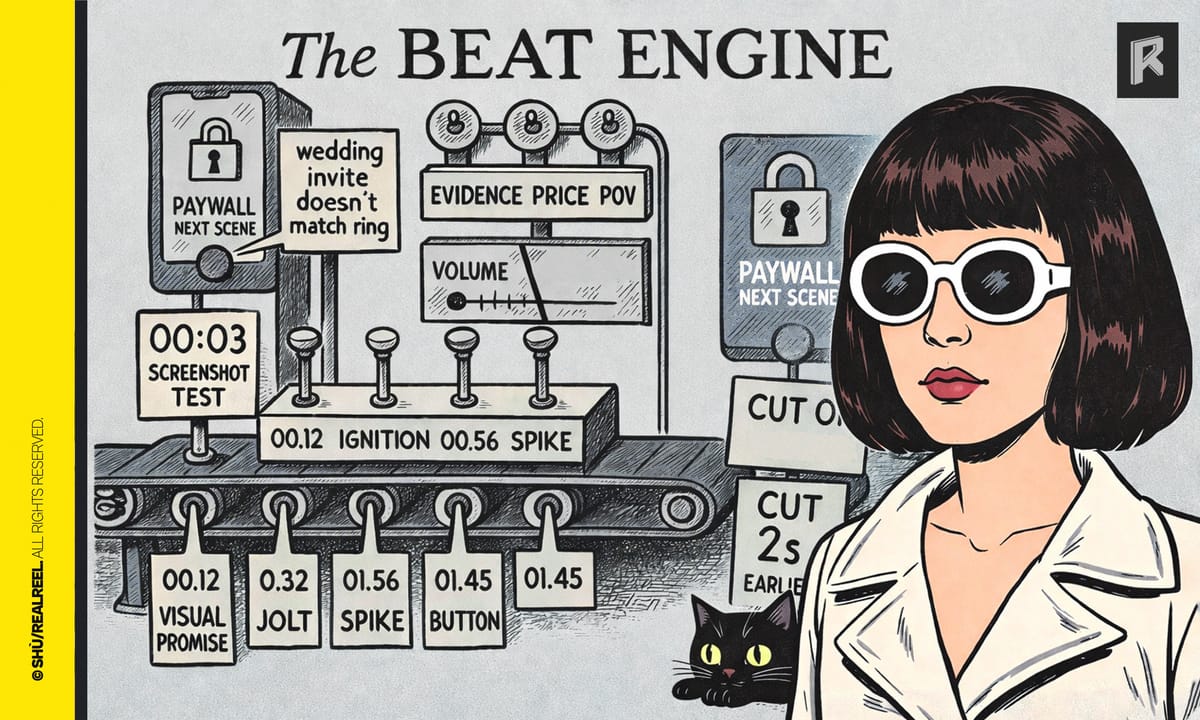
Hook (0–15s). You're not easing in. You're detonating. Chinese showrunners literally call this the "explosion point". Some productions drop the most cinematic beat of the entire season into these fifteen seconds as a built-in trailer. Your first three seconds need to deliver: what world is this, why does it matter right now, and what is the image? Freeze-frame at three seconds. If a stranger needs backstory to understand what they're looking at, you're not there yet.
Friction (15–60s). This is your engine room. But here's the thing traditional writers get wrong: the friction has to be filmable. Not emotional subtext, not implied tension, actual physical constraint. A badge that won't scan. A meeting that started without her. A door that won't open. If your obstacle is a monologue, you don't have an obstacle. You have a pause.
Spike (60–90s). The biggest single jolt of the episode. An evidence shift, a price hike, a POV flip. Something that re-prices the scene, makes what came before cost more than we thought. If you mute the audio and the spike disappears, it wasn't a spike. It was volume.
Button (last 5–10s). Cut on the question, not the answer. Two seconds earlier than feels safe. Most writers over-explain their cliffhanger because they're worried the audience won't feel it. They will. Trust the cut.
Before you write a line of dialogue, draft this as a timestamp skeleton. 0:00, ignition. 0:32, first jolt. 1:18, spike. 1:50, button. Then write the dialogue to carry those moments, not to create them.
 Real Reel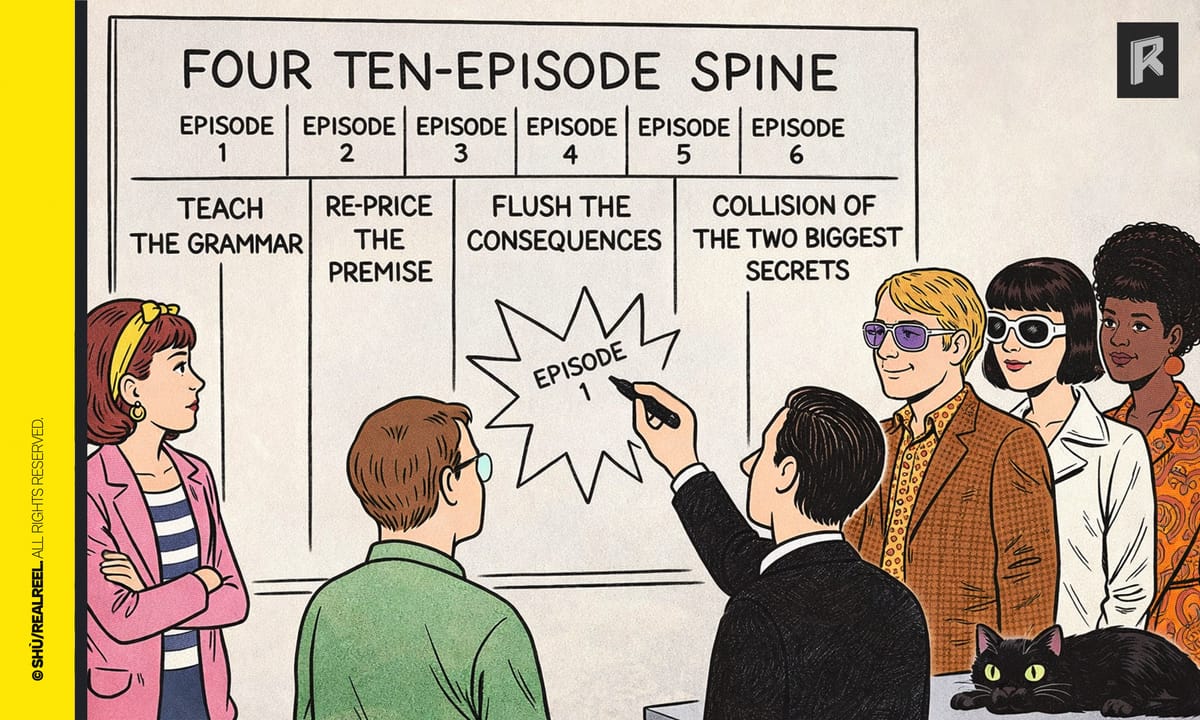
At season level, think in tentpoles: E5 re-prices the premise (not a twist, a new set of rules that makes everything the audience understood wrong), E10 collides the season's two biggest secrets. And spend early. Don't save your best beats for episode eight. The audience who reaches episode eight earned it because episodes two and three were worth it.
The emotional contract: what your show is actually selling
Here's a question worth sitting with before you write anything:
what is the emotional promise of this show?
Not the logline. Not the genre. The promise.
Vertical drama audiences aren't buying a genre, they're buying a specific emotional experience on demand.
 Real Reel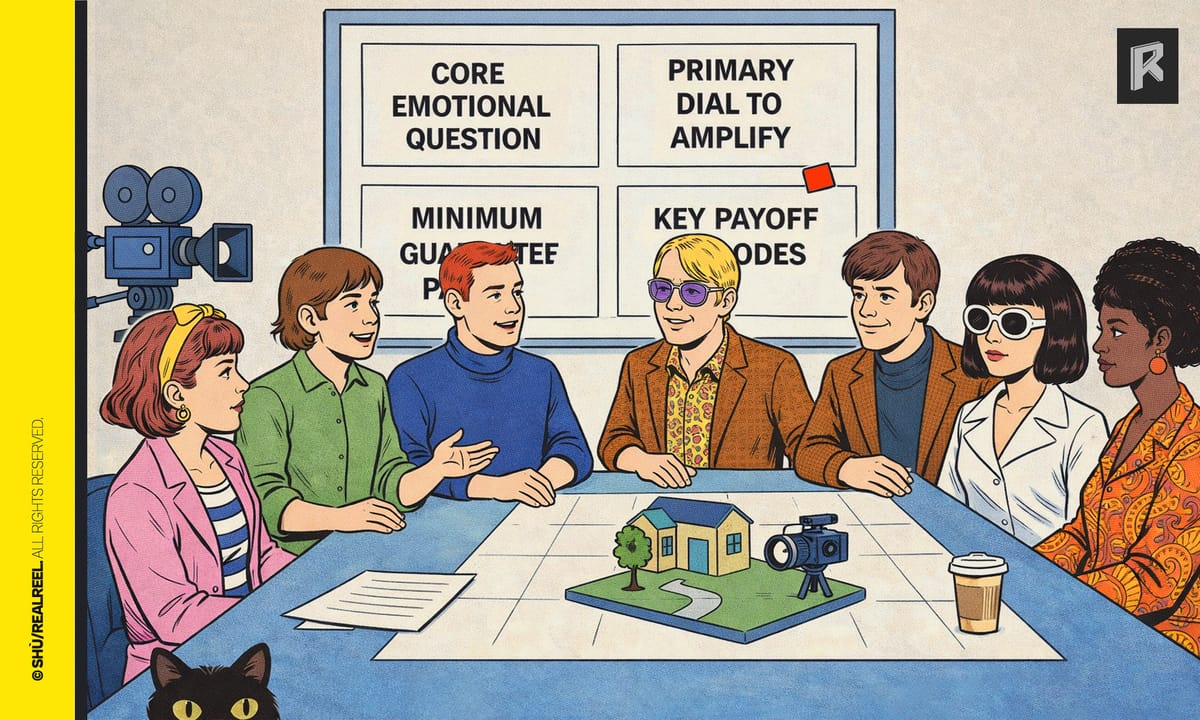
And almost every vertical hit runs on some combination of three beats: Shock, Hurt, Release.
Shock is the break: something that can't be argued with. Not a feeling, not a suggestion. Evidence. A text thread, a bank transfer, a wedding invite with two names. Specificity is credibility. If viewers can debate the premise, you haven't shocked them, you've started a conversation.
Hurt is detail, not declaration. Not "she's devastated", that's a note, not a scene. Hurt is the contact that still reads "husband ❤️." The houseplant being watered during the breakup. The ringtone that was never changed. You're not reporting the emotion. You're staging the artifacts of it. On a 9:16 frame, hands and eyes and objects carry more than any piece of dialogue.
 Real Reel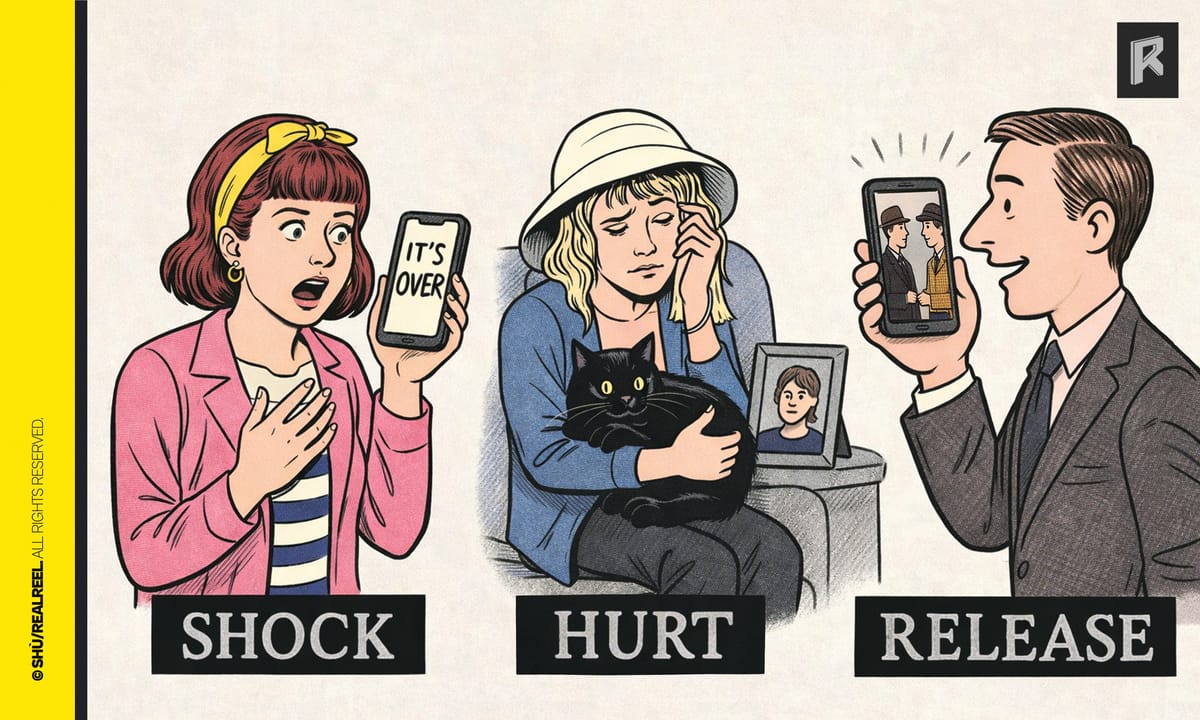
Release is the payoff, and the key word is public. Private victories are satisfying. Public receipts are addictive. The math, roughly: accumulated injustice × publicness of reversal = intensity of the release.
What shifts between genres is which dial gets turned up. Romance leads with small shocks, lingers in hurt, delivers the release through being chosen openly. Revenge runs long corridors of humiliation for one massive public payback. Power fantasy keeps its shock sharp and its release quiet, one move that flips the entire room without anyone outside the scene fully understanding what just happened.
When you pitch a vertical series, to yourself, to a platform, to a producing partner, this is the clarity you need:
What is the emotional question?
Not "a story about love and healing." Try: "A woman who's been told she's not enough her whole life, will she ever be chosen publicly, on her own terms?" That's a promise about Shock, Hurt, and Release. That's something a platform can greenlight, a writer's room can protect, and a marketing team can actually use.
Characters: jobs first, people second
This is probably the biggest adjustment for writers coming from drama.
In prestige TV, character is everything. The antihero with the contradictory wants, the wound beneath the wound, the behavior that makes sense only when you understand the backstory. That's real craft, and it still matters here, but it comes second.
In vertical drama, the first question isn't "who is this person?" It's "what is this person's job in the emotional loop?"
 Real Reel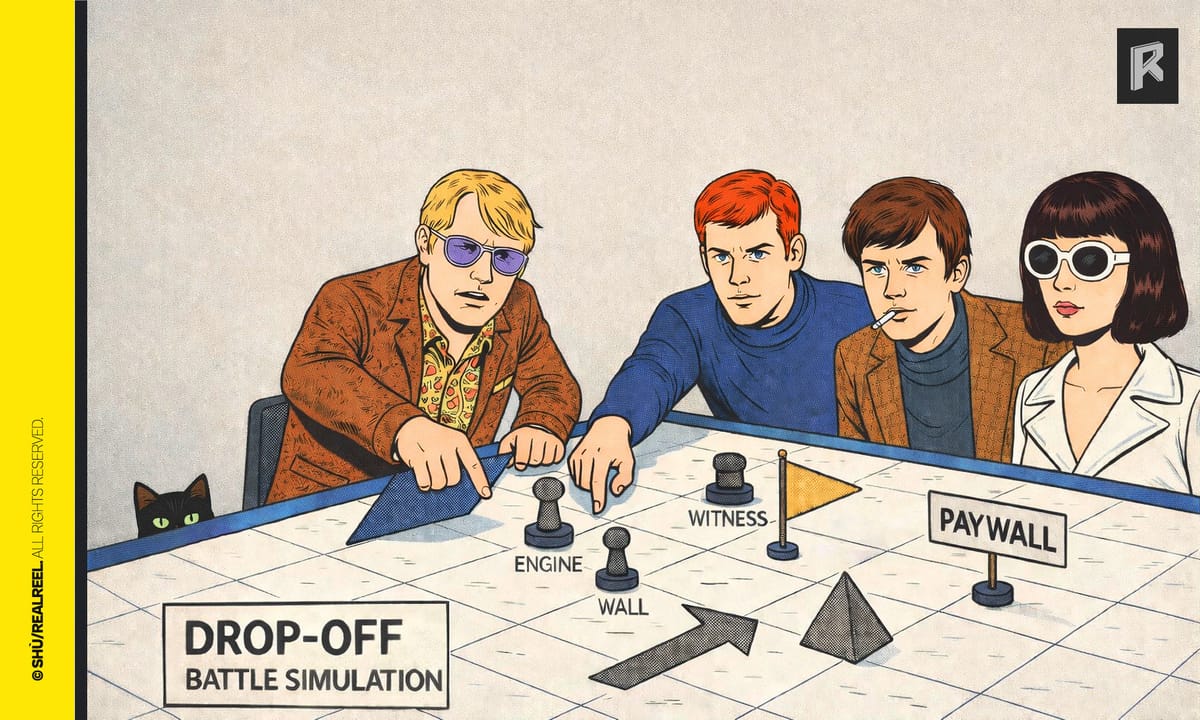
The Engine is whoever keeps giving you new episodes to shoot. Not necessarily the lead, whoever makes choices the story can't walk back. If you mute the audio and can't tell what they want or how their choices are moving things forward, you don't have an Engine. You have a presence.
The Wall is a price tag with a face. Not a villain, a cost-setter. When they say yes or no, something tangible changes: money, access, status, safety. If nothing concrete shifts when they enter a scene, you may have written a loud character, not a Wall.
The Witness is the audience's group chat made flesh. One character who picks a side, says the thing the viewer is thinking, and gives the edit somewhere to breathe after the slap. When you read reviews that say a show feels like "swallowing glass on repeat," what's usually missing isn't a plot twist, it's a Witness. If your editor keeps asking for air, they're asking for a shot that doesn't exist yet.
The Nuke is the truth that keeps almost exploding. Vertical drama is structurally built around the Nuke staying in the room, close to detonating, but not landing. How many near-misses can you justify before the audience stops believing? And when it does land: does anything actually change, or does the show quietly reset?
 Real Reel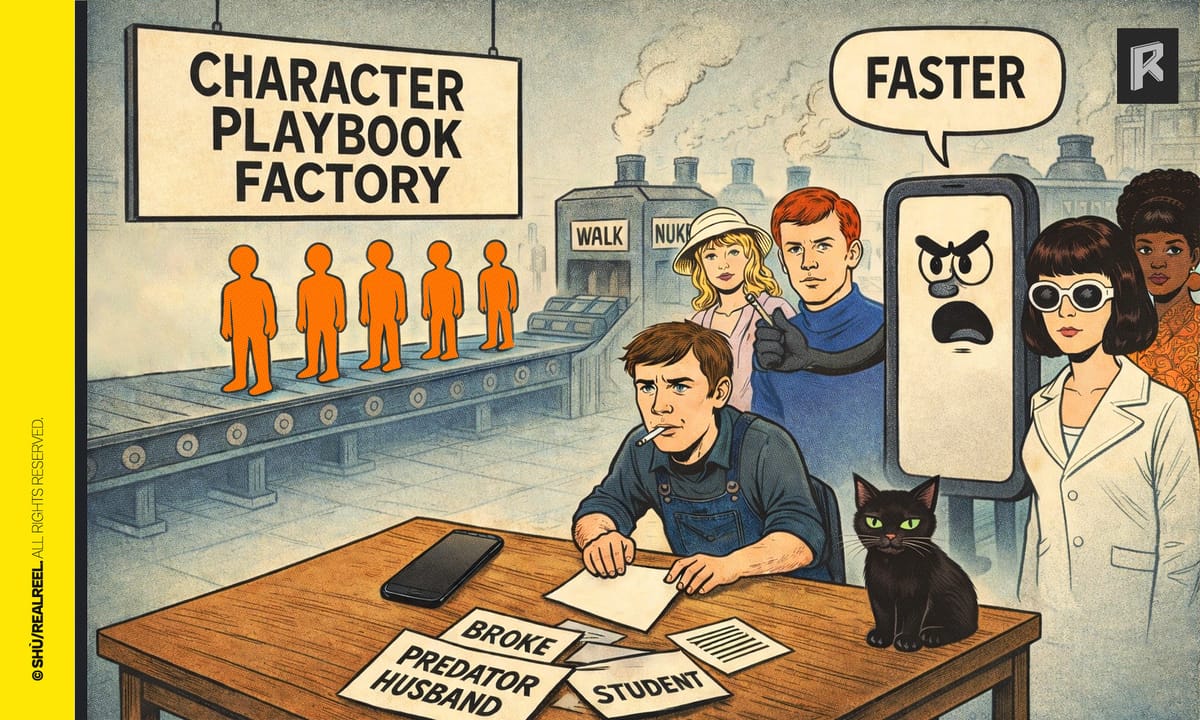
At the craft level, build with tag stacks, not character bibles. A job tag (CEO, broke student, abuse specialist), a social tag (protected/expendable, insider/outsider), and a contrast tag, the thing that cuts across the first two. That combination tells you 70% of who a character is before they open their mouth. And design for ten-episode micro-arcs. Each block needs a real hit, a tilt action, and a behavioral shift. "Endure more of the same" is not an arc. That's the pain-sponge trap, efficient for outrage retention, hollow as a season.
A word about tropes
If your instinct is to avoid tropes because you're a serious writer, that instinct is going to cost you.
In vertical drama, tropes aren't lazy writing shortcuts. They're load-bearing structures. Established emotional contracts that let the audience orient immediately, without setup time. The fake heiress, the contract marriage, the divorce-day twist, the rebirth-and-payback, these are not clichés to overcome, they are chassis to tune.
 Real Reel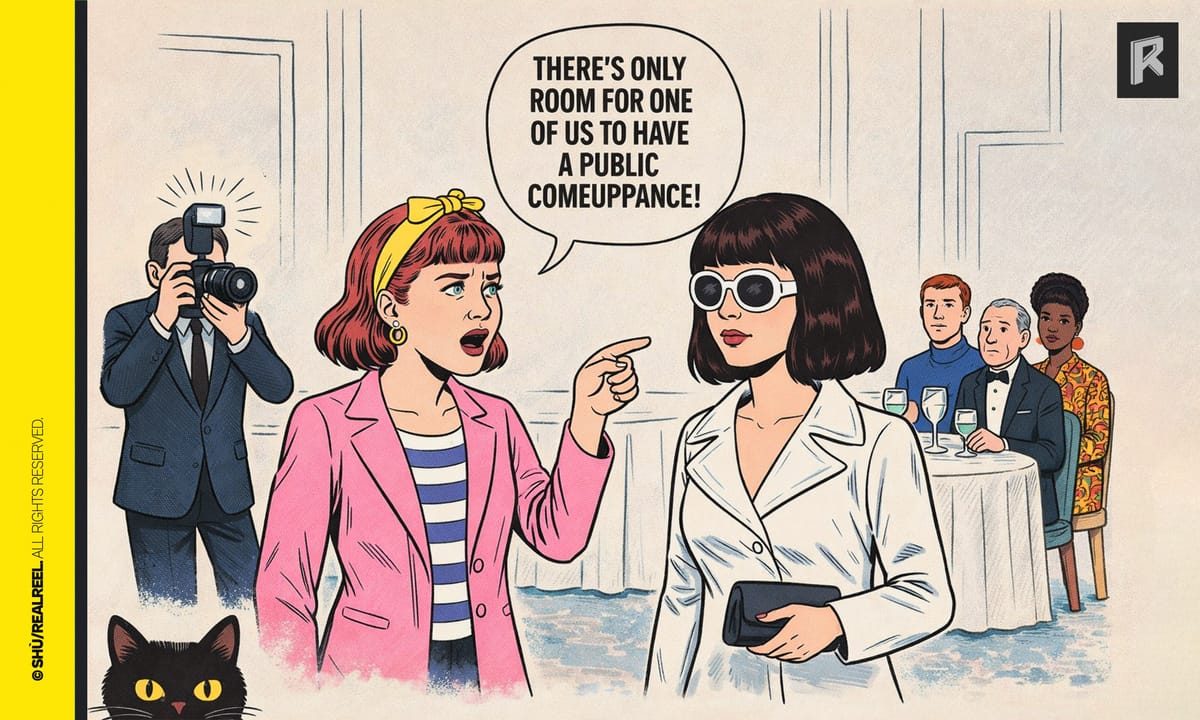
The craft question isn't "how do I avoid this trope?" It's "what specific emotional payload am I delivering through this infrastructure, and am I using the trope's full mechanical potential?"
Contract marriage works because it creates forced proximity with a built-in secret. The refresh isn't abandoning that premise, it's making every reveal accidental (a livestream exposes her riding medals; a hospital scene exposes his medical training), so the audience feels they're discovering something, not being told it.
 Real Reel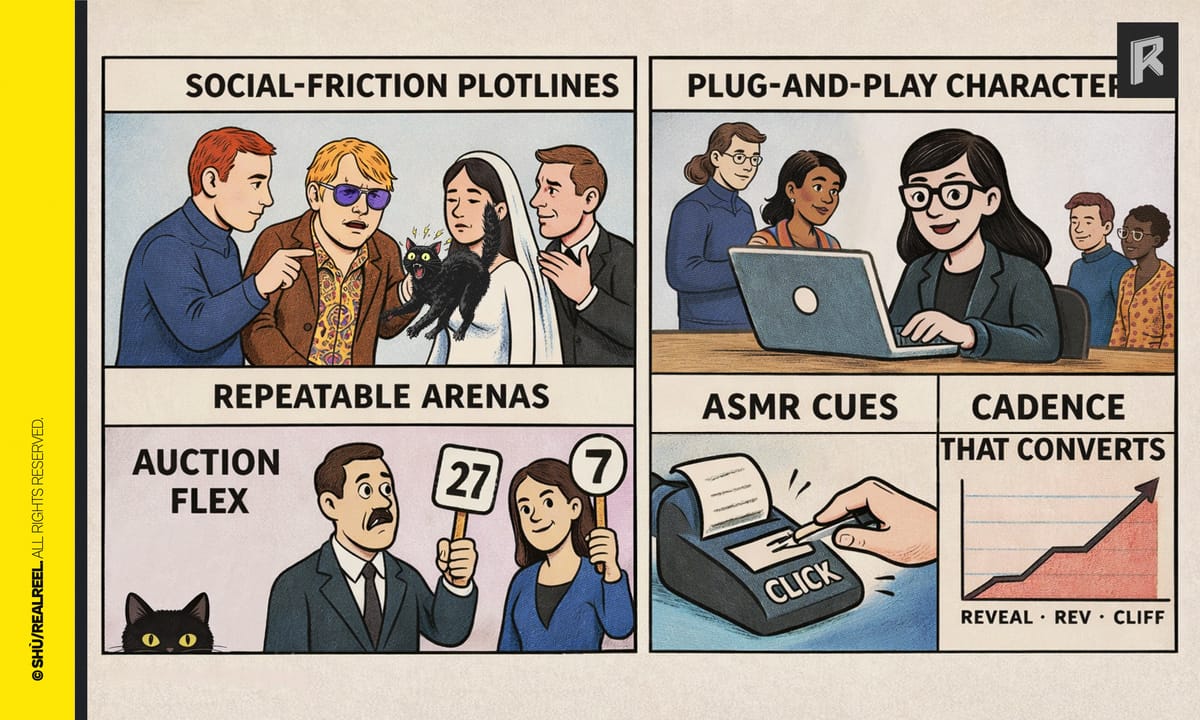
The Hit List is worth reading as a field guide, not to copy, but to understand the mechanics. What makes a banquet scene work isn't the setting. It's that a banquet is a space where status is public, witnesses can't leave, and the reversal has an audience built in. Once you understand why the arena works, you can build new ones that serve the same function.
Five scenes that actually convert
At scene level, five patterns consistently drive both engagement and paid unlocks. Think grammar, not formula: one prop, one rule, one turn.
 Real Reel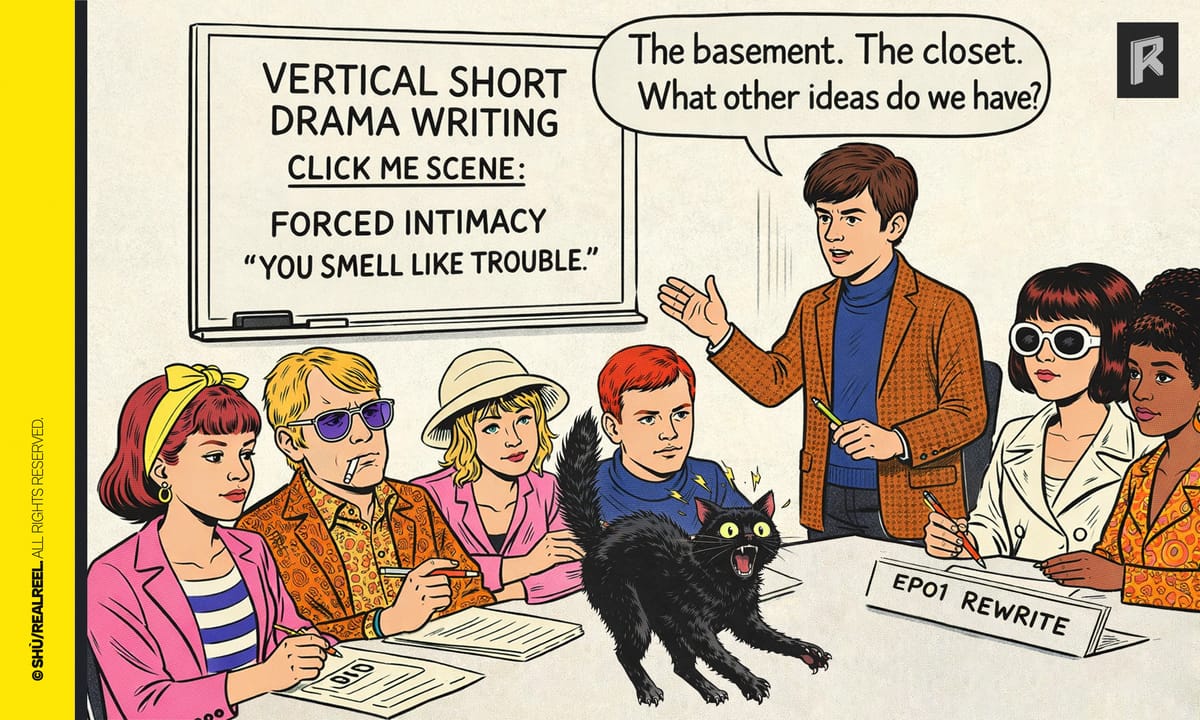
Public counter-shaming needs a space that traps witnesses. The reversal only lands if the proof was already visible somewhere in the frame: a receipt corner, a record light, an engraving. Plant it before you need it.
Identity reveal works when one piece of information relabels the entire room. Time it at the end of episode one or the open of episode two, right where the paywall needs to cash curiosity. Let an object explain it, not a speech. Cut on the why. Don't follow a good reveal with an encyclopedia.
Forced intimacy locks before any dialogue. Two people who shouldn't be close, sharing breath. The constraint has to escalate across episodes, cuffs to one bed cover to a contract clause that traps them together. If it doesn't escalate, it loops. Loops lose viewers.
Family crisis runs money math and moral math simultaneously. Bills, institutions, deadlines. One specific child behavior, a wheeze, a clutched chess piece, makes it human. Give us the price of the next chapter, not the family tree.
Power misalignment is the unfair game that flips because someone mastered the rulebook instead of breaking it. Seed the rule on screen before it matters. The ethical loophole is more satisfying than the magic clause that appears from nowhere.
The villain, the loop, and the details that make it real
 Real Reel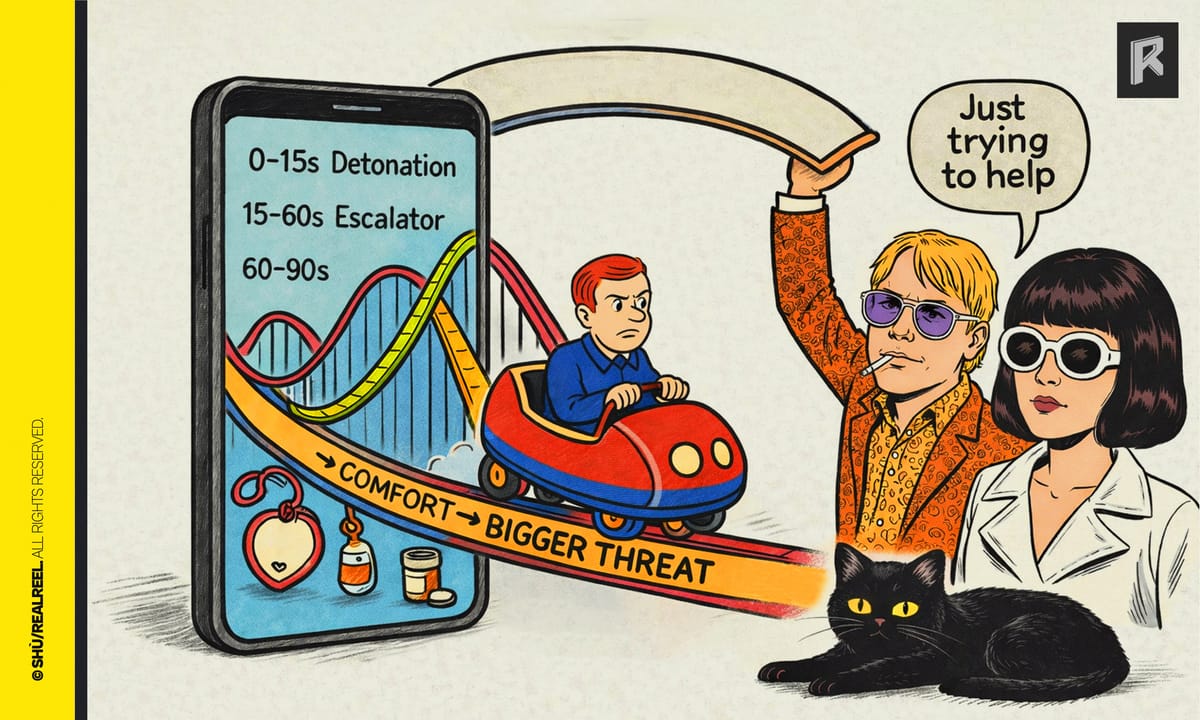
Three craft levers most writers reach for too late:
The villain sets the ceiling for how good the payoff feels. Tag a moral red flag in their first scene, something the audience recognizes on sight. Then run overt pressure and covert needling in the same episode. One crushes from the front; the other salts the wound from the side. Skip the villain monologue. Explanations dilute hate.
The addictive loop follows a simple biological pattern: harm → comfort → bigger threat. Harm is public humiliation, resource loss, something that changes options. Comfort is one small, true moment: a quiet cover, a returned draft. Bigger threat means the stakes escalate before the comfort can settle. The design note: give your lead tactical growth, even small moves.
The loop should fuel hope.
Nihilism converts once. It doesn't retain.
The details everyone cuts first are the ones that actually make people feel something. A prop with a clear origin and emotional contrast does more than two expository lines. A villain who says one unexpectedly expert thing becomes a worthy opponent. A three-second flash of a past sacrifice explains why this person can go this far, right now.
Cut explanations. Keep evidence.
This isn't a lesser format. It's a harder one.
The case for vertical drama isn't that it's replacing what you do. It's that it's a genuinely different medium with its own demands, and right now, while the craft is still being figured out, the people who bring real storytelling instincts to it are the ones building something that lasts.
 Real Reel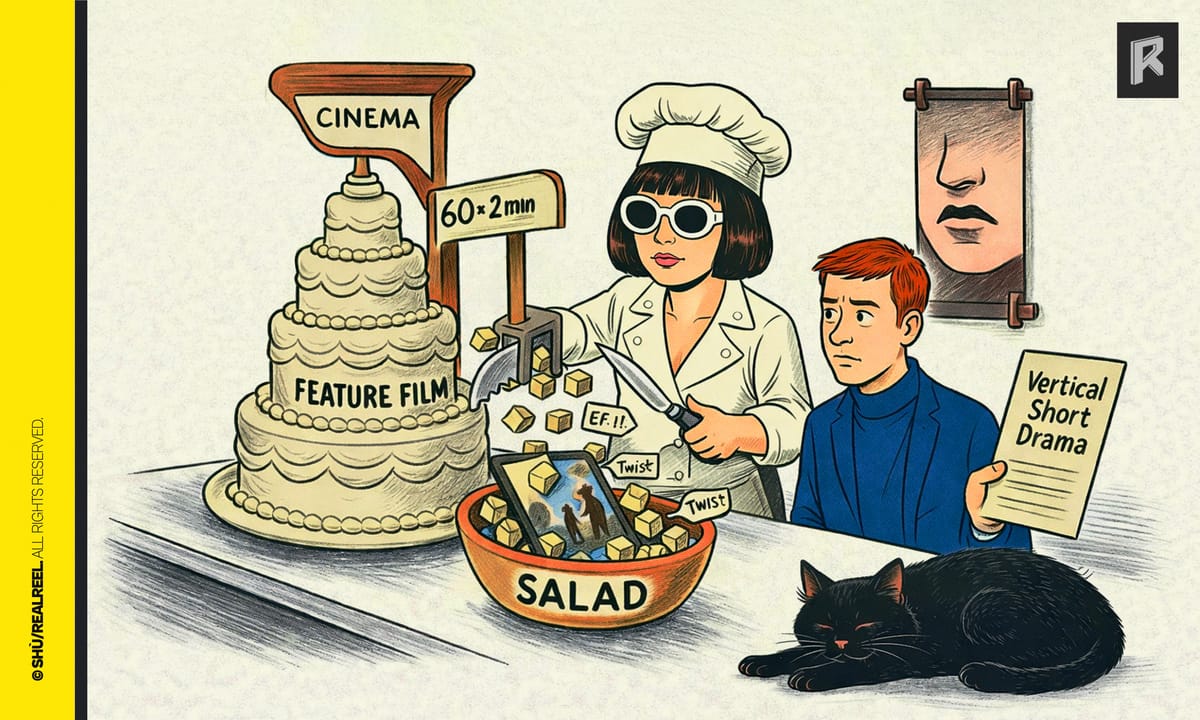
What transfers from traditional film and TV is real: the ability to break a story, to know when a character is working or just there, to feel the difference between a scene with consequence and a scene with volume. That judgment is rare in this space and it shows.
What doesn't transfer, pilot logic, the trust relationship with the audience, the earned slow burn, has to be rebuilt from scratch. Not abandoned. Rebuilt.
If you do go vertical, go all in.
Rebuild the story's circuitry. Aim the frame at the performer. Feed the attention economy with precise, high-voltage moments. You're not making a short version of something. You're making a different medium obey you.
 Real Reel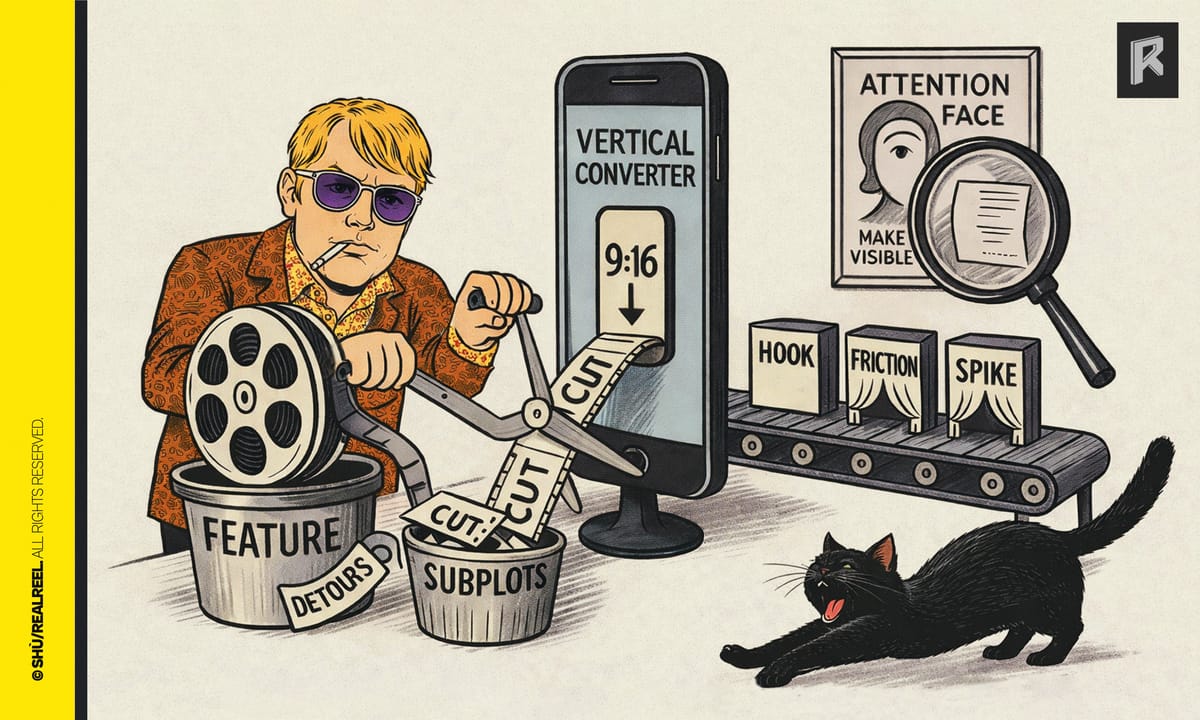
The audience is already there, phone in hand. The question is whether the story gives them a reason, every ninety seconds, to keep going.
Where to go from here
The Real Reel Playbook is built as a series of deep dives, each one focused on one layer of the craft. This guide is the map. Here's how to navigate it:
Start with the emotional architecture
Shock, Hurt, Release is the foundation:
 Real Reel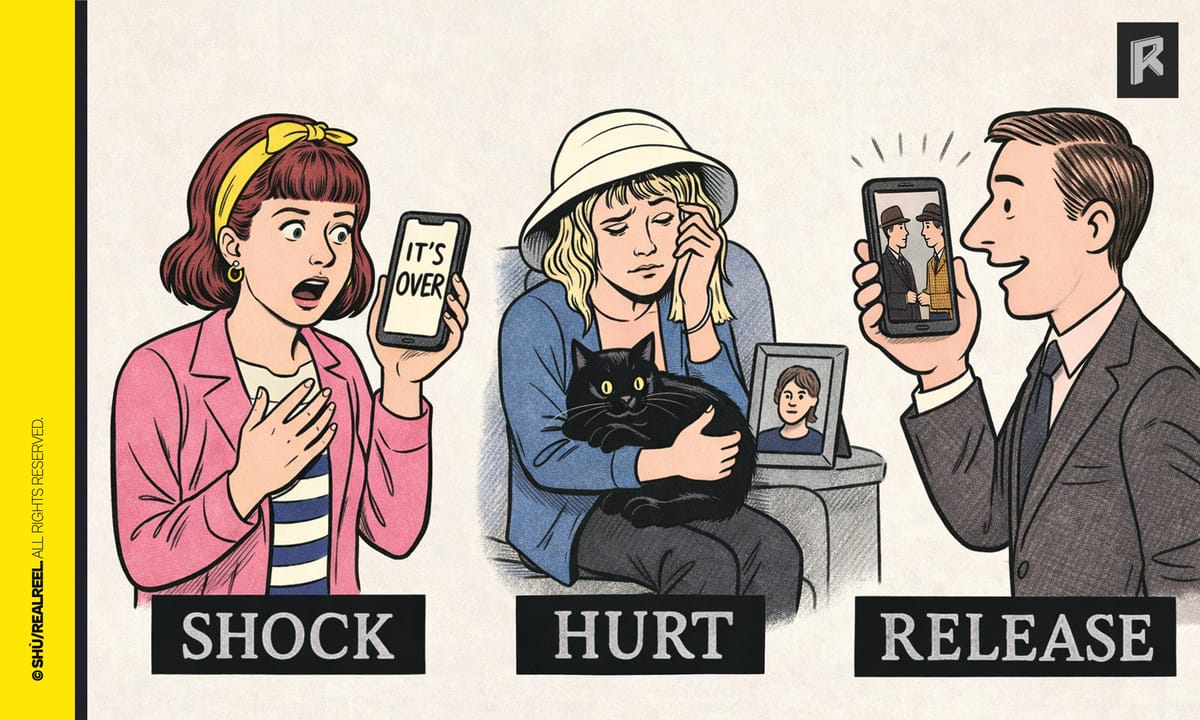
Then Emotional Patterns by Genre shows how that foundation shifts by story type:
 Real Reel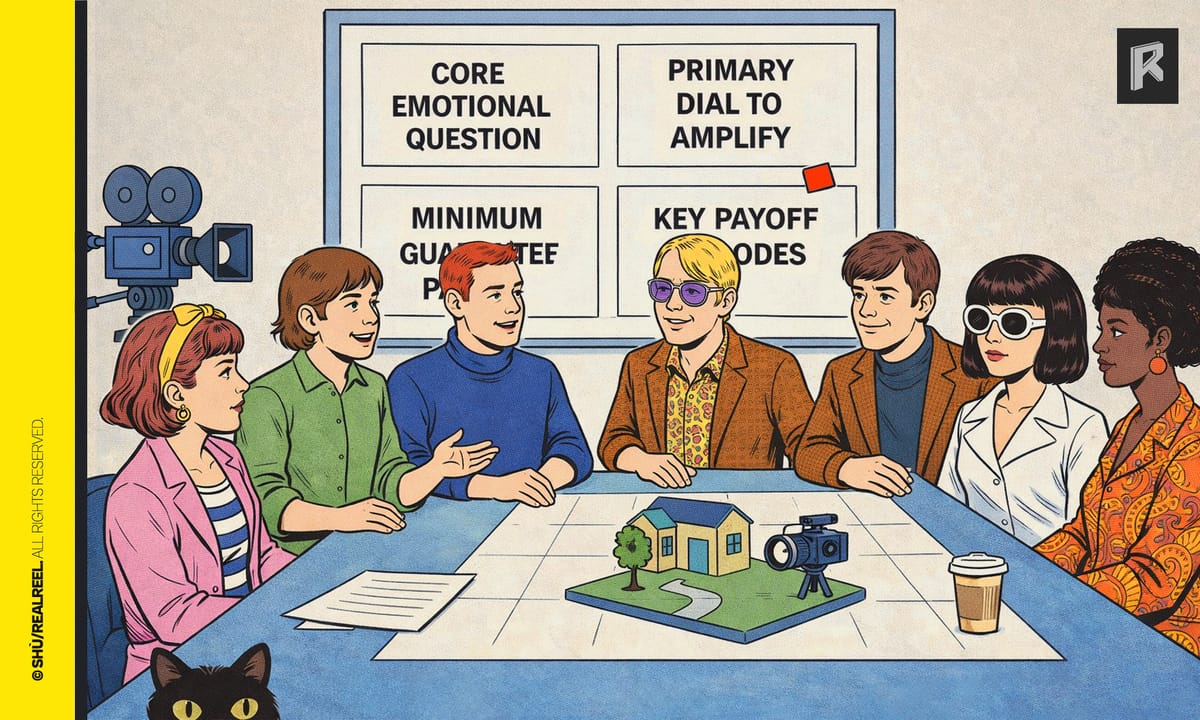
For episode and season structure
Beat Engine Part 1 (single episode) and Part 2 (season architecture) are the most precise technical pieces we've written:
 Real Reel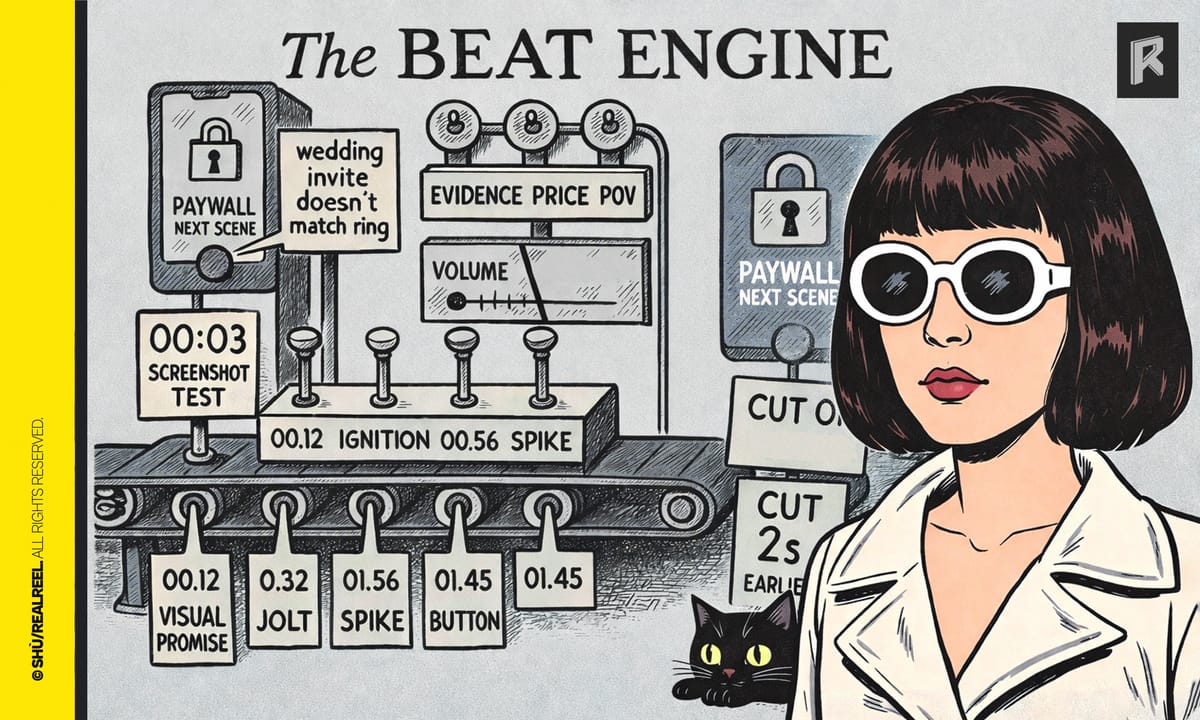
 Real Reel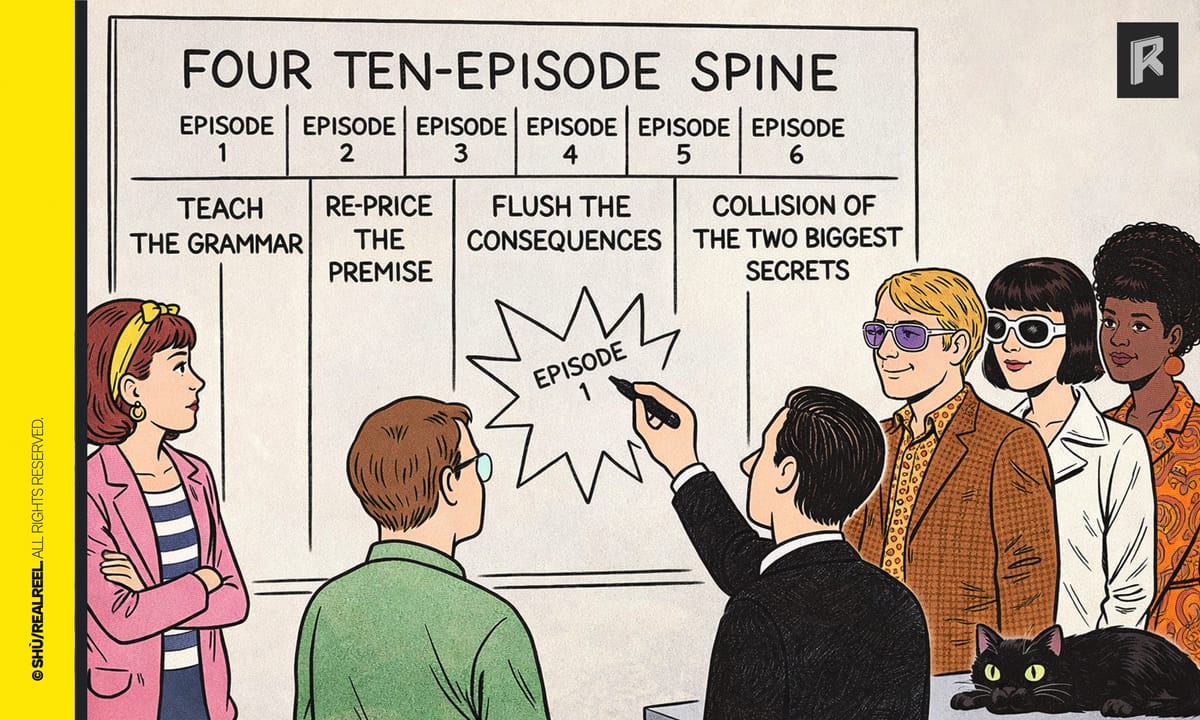
For character
Basic Rules first, then Engine, Wall, Witness, Nuke for the full framework:
 Real Reel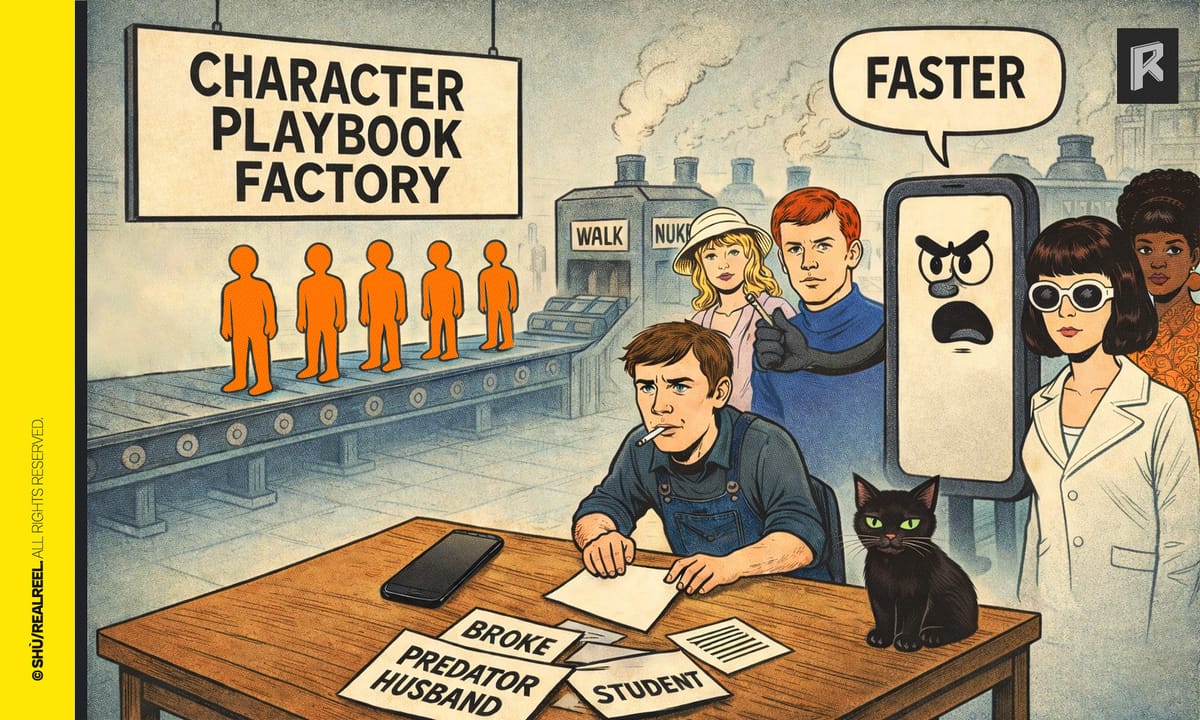
 Real Reel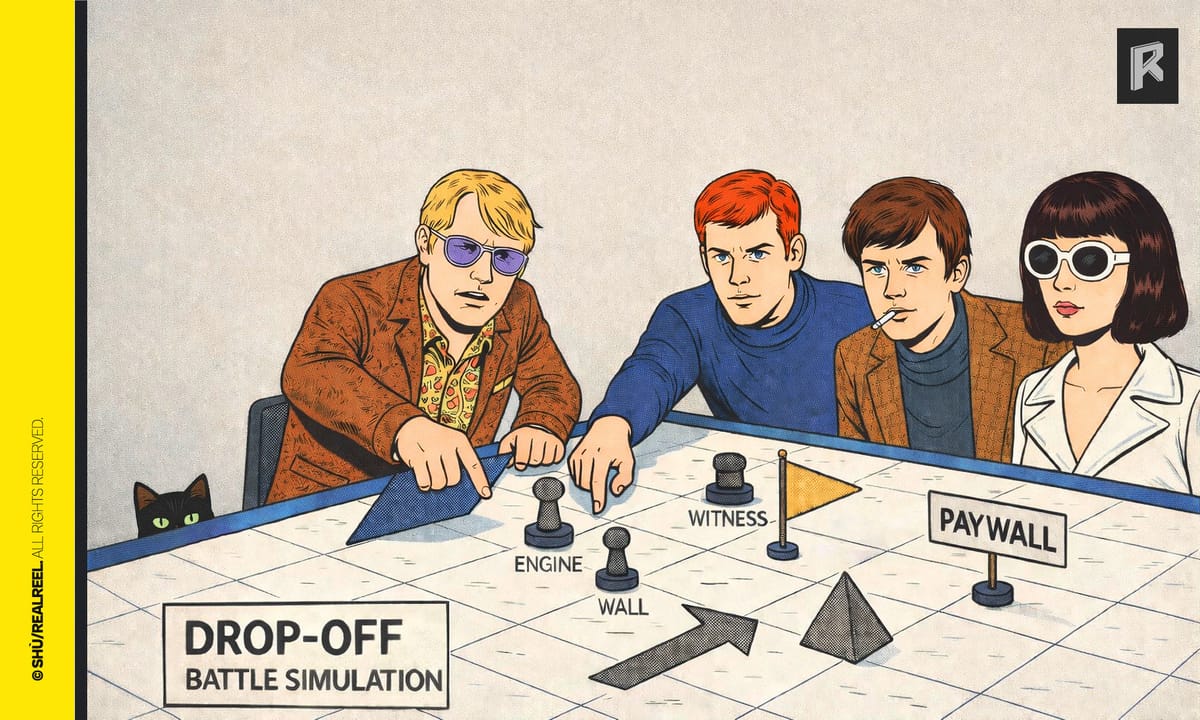
For tropes and arena design
Hit List Part 1 and Part 2:
 Real Reel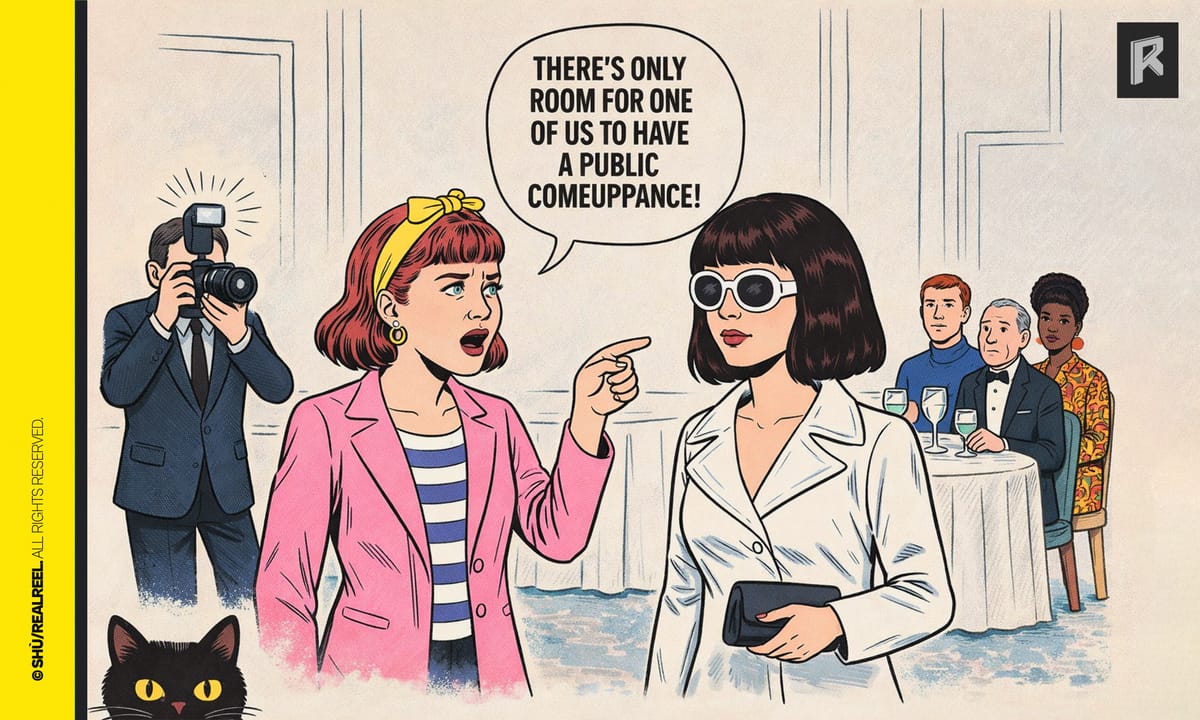
 Real Reel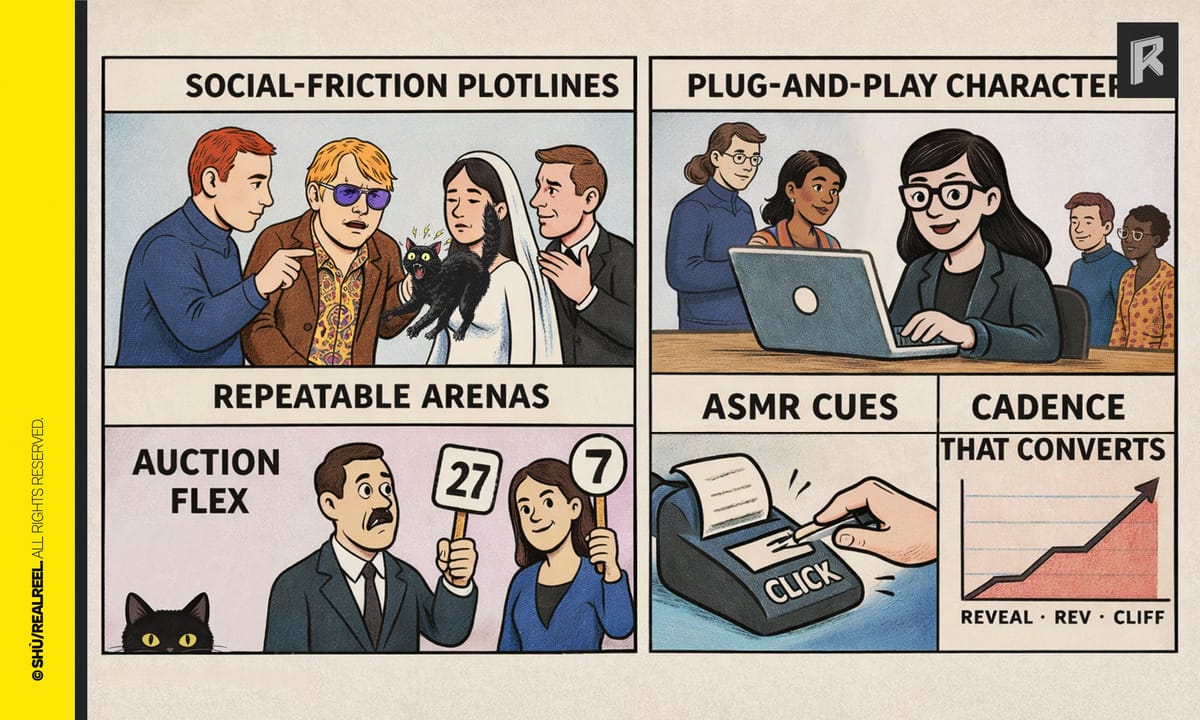
For scene craft and conversion
5 Click-Me Scenes, Advanced Writing 1, and Cut on Consequence:
 Real Reel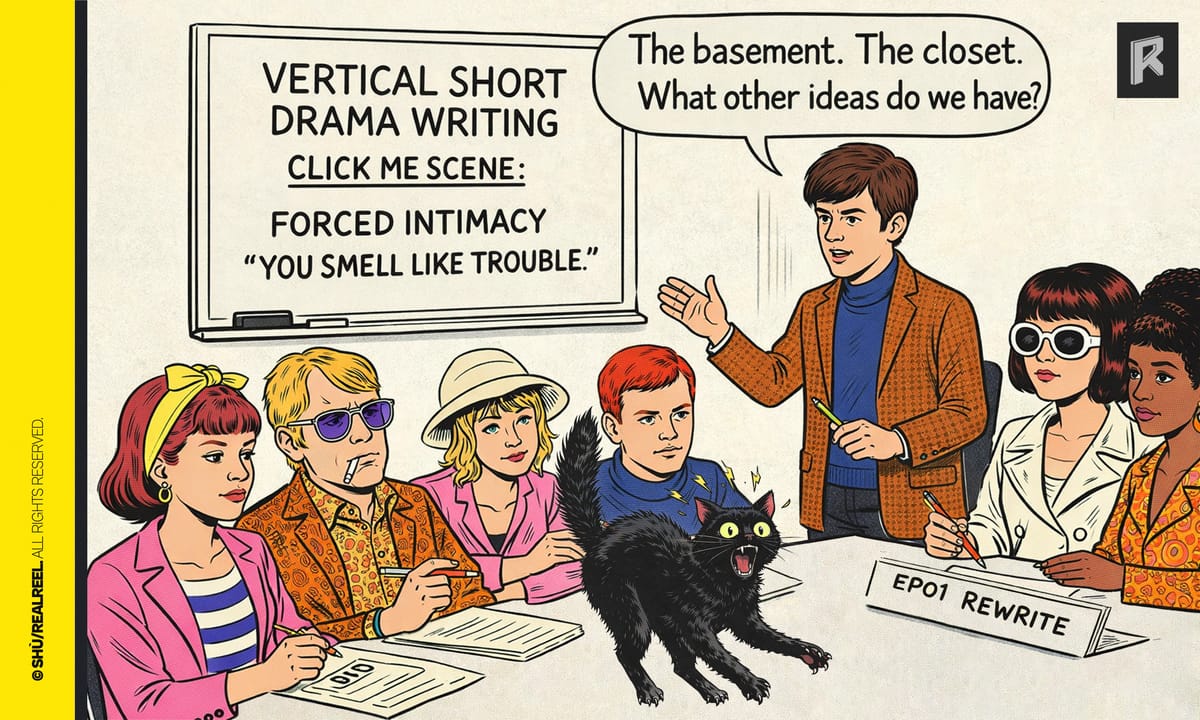
 Real Reel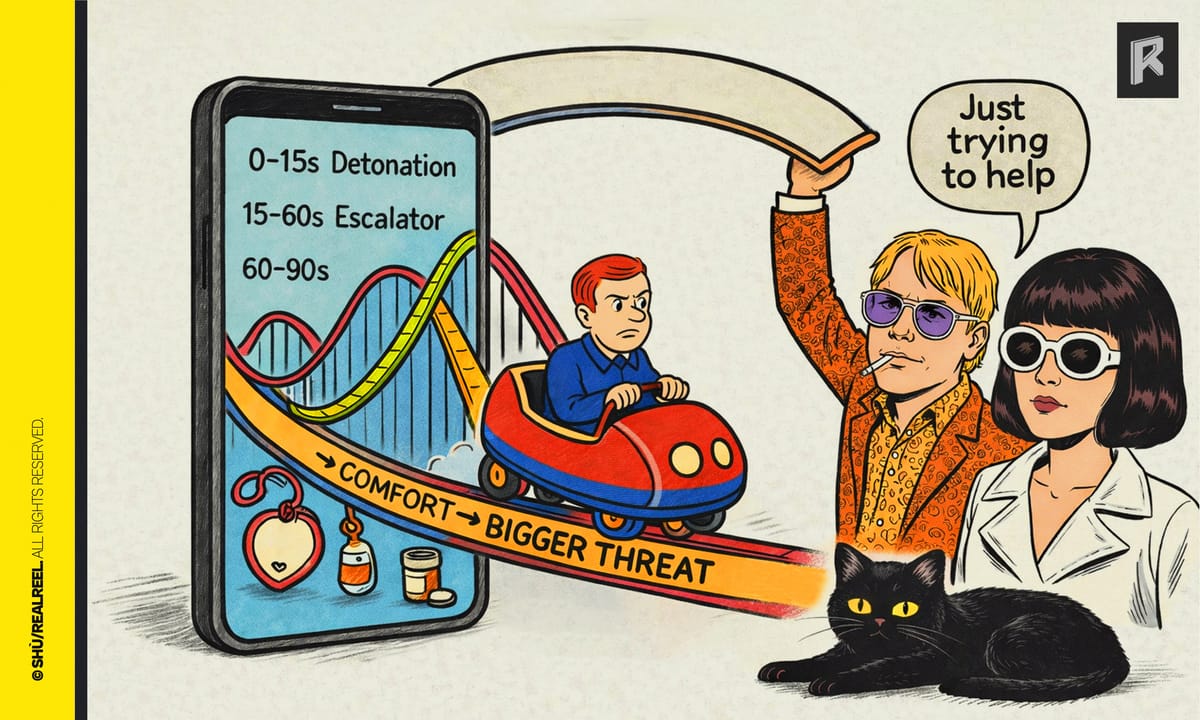
 Real Reel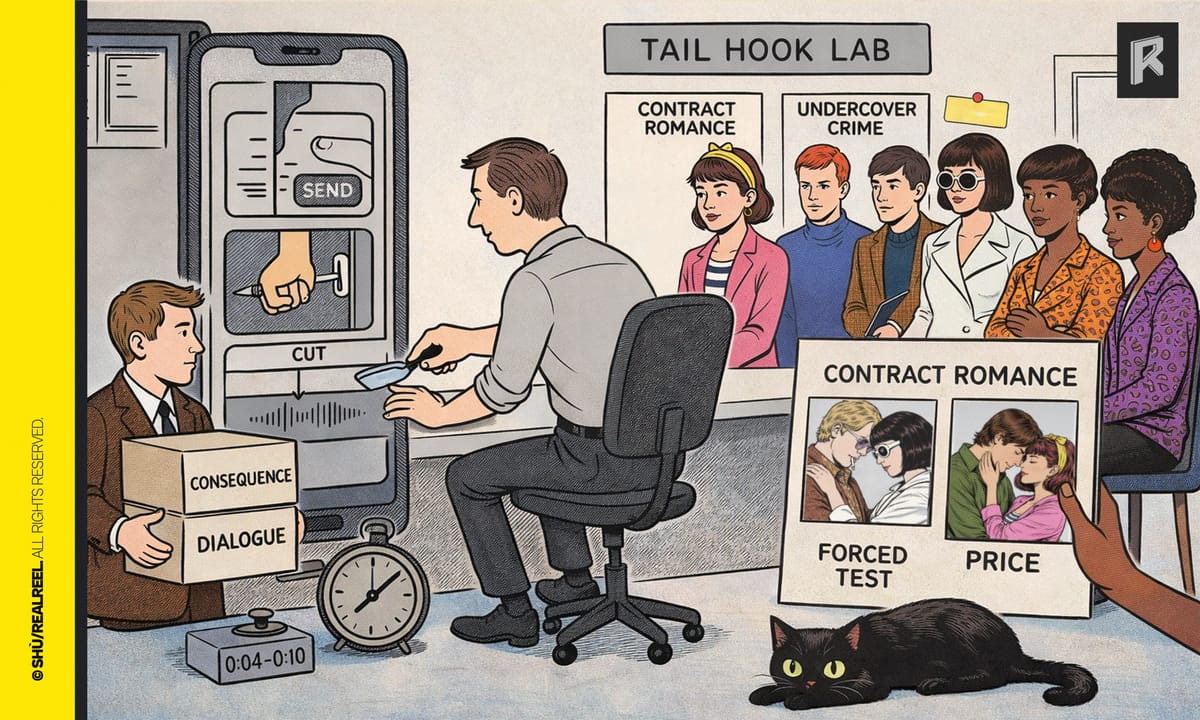
For the format itself vs. traditional film
Feature Film vs. Vertical and How to Adapt a Feature:
 Real Reel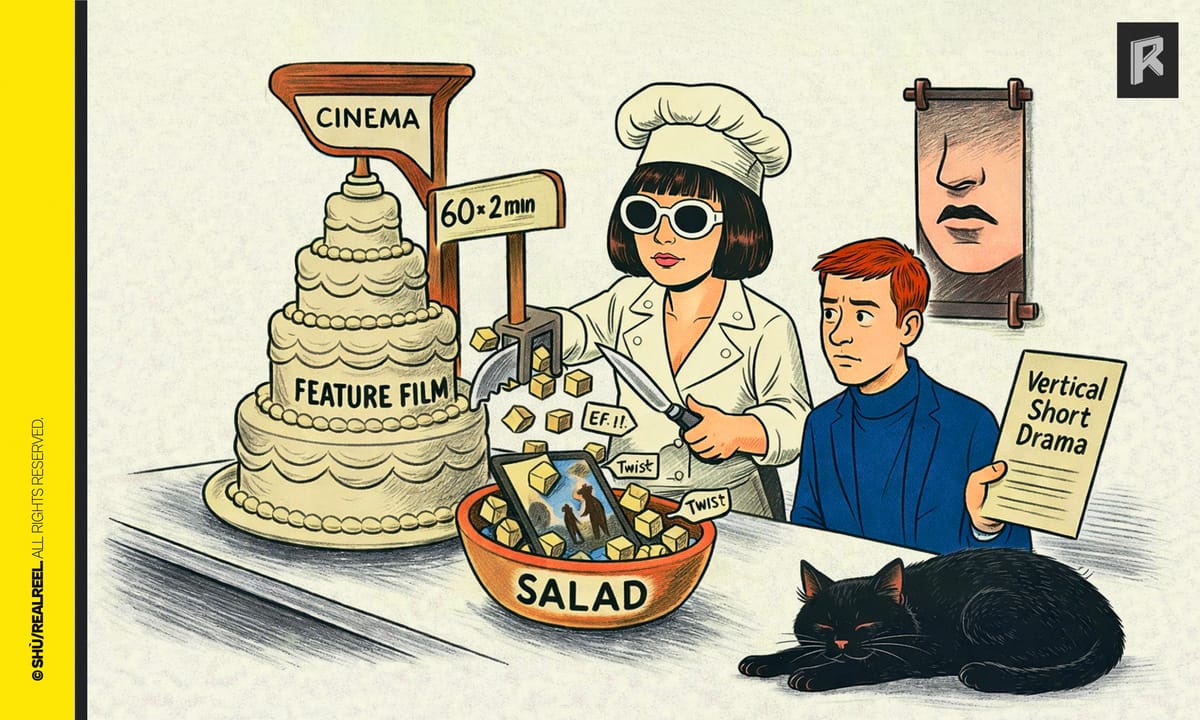
 Real Reel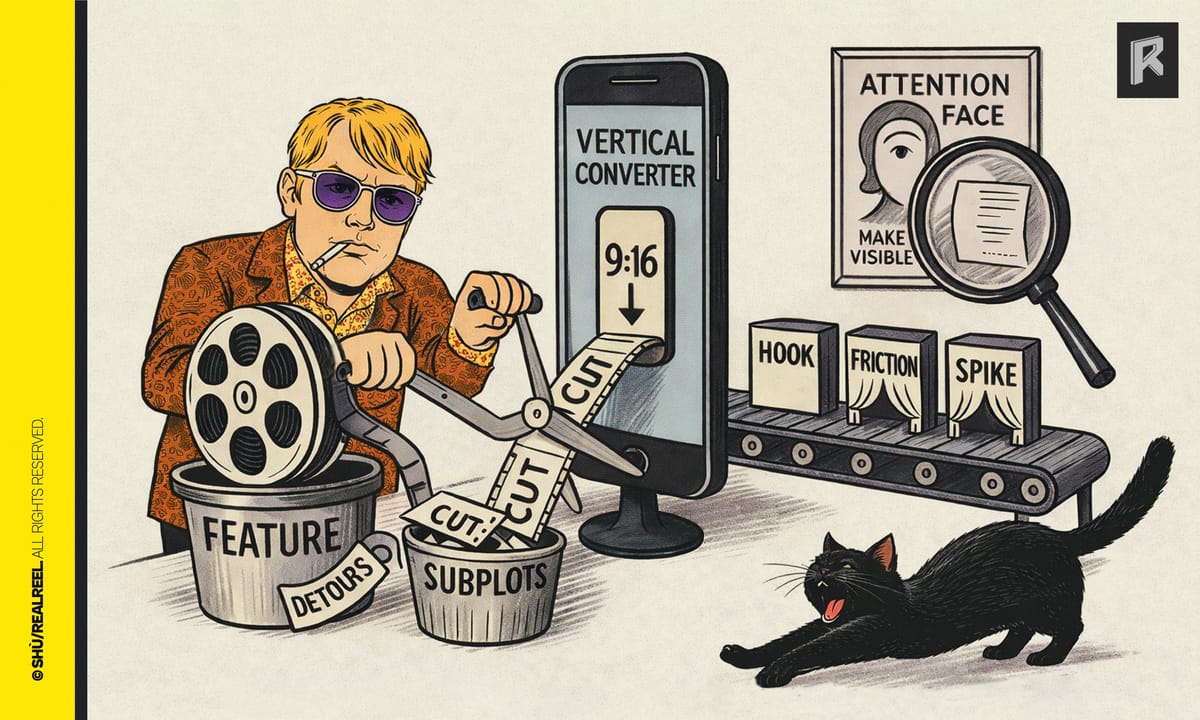
For the retention economy
Why the first ten episodes are everything:
 Real Reel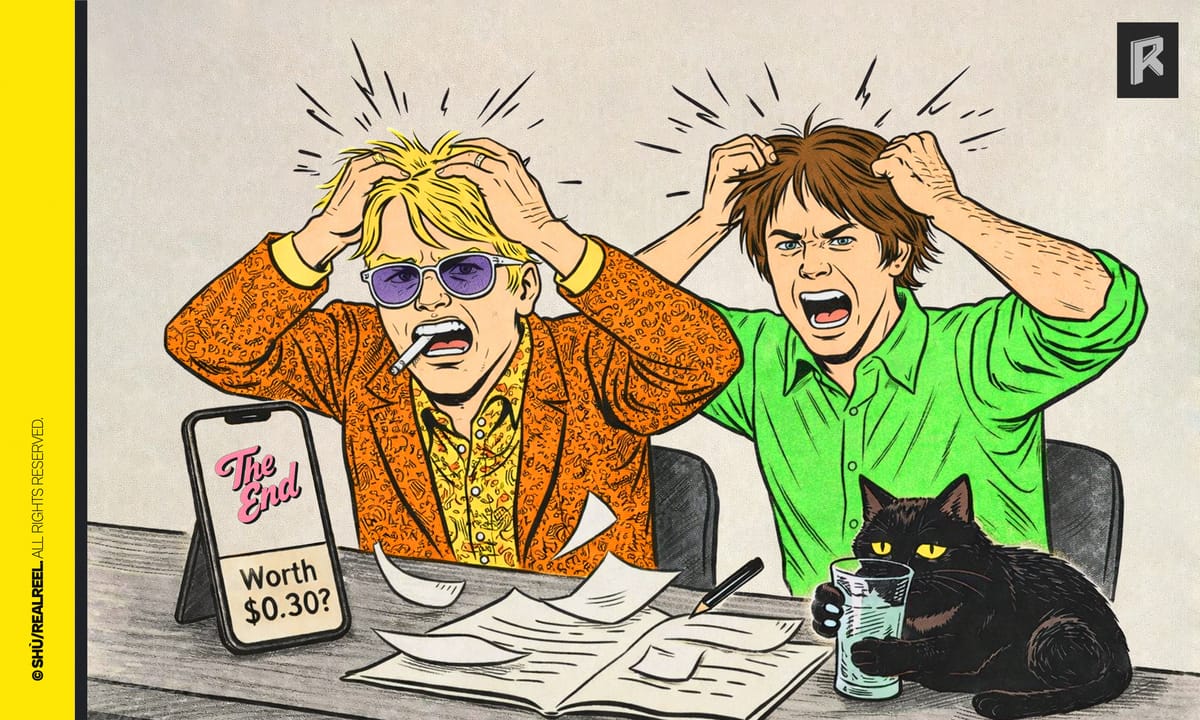
Real Reel Playbook covers the craft and structure of vertical drama for creators who take the format seriously.