Issa Rae Goes to TikTok, VeYou Launches, and Netflix Draws a Line
Hollywood talent is committing. New money is entering with a quality thesis. And the industry's biggest streamer just said no to vertical — for now.


Industry analysis of the global vertical drama and microdrama market.
⦿⦿
Hollywood talent is committing. New money is entering with a quality thesis. And the industry's biggest streamer just said no to vertical — for now.
Week of Apr 6-Apr 12, 2026

This week in vertical drama, three moves defined the direction of travel. Issa Rae committed to building original microdrama with TikTok, not as a guest appearance, but as a production partner. VeYou, backed by S32 and founded by a Top Gun producer, launched its vertical video platform with a quality-differentiation thesis. And Netflix LATAM drew an explicit line: short episodes, yes. Vertical format, no.
Issa Rae x TikTok: The First Prestige TV Creator Builds Inside the Format
Issa Rae, creator of HBO's Insecure and one of the most commercially credible voices in American television, has partnered with TikTok to produce Screen Time, an original microdrama series launching exclusively on TikTok and its standalone vertical drama app PineDrama. The series follows a double-date movie night that spirals when a stranger interrupts and forces each character to reveal secrets or face exposure. More significantly, Hoorae Media, Rae's production company, has committed to co-developing multiple micro-series with TikTok going forward. These will not be one-off experiments. They are the beginning of a structured original slate.
Rae's involvement is categorically different from celebrity casting. She is not appearing in someone else's vertical series. She is building one, with her company, on a platform, as a long-term creative relationship. That distinction matters for how the industry reads the move.
When a creator with Rae's track record chooses to originate content inside the vertical format rather than simply lend her name to it, it signals that the format is being evaluated on creative terms, not just commercial ones. That changes who else will consider it next.

Great American Media x Minivela: The Hispanic Market Gets Its First Vertical Drama Platform
Great American Media, parent of faith-and-family streamer Pure Flix, announced a development, distribution, and marketing partnership with Minivela, described as the first vertical shorts platform built specifically for U.S. Hispanic and Latin American audiences. The partnership will power the launch of Pure Flix Familia, a new Spanish-language and bilingual destination focused on faith and family storytelling, set to debut later this year. Minivela is a joint venture between actor and producer Carlos Ponce, Brilla Media, and adtech company Numatec. Under the agreement, Minivela will produce original microdramas and adapt Pure Flix's existing IP library for vertical viewing. The slate will include content in Spanish, English, and Spanglish, with production anchored in Miami, Los Angeles, New York, and key locations across Latin America. The announcement was made at ANA GrowthFronts in New York on April 8.
The deal structure is notable: Minivela gains access to Pure Flix's first-party audience data and existing distribution infrastructure, while Pure Flix gains a vertical-native production partner with decades of Hispanic media experience. Brand integrations and advertiser partnerships are explicitly part of the model from launch.
This is the first time a major faith-and-family media operator has committed to vertical drama as a distribution strategy, and it opens a content lane that the format has not meaningfully served until now. The Hispanic market is the largest-growing demographic in U.S. streaming; vertical drama reaching it through culturally specific, values-driven content redefines what audience the format can access.
Great American Pure Flix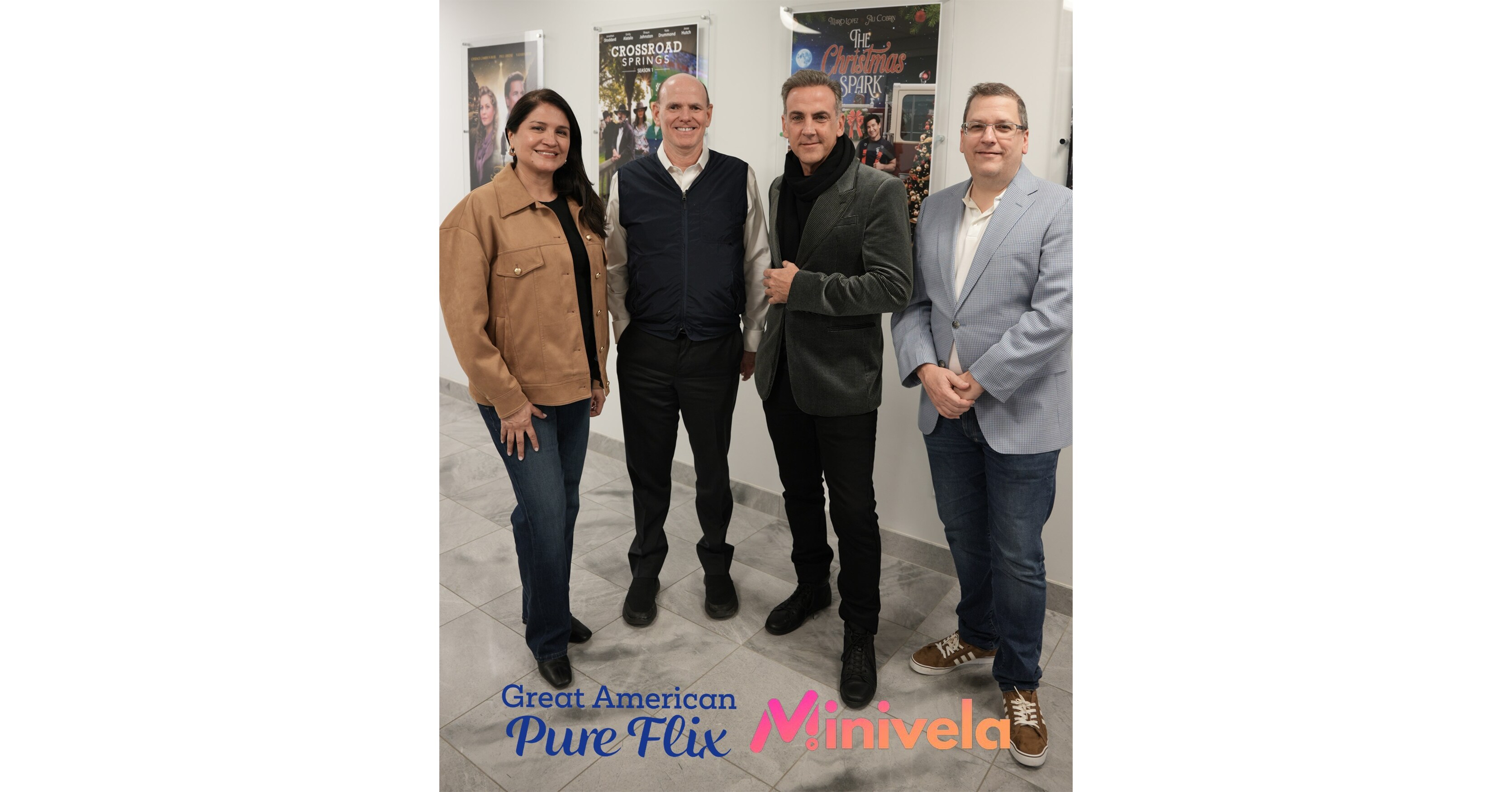
VeYou Launches: A Top Gun Producer, S32 Funding, and a Quality Bet on the U.S. Market
Tommy Harper, whose producing credits include Top Gun: Maverick, Star Wars: The Force Awakens, and multiple J.J. Abrams projects, launched VeYou on April 7. The platform combines licensed third-party vertical series with originals produced by Harper's studio Tiny Verticals, budgeted at $100,000–$250,000 per series. Pricing is tiered: licensed content at $4.99 per series, originals at $10.99. Seed funding came from S32, the venture firm founded by Google Ventures founder Bill Maris, whose portfolio includes Nest, Impossible Foods, and 23andMe. VeYou is also a distribution partner on Google TV, which is building microdrama content into its mobile app as a discovery layer for producers without their own streaming infrastructure. The first original, Love Under Fire, is an action-romance written by and starring vertical drama actor Kasey Esser. A 72-series, three-year production deal is in negotiation with Celtic Studios in Baton Rouge, Louisiana.
Harper has been direct about his competitive position: "I'm competing with the big Chinese companies that are throwing tons of money at this, so we have to be very, very strategic, and we have to make things that are good quality." His stated goal is to be "HBO mashed up with TikTok."
VeYou is the clearest articulation yet of the Western quality-differentiation thesis: the argument that the U.S. market can be won not through volume and CAC, but through recognizable talent, elevated production, and IP with franchise potential. S32's involvement is the first time a VC firm with a serious technology track record has backed a vertical drama platform directly.
Cynthia Littleton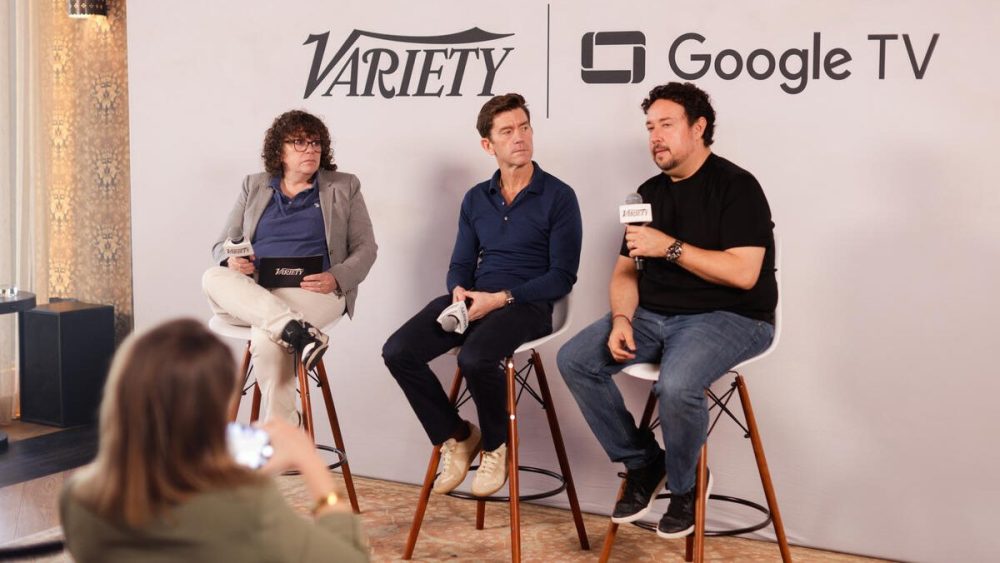
GammaTime x National Enquirer: Legacy IP Becomes a Vertical Drama Supply Chain
GammaTime, the microdrama platform founded by former Miramax CEO Bill Block and backed by $14 million from investors including Alexis Ohanian and Kris Jenner, has inked a production deal with MediaCo, current owner of the National Enquirer, to adapt stories from the tabloid's archives as vertical drama series. The partnership launched April 8 with National Enquirer Presents: The Drew Peterson Story, a true-crime vertical covering the Illinois police sergeant-turned-convicted murderer, now exclusively on the GammaTime app. Upcoming titles include series on Richard Ramirez, Karen Read, and Wanda Holloway. The Enquirer's existing social channels and print publication will cross-promote the series, creating a direct promotional funnel from the tabloid's legacy audience into the GammaTime platform.
The deal follows GammaTime's earlier licensing agreement with Content Partners LLC to adapt 15 Forensic Files episodes for vertical viewing. Taken together, the two deals represent a deliberate strategy: build a true-crime vertical franchise through IP licensing rather than original development, using established brand recognition to reduce audience acquisition friction.
GammaTime is converting legacy media archives into a content supply chain, and using each rights holder's existing distribution footprint as a built-in marketing channel. If the model holds, it offers vertical platforms a path around performance marketing costs by embedding directly into established media ecosystems rather than competing for attention from scratch.
Katie Kilkenny
Netflix LATAM Draws the Line: Short Episodes, Yes. Vertical Format, No.
At the opening of Netflix's new Buenos Aires offices, LATAM content chief Paco Ramos confirmed that the company is testing shorter episode formats in the region, but made clear that vertical video is not part of the plan. Netflix's first experiment, an Argentine comedy series called Carísima, runs 10-minute episodes and is shot horizontally. Additional short titles are in development in Argentina and Colombia. All will remain horizontal. Ramos was explicit: Netflix will not chase TikTok. The company is testing duration, not interface.
The timing makes this statement pointed. This week, Issa Rae committed to TikTok, Tommy Harper launched VeYou, and Great American Media entered the format with a Hispanic focus. Netflix's LATAM operation, in the same week, chose to draw a clear distinction between short content and vertical content.
Netflix is the only major global streamer to publicly articulate a strategic boundary between short-form experimentation and vertical format adoption. That boundary will hold until it doesn't, and watching when and why it moves will be one of the more instructive things to track in 2026.
 Steven Hindes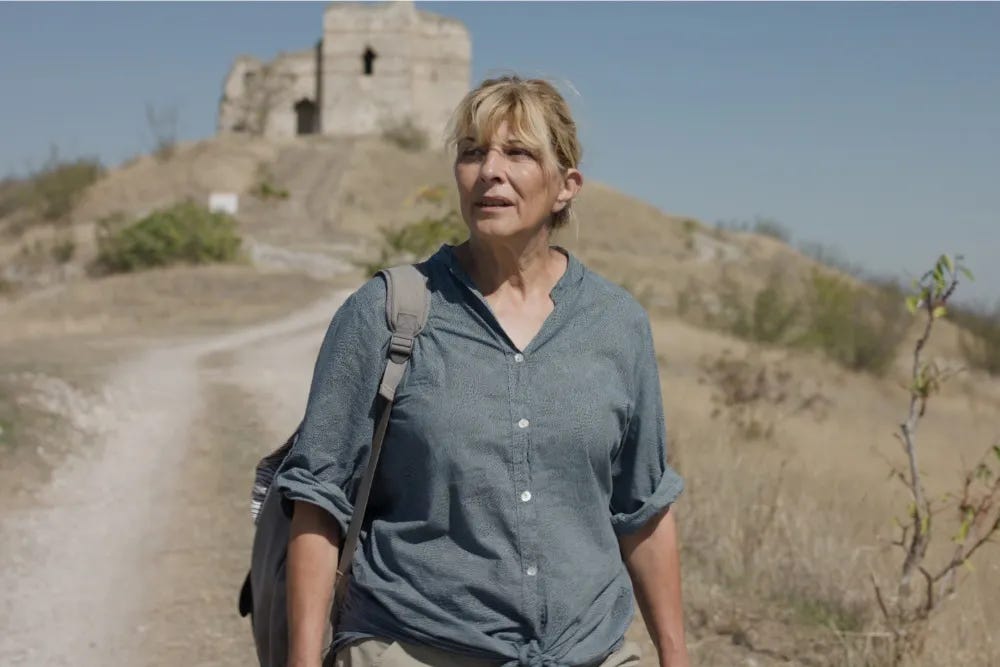
Ubisoft Is Watching, Not Moving, And That's a Signal Too
Taieb Ben Amor, head of film and TV at Ubisoft, confirmed this week that the company is actively tracking the microdrama market but has no plans to enter yet. His stated reason: content quality is not there. "Current offerings feel a bit cheap." Ubisoft — owner of Assassin's Creed, Far Cry, and some of the most globally recognized action IP in gaming — is monitoring a sector that generated $11 billion globally in 2025 and is projected to reach $14 billion by end-2026.
The candor is notable. Ubisoft is not dismissing the format. It is setting a condition for entry: quality has to improve first. That is a different posture than the skepticism the industry faced two years ago, and a more specific one.
When a major IP owner names quality as the threshold for entry rather than market size, it tells the industry where the next competitive battleground is. Platforms and producers positioning for IP licensing deals in 2027 and beyond need to clear that bar now.
Louise Bateman
✱